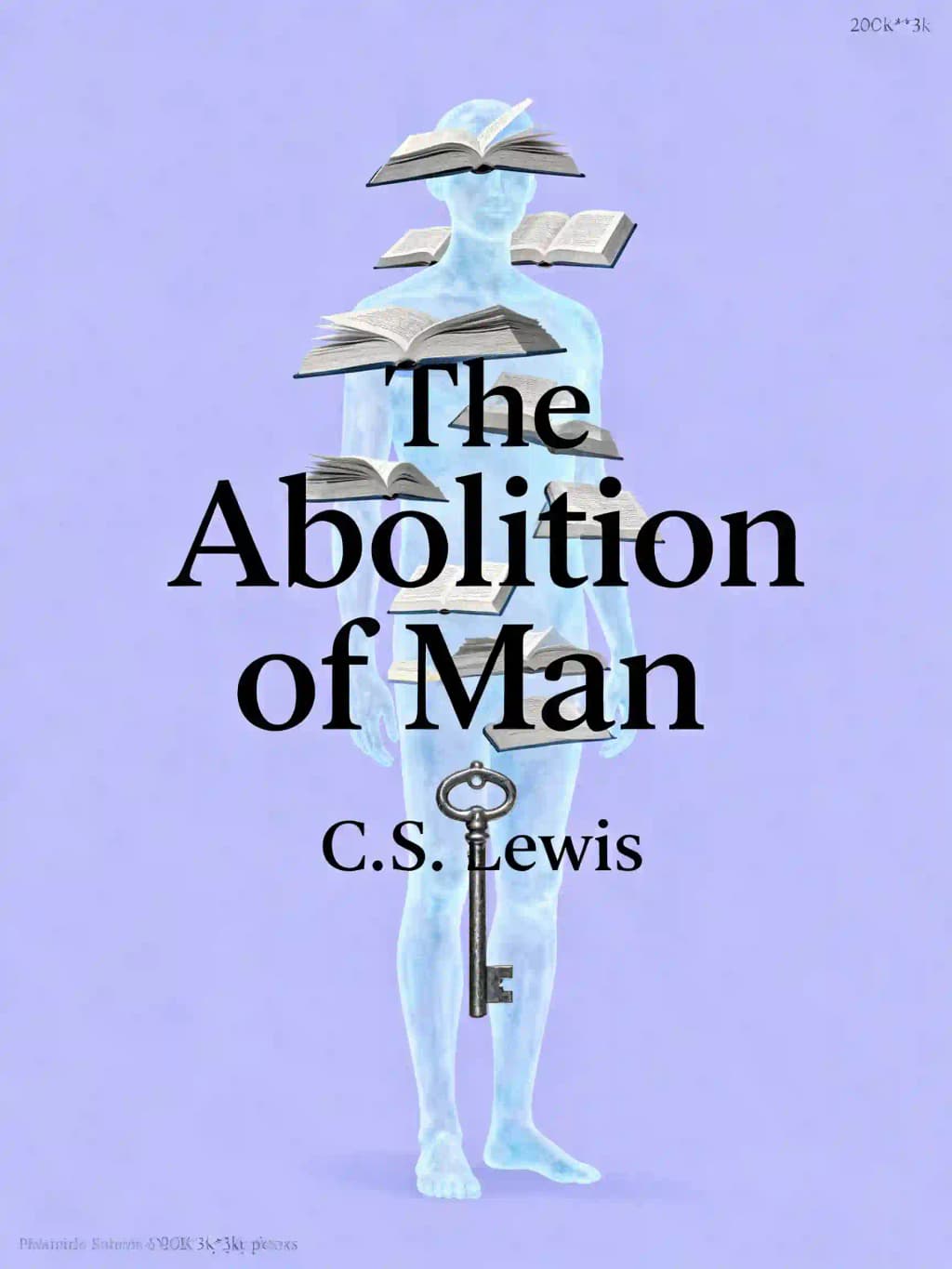
Lewis's philosophical masterpiece challenges our "post-truth" era, exploring morality's objectivity in just 133 pages. Named among the 20th century's most important books, it's Lewis's personal favorite - a prophetic warning about technology and human nature that feels eerily relevant today.
Siente el libro a través de la voz del autor
Convierte el conocimiento en ideas atractivas y llenas de ejemplos
Captura ideas clave en un instante para un aprendizaje rápido
Disfruta el libro de una manera divertida y atractiva
Imagine a world where children are taught that statements like "this waterfall is beautiful" or "this act is noble" merely express feelings, not truths about reality. This isn't dystopian fiction-it's happening in classrooms everywhere. In "The Abolition of Man," C.S. Lewis exposes how seemingly innocent educational approaches subtly undermine our entire moral framework. When teachers casually suggest that value statements are "just feelings," they implicitly communicate that values themselves lack objective reality. This isn't neutral analysis-it's philosophical dynamite. The consequences extend far beyond academic debates. Students develop razor-sharp critical thinking but no framework for determining what matters or why. They can dissect Shakespeare's language but remain blind to the moral truths his works illuminate. They become what Lewis calls "men without chests"-individuals with powerful intellects and strong appetites but lacking the essential middle element that connects knowledge to wisdom: trained moral sentiments. What makes this particularly dangerous is how it presents itself as objective education while actually advancing a radical philosophical position. Most teachers don't intend to promote moral relativism, yet their casual dismissal of value statements as "merely subjective" inevitably plants this worldview in young minds. The result? A generation skilled at analysis but potentially unable to recognize why anything should be valued at all.
Desglosa las ideas clave de The Abolition of Man en puntos fáciles de entender para comprender cómo los equipos innovadores crean, colaboran y crecen.
Destila The Abolition of Man en pistas de memoria rápidas que resaltan los principios clave de franqueza, trabajo en equipo y resiliencia creativa.

Experimenta The Abolition of Man a través de narraciones vívidas que convierten las lecciones de innovación en momentos que recordarás y aplicarás.
Pregunta lo que quieras, elige la voz y co-crea ideas que realmente resuenen contigo.

Creado por exalumnos de la Universidad de Columbia en San Francisco
"Instead of endless scrolling, I just hit play on BeFreed. It saves me so much time."
"I never knew where to start with nonfiction—BeFreed’s book lists turned into podcasts gave me a clear path."
"Perfect balance between learning and entertainment. Finished ‘Thinking, Fast and Slow’ on my commute this week."
"Crazy how much I learned while walking the dog. BeFreed = small habits → big gains."
"Reading used to feel like a chore. Now it’s just part of my lifestyle."
"Feels effortless compared to reading. I’ve finished 6 books this month already."
"BeFreed turned my guilty doomscrolling into something that feels productive and inspiring."
"BeFreed turned my commute into learning time. 20-min podcasts are perfect for finishing books I never had time for."
"BeFreed replaced my podcast queue. Imagine Spotify for books — that’s it. 🙌"
"It is great for me to learn something from the book without reading it."
"The themed book list podcasts help me connect ideas across authors—like a guided audio journey."
"Makes me feel smarter every time before going to work"
Creado por exalumnos de la Universidad de Columbia en San Francisco

Obtén el resumen de The Abolition of Man como PDF o EPUB gratis. Imprímelo o léelo sin conexión en cualquier momento.