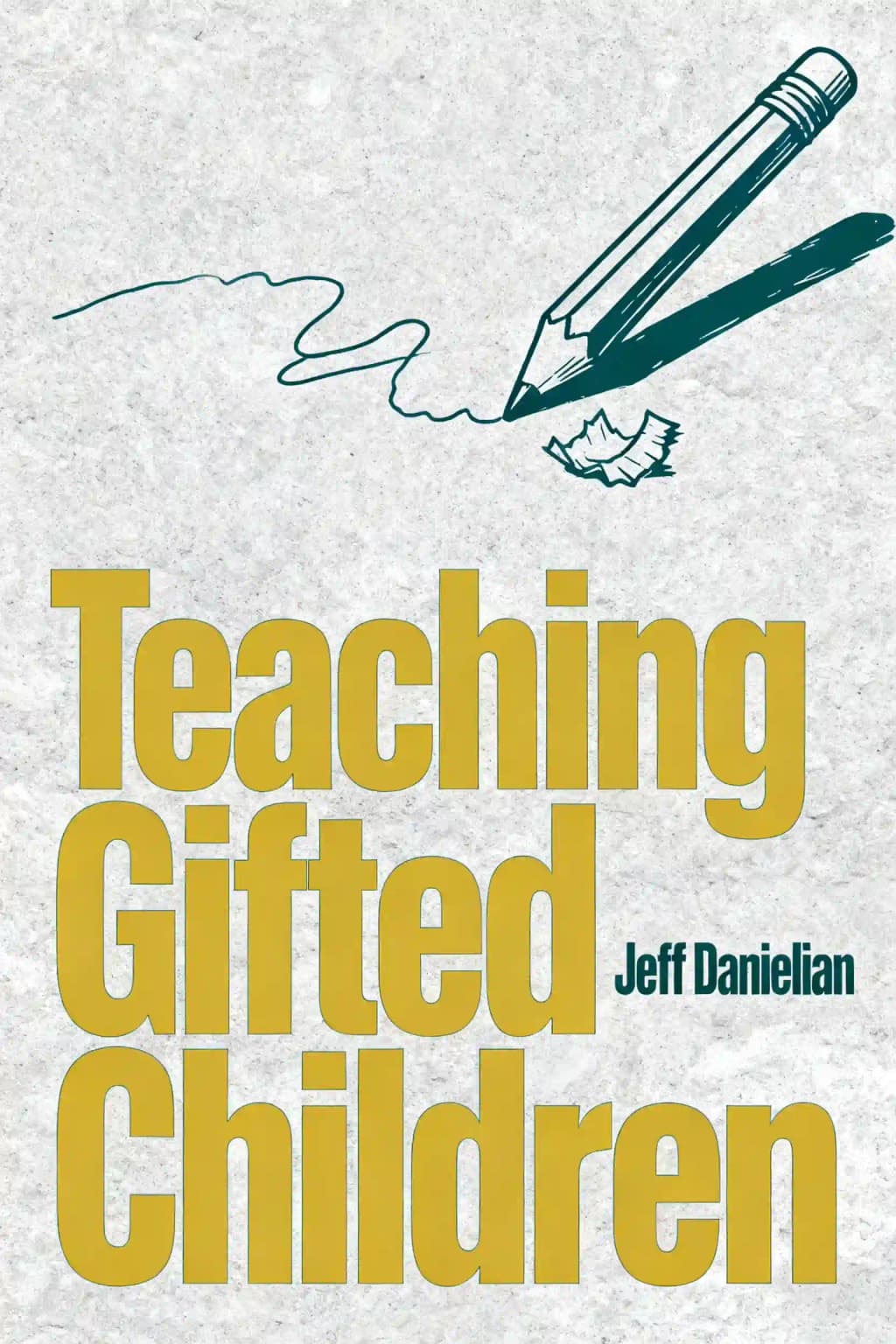
The definitive guide for nurturing exceptional minds, "Teaching Gifted Children" equips educators with strategies for high-ability learners, including underrepresented groups. Called "exceptionally well organized" by Midwest Book Review, it revolutionizes classroom approaches through innovative concepts like Makerspaces and growth mindset development.
Jeff Danielian, author of Teaching Gifted Children: Success Strategies for Teaching High-Ability Learners, is an educator and author specializing in gifted education and curriculum development.
A middle school natural science teacher in Providence, Rhode Island, he holds a bachelor’s degree in natural science from Lyndon State College and has dedicated his career to advancing strategies for nurturing high-ability students. His work blends practical classroom experience with research-backed methods, reflected in this comprehensive guide for educators, which has been praised as a "magnificent anthology of gifted research and teaching strategies" by MiddleWeb.
Danielian has co-authored The Reel Classroom and edited Enriching the Young Naturalist, alongside contributing to professional development programs accessible on digital platforms. His writing emphasizes real-world application, offering tools for lesson enhancement and curriculum design.
Teaching Gifted Children is recommended by educators and institutions globally, lauded for its actionable insights and adaptability across diverse classroom settings. The book has been widely adopted in gifted education programs and remains a trusted resource for teachers seeking to unlock student potential.
Teaching Gifted Children provides evidence-based strategies for educating high-ability students, covering instructional methods, social-emotional support, and classroom differentiation. It addresses STEM integration, growth mindset development, and combating underachievement, with insights from Danielian’s experience as a gifted education specialist and editor of Teaching for High Potential.
This book is ideal for K-12 educators, curriculum developers, and parents seeking research-backed methods to nurture gifted learners. Administrators and policymakers will also benefit from its frameworks for identification, equity-focused practices, and addressing twice-exceptional students’ needs.
Yes—praised as “exceptionally well organized and presented” by the Midwest Book Review, it combines academic rigor with actionable strategies. It’s particularly valuable for its focus on modern challenges like Makerspaces, underrepresented populations, and balancing academic rigor with emotional support.
Danielian emphasizes differentiated instruction, growth mindset cultivation, and project-based STEM learning. He advocates for using multiple intelligences theory to tailor curricula and introduces practical tools like vocabulary-building exercises and math engagement techniques.
The book dedicates chapters to perfectionism, idealism, and asynchronous development in gifted youth. Danielian provides strategies for fostering resilience, including mindfulness practices and peer collaboration models that align with gifted students’ heightened sensitivities.
He critiques overreliance on standardized testing and advocates for multidimensional assessments. The book highlights methods to recognize potential in twice-exceptional learners and underrepresented groups through observational checklists and portfolio evaluations.
Danielian promotes hands-on, inquiry-based STEM lessons tied to real-world problems. He provides templates for interdisciplinary projects and emphasizes leveraging gifted students’ natural curiosity through open-ended challenges.
Key strategies include:
The book links underachievement to mismatched curricula and emotional disengagement. Solutions include interest-based learning contracts, mentorship programs, and “passion projects” that reconnect students with intrinsic motivations.
While praised for comprehensive theory, some educators note a need for more grade-specific examples. Danielian balances this by including case studies across K-12 settings and modifiable templates for different age groups.
Danielian provides frameworks for identifying potential in ESL learners, low-income students, and neurodivergent populations. The book includes cultural competency guidelines and partnership models for school-community collaboration.
Blending 20+ years as a classroom teacher and NAGC resource specialist, Danielian merges academic research with poetic sensitivity—evident in his emphasis on nurturing creativity alongside academic rigor.
Siente el libro a través de la voz del autor
Convierte el conocimiento en ideas atractivas y llenas de ejemplos
Captura ideas clave en un instante para un aprendizaje rápido
Disfruta el libro de una manera divertida y atractiva
Gifted education exists to address students' unique social-emotional challenges.
It's not just about doing more work or doing it faster.
Organization matters more than expense.
I realized there wasn't anything wrong with me.
Desglosa las ideas clave de Teaching Gifted Children en puntos fáciles de entender para comprender cómo los equipos innovadores crean, colaboran y crecen.
Destila Teaching Gifted Children en pistas de memoria rápidas que resaltan los principios clave de franqueza, trabajo en equipo y resiliencia creativa.

Experimenta Teaching Gifted Children a través de narraciones vívidas que convierten las lecciones de innovación en momentos que recordarás y aplicarás.
Pregunta lo que quieras, elige la voz y co-crea ideas que realmente resuenen contigo.

Creado por exalumnos de la Universidad de Columbia en San Francisco
"Instead of endless scrolling, I just hit play on BeFreed. It saves me so much time."
"I never knew where to start with nonfiction—BeFreed’s book lists turned into podcasts gave me a clear path."
"Perfect balance between learning and entertainment. Finished ‘Thinking, Fast and Slow’ on my commute this week."
"Crazy how much I learned while walking the dog. BeFreed = small habits → big gains."
"Reading used to feel like a chore. Now it’s just part of my lifestyle."
"Feels effortless compared to reading. I’ve finished 6 books this month already."
"BeFreed turned my guilty doomscrolling into something that feels productive and inspiring."
"BeFreed turned my commute into learning time. 20-min podcasts are perfect for finishing books I never had time for."
"BeFreed replaced my podcast queue. Imagine Spotify for books — that’s it. 🙌"
"It is great for me to learn something from the book without reading it."
"The themed book list podcasts help me connect ideas across authors—like a guided audio journey."
"Makes me feel smarter every time before going to work"
Creado por exalumnos de la Universidad de Columbia en San Francisco

Obtén el resumen de Teaching Gifted Children como PDF o EPUB gratis. Imprímelo o léelo sin conexión en cualquier momento.
Imagine a classroom where a third-grader solves algebra problems while her peers work on multiplication, or where a quiet student creates poetry that moves seasoned teachers to tears. These gifted learners represent both extraordinary potential and unique challenges. While most educational training focuses on supporting struggling students, far fewer resources prepare teachers for nurturing exceptional abilities. This imbalance often leaves our brightest minds unchallenged, disengaged, and at risk of never reaching their potential. The journey through gifted education isn't merely about accelerating curriculum - it's about fundamentally reimagining how we nurture talent and creativity in our educational system. Traditional gifted education relied heavily on IQ testing, but contemporary approaches recognize that exceptional ability manifests in diverse ways. Mathematical talent might emerge early and develop linearly, while leadership abilities often surface later through specific experiences. Artistic gifts may flourish in creative bursts, while linguistic talents manifest differently across various contexts. Each domain requires its own identification methods and support structures. The talent development framework moves beyond static identification to recognize that abilities evolve throughout a student's educational journey. That child building astonishingly complex LEGO structures in elementary school might develop engineering aptitude in middle school and architectural brilliance in high school. The goal isn't labeling children permanently but creating articulated pathways that provide appropriate challenges while developing crucial psychosocial skills.