Capítulo 1
When Kindness Defies Borders: A Summer That Changed Everything
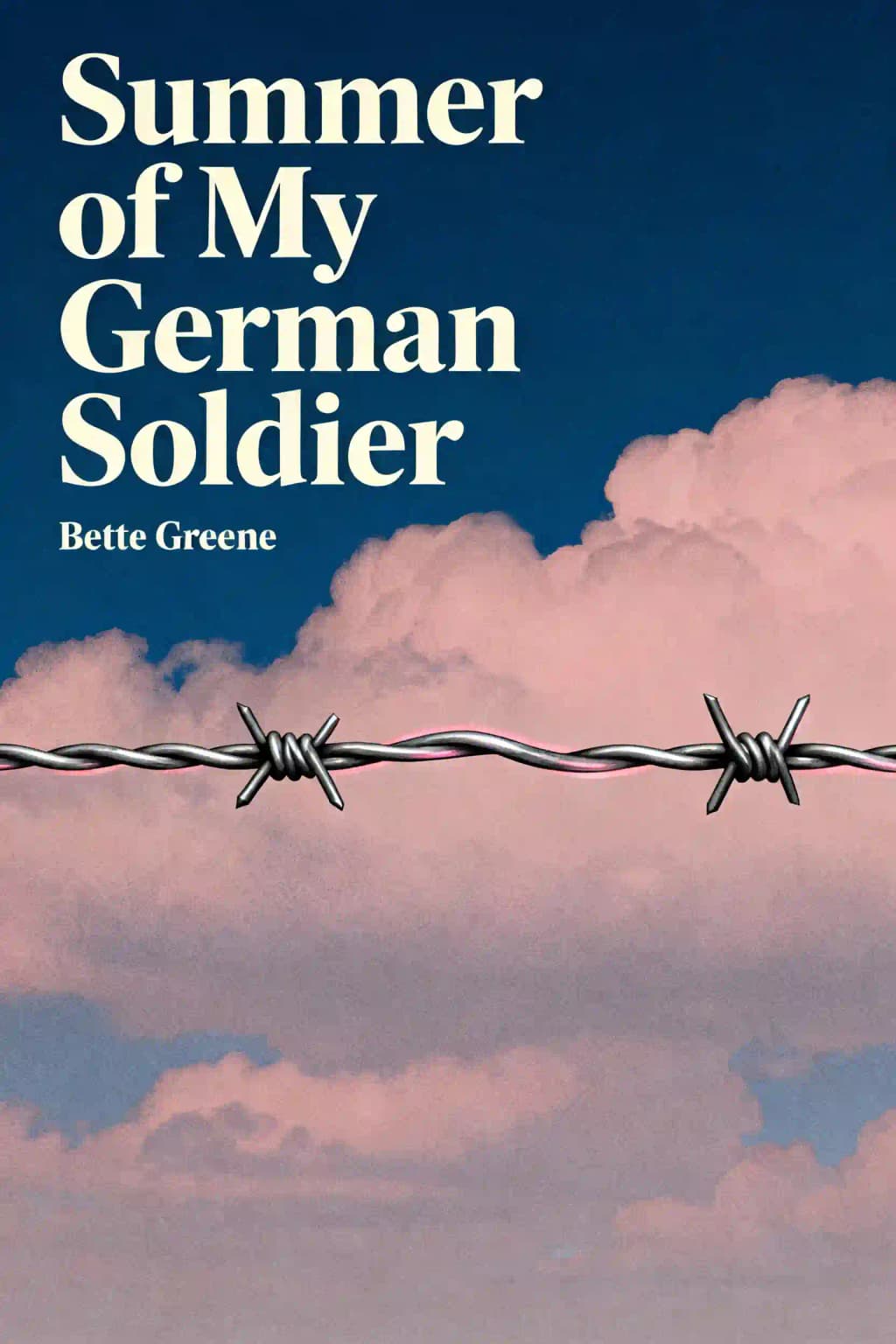
In a small Arkansas town during World War II, an unlikely friendship blossoms between two souls society deems natural enemies. Bette Greene's "Summer of My German Soldier" has captivated readers for nearly five decades with its poignant exploration of prejudice, identity, and the transformative power of human connection. First published in 1973 after 37 rejections, this semi-autobiographical novel became an instant classic, earning a National Book Award nomination and inspiring an Emmy-winning television adaptation. The book remains a staple in school curricula nationwide, with its themes of antisemitism, racism, and moral courage resonating across generations. As Greene herself finally confirmed after decades of speculation: "Yes, I am Patty Bergen, and she is me." Her courageous portrayal of a young Jewish girl who risks everything to help a German prisoner of war continues to challenge readers to examine their own capacity for compassion in the face of societal pressure.
Capítulo 2
A Small Town's Big Secret: The Arrival of German POWs
When the crowd gathers at Jenkinsville's train station one summer day in 1942, twelve-year-old Patty Bergen joins them, curious about the German prisoners of war arriving in their small Arkansas town. The military transport discharges young men in blue denim uniforms with "POW" stenciled across their backs-not the fearsome monsters Patty had imagined from war movies, but ordinary-looking young men under American guard.
Walking home along the railroad tracks afterward, Patty feels strangely disappointed. These Germans hadn't matched her dramatic expectations of defeated enemy soldiers. At home, she finds Ruth, the family's Black housekeeper, doing laundry. Ruth has prepared a special lunch for Patty and her younger sister Sharon-wienies and beans, followed by Jell-O with bananas, nuts, and marshmallows made specially for Patty. As they eat together, they share a moment of easy laughter that contrasts sharply with the tense atmosphere when Patty's parents are present.
"We keep our jubilee in easy reach," Ruth says, capturing the warm bond between them. This simple meal with Ruth becomes a sanctuary of acceptance for Patty, who constantly seeks but rarely receives approval from her parents. Looking out the window, she fantasizes about rescuing her mother and father from an Alaskan blizzard, imagining that such heroism might finally make them tell her they love her.
Ruth sees through Patty's plan to visit her father's department store with "up-to-the-second war news" about the Nazi prisoners. She gently suggests Patty change into a pretty dress instead of her faded shorts. "Pride, Patty Babe," Ruth explains. "You gotta have pride. It's me shouting out to the world that one of God's creatures is walking on by."
This tender moment illuminates the complex dynamics that shape Patty's world-a child desperate for parental love, finding nurturing instead from Ruth, whose wisdom and dignity persist despite her subordinate social position in 1940s Arkansas. The arrival of the German prisoners has set in motion events that will test these relationships and ultimately transform Patty's understanding of herself and the world around her.
Capítulo 3
Seeking Approval in a House Without Love
At Bergen's Department Store, Patty's attempt to connect with her father falls flat. He barely acknowledges her while meeting with a shoe salesman, treating her presence as an intrusion rather than a welcome visit. Her mother sits with Mrs. Fields, immediately criticizing Patty's appearance and unfavorably comparing her to her younger sister Sharon. "Some children just seem to be born with things others aren't," she remarks callously, as if Patty weren't standing right there.
Looking in the three-way mirror, Patty confronts her reflection-a skinny face, big feet, and long nose-nothing like her mother's symmetrical beauty. When Mrs. Burton Benn demands that Patty's mother fire Ruth for buying hamburger before her, Mother refuses not because she values Ruth as a person, but because "she's the best cook and house cleaner we've ever had." This casual dehumanization reveals how differently the Bergens view their housekeeper compared to Patty, who treasures Ruth's affection and wisdom.
Walking down Front Street afterward, Patty notices the vacant Chu Lee Grocery with its broken window. She recalls overhearing Mr. Jackson telling her father, "Our boys at Pearl Harbor would have got a lot of laughs at the farewell party we gave the Chink." When she asked what this meant, her father forbade her from ever mentioning it again. Though confused, Patty intuitively understands that something terrible happened to Mr. Lee simply because he was Chinese-another glimpse of the prejudice that permeates her community.
On a Sunday trip to visit her grandparents in Memphis, Patty enjoys talking with her grandfather about important topics like President Roosevelt, though her grandmother's questions about weight, grades, and friends make her uncomfortable. The stark contrast between her parents' cold household and her grandparents' warm welcome highlights Patty's emotional starvation. When her grandmother slips her ten dollars for books-"This is not for your mother to know!"-it becomes a secret treasure, a tangible proof that someone values her mind and interests.
Crossing the Harrihan Bridge over the Mississippi on the drive home, Patty imagines swimming across by refusing to let the current beat her down, measuring progress inch by inch. This metaphor for her emotional resilience foreshadows the strength she'll need to navigate the challenges ahead-a young girl determined to stay afloat in a family where love seems conditional and always just beyond her reach.
Capítulo 4
The German Who Spoke Perfect English
When German prisoners arrive at Bergen's Department Store to buy straw hats, Patty notices one prisoner who seems different from the rest. While the other POWs cluster together, this dark-haired man named Reiker explores the store independently. When he approaches the stationery counter unguarded, Patty fears he might attempt escape, but he merely examines pencils with interest.
Summoning her courage, she offers to help him. To her surprise, he speaks perfect English and asks for pocket pencil sharpeners with a smile that makes her feel truly seen-perhaps for the first time in her young life. Unlike her parents' dismissive treatment, this stranger treats her with genuine respect and kindness.
"How did you learn to speak English so well?" Patty asks, curious about this articulate prisoner.
Anton explains that his mother was born in Manchester, England, and his father studied history in London. His father, a professor at Gottingen University, wrote books before the war but "now nobody is allowed to write"-a subtle reference to Nazi censorship that Patty doesn't fully grasp. Before becoming a German soldier, Anton was a medical student with intellectual interests far beyond military service.
When Patty mentions Eli Whitney's cotton gin, Anton responds thoughtfully: "What is genius, anyway, if it isn't the ability to give an adequate response to a great challenge?" His philosophical perspective captivates Patty, who rarely encounters such stimulating conversation in Jenkinsville.
As the prisoners prepare to leave, Patty silently prays for God to make Anton her friend or at least keep him safe. Before departing, Anton returns to buy an inexpensive pin from the jewelry counter, grinning joyfully as he leaves-a small transaction that will later prove significant.
This brief encounter plants the seed of connection between two unlikely individuals: a Jewish girl from small-town Arkansas and a German soldier from an intellectual family. Their interaction transcends the expected boundaries of enemy and citizen, adult and child, setting the stage for a relationship that will challenge Patty's understanding of loyalty and compassion.
When her classmate Sister Parker later questions Patty's friendliness with the German, Patty defensively lies that Anton hates Hitler for killing his family. Walking to her friend Edna Louise's house, Patty decides to confide in her about Anton, but Edna Louise reacts with horror, comparing Patty's interest in a German prisoner to "going out with a nigger." This casual racism, equating two entirely different situations through shared prejudice, reveals the narrow mindset of Patty's community-a mindset she will increasingly question as her connection with Anton deepens.
Capítulo 5
A Secret Sanctuary and an Unexpected Return
With summer dragging on and her friends away at Baptist camp, Patty spends her days riding her bike past the prison camp, hoping for glimpses of Anton. She also devotes time to her hide-out-a forgotten servants' quarters above the family garage that's accessible only by climbing the brace boards since her father removed the stairway to keep hobos away.
This secret sanctuary becomes Patty's refuge from her difficult home life. In this private space, she pursues her ambition of learning every word in the English language, carefully copying definitions from Webster's Collegiate into her notebook. The hide-out represents her inner life-rich, thoughtful, and hidden from those who fail to appreciate her intelligence and sensitivity.
One day, walking along the railroad tracks, Patty spots a man in denim clothes with a stenciled "P" on his shirt running along the embankment. Recognizing Anton, she races through the field, calling his name. Just before a passing train would have separated them, he sees her, his face registering shock then pleasure. He extends his hand, which she grasps tightly until the train passes-a symbolic moment of connection across dividing lines.
Later, after preparing a care package for Anton, Patty discovers him hiding in her sanctuary above the garage. Despite newspaper headlines screaming "FBI SEIZES 8 NAZI SABOTEURS" with details of German spies planning to blow up war plants, Patty tells herself Anton isn't a Nazi spy. In her hide-out, they share the food she's brought, and Anton tells her about his civilized home in Gottingen near the university where his father was a history professor who got in trouble for making jokes about Hitler.
When Patty asks about his escape from the POW camp, Anton explains it was based on "deception built on truth"-something he ironically learned from Hitler's propaganda techniques. He used the gaudy pin Patty sold him to trick a guard, convincing him it contained valuable diamonds.
Their conversation takes an unexpected turn when Anton asks why she's helping him. When he discovers she's Jewish, he laughs at the irony of a "Jewish girl risks all for German soldier." Patty's simple response-"I don't want anything bad to happen to you"-cuts through political and religious divisions to the heart of human compassion.
This moment illuminates the novel's central theme: that genuine human connection can transcend the artificial boundaries created by war, prejudice, and nationalism. In their hideaway above the garage, Patty and Anton create a space where they are simply two people sharing food, stories, and mutual respect-a radical act in a world torn apart by conflict.
Capítulo 6
A Person of Value: The Gift That Changes Everything
Patty brings Anton the expensive Egyptian cotton shirt she'd bought for her father on Father's Day-a gift he had tossed aside with barely a "Thanks." In contrast, Anton strokes the blue fabric admiringly, examining the pearl buttons and monogrammed initials with genuine pleasure before touching Patty's cheek gratefully. This simple gesture of appreciation means everything to a girl starved for recognition.
Their conversations in the hideaway become a form of education for Patty. Anton calls her "P.B." and says he'll tell his family after the war about "how an American Jewess protected me." For perhaps the first time in her life, Patty feels valued not for what she might become or how she might improve, but for who she already is.
This newfound sense of worth is tested when Patty's father discovers her with Freddy Dowd, a boy he has forbidden her to see. As Father beats her in the backyard, Anton emerges from hiding ready to attack him, but Patty screams for him to go away. Anton freezes in horror before retreating to the garage-a moment that demonstrates his willingness to risk his safety for her.
Later, Ruth confirms the significance of this action: "That man come a-rushing out from the safety of his hiding 'cause he couldn't stand your pain and anguish no better'n me." This shared protective instinct creates an unexpected bond between Ruth and Anton, despite their vastly different backgrounds.
This connection deepens the next morning when Ruth prepares a special breakfast for Anton. To her surprise, Anton pulls out a chair and invites Ruth to join them-something no white man has ever done before. Ruth eventually sits down with her own coffee, remarking how refreshing it is to cook for someone who appreciates food, unlike the rest of the household.
Their conversation turns philosophical as Ruth asks Anton if he thinks the world will ever improve. Anton expresses skepticism about religion, education, and leadership as solutions to humanity's problems. When Patty presses him about what he does believe in, he states simply: "I believe that love is better than hate. And that there is more nobility in building a chicken coop than in destroying a cathedral."
This quiet moment of shared humanity is interrupted by the sound of a car in the driveway, reminding them of the dangerous reality of their situation. Anton announces he must leave that night, despite Patty's desperate protests. Before departing, he gives her his family ring-a treasured heirloom worn by generations, including his great-grandfather who was president of the University of Gottingen.
As he places it on her finger, Anton delivers his final lesson: "Even if you forget everything else I want you to always remember that you are a person of value, and you have a friend who loved you enough to give you his most valued possession." They share a brief kiss, then he disappears into the night as the 10:15 train rumbles in the distance.
This pivotal moment transforms Patty's understanding of herself. The ring becomes a physical reminder of her worth-something she can touch when doubt creeps in, proof that someone saw value in her that her parents never acknowledged.
Capítulo 7
Betrayal and Consequences
Days without Anton blur together as Patty tries to adjust to his absence. At school, she finds herself staring out the window during fractions class, touching Anton's ring hanging from a chain around her neck and thinking how her classmate Edna Louise is "no person of value."
Patty's fragile peace shatters when she proudly shows Sister Parker the ring, inventing an elaborate story about receiving it from a wealthy old man who rewarded her for feeding him. When Sister calls Patty's father over to examine the "solid gold" ring, he demands to know where she got it. As Patty repeats her fabricated story, his questioning grows increasingly hostile until he suddenly accuses her of letting a man "touch" her, calling her a "dirty filthy girl" before striking her so hard she falls backward into a magazine stand.
As she falls, Patty shouts that nobody loves him. From the balcony area where Sister Parker leads her, Patty hears her parents arguing below. Her father calls Sheriff Cauldwell, sending her mother into hysterics as their fighting escalates. Lying hurt on the floor-her face bruised and her stomach churning-Patty whispers Anton's name, wishing he hadn't left her.
When Sheriff Cauldwell arrives, he speaks gently, assuring Patty he'd never hurt her and explaining she needs to tell him if someone harmed her. With her ring back in hand, Patty maintains her fabricated story about an old man with white whiskers. When pressed for the real reason the man gave her a gold ring, she finds inspiration and aims her answer directly at her father: "Patty," said the old man, "I could go through this world proud and happy if only God had seen fit to give me a daughter exactly like you."
This pointed response reveals Patty's deepest wound-her father's inability to value her-while protecting Anton's identity. It's a moment of both vulnerability and strength, as she uses fiction to express her truth.
The consequences of Patty's deception eventually catch up with her when FBI agents Pierce and McFee question her about Anton. When Pierce shows her a photograph of Anton and the blue shirt she'd given him-now with blood stains-and reads a telegram announcing Anton's death, Patty finally breaks down. In her grief and rage, she attacks Pierce, calling him a murderer.
Her father, learning of her involvement with "a God damn Nazi," is devastated by what he perceives as a betrayal-especially from his Jewish daughter. When Ruth rushes in to defend Patty, explaining she simply gave shelter and food to someone who needed it, he fires her on the spot, throwing money on the bed and ordering her to leave immediately. Despite Patty's desperate pleas-"She's all I have left"-her father remains unmoved, depriving Patty of her most important source of love and support at the moment she needs it most.
Capítulo 8
Justice and Redemption
Patty's actions lead to her trial and eventual sentencing to the Arkansas Reformatory for Girls. On the drive to Bolton reformatory with Mr. Calvin Grimes, she finds herself unexpectedly filled with hope despite her circumstances. When Mr. Grimes asks if she's counted her blessings, Patty thinks of Ruth, her grandparents, and Anton-wondering "if a blessing is still a blessing if it lasts for only a little while."
During her thirty-two days at the reformatory, Patty awakens each morning at 6:30, using the half hour before the wake-up bell to plan her future. Though practical options seem limited, she returns repeatedly to a vision: Six years from now, at eighteen, she'll use her thousand-dollar war bond to travel to Gottingen, Germany, to meet Anton's family and become part of their world.
Her one bright spot is a subscription to the Memphis Commercial Appeal from Charlene Madlee, the only reporter who showed genuine distress after her trial. Charlene's kind notes have given Patty hope, especially when she expressed interest in Patty's desire to become "some kind of reporter or writer someday."
Unexpectedly, Ruth visits Patty at the reformatory, arriving in a fine new Easter-worthy blue crepe dress. Their reunion is emotional, with Ruth noticing Patty's thinness and bringing her favorite foods-perfectly fried chicken breasts with crispy corn meal coating. Ruth reveals she's now working for the colored schoolteacher, Mrs. Cora Mae Ford, and her family.
In a moment of vulnerability, Patty asks Ruth what's wrong with her. Ruth insists there's nothing wrong-"nothing a few years and a few pounds won't take care of." She then produces Anton's ring, which Patty thought she'd lost, reminding her that she'd given it to Ruth for safekeeping. Holding it, Patty feels renewed-"He did love me," she says, hoping her parents might someday too.
Ruth firmly tells Patty her parents will never feel anything good toward her, comparing them to "irregular seconds" merchandise for which Patty has been "paying more than top dollar." This revelation transforms Patty-"Nothing has changed, but I feel different. Good. Like a good person!" She explains to Ruth about the "whispering" inside her that she can now recognize as truth growing stronger day by day.
When Miss Laud, the head matron, announces that visiting time is over, Ruth rises to Patty's defense with unexpected authority. As they say goodbye, Ruth comforts Patty, urging her to stay strong because "better times a-coming." When Patty asks if better times are coming for Ruth too, she responds with heartbreaking honesty: "Mostly things don't get no better for old colored ladies."
As Ruth departs with aging steps, Patty realizes that perhaps life rafts only take the shipwrecked within view of shore, with the final mile left for them to swim alone. Standing motionless, barely treading water, she wonders if a beginning swimmer like herself could ever make it to shore-a question that might take her whole lifetime to answer.
This poignant ending leaves Patty at a crossroads-no longer the naive child who first met Anton, but not yet the woman she might become. Armed with Anton's affirmation of her value and Ruth's unconditional love, she faces an uncertain future with new resources of inner strength. The novel suggests that while justice in society may be imperfect, personal redemption comes through the courage to recognize worth in oneself and others, especially those society deems unworthy of compassion.
Capítulo 9
The Courage to See Beyond Labels
At its heart, "Summer of My German Soldier" challenges readers to examine how easily we categorize people-Jew, Nazi, Black, white-and how these labels can blind us to our shared humanity. Through Patty's eyes, we witness the destructive power of prejudice in its many forms: her father's physical abuse, her mother's emotional neglect, her community's antisemitism, and the systemic racism that shapes Ruth's limited opportunities despite her wisdom and dignity.
Anton's brief presence in Patty's life provides a counterpoint to these destructive forces. His appreciation of her intelligence and his affirmation of her worth plant seeds of self-respect that will sustain her through the difficult consequences of her choices. His parting gift-the family ring and the message that she is "a person of value"-becomes Patty's talisman against a world that repeatedly tells her otherwise.
Ruth's steadfast love offers another kind of salvation. Despite the constraints of her position as a Black housekeeper in the segregated South, Ruth embodies moral courage and emotional generosity. Her final visit to Patty at the reformatory demonstrates her willingness to transcend social boundaries to support the child she loves. When she stands up to Miss Laud with quiet authority, Ruth models the dignity that comes from knowing one's own worth regardless of society's judgment.
The novel's enduring power lies in its refusal to offer easy answers or neat resolutions. Patty's future remains uncertain, Anton is dead, and Ruth returns to her limited life of service. Yet something fundamental has changed in Patty's understanding of herself and her place in the world. She has learned that true value comes not from external validation but from the courage to see beyond labels and act with compassion-even when that compassion defies the rules of war and the prejudices of peace.
Through Patty's journey, Greene invites readers to question their own assumptions about who deserves our humanity and how we might find the courage to extend it, even to those we've been taught to fear or despise. In a world still struggling with divisions of religion, race, and nationalism, this message remains as relevant today as when the novel was first published nearly fifty years ago.
Capítulo 10
The Legacy of Untold Stories
Bette Greene's semi-autobiographical novel resonates beyond its specific historical moment to touch on universal themes of belonging, identity, and moral courage. The author's own experience growing up as the only Jewish child in a small Arkansas town during World War II informs the authentic details that bring Patty's world to life-from the stifling summer heat to the casual prejudice that permeates daily interactions.
For nearly forty years, Greene deflected questions about how much of the story was true, using "weasel words" and citing the book's fiction classification. But in her affidavit included in later editions, she finally confirmed what many readers had suspected: "Yes, I am Patty Bergen, and she is me." This admission adds another layer of poignancy to the story, suggesting the real power of fiction to transform personal pain into universal truth.
The novel's exploration of how war distorts our perception of "enemy" and "ally" remains relevant in every new conflict. Anton's humanity challenges Patty's-and the reader's-preconceptions about German soldiers during World War II, just as Ruth's dignity transcends the limitations imposed by segregation. By focusing on these individual relationships rather than abstract principles, Greene illustrates how personal connections can undermine the dehumanizing logic of both war and prejudice.
Perhaps most significantly, the novel honors those whose stories often go untold-the Ruth Hugheses of history who nurtured and protected children not their own; the Anton Reikers who maintained their humanity despite the dehumanizing pressures of war; and the Patty Bergens who found the courage to act with compassion when it would have been easier to conform.
In giving voice to these characters, Greene reminds us that history is made not only of grand events and famous figures but also of small acts of kindness and courage that rarely make headlines. The summer of Patty's German soldier may seem insignificant against the backdrop of World War II, yet in this intimate story of connection across dividing lines, we glimpse the possibility of a more humane world-one person, one relationship at a time.