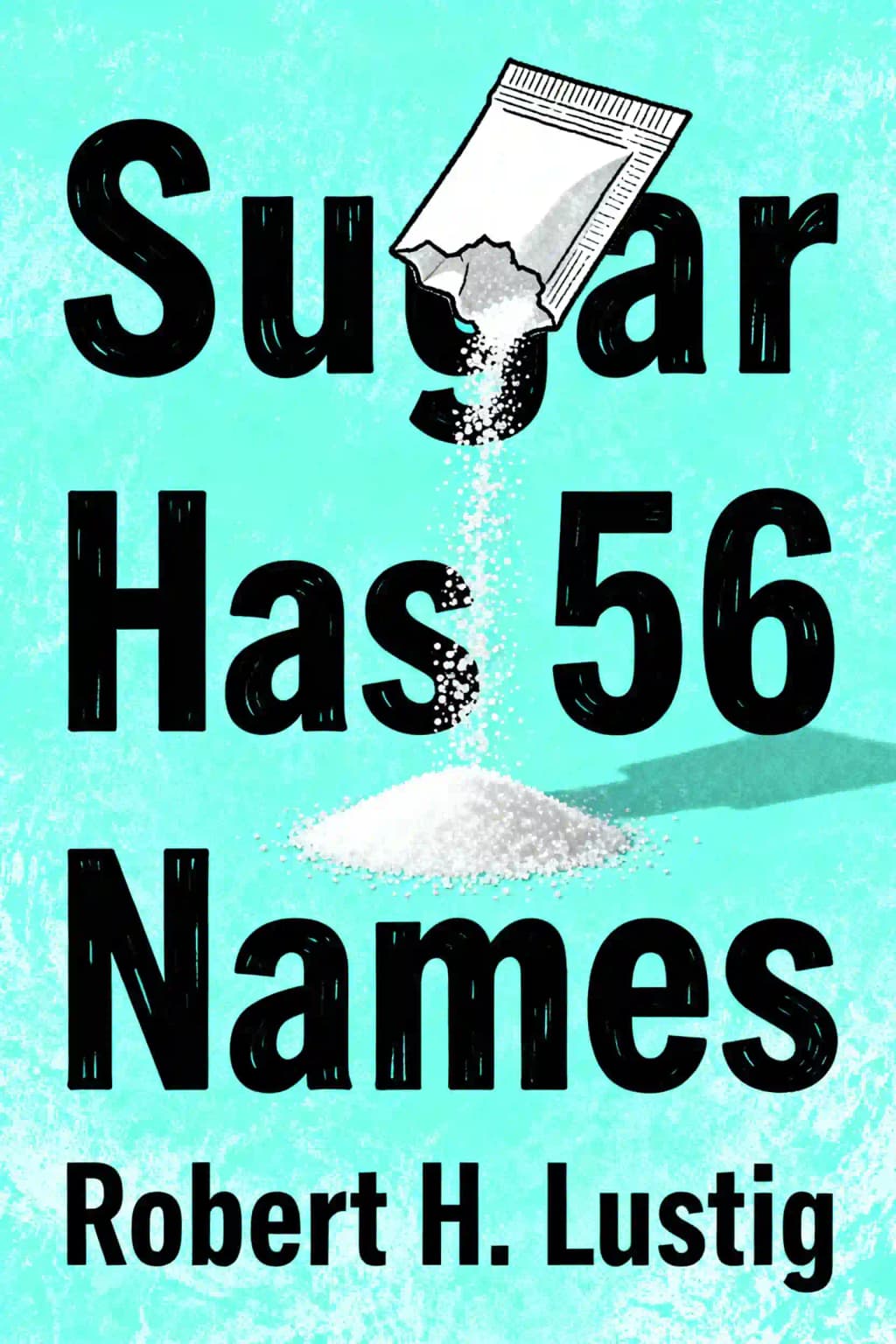
Sugar Has 56 Names
A Shopper's Guide
Resumen de Sugar Has 56 Names
In "Sugar Has 56 Names," Dr. Robert Lustig exposes the 56 disguises sugar hides behind on food labels. This eye-opening guide sparked a revolution in how Americans read nutrition labels - coinciding with the first-ever government limitations on safe sugar consumption.

Temas clave en Sugar Has 56 Names
- sugar nomenclature
- food label literacy
- metabolic syndrome prevention
- processed food additives
- hidden ingredient detection
Citas de Sugar Has 56 Names
Whether you realize it or not, you're at war with the food industry, and they're winning.
Our food environment has been systematically corrupted.
Trans fats stand as perhaps the single most dangerous item in our food supply.
The FDA offers minimal protection, regulating only "acute" toxins while largely ignoring chronic ones.
Personajes en Sugar Has 56 Names
- Robert H. LustigAuthor and practicing pediatric endocrinologist
Sobre el Autor
Sobre el autor de Sugar Has 56 Names
Robert H. Lustig, M.D., M.S.L., is a renowned neuroendocrinologist and anti-sugar advocate whose groundbreaking work on metabolic health informs Sugar Has 56 Names: A Shopper’s Guide.
A professor emeritus of pediatrics at UCSF and bestselling author of Fat Chance, Metabolical, and The Hacking of the American Mind, Lustig combines his expertise in obesity research and nutrition policy to expose the dangers of processed foods.
Trained at MIT and Cornell Medical College, he has become a leading voice in reshaping public health discourse through TEDx talks, congressional testimony, and media appearances on ABC’s Nightline and in The New York Times. His books dissect the connection between sugar addiction, corporate food systems, and chronic disease, offering actionable solutions for readers.
Lustig serves as Chief Science Officer for the nonprofit Eat REAL and advises multiple health technology startups. Fat Chance, his seminal critique of sugar’s role in metabolic disorders, has been widely cited in academic and policy circles, cementing his reputation as a catalyst for food-industry reform.
Descargar resumen de Sugar Has 56 Names: A Shopper's Guide
Obtén el resumen de Sugar Has 56 Names: A Shopper's Guide como PDF o EPUB gratis. Imprímelo o léelo sin conexión en cualquier momento.
Preguntas Frecuentes Sobre Este Libro
Sugar Has 56 Names exposes how food manufacturers disguise sugar under 56 different ingredient names like "evaporated cane juice" and "diastatic malt." Dr. Robert H. Lustig, a leading obesity researcher, provides a practical guide to decoding food labels and avoiding hidden sugars in everyday grocery items, empowering readers to make healthier dietary choices.
This book is essential for health-conscious shoppers, parents managing childhood nutrition, and individuals with diabetes or metabolic disorders. It’s also valuable for anyone seeking clarity on deceptive food labeling practices and aiming to reduce sugar intake without sacrificing convenience.
Yes—readers praise its concise, actionable insights for identifying hidden sugars, though some note its brevity. It’s hailed as a critical tool for navigating grocery aisles and understanding the link between sugar consumption and chronic diseases like obesity and diabetes.
The book catalogs aliases like "panocha," "barley malt," and "fruit juice concentrate" used to mask sugar content. Lustig emphasizes that these terms intentionally confuse consumers, allowing processed foods to bypass regulatory limits on added sugars.
Lustig provides real-world examples of common products (e.g., cereals, sauces) and their total sugar content, alongside strategies to prioritize whole foods. He advises checking for fiber content to slow sugar absorption, a key tactic for metabolic health.
Lustig explains that soluble fiber (e.g., pectin) forms a gut barrier to slow sugar absorption, preventing liver overload. He argues that processed foods strip out fiber, exacerbating sugar’s harmful effects—a core theme in his dietary recommendations.
The book highlights unsuspecting items like salad dressings, granola bars, and "healthy" snacks often loaded with hidden sugars. Lustig warns that "low-fat" products frequently compensate with added sweeteners.
While Fat Chance delves into the science of obesity, this guide focuses on practical, everyday solutions. It’s a shorter companion piece aimed at immediate application, ideal for readers seeking quick reference rather than in-depth analysis.
Some reviewers wish it included more extended dietary strategies or recipes. However, most agree it succeeds as a focused primer on label literacy, despite its concise format.
Lustig ties hidden sugars to rising diabetes rates and outdated FDA labeling standards. He argues for stricter industry regulations and consumer education to combat the public health crisis.
“Sugar hides in plain sight—your liver doesn’t care what it’s called, only what it does.” This underscores Lustig’s premise that all sugar types harm metabolism, regardless of their marketing-friendly names.
With processed foods dominating diets and sugar-linked diseases escalating, Lustig’s guide remains critical for navigating increasingly complex food marketing tactics. Its actionable advice aligns with growing demand for transparent nutrition labeling.