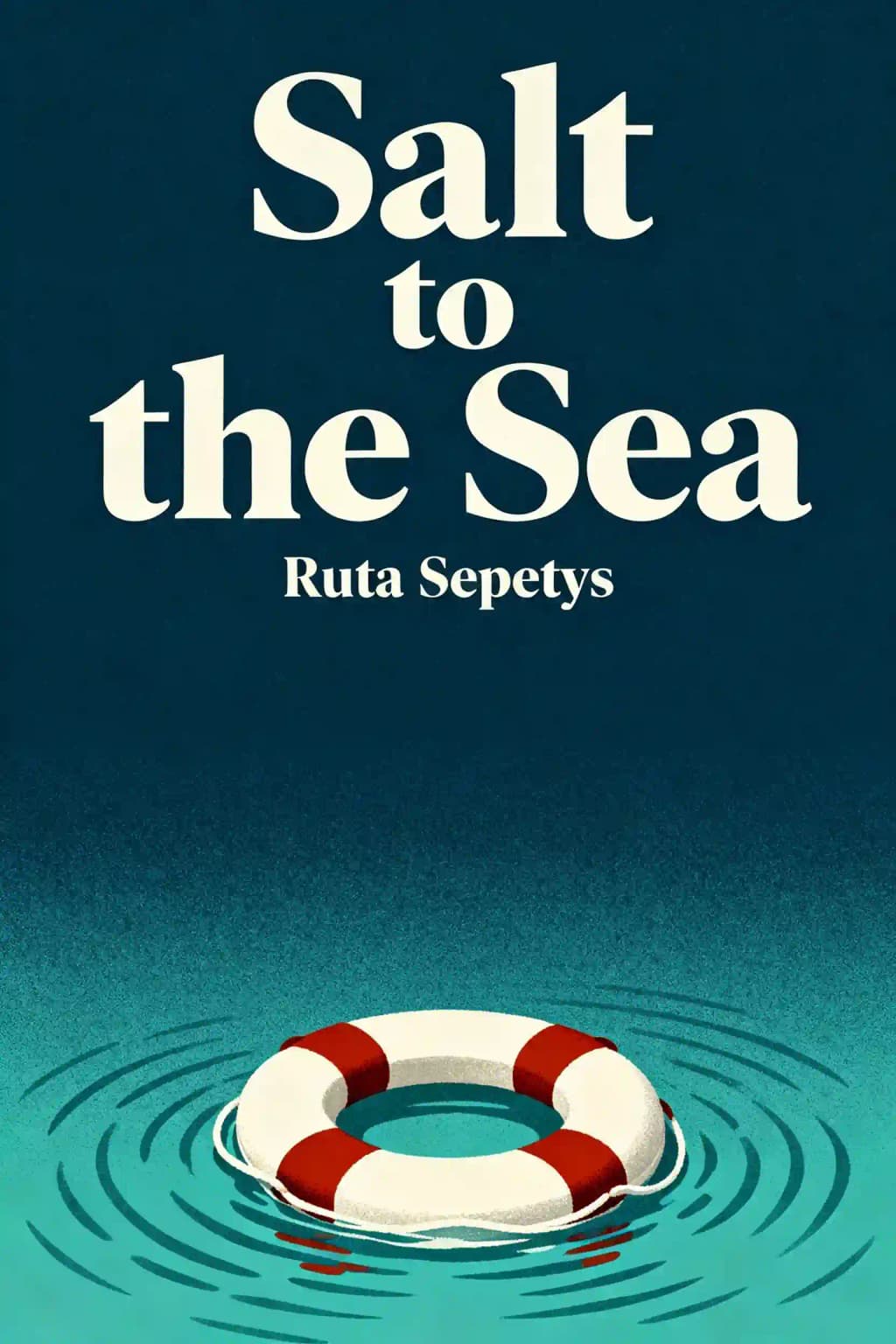
In "Salt to the Sea," Ruta Sepetys unveils history's deadliest maritime disaster - the Wilhelm Gustloff sinking that claimed 9,000 lives. This Carnegie Medal winner connects forgotten WWII tragedies to today's refugee crisis. "Not one of us knew about this disaster," admitted stunned literary judges.
Ruta Sepetys (Rūta Šepetys), born in 1967 in Michigan, is the #1 New York Times bestselling author of Salt to the Sea and an internationally acclaimed writer of historical fiction known for giving voice to underrepresented history. As the daughter of a Lithuanian refugee, Sepetys brings personal heritage and meticulous research to her portrayal of World War II refugees and the Wilhelm Gustloff disaster—the deadliest maritime tragedy in history that remains largely forgotten.
Winner of the Carnegie Medal, Sepetys is considered a "crossover" novelist whose books resonate with both students and adults worldwide. She has spoken at NATO, the European Parliament, and the U.S. Capitol, earning fellowships from Oxford University and the Rockefeller Foundation. Her other notable works include Between Shades of Gray and Out of the Easy, both New York Times bestsellers.
Her books have been published in over 60 countries and 40 languages and are currently in development for film and television.
Salt to the Sea by Ruta Sepetys is a historical fiction novel about the sinking of the Wilhelm Gustloff in January 1945, the deadliest maritime disaster in history. The story follows four refugees—Joana, Florian, Emilia, and Alfred—fleeing the advancing Soviet army through war-torn Germany, desperately seeking passage on a ship that promises safety. Over 9,000 people, including 5,000 children, perished when a Soviet submarine torpedoed the overcrowded vessel.
Ruta Sepetys is a Lithuanian-American young adult author whose father fled Lithuania when the Soviets occupied the country following World War II. She wrote Salt to the Sea after her father's cousin revealed she barely missed passage on the Wilhelm Gustloff, prompting Sepetys to uncover this forgotten tragedy. Her previous acclaimed novel, Between Shades of Gray, also explores Lithuanian history during WWII.
Salt to the Sea is ideal for young adult and adult readers interested in historical fiction, World War II history, and untold stories of refugees. The novel suits those who appreciate multiple perspectives, emotionally powerful narratives, and meticulously researched historical events. Readers drawn to humanitarian stories about resilience, survival, and the human cost of war will find this book particularly compelling.
Salt to the Sea is worth reading for its honest portrayal of a largely unknown tragedy and its skillfully crafted characters that make history deeply personal. While the brutal depiction of war and shifting perspectives may challenge some readers, Sepetys's meticulous research and emotional storytelling honor the 9,000 souls lost in this maritime disaster. The book has received widespread critical acclaim for bringing humanity to historical catastrophe.
Salt to the Sea features four main narrators: Joana, a Lithuanian nurse with medical skills; Florian, a Prussian fleeing the Nazis with stolen art treasure; Emilia, a pregnant Polish girl seeking safety; and Alfred, a delusional low-ranking German sailor stationed aboard the Wilhelm Gustloff. Each character harbors dark secrets and traumatic pasts while desperately trekking through frozen landscapes toward the ill-fated ship.
The Wilhelm Gustloff disaster remains largely unknown due to deliberate suppression and collective shame. Adolf Hitler himself covered up the ship's sinking to avoid damaging German morale during the war. Additionally, survivors with Nazi affiliations felt inappropriate positioning themselves as victims considering the atrocities they had committed before escaping. Even German historians Sepetys consulted had not initially heard of the tragedy.
Salt to the Sea uses alternating first-person perspectives with short chapters devoted to each of the four main characters. This rapid shifting of viewpoints can initially challenge readers in distinguishing characters, but creates an intimate, multi-dimensional portrait of the refugee experience. The structure builds emotional attachment as characters' poignant backstories are skillfully woven through chapters leading to the inevitable sinking.
Salt to the Sea illuminates a forgotten refugee story that eclipses both the Titanic and Lusitania in casualties yet receives no comparable recognition. Unlike most WWII narratives focusing on soldiers or Holocaust victims, Sepetys centers on civilian refugees of multiple nationalities fleeing the Soviet advance. The book reveals how war devastates innocent people caught between opposing forces, with 5,000 children among the 9,000 dead.
Ruta Sepetys conducted meticulous historical research, consulting survivors, memoirs, and testimony from people who experienced the era. She interviewed her father's cousin who nearly boarded the Wilhelm Gustloff and worked with historians to verify details. The fictional characters are wrapped around authentic historical testimony, ensuring the narrative remains historically accurate while providing emotional accessibility to this real-life tragedy.
Salt to the Sea explores themes of refugee survival, the innocent victims of war, collective trauma, and how history forgets certain tragedies. The novel examines human cruelty, evil, and the devastating impact of vengeful regimes on children who inherit heartache for something they had no role in causing. Despite depicting war's brutality, the book also reveals moments of heroism, humanity, and how connections prevail even in darkness.
Salt to the Sea is emotionally devastating, with readers reporting crying through the final chapters as the ship sinks. The novel spares nothing in its brutal portrayal of human cruelty, war, starvation, and death, making it tough reading despite its YA classification. Sepetys captures the panic, drowning, and exposure deaths so vividly that some readers literally held their breath during the sinking sequences. The book contains trigger warnings for death, violence, rape, and famine.
The title Salt to the Sea metaphorically represents tears, suffering, and the final journey of thousands of refugees returning to the Baltic Sea in death. Salt symbolizes both preservation (keeping memories alive) and the sea's acceptance of those lost in the Wilhelm Gustloff tragedy. The phrase evokes the Jewish tradition of adding salt to preserve and honor, reflecting how Ruta Sepetys preserves these forgotten souls through storytelling while they literally became "salt to the sea" in the frozen Baltic waters.
Siente el libro a través de la voz del autor
Convierte el conocimiento en ideas atractivas y llenas de ejemplos
Captura ideas clave en un instante para un aprendizaje rápido
Disfruta el libro de una manera divertida y atractiva
Fate is a hunter.
Shame is a hunter.
Fear is a hunter.
The shoes always tell the story.
Desglosa las ideas clave de Salt to the Sea en puntos fáciles de entender para comprender cómo los equipos innovadores crean, colaboran y crecen.
Destila Salt to the Sea en pistas de memoria rápidas que resaltan los principios clave de franqueza, trabajo en equipo y resiliencia creativa.

Experimenta Salt to the Sea a través de narraciones vívidas que convierten las lecciones de innovación en momentos que recordarás y aplicarás.
Pregunta lo que quieras, elige la voz y co-crea ideas que realmente resuenen contigo.

Creado por exalumnos de la Universidad de Columbia en San Francisco
"Instead of endless scrolling, I just hit play on BeFreed. It saves me so much time."
"I never knew where to start with nonfiction—BeFreed’s book lists turned into podcasts gave me a clear path."
"Perfect balance between learning and entertainment. Finished ‘Thinking, Fast and Slow’ on my commute this week."
"Crazy how much I learned while walking the dog. BeFreed = small habits → big gains."
"Reading used to feel like a chore. Now it’s just part of my lifestyle."
"Feels effortless compared to reading. I’ve finished 6 books this month already."
"BeFreed turned my guilty doomscrolling into something that feels productive and inspiring."
"BeFreed turned my commute into learning time. 20-min podcasts are perfect for finishing books I never had time for."
"BeFreed replaced my podcast queue. Imagine Spotify for books — that’s it. 🙌"
"It is great for me to learn something from the book without reading it."
"The themed book list podcasts help me connect ideas across authors—like a guided audio journey."
"Makes me feel smarter every time before going to work"
Creado por exalumnos de la Universidad de Columbia en San Francisco

Obtén el resumen de Salt to the Sea como PDF o EPUB gratis. Imprímelo o léelo sin conexión en cualquier momento.
In the frigid January of 1945, as Soviet forces swept through East Prussia, thousands of desperate refugees converged on the port of Gotenhafen. Among them were four young people, each carrying secrets as heavy as the winter snow. What awaited them was the Wilhelm Gustloff, a former Nazi "Strength Through Joy" cruise ship now serving as an evacuation vessel. None could have known they were boarding what would become the deadliest maritime disaster in history - a tragedy that would claim over 9,000 lives when Soviet torpedoes struck the overcrowded ship. Yet somehow, this catastrophe six times deadlier than the Titanic has remained largely forgotten, lost in the chaotic final chapters of World War II. Their intertwined stories reveal how war strips away everything but our essential humanity, and how even in history's darkest moments, light can still be found.
