Capítulo 1
The Sacred Lotus Journey: Awakening the Divine Feminine
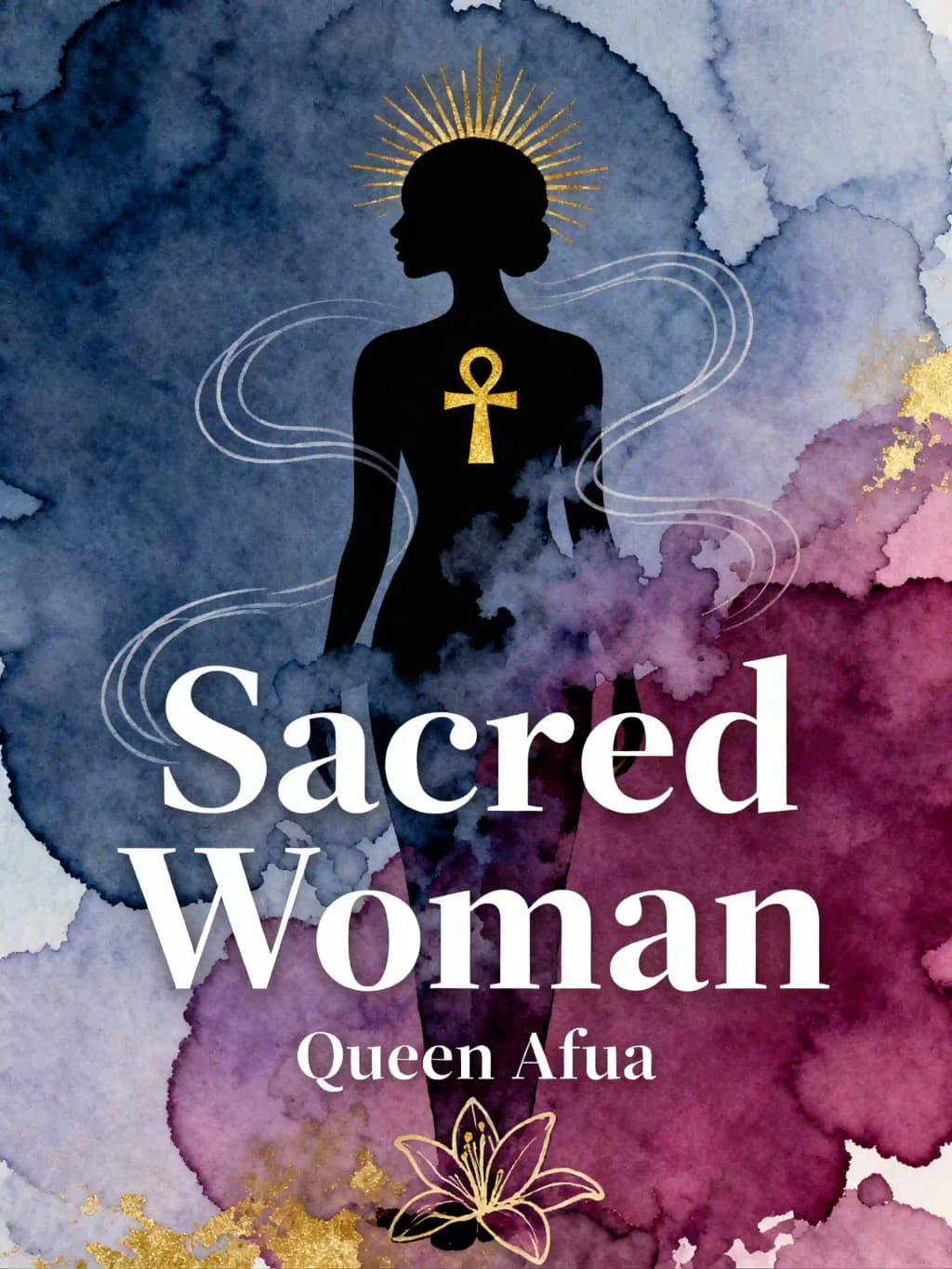
When Queen Afua first published "Sacred Woman" in 1999, she couldn't have anticipated how it would transform the wellness landscape for women of color. This revolutionary guide-beloved by celebrities like Erykah Badu, Jada Pinkett Smith, and Lauren London-emerged from the author's own healing journey. After suffering debilitating menstrual pain since age thirteen and undergoing three cesarean sections, Queen Afua developed a holistic approach to women's wellness rooted in ancient Khamitic (Egyptian) traditions. Her philosophy resonates deeply in today's wellness culture, where Black women increasingly seek alternatives to conventional healthcare due to documented disparities in medical treatment.
The book's cultural impact extends beyond individual healing-it sparked a movement of womb wellness circles, natural living communities, and spiritual sisterhood that continues to flourish two decades later. As we witness the rise of holistic health practices and decolonized wellness approaches, "Sacred Woman" stands as a pioneering text that anticipated these shifts long before they entered the mainstream conversation.
Capítulo 2
The Womb Crisis: A Call for Sacred Awakening
"Ring after ring, the desperate calls come in," Queen Afua writes, describing the epidemic of reproductive health crises she witnessed as founder of the Heal Thyself Center. Women in their twenties and thirties facing devastating diagnoses-"dead ovaries," hysterectomies, fibroids, heavy bleeding, and constant PMS. The statistics are chilling: over 550,000 hysterectomies performed yearly in the US, 90% for non-life-threatening conditions, with African American women facing disproportionately higher rates, longer hospitalizations, more complications, and greater risk of death. These surgeries often occur without exploring alternative healing methods or addressing root causes, leaving women permanently altered both physically and emotionally.
This crisis stems from disconnection-from our bodies, our ancestral wisdom, and natural living principles. Queen Afua explains that the womb is humanity's gateway, a storehouse of emotions that, when honored, channels power and creativity, but when ignored, becomes diseased. "The state of your womb reflects the state of your life," she writes. Women's collective womb condition mirrors our world's state-tumors, cysts, and unnecessary surgeries reflect global disharmony. She details how environmental toxins, processed foods, chronic stress, and emotional trauma contribute to this widespread reproductive crisis, creating a cycle of dysfunction that passes through generations.
The solution begins with reconnection through the Nine Gateways of transformation-sacred portals that guide women back to wholeness. Starting with Gateway 0: The Sacred Womb, women learn to identify, cleanse, purify, heal, and honor their center of spiritual power. This foundation supports the journey through all nine gateways, each addressing different aspects of feminine power and wellness. The gateways incorporate ancient healing practices, including womb meditation, sacred movement, herbal remedies, and emotional release work. Queen Afua provides specific protocols for each gateway, from dietary guidelines to spiritual ceremonies that help women reclaim their sacred feminine power.
Queen Afua emphasizes that true health cannot be purchased-regardless of wealth, possessions, degrees, or status. It must be cultivated from within through positive thoughts, prayers, uplifting company, and life-giving foods. This investment in transforming the Sacred Body Temple requires commitment but promises profound rewards-not just physical healing but spiritual awakening. She shares numerous case studies of women who've reversed serious conditions through this holistic approach, including stories of fibroid reduction, restored fertility, and eliminated menstrual pain. The healing journey involves daily practices like sacred bathing rituals, womb meditation, specific food combinations, and emotional release work-all designed to restore the natural rhythm and power of the feminine center.
Through personal testimonies and clinical observations, Queen Afua demonstrates how this sacred approach to healing transcends conventional medical treatments by addressing the spiritual and emotional roots of reproductive disorders. She emphasizes the importance of community support, suggesting women form healing circles and sacred sister bonds to sustain their transformation journey. This comprehensive approach not only heals individual women but contributes to the collective healing of feminine energy worldwide.
Capítulo 3
Reclaiming Ancient Wisdom: The Khamitic Nubian Foundation
To fully embrace the Sacred Woman journey, we must first turn our compass south to Mother Afraka, source of the Nile and Khamitic culture. Queen Afua introduces the spiritual traditions of ancient Khamit (Egypt), asking readers to set aside preconceptions about "classical Egypt" and embrace the legitimacy of Afrakan-Nubian heritage. This heritage stretches back over 10,000 years, predating many modern civilizations and religious traditions.
The ancient Khamitic people weren't polytheistic as commonly believed-they viewed NTR as the undifferentiated One/All-Divine Creator with many divine attributes (NTRU), not as multiple gods. Their sophisticated spiritual system recognized the interconnectedness of all creation, viewing each divine attribute as a gateway to understanding universal truth. They lived by the philosophy of Maat (harmony, truth, and justice) and used the elements of water, earth, air, and fire for purification and healing. These elements were incorporated into daily rituals, from morning prayers to healing ceremonies and seasonal celebrations.
Their entire society was guided by the Forty-two Laws of Maat, a moral code that predated the Ten Commandments. These laws encompassed principles like truthfulness, environmental stewardship, respect for elders, care for children, and maintaining balance in all relationships. Archaeological evidence shows how these principles were woven into architecture, art, and social structures, creating a society that flourished for millennia without the need for prisons or police forces.
Unlike modern religions that worship only a male God, the Khamites honored both the Mother and Father aspects of the Divine equally. This balance was reflected in their temple designs, hieroglyphic writings, and social structures. Their legacy includes sophisticated systems of holistic healing using herbs, energy work, and sound therapy; spiritual practices incorporating meditation and sacred movement; and artistic expressions that encoded spiritual wisdom through symbols and sacred geometry.
The NTRU-divine energies manifested through various aspects: Asar (resurrection and regeneration), Ast (divine wisdom and healing), Maat (truth and cosmic order), and Sekhmet (powerful healing and transformation). Each aspect represented universal principles and natural laws, offering different pathways to understanding divine consciousness. Women held positions of power as Queens like Hatshepsut and Nefertiti, High Priestesses in temples, and healers in communities.
Queen Afua explains that reclaiming this heritage is essential for healing contemporary social and personal wounds. Before colonization and slavery disrupted Afrakan traditions, people underwent carefully structured Rites of Passage that marked important life transitions and ensured psychological and spiritual maturity. These rites included periods of fasting, meditation, study with elders, and ceremonial initiations that helped maintain individual and collective harmony. The Sacred Woman initiation draws from these ancient practices, adapting them for modern women seeking to reconnect with their divine nature and ancestral wisdom.
Through understanding and implementing these Khamitic principles, women can access tools for personal transformation that have proven effective across millennia. This work of reclamation isn't just about historical appreciation-it's about accessing practical wisdom for healing, empowerment, and spiritual evolution in our current times.
Capítulo 4
Gateway 0: The Sacred Womb-Foundation of Transformation
The foundational gateway-Gateway 0: The Sacred Womb-prepares women for the Nine Gateways of Initiation by establishing womb wellness. This gateway employs water as its element and introduces the concept of the womb as the spiritual center of a woman's power.
Creating a sacred altar is the first step in this journey. This private, undisturbed space becomes the focal point for spiritual practice, where women commune with the Creator and receive guidance. The altar faces east toward the rising sun, with specific sacred objects arranged to honor the womb's power.
Daily spiritual observances for Gateway 0 include spiritual baths with frankincense oil at dawn, altar work with anointing rituals, opening prayers to Gateway Guardians, and performing libations with blessed water as offerings to the Sacred Mother Guardian Nut, the Great Cosmic Mother.
The womb is not just a physical organ but a spiritual center-an arit (chakra) corresponding to the second energy center governing creativity, inspiration, and family. When damaged through bleeding, infections, fibroids, abuse, or medical procedures, our creativity, relationships, and joy become impaired. Governed by the Moon and water elements, the womb affects our emotional tides, which is why water rituals can transform negative dispositions and reconnect us to our Sacred Woman self.
Sacred time plays a crucial role in womb wellness. Within each twenty-four hours, ancient Afrakan guardians greet us at designated times to help maintain equilibrium. Nebt-Het appears between 4-6 A.M. as guardian of the twilight before dawn. Ast reflects through the brightest midday light. Het-Hru appears with the setting Sun. And Mother Nut watches over us during nighttime. These sacred times correspond to different life stages, seasons, and moon phases, creating a holistic framework for understanding time as sacred and cyclical.
Capítulo 5
The Spirit of the Womb: Dialogue with Your Sacred Center
The Sacred Womb Journal serves as a powerful healing tool designed to reconnect women with their wombs through deep introspection and sacred dialogue. Queen Afua describes this as a "womb wake-up call" - a profound process of acknowledging and releasing the generational, emotional, and physical pain many women have been unconsciously carrying. This pain is symbolically offered to the Sacred Mother, representing the divine feminine energy that holds and transforms suffering into wisdom.
Our wombs, according to Queen Afua, function as living archives of experience, holding memories of both trauma and joy with remarkable precision. Many women suffer from various ailments - from menstrual difficulties to fertility challenges to emotional distress - because they've disconnected from this vital energy center. This disconnection often begins in adolescence and deepens through various life experiences, including medical procedures, relationship difficulties, and societal messaging about women's bodies.
"The womb speaks a language all its own," Queen Afua explains, manifesting through physical sensations, emotional responses, and intuitive knowing. This sacred language expresses itself through singing, moaning, clear yes and no signals, and various physical symptoms. The womb records every significant life event, relationship dynamic, buried fear, and moment of joy. When in pain or distress, the womb may manifest physical symptoms like tumors, cysts, or inflammation; when nourished and honored, it becomes a wellspring of creativity, sensuality, and life-giving energy. For those experiencing blockage or disconnection, Queen Afua recommends a simple but powerful practice: placing hands over the womb area, breathing deeply, and creating a safe space for several minutes daily. Through this consistent practice, the womb's voice gradually emerges, often first as subtle sensations or emotional releases.
Queen Afua draws a compelling parallel between the unhealed womb and Langston Hughes' famous poem "Dream Deferred," highlighting how suppressed womb wisdom, like a deferred dream, can dry up, fester, stink, or ultimately explode into various forms of disease or dysfunction. She teaches that healing womb wounds requires courage to journey into our womb memories and face past traumas, whether personal, ancestral, or collective. Through her own healing journey, she transparently shares the internal dialogue many women experience between their fearful self ("It's too hard!" "I can't face this!") and their healing self ("It's a lot harder to keep carrying that load of pain" "You deserve to be whole").
The Sacred Womb Circle emerges as a vital component of this healing work, providing a protected space where women gather to heal their minds, hearts, and wombs collectively. In these circles of profound love and non-judgment, women share their "womb stories" - narratives of joy, pain, loss, and triumph - while purging past disharmonies and learning the arts of forgiveness and womb restoration. These circles, connecting to ancient traditions of women's healing gatherings worldwide, create ripple effects of transformation that extend from individual women to their families, communities, and ultimately, the global feminine consciousness. Through these gatherings, women learn practical tools for womb healing, including specific breathing techniques, movement practices, and dietary guidelines that support womb wellness.
Capítulo 6
The Care of the Womb: Natural Approaches to Healing
Queen Afua opens this chapter by sharing her 25-year journey on the Natural Living path, during which she discovered that the womb is the foundation of a woman's whole self-"the defining sacred center of our bodies, minds, and spirits." Through her work as a healer, she noticed that women seeking help for various health issues invariably had blockages in the womb.
"I teach that there's a toxic lifestyle that directly feeds tumors in the womb and breasts," she explains, "but switching to a natural, flesh-free diet with limited starches can prevent these growths." Foods like mango, papaya, coconut water, ginger, and various greens make our wombs supreme. "Love feeds a child, water feeds a plant, and dairy, eggs, and flesh feed tumors," she states, emphasizing that we control our wellness destiny.
The Sacred Woman's Womb Wellness Diet is primarily vegetarian, focusing on fresh vegetables, fruits, whole grains, and plant-based proteins. Queen Afua warns against mucus-forming foods like white flour products, white rice, potatoes, dairy, and animal flesh, explaining that tumors and cysts are essentially solidified mucus.
She establishes a clear connection between the colon and womb health: "With three daily meals but only one daily bowel movement, 14 meals remain backed up in your colon, turning into gravel or lining it like leather. This excess weight causes the colon to sink below the navel and press down on the womb."
Queen Afua offers twenty-five natural womb rejuvenation techniques, including healing drinks (water, herbal tonics, wheatgrass, ginger, clay), therapeutic baths and showers, douches, internal cleansing methods, packs and poultices, and various massage techniques. These approaches draw out toxins while allowing the skin to absorb minerals and nutrients for healing.
She also introduces the Sacred Woman Womb Scroll-a comprehensive blueprint for cleansing negative womb impressions. This scroll guides women through nine womb zones, from Zone 0 to wholeness, promising freedom from physical, spiritual, and psychological womb disease.
Capítulo 7
The Nine Gateways: A Spiritual Journey to Wholeness
After establishing womb wellness through Gateway 0, women are prepared to journey through the Nine Gateways of Initiation, each addressing different aspects of feminine power:
Gateway 1: Sacred Words focuses on communication, eliminating destructive speech patterns and empowering honest, creative expression. The practices include eucalyptus oil baths, meditation with aquamarine stones, and herbal teas that open the throat center. Queen Afua emphasizes that "we can speak ourselves into wellness just as we can speak ourselves into sickness."
Gateway 2: Sacred Foods teaches how to eat and assimilate nourishment that heals the body. Queen Afua transforms the kitchen into a "Healing Laboratory" where women act as "healing scientists" for their families. She explains that foods affect our emotions-flesh foods cause resentment and anger, white flour creates emptiness, while fresh fruits bring "angelic forces" into our lives.
Gateway 3: Sacred Movement revitalizes the physical body while teaching practitioners to spiritualize matter. The Dance of the Womb-twenty-five rhythmic movements-flows together to create a healthy, vibrant womb. Queen Afua teaches that "taking responsibility for your womb is the most revolutionary act a woman can perform."
Gateway 4: Sacred Beauty introduces natural approaches to beauty that transcend artificial enhancements. Queen Afua calls for a return to ancient Afrakan beauty traditions, rejecting Western standards that disconnect women from their heritage. "Beauty is a spirit," she writes, encouraging readers to "dress your spirit in kindness, understanding, tolerance, patience, gentleness, and love."
Gateway 5: Sacred Space focuses on creating and maintaining sacred environments. Queen Afua elevates housekeeping from mundane chore to spiritual discipline, explaining that maintaining a clean, orderly home directly reflects and affects your spiritual condition.
Gateway 6: Sacred Healing empowers women to release dependence on others for healing and embrace their innate healing abilities. Queen Afua provides comprehensive tools including pendulum work, dream interpretation, and four sacred medicine bags containing remedies for various situations.
Gateway 7: Sacred Relationships eliminates toxic connections and creates harmonious relationships. Queen Afua emphasizes that "the mother-daughter relationship is our first and most primal connection," and offers healing meditations to release resentment and cultivate gratitude.
Gateway 8: Sacred Union combines water/moon/female and fire/sun/male elements to create balanced partnerships. Queen Afua teaches that "when male and female forces unite in complete harmony, heaven and earth become one."
Gateway 9: Nefer Atum (Sacred Lotus Initiation) represents spiritual illumination and beauty. Like the lotus emerging from mud into perfection, this gateway transforms life's challenges into opportunities for spiritual growth, leading to Oneness with the Creator.
Capítulo 8
The Rebirth: Becoming a Sacred Woman
The Sacred Woman journey reaches its profound culmination in the Nefer Atum Rebirthing Ceremony-an elaborate graduation ritual celebrating the transformative passage into Sacred Womanhood. This deeply meaningful ceremony brings together Sister Midwives, respected Elders, cherished family members, and supportive friends, all adorned in pure white garments symbolizing spiritual protection, deep purification, and divine renewal. The white attire also represents the ancient Egyptian tradition of spiritual cleansing and rebirth.
Each Aspirant undertakes a deeply personal reflection, acknowledging the specific wisdom and transformative lessons learned at each Gateway of their journey. The ceremony incorporates traditional African drumming, sacred chants, and ritual movements as the Aspirant prepares to complete her transformation. In a powerful symbolic act, she must pass through a birth canal formed by Divine Spiritual Midwives, who create this sacred passage with their bodies while singing traditional birthing songs. This represents both a physical and spiritual transition to reach the ceremonial Birthing Stool.
At each stage of the ceremony, dedicated representatives from each Gateway approach the Aspirant. These wise women pose specific questions and challenges related to their Gateway's teachings. The Aspirant must make sacred vows to honor and embody the spiritual principles of each Gateway - from Sacred Words to Sacred Foods, Sacred Movement to Sacred Space. Upon accepting each vow, she is crowned with the divine spirit of that Gateway, symbolized by specific sacred oils, herbs, or crystals traditional to ancient Egyptian healing practices.
This powerful initiation marks more than just a ceremony - it represents the complete rebirth of the Sacred Woman. She emerges as someone who has fully reclaimed her divine feminine power, healed generational wounds in her womb space, and embraced the depth of her ancestral wisdom. Through intensive spiritual work and personal transformation, she now stands prepared to serve as a healing presence not only for herself but for her entire community and the world at large.
Queen Afua emphasizes in her moving afterword: "There is a Sacred part of me that no one can take away... Where is she? Go within. She's there." This recognition of inner divinity, passed down through countless generations from Nile Valley ancestors, represents an unshakable sacred peace that dwells within every woman, waiting to be awakened and expressed.
The journey of becoming a Sacred Woman transcends individual healing to embrace collective transformation. The program teaches that when women heal their wombs, they simultaneously heal their bloodlines, families, and communities. As beautifully expressed in Lady Prema's powerful poem: "Heal a woman, heal a nation." This understanding places the Sacred Woman's journey within a larger context of global healing and transformation, connecting personal spiritual growth to collective wellbeing and cultural restoration.
Capítulo 9
Sacred Woman's Legacy: A Return to Divine Feminine Power
Queen Afua's "Sacred Woman" offers a comprehensive path to wholeness that addresses physical, emotional, and spiritual dimensions of women's health. By reconnecting with ancient Khamitic wisdom and natural living principles, women can heal not only their wombs but their entire lives. The teachings draw from centuries-old African healing traditions, incorporating sacred rituals, plant medicine, and energetic practices that have been passed down through generations of wise women and healers.
The book's enduring legacy lies in its holistic approach to wellness-one that honors women's innate healing abilities and divine feminine power. In a healthcare system that often fails women, particularly women of color, Queen Afua's teachings provide an alternative path to healing that is both empowering and effective. Her methods address common women's health issues like fibroids, menstrual disorders, and emotional trauma through natural remedies, dietary changes, and spiritual practices that treat the root cause rather than just symptoms.
As more women embrace these teachings and form Sacred Womb Circles, the ripple effects extend outward, creating communities of healing and support. These circles serve as modern-day temples where women gather to share wisdom, perform healing rituals, and support each other's transformation. Through practices like womb meditation, sacred movement, and ceremonial bathing, women reconnect with their bodies' natural rhythms and healing wisdom. The circles also provide safe spaces for addressing generational trauma and collective healing.
The journey of the Sacred Woman involves specific gateways of transformation: from physical purification through sacred foods and herbs, to emotional healing through ritual and meditation, to spiritual awakening through connection with divine feminine archetypes. Each gateway represents a crucial aspect of wholeness, teaching women to honor their bodies as temples and their lives as sacred paths.
In Queen Afua's words: "You are a Sacred Woman constantly unfolding through Gateways to wholeness... Your destination is freedom and your quest liberation!" This journey-from womb awakening to spiritual illumination-represents not just personal healing but a return to the divine feminine power that has the potential to transform our world. The practices she teaches help women reclaim their roles as healers, wisdom keepers, and sacred vessels of life force energy, roles that have been diminished in modern society but are crucial for collective healing and transformation.
Through daily practices like sacred bathing, altar creation, and womb wellness rituals, women learn to embody their divine feminine essence and become living examples of wholeness. This return to sacred feminine wisdom creates ripples of healing that extend from individual women to their families, communities, and ultimately, the Earth herself.