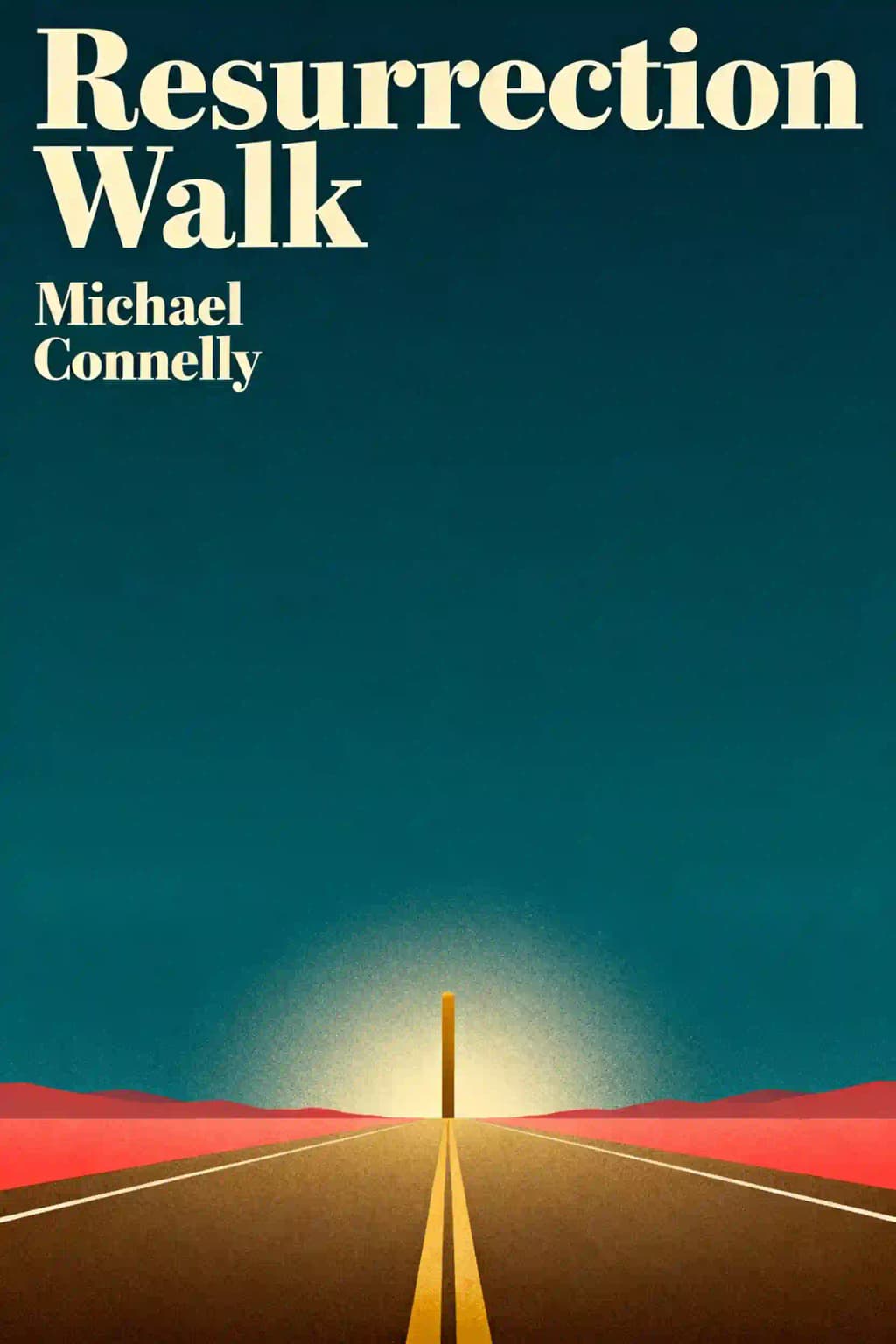
When Bosch joins half-brother Haller to free a wrongfully convicted man, legal brilliance meets detective instinct. Praised as their "richest pairing," this AI-era thriller exposes police corruption while masterfully alternating perspectives. What dark secrets will their resurrection walk uncover?
Michael Joseph Connelly is the bestselling author of Resurrection Walk and a master of crime fiction, particularly known for his LAPD Detective Harry Bosch and criminal defense attorney Mickey Haller series. Born July 21, 1956, in Philadelphia, Connelly's background as a crime reporter for the Los Angeles Times deeply informs his authentic portrayals of law enforcement and legal drama. Resurrection Walk, the seventh Lincoln Lawyer novel, expertly weaves together courtroom suspense with hard-boiled detective work, exploring themes of wrongful conviction, institutional fallibility, and the moral complexities of seeking justice in a flawed system.
Connelly has authored over 40 novels, with more than 80 million copies sold worldwide and translations in 45 languages.
His debut, The Black Echo, won the prestigious Edgar Award for Best First Novel in 1992. His work has been adapted into successful film and television series, including Bosch, Bosch: Legacy, and The Lincoln Lawyer starring Matthew McConaughey. He received the Grand Master title from the Mystery Writers of America in 2023, cementing his status as one of contemporary crime fiction's most influential voices.
Resurrection Walk is a legal thriller where defense attorney Mickey Haller teams up with his half-brother, retired LAPD detective Harry Bosch, to prove the innocence of Lucinda Sanz, a woman imprisoned for killing her ex-husband, a sheriff's deputy. The book combines courtroom drama with criminal investigation as the duo uncovers corruption within the Los Angeles County Sheriff's Department while fighting an uphill legal battle to overturn a wrongful conviction.
Michael Connelly is a bestselling crime fiction author who discovered his passion for writing through Raymond Chandler's novels and worked as a crime reporter before becoming a novelist. His writing style features detailed procedural descriptions of legal processes and police investigations, dual narrative perspectives, and masterful suspense building. Connelly is known as "the most consistently superior living crime fiction author" and has been writing the Harry Bosch and Lincoln Lawyer series for over three decades.
Resurrection Walk is perfect for fans of legal thrillers, courtroom dramas, and police procedurals who appreciate intricate plotting and authentic criminal justice system details. Readers who enjoy character-driven crime fiction featuring morally complex protagonists will find the Mickey Haller and Harry Bosch partnership compelling. This book also appeals to those interested in wrongful conviction cases, law enforcement corruption, and stories about underdogs fighting powerful institutions.
Resurrection Walk is widely considered one of Michael Connelly's best novels, earning overwhelmingly positive reviews and five-star ratings from critics and readers alike. The book delivers gripping courtroom scenes, surprising plot twists, and the engaging dynamic between two beloved characters working together for the first time in this capacity. Reviewers describe it as an "effortless read" with masterful pacing that keeps readers engaged until the final pages, making it a must-read for both longtime fans and newcomers.
After successfully freeing a wrongfully convicted man, Mickey Haller receives hundreds of letters from prisoners claiming innocence and enlists Harry Bosch to investigate them. Bosch identifies Lucinda Sanz, who has spent five years in prison for killing her sheriff's deputy ex-husband despite maintaining her innocence and pleading no contest to avoid life imprisonment. Haller and Bosch face an uphill battle against the legal system and dangerous opposition from those who want the case to remain closed.
Mickey Haller, known as the Lincoln Lawyer, is a defense attorney who takes long-shot cases and isn't ashamed of self-promotion through billboards and media, but never lets an innocent person suffer. Harry Bosch is his half-brother and a retired LAPD detective with forty years of homicide investigation experience who now works as Haller's investigator. This marks a significant shift for Bosch, who spent his career prosecuting criminals and now must see the legal system from the defense perspective.
Resurrection Walk examines systemic corruption within the Los Angeles County Sheriff's Department, including deputy cliques and rushed justice when law enforcement officers are killed. The book explores the flaws and limitations of the legal system, particularly the challenges of proving innocence and overturning wrongful convictions based on plea deals. Personal stakes in legal battles, the impact of wrongful convictions on families, and the moral complexities of criminal justice are central themes throughout the narrative.
Resurrection Walk is considered one of Michael Connelly's best works, uniquely bringing together three of his most beloved characters—Mickey Haller, Harry Bosch, and Renée Ballard—though Ballard's appearance is brief. Unlike pure Harry Bosch novels or Lincoln Lawyer books, this story balances both police procedural and legal thriller elements equally, giving fans of both series what they love. The book showcases Connelly's evolution as a writer while maintaining the authentic crime fiction and courtroom drama that made him famous.
The courtroom scenes in Resurrection Walk are described as dramatic, tense, and among the best legal thriller sequences Michael Connelly has written, rivaling anything in the genre. Mickey Haller delivers high-octane courtroom brilliance while facing Assistant Attorney General Hayden Morris, who seems to have something up his sleeve despite Haller's terrific witnesses. The combination of Haller's legal strategy, unexpected twists, and the high stakes of freeing an innocent woman creates edge-of-your-seat tension throughout the trial.
A resurrection walk refers to the moment when a wrongfully convicted person is freed from prison and walks out as a vindicated, innocent individual—essentially being resurrected from a living death. In Resurrection Walk, Mickey Haller experiences profound fulfillment from achieving this outcome, stating "I had resurrected this man from the dead. And with that came a fulfillment I had never known in the practice of law or in life". The term captures the transformative power of overturning wrongful convictions and restoring someone's freedom and reputation.
Resurrection Walk incorporates timely technological elements including artificial intelligence and geo-fencing as part of the investigative and legal strategies. These modern forensic tools play a role in both building and challenging the case against Lucinda Sanz, reflecting real-world advances in criminal justice technology. Michael Connelly's inclusion of these contemporary elements demonstrates his commitment to keeping his crime fiction relevant and authentic to current investigative practices while maintaining traditional detective work.
The Los Angeles County Sheriff's Department corruption is central to the plot, with the book delving into the history of deputy cliques and systemic issues that lead to wrongful convictions. When Lucinda Sanz's sheriff's deputy ex-husband is killed, the department rushes to bring quick justice for one of their own, overlooking evidence that doesn't add up. This institutional pressure to close the case and protect fellow officers creates the wrongful conviction that Haller and Bosch must fight against, while facing danger from those determined to keep the truth buried.
Siente el libro a través de la voz del autor
Convierte el conocimiento en ideas atractivas y llenas de ejemplos
Captura ideas clave en un instante para un aprendizaje rápido
Disfruta el libro de una manera divertida y atractiva
Justice isn't always served by the system designed to protect it.
No guilty clients, no manufactured evidence, and absolutely no compromising his integrity.
Isn't it chilling to consider how easily the machinery of justice can be turned against an innocent person?
Their collaboration shows how justice often requires both the letter and the spirit of the law.
Bosch's willingness to help, despite his deep-seated discomfort, reveals his ultimate allegiance to truth rather than institutional loyalty.
Desglosa las ideas clave de Resurrection Walk en puntos fáciles de entender para comprender cómo los equipos innovadores crean, colaboran y crecen.
Experimenta Resurrection Walk a través de narraciones vívidas que convierten las lecciones de innovación en momentos que recordarás y aplicarás.
Pregunta cualquier cosa, elige tu estilo de aprendizaje y co-crea ideas que realmente resuenen contigo.

Creado por exalumnos de la Universidad de Columbia en San Francisco
"Instead of endless scrolling, I just hit play on BeFreed. It saves me so much time."
"I never knew where to start with nonfiction—BeFreed’s book lists turned into podcasts gave me a clear path."
"Perfect balance between learning and entertainment. Finished ‘Thinking, Fast and Slow’ on my commute this week."
"Crazy how much I learned while walking the dog. BeFreed = small habits → big gains."
"Reading used to feel like a chore. Now it’s just part of my lifestyle."
"Feels effortless compared to reading. I’ve finished 6 books this month already."
"BeFreed turned my guilty doomscrolling into something that feels productive and inspiring."
"BeFreed turned my commute into learning time. 20-min podcasts are perfect for finishing books I never had time for."
"BeFreed replaced my podcast queue. Imagine Spotify for books — that’s it. 🙌"
"It is great for me to learn something from the book without reading it."
"The themed book list podcasts help me connect ideas across authors—like a guided audio journey."
"Makes me feel smarter every time before going to work"
Creado por exalumnos de la Universidad de Columbia en San Francisco

Obtén el resumen de Resurrection Walk como PDF o EPUB gratis. Imprímelo o léelo sin conexión en cualquier momento.
In the shadowy corridors of Los Angeles justice, a desperate letter arrives from behind prison walls. Lucinda Sanz, five years into an eleven-year sentence for killing her ex-husband Roberto, a sheriff's deputy, maintains her innocence with unwavering conviction. The letter lands in the hands of Mickey Haller, the famed "Lincoln Lawyer," and his half-brother Harry Bosch, a retired detective now reluctantly working defense cases. What begins as a routine wrongful conviction claim quickly spirals into something far more sinister-a web of corruption reaching into the highest levels of law enforcement. For Bosch, this case crosses a line he never thought he'd approach: helping someone accused of killing a cop. But as inconsistencies pile up, both men find themselves drawn into a dangerous pursuit of truth that will test their skills, their relationship, and their very lives.
Bosch discovers Roberto Sanz wasn't an ordinary deputy. His autopsy reveals a tattoo reading "Que Viene el Cuco" ("The Bogeyman's Coming"), linking him to Los Cucos, one of several sheriff's gangs within the department. These cliques, including the Executioners and Banditos, evolved from jail units to substations, engaging in activities from betting on inmate fights to facilitating gang violence. Cell tower data shows Roberto met with an FBI agent on his murder day, suggesting federal cooperation. More incriminating, Sergeant Stephanie Sanger, Roberto's colleague, had been following him that day. Her phone went offline for exactly 84 minutes - precisely during the murder window. The corruption reaches beyond the department. Frank Silver, Lucinda's first attorney, admits anonymous callers claiming to be deputies threatened him into convincing Lucinda to accept a plea deal. What chance does one wrongfully convicted woman have against such entrenched power? When protective institutions become predators, where can justice be found?
The prosecution's case against Lucinda hinged on gunshot residue found on her hands. Yet Lucinda remembers the GSR test being conducted by a female deputy wearing a badge on a chain-later identified as Stephanie Sanger-contradicting official records. The breakthrough comes when Bosch discovers half of the original GSR pad still exists in cold storage. DNA testing reveals a bombshell: the pad contains gunshot residue but no trace of Lucinda's DNA, suggesting it was never actually swiped over her body. Instead, it contains DNA from two people-one unidentified and one from a former lab technician. When Bosch collects Sanger's discarded cigarette butt, DNA analysis confirms the unidentified DNA on the GSR pad belongs to her-proving a frame-up. Meanwhile, forensic expert Dr. Arslanian creates a digital re-creation showing the shots were fired from a height between 5'2" and 5'6"-making it physically impossible for the 5'2" Lucinda to have fired accurately. How many other cases have been decided based on flawed or fabricated evidence? The line between justice and injustice often comes down to who controls the narrative-and the evidence.
Beyond legal battles lies the devastating human toll of wrongful conviction. Lucinda has lost five irreplaceable years with her thirteen-year-old son Eric, now homeschooled due to peers' cruelty about his mother's imprisonment. Her mother Muriel raises him in a gang-controlled neighborhood, maintaining his connection to Lucinda through family photos throughout their home. For Lucinda, prison means lost time and opportunity. When signing Haller's engagement letter despite warnings, her desperation is clear: her son needs his mother. Her unwavering assertion of innocence reflects a necessary resilience - she must keep fighting. The case transforms the legal team. Meeting Lucinda converts her from case to person for Haller, whose belief in her innocence feels hollow against court realities. Bosch's juvenile detention experience gives him empathy for the wrongfully imprisoned. What drives them is the "resurrection walk" - that moment when an innocent person walks free after years imprisoned. This moment, not money or fame, makes their sacrifice worthwhile.
The courtroom battle forms the dramatic heart of Lucinda's fight for freedom. Haller faces formidable opposition from Assistant AG Morris and "Maggie McFierce" McPherson-Haller's ex-wife brought in to counter their cell tower evidence. Judge Coelho strikes both Dr. Arslanian's AI-powered digital re-creation and the DNA evidence from the GSR pad as inadmissible. When cornered, Haller deliberately provokes the judge into holding him in contempt, buying time for Bosch to collect DNA from Sanger's discarded cigarette butt. The drama peaks when Haller recalls Sergeant Sanger about her DNA on the GSR stub. Before questioning concludes, Sanger is murdered outside the courthouse by a cartel hitman-eliminating a liability. Despite this shocking development, Judge Coelho ultimately rules in Lucinda's favor, granting habeas relief, vacating her conviction, and apologizing for her five lost years. The courtroom erupts as Lucinda reunites with her family. Justice often hinges on procedural technicalities rather than truth. Despite overwhelming evidence of innocence, freedom depends on legal maneuvering where rules sometimes matter more than reality.
Both Bosch and Haller pay significant prices for pursuing justice. Bosch battles chronic myeloid leukemia while working the case - an invisible enemy mirroring the corruption they fight. His illness becomes ammunition when McPherson questions his competence in court, citing a police report suggesting treatment-related confusion. Haller faces danger when his house is vandalized with emptied drawers, slashed furniture, and maple syrup poured over his laptop. His greatest sacrifice comes when he deliberately provokes Judge Coelho into holding him in contempt, spending a night in jail to secure time for crucial DNA evidence. During detention, as an inmate howls nearby, Haller reflects on his career and realizes headline-chasing can no longer be his goal. The case transforms them both. Bosch finds renewed purpose despite illness, proving his worth "for the defense." Haller experiences his own "resurrection walk" after release, sensing a need for change. The novel suggests seeking truth exacts a price - but one worth paying. As Haller explains at his mentor's memorial, freeing an innocent person makes all sacrifices worthwhile.
The resolution brings mixed results. Lucinda walks free, but Roberto's killer escapes formal justice, protected by powerful interests. Corruption within the sheriff's department persists, and Lucinda has lost five irreplaceable years with her son. Yet significant change has occurred. Judge Coelho's ruling acknowledges the system's failure, and her apology to Lucinda represents a rare institutional admission of wrongdoing. News coverage linking Sanger to a sheriff's clique with cartel ties suggests broader accountability may follow. For Haller and Bosch, the case marks a turning point. Haller shifts toward pursuing meaningful justice rather than mere legal victories. Bosch reaffirms his commitment to truth regardless of who employs him. Their impact lies not in professional titles but in lives changed through their pursuit of justice. The "resurrection walk" becomes a metaphor for our justice system - imperfect, sometimes corrupt, but capable of redemption when dedicated individuals refuse to accept convenient lies. Through persistence and courage, truth can prevail against entrenched corruption. What matters most is standing for truth when it counts. "Resurrection Walk" reminds us that the fight for justice defines who we are, regardless of outcome.