Capítulo 1
The Entrepreneurial Blueprint: Mastering the Ready, Fire, Aim Approach
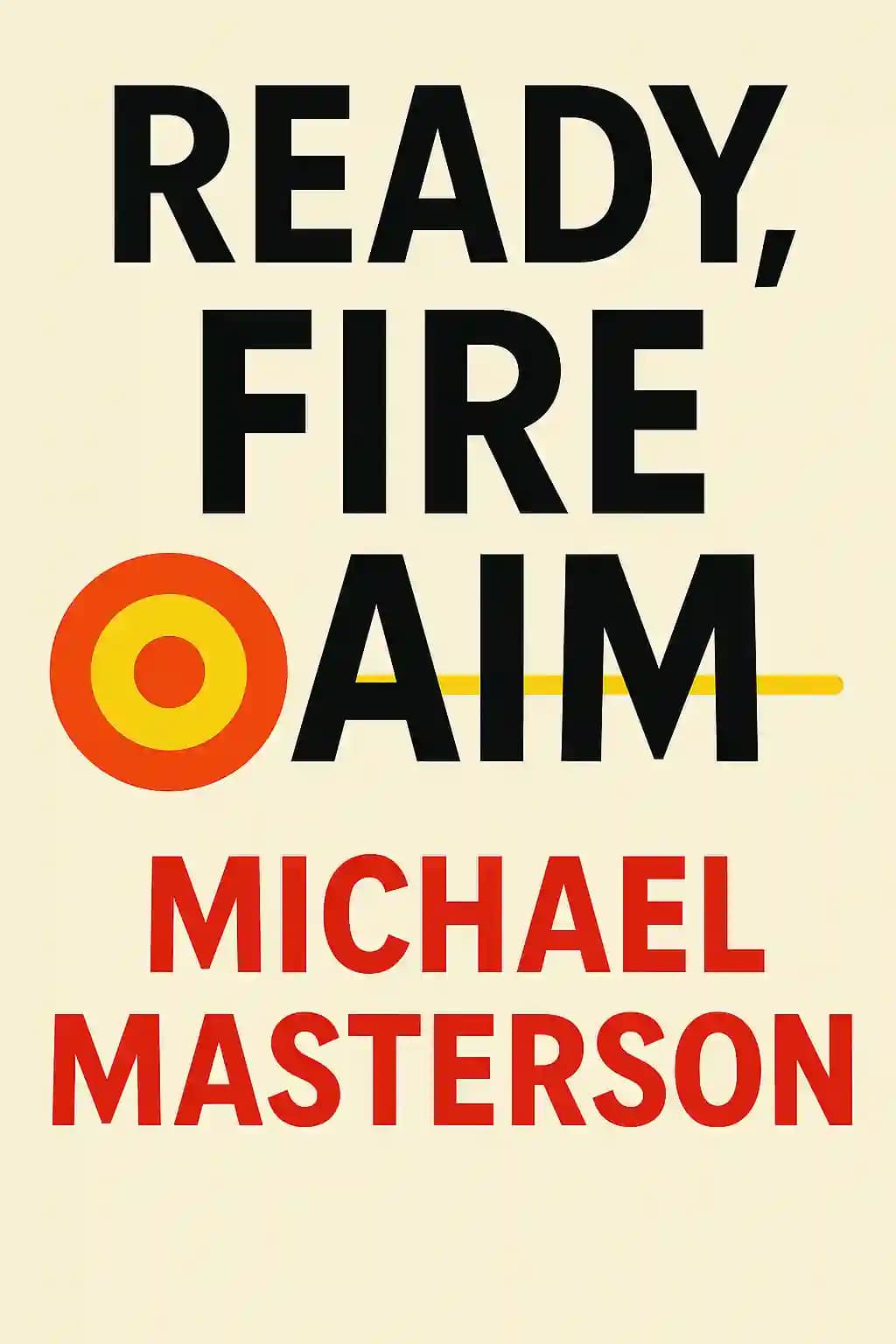
Michael Masterson's journey from Peace Corps volunteer to serial entrepreneur defies conventional wisdom. Without formal business education, he's launched dozens of successful enterprises across industries from information publishing to real estate development. His unconventional approach has helped businesses like Dr. Al Sears' Wellness Research & Consulting grow from zero to $4 million in under two years, and transformed EarlytoRise.com from an informal email into a $20 million enterprise. What's his secret? A counterintuitive methodology called "Ready, Fire, Aim" that prioritizes action over perfection, selling over planning, and customer feedback over theoretical models. This philosophy has made Masterson's book a favorite among entrepreneurs like Tim Ferriss and Seth Godin, who cite it as essential reading for anyone looking to build a business without getting trapped in analysis paralysis. The book has quietly become a cult classic in Silicon Valley, where its principles align perfectly with the "minimum viable product" approach that has launched billion-dollar startups.
Capítulo 2
The Four Stages of Business Growth: A Revolutionary Framework
Every business progresses through four distinct developmental stages, each with unique challenges and opportunities. Like human development, businesses move from infancy (zero to $1 million in revenue) to childhood ($1-10 million), adolescence ($10-50 million), and finally maturity ($50-300+ million). Understanding which stage your business occupies is crucial because the skills and strategies that brought success in earlier stages often become limitations in later ones.
In Stage One (infancy), the primary challenge is making the first profitable sale. Companies that succeed typically take one to five years to reach $1 million, but the critical milestone is figuring out how to sell profitably. Once this happens, reaching $1 million usually takes just one year. The entrepreneur must focus almost exclusively on selling during this phase, with 80% of time and resources dedicated to marketing the lead product.
Stage Two (childhood) is characterized by rapid growth through product development. Companies typically take about five years to grow from $1 million to $10 million, with speed and innovation being the determining factors. The entrepreneur must shift focus from selling one product to creating and marketing many products quickly. This requires developing new skills in innovation and team leadership.
Stage Three (adolescence) requires establishing systems to manage the chaos created by rapid growth. As employee count multiplies, communication breaks down and customer service suffers despite booming sales. The entrepreneur must transform from a sales-oriented leader to a professional manager, implementing corporate-style structures without stifling the entrepreneurial spirit.
Stage Four (maturity) demands reigniting entrepreneurial energy when sales plateau. At this point, the founder often becomes the limitation to growth, as the organizational structure that enabled expansion to 350+ employees now inhibits further innovation. The solution is bringing in entrepreneurial talent to create enterprises within the existing business.
This framework provides a roadmap for entrepreneurial growth that transcends industry specifics, allowing business owners to anticipate challenges before they arise and develop the skills needed for each transition.
Capítulo 3
The Supremacy of Selling: Why Marketing Must Come First
The biggest mistake most entrepreneurs make is neglecting selling in favor of seemingly important but ultimately secondary activities. They spend months perfecting their product, designing logos, setting up offices, and filing legal paperwork-all before making a single sale. This approach is both arrogant (assuming your product idea is good without customer validation) and foolish (ignoring that business is fundamentally about providing value to customers).
Masterson argues that for Stage One businesses, selling should consume 80% of your time and resources. The remaining 20% should focus on mentoring, teaching your team, and setting business targets-but never at the expense of sales activities. This prioritization feels uncomfortable for many entrepreneurs, particularly those from academic or professional backgrounds who harbor biases against selling.
Consider two contrasting startup approaches: A New York realtor spent a year and $10,000 building an impressive website for brokering surplus office space, believing customers would naturally appear. When they didn't, he quickly exhausted his funds on desperate marketing attempts. Meanwhile, a car repairman with just $1,000 invested $350 in two crude prototypes of neon lights for car undercarriages and spent his remaining $650 on selling. By collecting deposits before building systems and reinvesting profits, his company grew to $23 million in annual revenue.
The proper sequence for launching a business should be: (1) Get the product ready enough to sell, without perfecting it; (2) Sell it; (3) If it sells, improve it. This approach provides immediate cash flow while testing whether your unique selling proposition actually works in the marketplace.
Alex Tew's MillionDollarHomePage.com perfectly illustrates this principle. Needing money for college, Alex conceived the idea of selling pixels of advertising space at $1 each. Rather than spending months perfecting his website, he launched within 48 hours on a $100 budget and immediately focused on selling. Within five months, he'd reached his seemingly impossible goal of $1 million in sales. Had he given himself "a reasonable period" to build a perfect website before selling, he likely would have failed.
Capítulo 4
The Optimum Selling Strategy: Four Secrets to Profitable Customer Acquisition
For every business at any given time, there exists one best way to acquire new customers-the Optimum Selling Strategy (OSS). For Stage One businesses, this strategy should focus on generating positive cash flow. Discovering your OSS puts your business on the right track, making everything afterward easier.
To determine your optimum selling strategy, you need to answer four critical questions:
1. Where are you going to find your customers? The first step is locating your audience, whether they're walking down Main Street, reading specific magazines, or surfing particular websites. For new entrepreneurs facing multiple options, the author offers surprisingly practical advice: do what everyone else in your industry is doing. While originality matters later, initially imitating the industry norm for customer acquisition is smartest.
2. What product will you sell them first? While many entrepreneurs start with a single product idea, this approach carries significant risk. Prudent entrepreneurs remain flexible about their product details, maintaining several alternative ideas if their first concept underperforms. Study the top products in your market, list their features, benefits, and shortcomings. Every fault represents an opportunity to create an improved version.
3. How much will you charge for it? The price you charge has a major impact on sales-third only to media selection and product appeal. Start by researching competitor pricing. If competing widgets sell for $19.95, that's likely the market's sweet spot. Discounting is a powerful way to grow a small business, particularly when marketing an upwardly trending product at substantially less than its perceived value. However, it should be used strategically rather than universally, working best as an acquisition strategy for front-end products.
4. How will you convince them to buy it? The conceptual foundation of your advertising campaign-including all words and images used to sell your product-is crucial. Finding the optimal approach requires testing multiple media channels, several price points, and at least two completely different copy platforms. The impact of effective marketing copy is substantial-a strong concept can double response rates and profitability compared to mediocre approaches.
The author illustrates this through Early to Rise's evolution, showing how they discovered their customer sources (which pay-per-click lists worked), what products sold best ($50 reports performed optimally), pricing sweet spots (customers who initially spent $50 were worth about $50/year in additional purchases), and what marketing approaches resonated with their audience.
Capítulo 5
Mastering the Copy Side of Selling: Four Key Marketing Concepts
To create great copy and effectively direct copywriters, entrepreneurs must master four essential marketing concepts:
1. The difference between wants and needs: Despite common confusion, true needs are limited to essentials like air, water, food, shelter, and basic tools. Everything else we purchase stems from wants. Even when buying necessities, our choices are driven by wants-specific brands, styles, or features. This distinction is crucial for marketers because it means you must create emotional desire rather than just rational arguments.
2. The difference between features and benefits: Features are objective qualities of a product (what it is), while benefits explain why these matter to the customer (what it does for them). The most powerful marketing delves deeper into emotional benefits. For example, an easily-sharpened pencil might save a busy executive precious time, addressing their deeper frustration about falling behind at work.
3. How to establish a unique selling proposition (USP): Though most successful advertisements highlight a single dominant benefit, over 90% of new products launch without any distinguishing characteristics. To succeed in an established market, you must either make your product genuinely better than competitors or make it seem better by emphasizing a unique quality. Every effective USP needs three characteristics: the appearance of uniqueness, usefulness to customers, and conceptual simplicity.
4. How to sell the USP: Once you've established your product's USP, you need an effective sales strategy with four components: The Big Idea, The Big Promise, specific claims, and proof of those claims. The Big Idea drives your marketing promotion but differs from the USP itself. For instance, if your USP is "the only inspirational website based on Confucius," your Big Idea might emerge from researching Confucian wisdom that excites you personally.
The most critical consideration after creating your USP is preventing it from becoming stale. You must constantly update it as competitors will inevitably imitate your product's most appealing features. Without ongoing improvement, any product's quality and distinctiveness will naturally degrade over time.
Capítulo 6
Innovation: The Key to Second-Stage Growth
The fundamental challenge in Stage Two is different from Stage One. While Stage One's problem was ignorance about selling your lead product, Stage Two requires aggressive product development. As Masterson explains: "The primary factor in Stage Two growth is the development and marketing of new products. The faster you can develop and sell those new products, the faster your business will grow."
When your initial product reaches market saturation, the only significant way to grow is through new product development. You can't stimulate substantial growth by improving accounting, database management, or customer service. The real opportunity lies in selling more new products to your existing customer base, allowing you to double your sales repeatedly until you reach $16 million and beyond.
Malcolm Gladwell's "The Tipping Point" reveals that trendsetting products aren't revolutionary breakthroughs but variations on growing themes. Most significant social trends represent minor variations on ideas already in the collective consciousness rather than stark departures from the past. Consumers don't want completely new products; they prefer clever adaptations of familiar ones. The ideal ratio is 80% familiar with 20% new elements.
The winning Stage Two formula requires creating a small number of tipping-point products for your front end while developing many ordinary products for your back end. Creating tipping-point products demands hard work, surrounding yourself with smart, plugged-in people, and engaging them productively. Even then, you'll likely succeed only one time out of ten. By always striving for innovation, you'll naturally produce what you need: nine ordinary back-end products and one tipping-point front-end product.
The first product to market rarely becomes the winner. Best sellers typically emerge in the second wave, often as knock-offs from Fortune 500 companies. Being number one should never be your objective-it's wasteful and foolish. Smart businesses aim to catch trends when they're rising, knowing that companies who succeed at this two out of three times will grow rapidly.
Capítulo 7
Speed: Accelerating Innovation Through Ready, Fire, Aim
To achieve significant second-stage growth, entrepreneurs must combine innovation with speed. The velocity of innovation-how quickly you can brainstorm, develop, test, and produce new products-directly determines your growth potential. While it may have taken years to launch your first product, you must now move at least twice as fast as you're comfortable with.
Second-stage growth follows a simple formula: 80% of 2G = IV, where G equals growth, I equals innovation, and V equals velocity. In other words, your company's growth is directly related to generating and testing new product ideas quickly. As the leader, you should dedicate most of your time to pushing new ideas to fruition through follow-up meetings, memos, calls, and reports.
The Ready, Fire, Aim methodology focuses resources on getting ideas ready for testing quickly, postponing perfectionist adjustments until after an idea proves viable. This approach increases testing speed while decreasing costs per innovation, allowing more good ideas to be implemented. The concept isn't about recklessness but about moving quickly from idea to action without getting bogged down in perfection.
A publishing CEO transformed her newsletter division by cutting product development time from two years to one year. This simple change doubled the number of products they could test, dramatically increasing both sales and profits. Their streamlined approach includes creating a basic business plan, rough sketches, hiring writers on short contracts, and testing with 100 free subscribers who provide feedback.
Test-launching products with existing customers offers multiple advantages: it validates products with your best market, saves money by not requiring polished versions, provides valuable feedback before official launch, generates testimonials for marketing, and creates anticipation among customers.
The principle of "accelerated failure" acknowledges that many good ideas will be rejected by customers, so the company embraces failure as part of the process. By failing faster, they succeed faster. The company publicizes failures, documents them alongside successes, and maintains an attitude that it's acceptable to fail as long as you learn from mistakes.
Capítulo 8
From Entrepreneur to Corporate Leader: The Stage Three Transformation
When your business approaches the $10 million mark, you'll likely feel it's getting beyond your control. The entrepreneurial skills that built your company no longer serve you as problems mount faster than solutions. Your key people are overwhelmed, working 60-hour weeks just to keep up with daily demands. Communication gaps widen between departments, customer complaints increase by 30-40%, and employee turnover rises dramatically. Despite your proven innovation capabilities, more product launches are failing without clear explanations why, and market share begins to plateau or decline in key segments.
This signals the need for your second major business transformation. The rapid growth from Stage Two's innovation-driven approach has created structural strains that require more organization and control. Where informal processes and direct communication once worked, you now need systematic approaches and clear reporting structures. It's time to introduce corporate-style management-something that may feel uncomfortable to your entrepreneurial instincts, like trading your sports car for a minivan.
To navigate this transition successfully, you need to implement stronger controls, better accounting procedures, rigid customer service protocols, and more efficient operations. This requires retraining key people who've been with you since the start and possibly hiring outside executives with corporate experience. Specific changes might include implementing ERP systems, establishing formal quality control measures, creating detailed financial reporting processes, and developing standard operating procedures for every key business function.
The recommended organizational structure divides the business into two main branches: operational functions under a COO and marketing/product development organized by product lines as separate profit centers. Each profit center should have its own P&L responsibility and dedicated resources. This structure offers key advantages: no one person has more than six direct reports (preventing management overload), you can devote 80% of your time to marketing and product development (your core strengths), operations are run by professionals with specific expertise, and future growth won't be impeded because profit center managers report directly to you, maintaining quick decision-making capabilities.
Corporate executives excel at solving problems through systematic analysis but often struggle with creating growth through innovation. Give them latitude to do their jobs while ensuring they understand your role is to keep them busy by creating new challenges and opportunities. Don't let them dictate policy that might stifle innovation, but don't replace them with yes-people either - you need their objectivity and process-oriented mindset.
Accept your fundamental differences as complementary strengths: You prefer selling, innovation, and speed; they value planning and preparation. You like cocktail-napkin estimates and quick decisions; they want detailed budgets and thorough analysis. You believe in accelerating failure to learn quickly; they aim to avoid failure through careful planning. You cherish freedom and flexibility; they seek control and predictability. Despite these seeming contradictions, your business can't continue growing without their complementary skills - think of it as adding a reliable navigation system to your high-performance vehicle.
Capítulo 9
Building a Stellar Team: Finding and Developing Superstars
Finding exceptional employees is critical to business success. While every business leader complains about the shortage of good people, few devote sufficient time to finding them. The standard hiring process-placing ads, sorting resumes, conducting interviews-typically brings in mediocre candidates because it attracts primarily active job seekers, who represent only 20% of potential talent. Finding extraordinary people requires extraordinary measures and a systematic approach.
As a Stage Three entrepreneur, overseeing the hiring of exceptional people should be your second most important job (after product development and marketing). A single great employee can be worth $10-50 million to your business through their innovations, leadership, and ability to attract other talent. Conversely, bad employees can cost millions in lost productivity, damaged client relationships, and decreased team morale, while making your job exponentially more difficult. Research shows that top performers are typically 4-8 times more productive than average employees.
Treat recruitment like a direct-response advertising campaign: identify your target audience (including passive candidates), determine what benefits you can offer them (beyond just salary), and communicate those benefits convincingly. The conventional job ad is brief, focuses on what the business needs (experience requirements), and asks for a resume. The improved approach is longer, focuses on benefits to the candidate ("dream job," "unlimited potential," "work with industry leaders"), downplays experience requirements in favor of character traits like initiative and learning ability, and requests a personal letter instead of a resume. This approach typically generates fewer but higher-quality applications.
Beyond formal recruitment, regularly attend industry events, trade shows, and professional conferences to network and identify potential talent. Build relationships before you need to hire. Since most stars and superstars are already happily employed elsewhere, you must create your own by hiring "very good" and "great" people, then providing them with proper training and mentoring. Look for candidates who show potential in critical areas: learning agility, emotional intelligence, and drive for excellence.
One major advantage of hiring very good and great people is that traditional corporate training and motivation programs become largely unnecessary. These employees train themselves when given proper resources, arrive already motivated, and actively seek mentoring. They absorb knowledge eagerly and repay mentorship with loyalty. They also tend to attract other high performers, creating a virtuous cycle of talent acquisition.
Masterson debunks common management myths: employees don't need detailed job descriptions (which limit great performers and stifle creativity), money isn't the primary motivator (growth opportunities, recognition, and autonomy matter more), and making employees owners rarely works (most don't want ownership responsibility or understand its implications). The key to employee happiness is providing meaningful work with opportunities for growth, clear paths for advancement, and regular recognition of achievements. High performers particularly value mentorship from leaders, exposure to new challenges, and the ability to make meaningful impact in their roles.
To retain top talent, create an environment where exceptional performance is both expected and rewarded. Implement regular feedback sessions, provide stretch assignments, and ensure your best people are consistently challenged and growing. Remember that your top performers are always being recruited by others, so maintaining strong relationships and understanding their career aspirations is crucial for retention.
Capítulo 10
The Final Transformation: Becoming a Wealth Builder
Reaching $50 million in revenue puts you in an elite category-statistically in the top one-one-hundredth of the top one-one-hundredth of the world's population. At Stage Four, your business may continue growing rapidly to $100-400 million before natural forces slow it down. You've transformed from a very big small business into a small big business, shifting from Inc. magazine features to Forbes and Fortune coverage.
The entrepreneur's role evolves through four distinct phases. In Role 1 (Employee), you did everything yourself as the chief cook and bottle washer-necessary at first but problematic if continued too long. In Role 2 (Manager), you created structures and systems, which should have been largely delegated during Stage Three. Role 3 (Business Builder) involves articulating core values and vision-initially done informally but requiring more formal communication as the company grows. Now in Role 4 (Wealth Builder), you must step back and view your company as an investor would, assessing its current and future worth objectively rather than emotionally.
As a Stage Four business owner, you're in the catbird seat with a valuable business generating more income than needed and competent people running operations. While you must remain the company's visionary (taking only an hour or two weekly), you shouldn't do any employee work unless it's something you love-and even then, keep it outside production flow. Avoid management work entirely, delegate business-building to occasional meetings with profit center managers, and limit wealth-building work to annual assessments.
Being an adviser to your own business becomes deeply rewarding when you break the company into separate profit centers and focus on transferring successful strategies between them. Your deep experience lets you discover operational secrets that even division leaders might miss. However, you must never expect executives to blindly follow your advice-their responsibility is to listen and make their own decisions.
The author advises against taking your company public just for a payday-as a Stage Four business owner, you're already making more money than you need. The only valid reason to go public is to create a bank account for investing in company growth. But beware: reporting requirements and regulations make running a public company far less enjoyable than a private one. Similarly, selling your business privately is rarely the best option. Why sell when you could step back as its adviser and investor? Owning your own business is-and always will be-the best job in the world.