Capítulo 1
The Courtroom Drama That Changed Legal Thrillers Forever
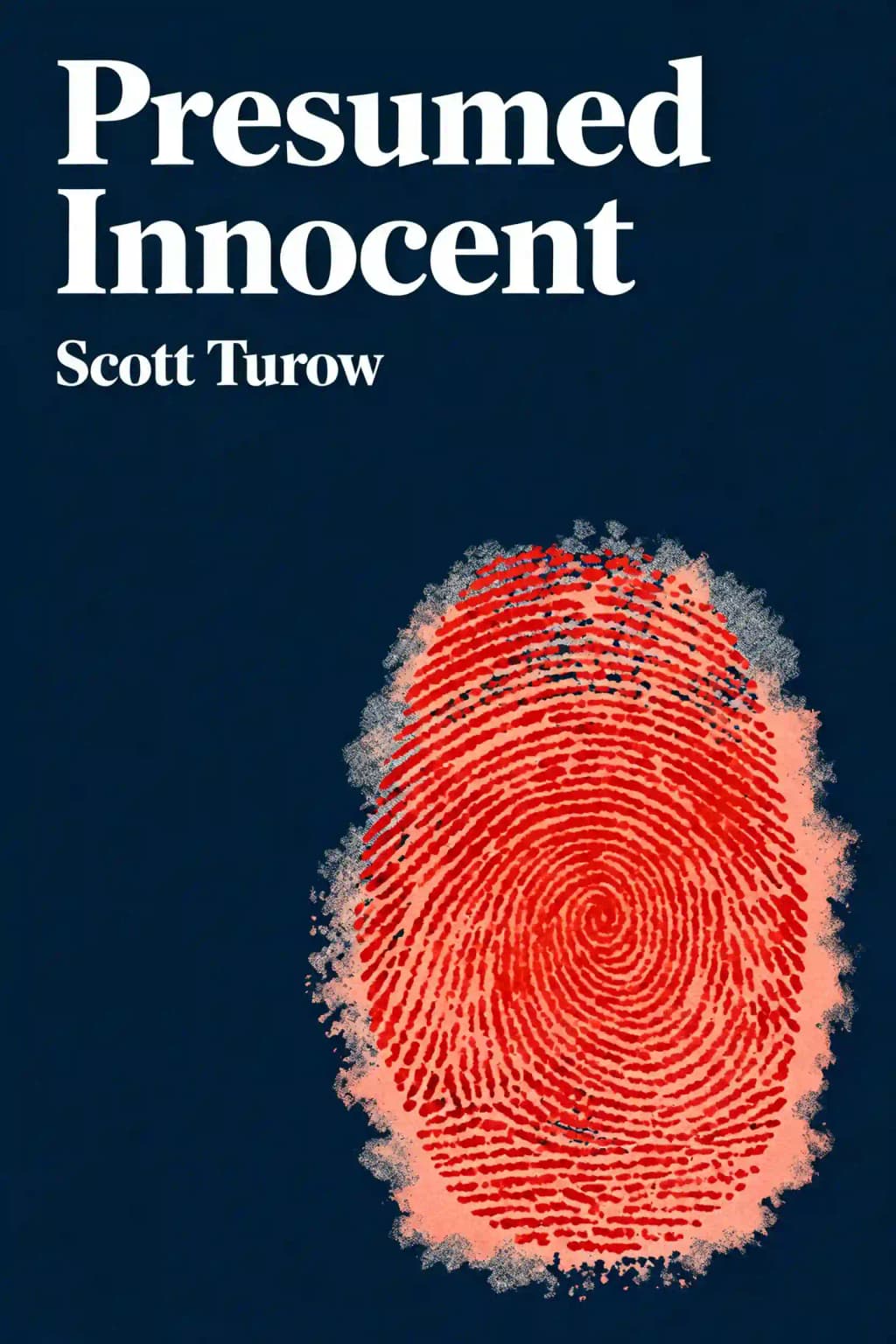
Scott Turow's "Presumed Innocent" revolutionized the legal thriller genre when it debuted in 1987, selling over 6 million copies and spending 45 weeks on the New York Times bestseller list. The novel's gripping courtroom scenes and moral complexity influenced countless legal thrillers that followed, including John Grisham's entire career. Harrison Ford's portrayal of protagonist Rusty Sabich in the 1990 film adaptation cemented the book's cultural significance. What makes this story so compelling is its exploration of the justice system from the perspective of someone who understands it intimately - a prosecutor who suddenly finds himself on the wrong side of the courtroom. Through Sabich's eyes, we experience the terrifying vulnerability of being presumed guilty in a system designed to convict.
Capítulo 2
The Prosecutor Becomes the Accused
"I am the prosecutor. I represent the state." These words open Rusty Sabich's narrative as he reflects on his twelve years serving in the Kindle County Prosecutor's Office. A dedicated public servant who views himself as "a bureaucrat of good and evil," Rusty takes pride in his role within the justice system. Under the leadership of Raymond Horgan, the current Prosecuting Attorney running for reelection, Rusty has risen to become chief deputy - second in command of the entire office.
When Carolyn Polhemus, a fellow prosecutor specializing in rape cases, is found brutally murdered - bound with ropes in a sexually suggestive position with evidence of assault - Raymond assigns Rusty to lead the investigation. What Raymond doesn't know is that Rusty and Carolyn had a brief but intense affair months earlier that ended with Rusty's devastating rejection. Despite this obvious conflict of interest, Rusty accepts the assignment, hiding his past relationship with the victim.
As Rusty and detective Lipranzer investigate, they discover troubling evidence: Carolyn was killed by a blow to the head, not strangulation as the rope marks suggested; the killer likely knew her since there was no sign of forced entry; and forensic evidence indicates the murderer was a secretor with type A blood. When Rusty learns that Carolyn had a son he never knew about - a revelation that fills him with unexpected grief - we glimpse the complex emotions he still harbors for the victim.
Meanwhile, Raymond's political opponent, Nico "Delay" Della Guardia, is gaining ground in the election. When Raymond loses and Della Guardia takes office, the investigation takes a shocking turn. Tommy Molto, a former deputy who defected to Della Guardia's campaign, reveals they've been conducting their own investigation - one that points directly at Rusty. They've found his fingerprints on a glass in Carolyn's apartment and phone records showing he called her the night of her murder. When confronted, an enraged Rusty sarcastically responds to Molto's accusation with "Yeah, you're right" - words that will haunt him as he's formally indicted for first-degree murder.
Capítulo 3
A Love Affair That Destroyed Everything
Rusty's obsession with Carolyn Polhemus began while they worked together on the McGaffen case - a disturbing child abuse prosecution where a mother had placed her five-year-old son's head in a vise. Despite his stable marriage to Barbara, an introverted mathematician, and their young son Nathaniel, Rusty became consumed by Carolyn's magnetic presence. She represented everything his life lacked - excitement, passion, and unpredictability.
Carolyn herself was a complex figure - deliberately, almost ironically sexy with "torrents of blonde hair, a full bosom, and long red nails." Initially dismissed by many as just "that good-looking blonde with big tits," she strategically built her reputation by taking on difficult rape cases that others avoided. Raymond put her in the limelight, sending her to represent women's issues on television programs. Defense lawyers complained she had something to prove, but police officers admired her tenacity.
What truly captivated Rusty was Carolyn's unexpected tenderness with Wendell McGaffen, the traumatized five-year-old victim. Watching her gentle questioning of the boy, drawing out his painful story in "snatches and mumbles" while he clutched his doll, Rusty saw a dimension of Carolyn that transformed his attraction into something deeper. "Her attention to this hurting child gave my feelings for her a melting, yearning quality beyond mere attraction," he confesses.
Their affair began after securing a guilty verdict in the McGaffen case. The seduction followed "movie-like conventions" - smooth, wry, and composed despite the electric tension between them. At her fashionable loft apartment filled with teak furniture and crystal, Rusty surrendered completely to his obsession. "That time, I knew I was lost," he admits, describing his affair as an addiction that manifested in constant distraction, sweating, and an elevated pulse whenever he thought of her.
But the relationship was fundamentally unbalanced. While Rusty approached Carolyn "prayerfully," she gradually took command of their encounters, preferring rough sex and speaking crudely in ways that shocked him. She deliberately mentioned his wife during intimate moments, knowing he wouldn't recoil at Barbara's name - evidence of how far he had already fallen. Most painfully, Carolyn ended the affair suddenly and completely, leaving Rusty devastated and consumed by longing "just to be in the same room with her." When he finally confronted her at a bar about his feelings, her cold response - "Grow up" - crushed him. In that moment, he admits feeling "the most desperate wish that she were dead."
Capítulo 4
The Tangled Web of Corruption
As Rusty prepares for trial with defense attorney Sandy Stern, a mysterious "B file" emerges at the center of a web of corruption. This sparse collection of documents, which Raymond had given to Carolyn before her death, contains an anonymous letter about a deputy prosecutor taking bribes nine years earlier. The letter details how someone called "Noel" paid $1,500 to have charges dismissed at the North Branch courthouse.
Rusty's investigation leads him to the 32nd District police station, where he learns Carolyn had secretly visited months before her death, searching through booking sheets from nine summers ago. She was looking specifically for someone named "Noel" arrested for public indecency in the Public Forest - a common location for arrests of gay men. When Rusty examines these records, he discovers they've been deliberately shuffled, with one file conspicuously missing.
The corruption trail leads to Lionel Kenneally, a racist but street-smart cop who reveals that "things were loose" in the North Branch district before a scandal broke. Though Kenneally insists Tommy Molto would never take bribes - "He's from the fuckin seminary" - he hints that Carolyn "was everybody's pal" who would "smooth things out" between people. Most significantly, Kenneally reveals that Carolyn had been sleeping with "the nigger" - Judge Larren Lyttle, the very judge presiding over Rusty's murder trial.
The final piece falls into place when Lipranzer locates "Leon" - not the well-off white man Rusty had imagined, but a Night Saint gang lieutenant living in the projects who keeps his homosexual activities secret from his fellow gang members. Leon reveals he did indeed pay a $1,500 bribe years ago, but it wasn't the prosecutor who took the money - it was the judge. Carolyn, then a probation officer, had orchestrated the entire scheme, instructing Leon where to leave the money and not to turn around when the judge spoke from behind him.
This revelation explains why Judge Lyttle has been so favorable to the defense throughout Rusty's trial. Sandy Stern had deliberately mentioned the B file repeatedly, making it appear he was pursuing Molto while actually pressuring Lyttle, who feared exposure of his corrupt past. The strategy culminates in Lyttle granting a directed verdict of acquittal, saving his own reputation while freeing Rusty.
Capítulo 5
The Trial That Exposed Everything
Rusty's murder trial becomes a masterclass in legal strategy and courtroom drama. Judge Larren Lyttle, a tall, imposing man with extraordinary intelligence and a background as a defense attorney, presides over the proceedings. Known for ruling against prosecutors, Lyttle surprisingly offers an immediate trial date just three weeks away - August 18th. This works in Rusty's favor, as the prosecution seems unprepared.
The prosecution's case relies heavily on physical evidence: Rusty's fingerprints on a glass in Carolyn's apartment, phone records showing he called her the night of her murder, and carpet fibers matching those from his home. Their theory centers on jealousy - claiming Rusty murdered Carolyn in a rage after discovering her relationship with Raymond Horgan. However, the prosecution's case begins to unravel when they admit they cannot find the glass with Rusty's fingerprints, a critical piece of evidence.
Sandy Stern's defense strategy is brilliant and methodical. Rather than denying Rusty knew Carolyn, he establishes legitimate work reasons for their interactions, including their collaboration on the McGaffen child abuse case. He systematically undermines prosecution witnesses: trapping Eugenia Martinez in contradictions about overhearing Rusty call Carolyn "my angel"; exposing Mrs. Krapotnik's unreliability when she fails to identify Rusty in court and instead points to the judge and Tommy Molto; and devastating Raymond Horgan's credibility by revealing his unprofessional conduct in assigning a sensitive case to Carolyn while they were intimately involved.
The most dramatic moment comes during Stern's cross-examination of Dr. Kumagai, the medical examiner. Stern forces Kumagai to acknowledge that his autopsy notes showed Carolyn had undergone a tubal ligation years earlier, making it impossible she would have used the spermicide found at the crime scene. This revelation suggests evidence tampering or fabrication, causing an audible reaction from the jury.
When the prosecution desperately calls Rusty's psychiatrist, Dr. Robinson, hoping he'll reveal damaging confidences, Judge Lyttle warns against violating physician-patient privilege. When Tommy Molto brazenly asks if Rusty ever confessed to killing Carolyn, Robinson answers with a clear "no," devastating their final attempt. Furious with Molto's conduct, Judge Lyttle dismisses the jury and grants a directed verdict of acquittal.
Capítulo 6
The Aftermath of Innocence
Freedom brings Rusty moments of exhilarating relief mixed with bitter depression. Though spared the terror of imprisonment, he's consumed by anger over what he's endured. He spends his days alone, often walking in forests or fishing with his son Nat, gradually reconnecting with the world. The public believes Tommy Molto manufactured evidence against him, and Rusty has no intention of correcting this perception by revealing the truth about his affair with Carolyn.
His marriage to Barbara deteriorates further despite her support during the trial. When Rusty suggests they move back to the city as a concession to her wishes, Barbara reveals she's taken a teaching position at Wayne State in Detroit starting in January and plans to take Nat with her. Though she agrees Rusty could move nearby to see his son, their relationship seems beyond repair.
In a chance encounter while Christmas shopping, Rusty meets Nico Della Guardia, who earnestly insists he didn't set Rusty up or tamper with evidence during the trial. Nico reveals that his own career is likely finished due to a recall effort, observing with ironic resignation that despite everything, nothing has fundamentally changed - Rusty could have beaten him in the election a year ago, and could still beat him today.
The most shocking revelation comes when Lipranzer brings Rusty a Christmas gift - the missing glass from Carolyn's bar still covered with powder showing his fingerprints. Rusty then shares his theory: Barbara killed Carolyn in a calculated scheme born of rage and jealousy. She stole one of their glasses with his fingerprints, collected his semen from her diaphragm, called Carolyn from their house, then went to her apartment and bashed her head in with an iron tool inherited from her father. She staged it as a rape, leaving Rusty's fingerprints and DNA as silent evidence only he would recognize.
When Lipranzer asks why Rusty doesn't want Barbara prosecuted, he explains he couldn't do that to Nat. Surprisingly, Rusty reveals that Barbara was the one who left him, not the other way around. Lipranzer remains skeptical, pointing out inconsistencies in Rusty's theory - why would Barbara, who knew about police procedures from Rusty's stories, make so many mistakes that could implicate him?
Capítulo 7
The Moral Complexity of Justice
At its core, "Presumed Innocent" explores the moral ambiguity inherent in the justice system. Rusty Sabich embodies this complexity - a prosecutor who believes in the system yet finds himself trapped within it, a man who upholds the law while concealing his own secrets, a husband who betrays his marriage yet protects his wife even when she may have framed him for murder.
The novel challenges our assumptions about guilt and innocence. Is Rusty innocent simply because he was acquitted? Is Barbara guilty if she killed Carolyn out of justified rage over her husband's betrayal? Was Carolyn herself guilty of corruption for facilitating Judge Lyttle's bribery scheme? The legal system's binary of guilty/not guilty proves inadequate for the moral complexity of human behavior.
The corruption within the justice system itself becomes a central theme. From Judge Lyttle accepting bribes to Raymond Horgan's political calculations, from police department infighting to prosecutorial misconduct, we see how personal ambition and self-interest contaminate the pursuit of justice. As Rusty observes, he's become "a bureaucrat of good and evil" - reducing profound moral questions to procedural routines.
Perhaps most disturbing is how easily evidence can be manipulated. Fingerprints, phone records, and scientific testimony - the supposedly objective foundations of criminal prosecution - are revealed as malleable tools that can be shaped to serve predetermined narratives. When Dr. Kumagai admits he "forgot" critical medical information that undermines the prosecution's case, we see how even scientific evidence depends on human interpretation.
The novel also explores how personal relationships distort professional judgment. Raymond assigns Rusty to investigate Carolyn's murder despite their personal connection; Rusty accepts despite his conflict of interest; Lipranzer protects Rusty despite his suspicions; and Judge Lyttle acquits Rusty to protect himself. In each case, personal loyalty trumps the abstract ideal of justice.
Capítulo 8
The Psychological Cost of Deception
Throughout the novel, Rusty Sabich maintains a facade of control while internally unraveling. His narrative voice - precise, analytical, and detached - reflects his professional training as a prosecutor accustomed to organizing facts into coherent narratives. Yet beneath this composed exterior lies profound psychological turmoil.
Rusty's relationship with his father provides crucial context for understanding his character. The elder Sabich, a Yugoslav immigrant who survived Nazi camps before coming to America in 1946, possessed "a gargoyle's face and a dragon's scaled heart" with emotions too "clotted, strangulated" to feel anything for his son. Running a bakery with unyielding standards and exact procedures, he regarded Rusty merely as his wife's possession. This emotional deprivation shaped Rusty's adult psychology - his need for control, his difficulty with emotional intimacy, and his tendency to compartmentalize his life.
In contrast, Rusty's mother suffered from mental illness and phobias that kept her largely homebound. Her behavior was "excessive and ungovernable," with wild mood swings that Rusty's aunts helped manage. Despite her limitations, she loved Rusty unconditionally - creating a template for the kind of acceptance he later seeks from both Barbara and Carolyn.
Barbara Sabich presents another psychological puzzle. Initially portrayed as socially awkward, taciturn, and isolated - a brilliant mathematician consumed by her dissertation who "spends hours staring pitifully toward our failing dwarf cherry tree" - she later reveals unexpected strength during Rusty's trial. Her unwavering support despite knowledge of his affair suggests either remarkable loyalty or, as Rusty eventually suspects, a calculated performance to conceal her own guilt.
The psychological cost of deception manifests in Rusty's insomnia, his midnight terrors about imprisonment, and his desperate prayers to a God he doesn't believe in. When he stands at his son's bedroom door listening to his breathing, overcome with "tenderness and dread of separation," we see how his choices have endangered what he values most - his relationship with Nathaniel and their life together in Nearing.
Capítulo 9
The Unresolved Mystery
In the novel's final chapters, Rusty assumes the role of acting Kindle County Prosecuting Attorney following Della Guardia's humiliating defeat in a recall election. The community dubs him "the caretaker P.A.," and Rusty embraces this temporary position with a mix of humility and resignation. He accepts his status as a "museum piece" in Kindle County politics - a reminder of an era passing into history - fully aware that his tenure marks the end rather than the beginning of his political career. The murder that upended his life remains officially unsolved, leaving a haunting void in the county's criminal records.
The aftermath finds Rusty traveling to Detroit on weekends, where he and Barbara maintain a delicate reconciliation. Their marriage exists in a fragile state of suspended animation - neither fully alive nor completely dead. Both recognize the temporary nature of this arrangement, yet neither moves to end it. Their son Nathaniel draws some comfort from their continued legal union, though he's old enough to sense its precariousness. The family dynamic has evolved into something more complex - marked by unspoken truths and careful navigation around painful subjects.
When thoughts of Carolyn surface now, they come without the searing intensity that once characterized his obsession. Rusty analyzes his attraction to her with the detached curiosity of an archaeologist examining artifacts. He recognizes how her apparent "triumph over suffering" drew him in - the way she wore her trauma like elegant armor, displaying what he calls her "determined grace." His pursuit of her was fueled by "everlasting hope" - a desperate reach for "the exultation, the passion and the moment, the fire, the light." Yet he now sees clearly her fundamental flaws: the troubled vanity, the emotional superficiality, "the poverty of feeling that reduced her soul."
The novel's masterful handling of ambiguity elevates it beyond a simple legal thriller. Key questions remain tantalizingly unresolved: Did Barbara actually commit the murder? Was Rusty's elaborate theory merely a psychological defense mechanism - a way to rationalize his own potential culpability? If Barbara truly planned the murder, how to explain the seemingly amateur mistakes in execution? These unresolved questions transform readers into active participants, forcing them to sift through evidence and testimony as if they themselves sat on the jury.
This deliberate ambiguity serves the novel's deeper exploration of truth and justice. As Rusty declares to the jury in his opening statement, "Without truth, there can be no justice." Yet the narrative systematically demonstrates how personal bias, self-preservation instincts, and psychological needs distort our perception of truth. Even Rusty, our primary window into events, proves himself an unreliable narrator - withholding crucial information, justifying questionable choices, and perhaps constructing elaborate alternative scenarios to shield himself from confronting his own guilt. The murder's resolution remains as elusive as absolute truth itself - a fitting metaphor for the limitations of human justice.
Capítulo 10
The Enduring Legacy of Betrayal
"Presumed Innocent" masterfully explores how betrayal cascades through lives, relationships, and institutions with devastating consequences that extend far beyond the immediate moment of deception. The novel weaves multiple layers of betrayal: Rusty's infidelity to Barbara through his passionate affair with Carolyn; Carolyn's calculated rejection of Rusty when their relationship threatens her career ambitions; Raymond Horgan's stunning courtroom betrayal of his former protege; and perhaps most significantly, the justice system's betrayal of its foundational principles through endemic corruption and cynical political maneuvering.
These betrayals create fractures that can never fully heal. Rusty emerges from his ordeal fundamentally altered - his former idealism replaced by a deep-seated cynicism, his natural gregariousness transformed into guarded isolation, his faith in human nature permanently shaken. The weekly visits to Detroit to see his son Nathaniel become painful reminders of family bonds irreparably damaged. His professional life, though superficially restored through his appointment as acting Prosecuting Attorney, carries an indelible shadow - colleagues' sideways glances and whispered conversations never fully cease, marking him as someone forever tainted by scandal.
The marriage that survives is a masterpiece of mutual compromise and unspoken pain. Barbara and Rusty maintain their union primarily for Nathaniel's benefit, but their relationship has been transformed into something almost transactional - a shared commitment to their son's welfare rather than a true partnership. Their interactions are marked by careful civility that masks deeper wounds, creating a household where important truths remain perpetually unspoken.
The novel's poignant depiction of Rusty's weekend trips to Detroit - where he engages in a tentative reconciliation with Barbara that both parties recognize as temporary - perfectly captures the compromised nature of his post-trial existence. He has achieved survival but not victory, legal exoneration but not moral redemption. His freedom comes with invisible but very real constraints, shaped by the consequences of past choices and betrayals.
Through his retrospective analysis of his relationship with Carolyn, Rusty finally achieves a crucial insight. He recognizes that his obsession was fundamentally rooted in what he calls "everlasting hope" - a yearning for personal transformation and transcendence that no mere human relationship could possibly fulfill. This hard-earned wisdom represents his most significant personal growth, though it arrives too late to prevent the cascade of destruction his misplaced hopes have unleashed.
The novel concludes by forcing readers to grapple with uncomfortable truths about justice and human nature. The legal system's verdict of "not guilty" stands in stark contrast to the more complex moral reality. In this ambiguous space between legal and moral judgment, between technical innocence and ethical culpability, the novel finds its lasting resonance. It refuses to provide simple answers to questions about guilt, justice, and betrayal - questions that continue to challenge readers long after they've turned the final page. This persistent moral ambiguity, coupled with the novel's unflinching examination of betrayal's far-reaching consequences, ensures its place as a lasting meditation on human frailty and the often-devastating price of our choices.