Capítulo 1
When the Conscience Disappears: Surviving the Manipulators Among Us
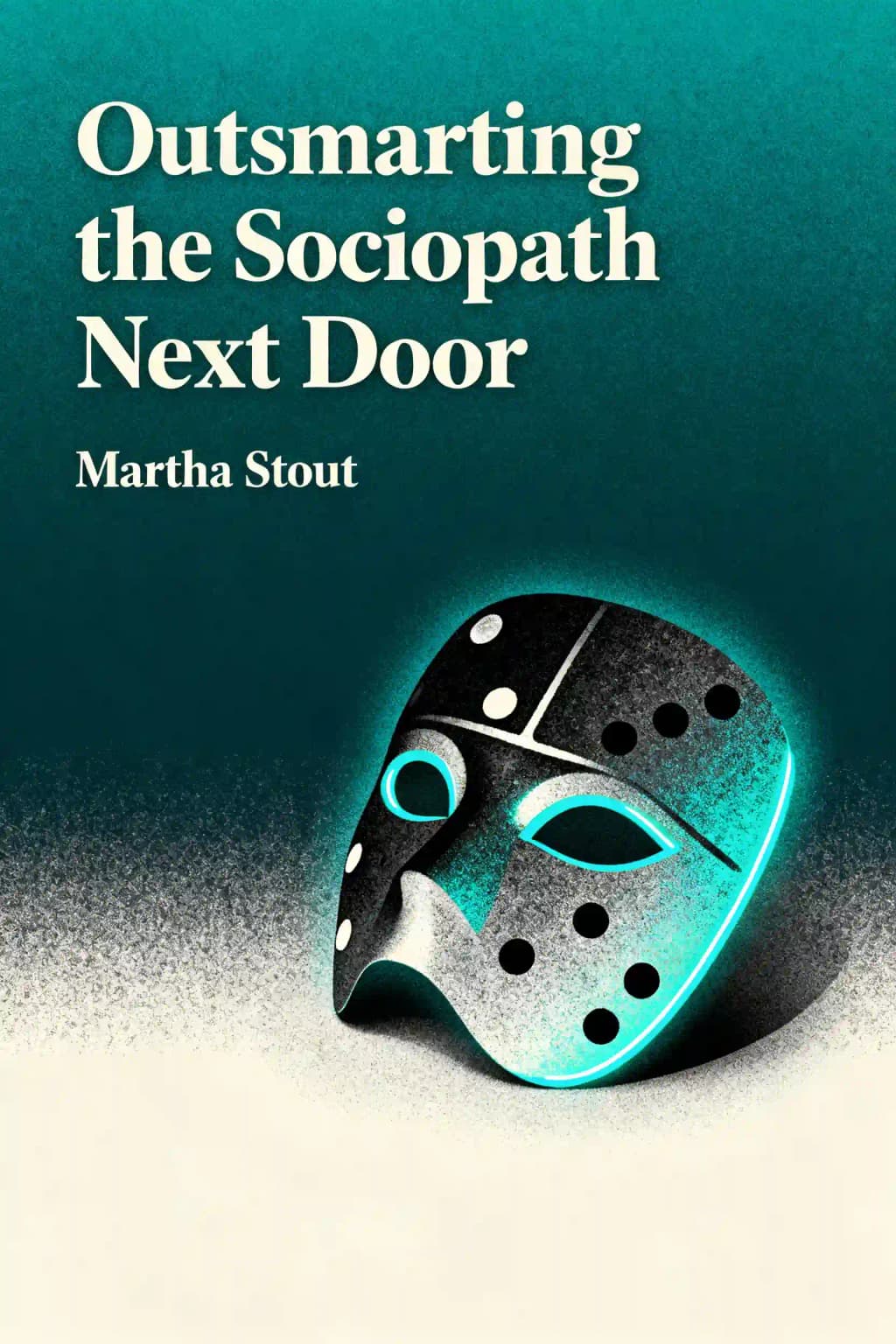
In a world where we instinctively search for monsters with horns and fangs, the most dangerous predators walk among us wearing friendly smiles and designer suits. Martha Stout's groundbreaking work has transformed our understanding of human evil, revealing it not as a supernatural force but as a neurological deficit-a hole in the psyche where conscience should be. Since its publication in 2005, "The Sociopath Next Door" has sparked a cultural awakening, with readers from all walks of life recognizing the sociopaths in their own lives: the charming ex who turned custody battles into psychological warfare, the boss who delights in humiliating subordinates, or the family member whose lies seem pathological. This book has become required reading in psychology programs nationwide and has been cited by celebrities from Oprah Winfrey to Anderson Cooper as essential for understanding the manipulators we inevitably encounter. Stout now returns with practical strategies for those who can't simply avoid the conscienceless people in their lives.
Capítulo 2
The Empty Space Where Conscience Should Be
What if evil doesn't actually exist? Not as a force or supernatural being, but merely as an absence-a hollow space where something vital should be? This seemingly paradoxical question challenges our fundamental understanding of human behavior and morality. For centuries, we've conceptualized evil as an active force, but what if it's simply an emptiness?
Conscience isn't a set of rules or thought processes but a compelling emotion based on our attachment to others. It requires the neuropsychological capacity to form genuine emotional bonds-something sociopaths fundamentally lack. When we understand that evil behaviors stem from this absence rather than from some dark force, we gain powerful insight into how to protect ourselves.
Sociopaths like "Jack" are born with subtle brain deficiencies resulting in a gaping hole in their emotional lives. While they can display counterfeit emotions when needed, they experience only emptiness where genuine interpersonal feelings should exist. They cannot love family members, form authentic friendships, or feel concern for others. Most disturbingly, they cannot love even their own children.
The warm feelings that form normal human bonds-love, caring, affection, gratitude-are the foundation of conscience. Without them, conscience cannot exist. While most people feel guilt even for minor selfishness, sociopaths feel nothing when committing unimaginably cruel acts. This psychological and neurological emptiness allows them to act without the restraint of human connection.
Clinically, sociopaths display irresponsibility (disregarding obligations), impulsivity (acting without considering consequences), and risk-taking (engaging in dangerous activities without concern). They often possess a glib charm that makes them initially seem more interesting than others. They mirror body language and speech patterns to build false trust, provide excessive flattery, and make grandiose claims about themselves.
When confronted about manipulative behavior, sociopaths deploy a predictable strategy: protestations of innocence, pity plays claiming emotional distress, and finally threats against accusers. Though they represent only about 4% of the population and 20% of prison inmates, they commit over half of the most serious crimes and manipulate their way to early release twice as often as non-sociopathic criminals.
For most of human history, we've resisted understanding that the inability to develop conscience is substantially inborn, unchangeable, and unresponsive to appeals for compassion or rationality. Our psychological denial-viewing evil as a force outside ourselves-allows sociopathy to flourish unseen. Understanding "evil" as a psychological and neurological deficiency provides a paradigm shift that can help us deal with the ruthless rationally rather than superstitiously.
Capítulo 3
When Your Child Has No Conscience
"I am having a very difficult time reconciling the beautiful child that I gave birth to with the monster that my eldest boy is." This heartbreaking confession from a mother captures the devastating reality faced by parents of children born without the capacity to love or feel remorse.
Eleven-year-old Silas exemplifies this nightmare. After Superstorm Sandy, while others were helping neighbors, he ventured out early to loot damaged homes, taking jewelry and even a wallet from a drowned man's body. He showed no remorse, only excitement at the destruction around him. When his mother later discovered his collection, including the dead man's wallet, she "wept for the child she had lost."
His mother had long stopped trying to control him, allowing him to do whatever he wanted. She even avoided taking them to a storm shelter during the hurricane, fearing he would do something "shameful" in public. His father had left two years earlier, unable to cope with Silas's behavior. The boy recognized his power over his mother and found manipulating her "hardly even fun anymore."
Parents of conscienceless children face devastating challenges including violence, drug involvement, manipulation, and destruction of family life. Some families must lock their bedroom doors at night out of fear, as these children often direct violence toward the most vulnerable family members. One mother described how her son Robert pushed his two-year-old sister down the basement stairs to her death, showing no shock or remorse afterward.
The psychiatric community complicates matters by using confusing terminology. Children under eighteen receive the diagnosis of "conduct disorder" rather than sociopathy, though the behaviors are strikingly similar: bullying, cruelty to people and animals, destruction of property, sexual assault, fire-setting, and remorseless manipulation. Research shows that at least 60% of those diagnosed after age ten will develop antisocial personality disorder as adults, with even higher rates for those diagnosed before age ten.
The neurological underpinnings reveal significant differences in brain structure and function. Sociopaths have a cavum septum pellucidum (CSP)-a fluid-filled space between cerebral hemispheres that normally closes during fetal development but persists in sociopathic adults. This persistence signals faulty development of critical brain structures including the hippocampus and amygdala, which process emotions.
The sociopathic brain processes emotions fundamentally differently. While normal brains prioritize emotional input, sociopaths show no enhanced processing for emotional words or expressions. They must calculate emotions intellectually rather than experiencing them automatically. Brain imaging reveals increased activation in the dorsolateral prefrontal cortex when sociopaths process emotions, suggesting they must work out intellectually what others feel instinctively.
For parents, positive contingency management offers a practical approach to managing conduct disorder behaviors, though it cannot create a conscience. This evidence-based technique uses "if/then" pairings where specific behaviors earn points that can be exchanged for material rewards. While this approach doesn't cure the disorder, it can dramatically improve family life by establishing predictable consequences.
Most importantly, parents must protect their other children by having honest conversations about their sibling's condition. When a mother finally explains to twelve-year-old Cara that her sixteen-year-old sister Nicole lacks a conscience-"a voice inside her heart" that makes people feel guilty when hurting others-Cara experiences immediate relief and reveals that Nicole has been pressuring her to try cocaine. This disclosure allows the parents to make difficult but necessary decisions about Nicole's future, including planning for her removal from the home when she turns eighteen.
Capítulo 4
The Workplace Predator
Angela sits across from Kyle, conducting his three-month performance review. Though she finds the process tedious, she deliberately gives him positive marks to set the stage for her predatory behavior. During their meeting, she strategically locks her office door, invades his personal space, removes her shoes, touches his leg, and presses her body against his, causing him visible discomfort before abruptly dismissing him when interrupted by a phone call.
Later, she shifts to tormenting Grace, a different colleague, with false accusations and public humiliation. Angela's internal thoughts reveal her enjoyment of others' discomfort and her strategic use of flattery with her boss. Her behavior demonstrates how workplace sociopaths view colleagues as objects for entertainment and manipulation, using intimidation and emotional abuse while maintaining a professional facade when necessary.
This behavior violates our evolutionary heritage of cooperation. Social mammals are hardwired with helping tendencies that promote group survival-illustrated through examples like Mike the chimpanzee who helped an injured mother by carrying her baby. Countless animals demonstrate cooperation, consolation, and peacekeeping behaviors. This cooperative tendency allowed humans to build magnificent structures, cure diseases, and create technological marvels through teamwork. Sociopaths lack this fundamental social sense, representing a profound deficit that violates our species' primordial code.
Unlike normal workplace competition aimed at enhancing survival or well-being, sociopathic "competition" aims primarily to diminish and control others for entertainment. Sociopaths often engage in self-destructive behaviors that risk their own professional standing merely for the pleasure of tormenting others. A prime example is "gaslighting"-making victims doubt their own perceptions-which is especially common in workplace situations.
Sociopaths often target vulnerable individuals in workplace "closed systems"-isolated relationships hidden from outside scrutiny. Consider the case of a bookkeeper manipulated by a bartender who used flattery, seduction, and emotional manipulation during her divorce. He created dependency through alternating warmth and coldness, pressured her for financial information, requested money advances, and ultimately threatened her with false harassment claims when she didn't comply.
To protect yourself from a workplace sociopath, maintain emotional privacy-don't display distress that feeds their desire for power. Document each lie, theft, and sabotage with dates and consequences. Present your documentation to upper management, framing the sociopath as financially costly to the company. If they investigate, you've won; if not, consider leaving with legal assistance to secure recommendations and severance.
Some conscienceless individuals hide behind respected professional titles that automatically trigger our trust. Certain professions-particularly teaching, medicine, clergy, and psychotherapy-attract sociopaths because they offer both interpersonal power over trusting individuals and privacy in closed settings. This combination of unequal power and isolation creates perfect conditions for abuse.
For victims of sociopathic professionals, pursuing malpractice lawsuits is difficult, as they require proving life-threatening or permanent damage. A more effective approach is filing complaints with professional licensing boards, which can suspend or revoke licenses with less stringent proof requirements. This won't provide financial compensation but may protect others from similar harm.
Capítulo 5
Custody Battles: When Children Become Weapons
In custody battles, sociopaths masterfully manipulate the legal system, as illustrated by Perry's case. After feigning distress about his daughter's welfare to a court counselor, Perry internally gloated about his performance, revealing his true motives: not genuine concern for his daughter but a desire to torment his ex-wife Lynn. He found perverse pleasure in the prospect of Lynn's suffering when falsely accused of child abuse, comparing it to the childhood thrill he felt when torturing his mother's dog. His ultimate plan wasn't even to parent his daughter long-term, but to use her as a weapon against Lynn.
Do sociopaths make bad parents? The answer is unequivocally yes. Despite this obvious truth, our society and legal systems often fail to recognize the danger conscienceless people pose to children. Letters from grown children of sociopaths confirm the lasting damage these parents inflict. One 29-year-old described suffering sexual abuse during court-mandated visitations with her sociopathic father, resulting in lifelong trust issues, depression, and anxiety.
Sociopathic custody battles follow a predictable pattern. First, the sociopath pursues custody not out of love for the children but for the thrill of the game and control over their ex-spouse. Second, the legal system fails to protect the children, deceived by the sociopath's convincing lies and manipulations. Finally, the non-sociopathic parent becomes increasingly frantic, which paradoxically makes them appear "hysterical" to the court-sometimes interpreted as evidence of being an unfit parent.
The legal system unintentionally favors sociopaths in custody battles for several reasons. Courts operate under the presumption that joint custody serves children's interests, but this breaks down when one parent is dangerous. The "friendly parent doctrine"-designed to encourage cooperation-becomes another weapon for sociopaths, who remain calm in court while making the concerned parent appear unreasonable.
Seven aspects of our legal system give sociopaths advantages: courts assume people won't lie under oath; sociopaths manipulate situations without technically breaking laws; they treat legal proceedings as games; the concept of mental illness might eventually benefit them; the system values repentance and rehabilitation, which sociopaths can't genuinely provide; courts prize objectivity over character assessment; and the system operates at a conventional moral level, rigidly following rules without questioning their fairness.
Rather than trying to prove your spouse is sociopathic-which courts aren't equipped to address-focus on documenting specific abusive behaviors. Keep secure records of incidents, especially police reports of domestic violence. Use universally understood terms like "abusive," "deceitful," and "violent" rather than clinical language like "sociopathic." Educate your attorney about research showing that children suffer psychological harm merely by living with an assaultive parent, even if they themselves aren't directly abused.
Research conclusively shows that children exposed to domestic violence suffer serious psychological harm. Twenty-four separate studies found consistent evidence that witnessing parental violence causes unique psychological damage. Between 30-60% of children whose parent was abused will themselves become targets of violence. Contrary to what many believe, separation and divorce often make the situation worse, as batterers may redirect their abuse toward the children when the marriage dissolves.
The most powerful weapon against a sociopath in a custody battle is surprisingly simple: be boring. Sociopaths fight for custody primarily to control you and enjoy your emotional reactions. When you show anger, fear or distress, you provide them with entertainment and a sense of power. By responding to provocations with apparent indifference, you deprive them of this psychological "drug." This approach works on the principle of "extinction"-removing the reward (your emotional reaction) that reinforces their behavior.
Capítulo 6
The Violent Sociopath: From Domestic Abuse to Murder
Our lives are fundamentally structured by our attachments to other people-from a parent's love for a newborn to the emotional connections of family, friends, and romantic partnerships. Our brains are biologically designed for these bonds, extending from our affection for pets to our deep connections with human communities.
The most terrifying aspect of sociopathic killers is their ordinary appearance. Dennis Rader, the BTK Strangler who murdered ten people over thirty-one years, exemplifies this horror-a churchgoing family man and city employee whose neighbors later said, "I just can't believe it." Yet his sociopathic traits were visible all along: as the local "compliance officer," he obsessively controlled neighbors through petty enforcement, kept meticulous records of potential victims, and tortured animals as a child.
Sociopathic violence often remains hidden behind closed doors. One woman's account reveals how her handsome, wealthy husband transformed after marriage into a calculating abuser who humiliated her publicly, physically and sexually assaulted her, and psychologically tortured their children. His violence wasn't impulsive but cold and controlling-he would wash their infant son in pelting water to "toughen him up" and later force their daughter to strip naked for his drunken friends.
Beyond physical violence, sociopaths employ invisible forms of assault, including knowingly transmitting infectious diseases. Many victims report partners deliberately engaging in unsafe sex while infected with hepatitis or HIV. These sociopaths are gratified by the knowledge they're causing harm.
Most sociopaths aren't murderers, but when they do kill, they commit the most shocking crimes-cold, emotionless, and calculated. Unlike "crimes of passion" committed by people with conscience, sociopathic murders are instrumental, premeditated, and devoid of emotional reaction. They kill for convenience and for the thrill of ultimate domination. A sociopath can methodically plan a murder, execute it dispassionately, and show less reaction to gruesome crime scene photos than jurors who suffer PTSD from viewing them.
Modern technology has created new hunting grounds for sociopaths, allowing them to destroy lives without physical contact. Cyberassault provides the same gratification as direct victimization but with digital distance and sometimes anonymity. Research shows cyberbullying has an even stronger association with suicidal ideation than traditional bullying, possibly because "wider audiences can be reached through the internet and material can be stored online, resulting in victims reliving denigrating experiences more often."
For those facing cyberbullying, understand this isn't your fault but stems from the bully's own disturbance. Don't suffer in silence-talk to someone you trust. Protect yourself by changing privacy settings on social media accounts and completely cutting off contact with the bully. Preserve evidence by taking screenshots and saving emails. When possible, ignore the bully rather than engaging, as your apparent serenity will eventually bore them.
Capítulo 7
Ten Strategies for Surviving Sociopathic Manipulation
When avoidance isn't possible, these ten guidelines provide a framework for protecting yourself while maintaining your psychological integrity:
1. Understand who you're dealing with: Sociopathy is the complete absence of conscience-they feel no guilt, shame, remorse, or embarrassment regardless of their actions. They lack empathy, gratitude, and any sense of fairness or justice. Despite their potential charm or familiar demeanor, sociopaths are always psychologically dangerous.
2. Know you're on the side of good: Frame your resistance as a mission to protect yourself and others. This isn't about winning but about standing for human connection against those who lack it. Remember that you represent the majority of humanity who can love and form bonds.
3. Change the game: The sociopath's goal is always to win by manipulating and controlling others. You cannot beat them at this game, so secretly alter the premise. In custody battles, instead of trying to "win," focus on keeping children safe. With sociopathic coworkers, don't seek revenge but minimize their daily effects on you.
4. Focus clearly on your own goal: Write down your real objectives beyond simply defeating the sociopath-keeping children safe, maintaining your own safety, eliminating workplace stress, or restoring peace. Refer to this list regularly to stay focused on what truly matters.
5. Don't give the sociopath what they want: The sociopath craves control and manipulation-they want to affect you visibly. Each time you show anger, confusion or hurt, you reward and encourage them. Practice maintaining a poker face and speaking calmly in their presence.
6. Enlist others: When good people share experiences, they often discover they're not the only ones targeted by a sociopath. Focus on specific behaviors rather than diagnostic labels-terms like "manipulative," "slick," and "liar" are more readily accepted than "sociopath."
7. Remember this is only one part of your life: Being targeted often creates panic and obsession, making you neglect meaningful activities and relationships. Don't let the sociopath consume your entire existence. Pace yourself for what may be a long struggle. Break your mission into manageable tasks.
8. Don't catastrophize: Remain realistic about potential damage, even in difficult situations like custody battles. Constantly contemplating worst-case scenarios will freeze you with anxiety and fear. People are more likely to help when you present your case calmly rather than with panic.
9. Take care of your health: Being targeted by a sociopath triggers a prolonged fight-or-flight response that can lead to chronic stress syndrome. Make stress management central to your coping strategy through relaxation techniques, exercise, or supportive therapy.
10. Protect yourself from violence: While sociopaths typically limit physical aggression to private settings where discovery is unlikely, take any concerns about violence seriously. Don't keep your apprehension secret-inform friends, family, and police about specific threats.
Capítulo 8
Sociopathy vs. Narcissism: Critical Distinctions
Why is understanding others' emotions considered desirable? Wouldn't immunity to others' feelings conserve human energy? While sociopathy means having no conscience or ability to love, narcissism presents a different condition-one where conscience remains but empathy is absent. The narcissist desperately craves connection but lacks the emotional equipment to maintain relationships, creating a bewildering cycle of interpersonal disasters they can never understand.
The fundamental difference between sociopathy and narcissism is crucial yet sometimes practically irrelevant: sociopaths lack both conscience and empathy, while narcissists lack only empathy. The narcissist can form bonds and experience conscience but remains crippled by ignorance of others' feelings and needs.
The icy coldness of sociopathy results from congenital brain deficits in processing emotional input, while narcissism stems from disrupted emotional connection with caregivers in early childhood. This makes the failure of empathy in narcissism analogous to having an arm damaged in childhood versus being born without one in sociopathy.
Both sociopaths and narcissists are fundamentally deceitful, though with different motives. The sociopath lies to manipulate, control, and for entertainment, while the narcissist lies to maintain their false world and secure admiration. Both are intensely competitive-sociopaths crave control and power while narcissists need to prove their superiority.
The key difference lies in emotional capacity-sociopaths lack higher emotions entirely, while narcissists possess them but express them in warped ways due to lack of empathy. Sociopaths deny responsibility through calculated deception, while narcissists confabulate elaborate explanations that fit their distorted worldview.
Two critical distinctions help differentiate sociopaths from narcissists. First, sociopathy centers on the thrill of coldly "playing" with people like predators toying with prey. While narcissists damage others unintentionally, they lack the ice-cold calculation of sociopaths who torment for fun.
Second, sociopaths excel at the "pity play," manipulating others through false tales of suffering. Narcissists, with their need for superiority, typically avoid appearing pitiful, though they may be hypochondriacal.
Capítulo 9
The Triumph of Human Connection
Having defined evil as an empty hole-the absence of conscience and ability to love-goodness emerges from our psychological completeness and capacity for love and conscience. From this wholeness spring empathy, gratitude, loyalty, and our sense of justice-the warm emotional responses that enable human coexistence.
Compassion's power is illustrated through stories of moral courage: a young girl defending a bullied newcomer by simply asking "Why does he deserve to be treated so badly?" and helping him up-an act that stopped the bullying completely. Another account reveals how a sociopath is attracted to another person's virtues, showing that being a "sociopath magnet" isn't mysterious but stems from possessing the very qualities sociopaths lack.
Compassion and forgiveness open the door to freedom, while hatred and revenge become prisons that entangle us like poisonous vines. Despite the harm sociopaths cause, we must avoid morally excluding them as less than human, which would corrupt our own hearts. Standing against abusive behavior works better when done calmly without revenge fantasies.
Research confirms that our happiness depends largely on our interpersonal connections, with empathy, compassion, and forgiveness scientifically linked to personal fulfillment. Though loving a sociopath may be beyond reach, developing compassion for their hollow existence is beneficial. Despite thinking themselves superior, their lives remain dry, monotonous, and empty of meaning, unable to experience love even for their own children.
Love transcends mere social bonding-it enables us to keep deceased loved ones alive in our hearts, remembering countless details and predicting what they would say or value in new situations. This emotional attachment has evolved beyond survival, containing "the seed of eternity."
Our power exceeds the sociopath's because it stems from emotional wholeness and our ability to bond steadfastly with each other. With greater numbers and deeper connections, we have both the power and mission to save ourselves, those we love, and our planet from sociopathic influence-without losing our own humanity.