Capítulo 1
Turning Simple Ideas into Licensing Gold: A Path to Entrepreneurial Freedom
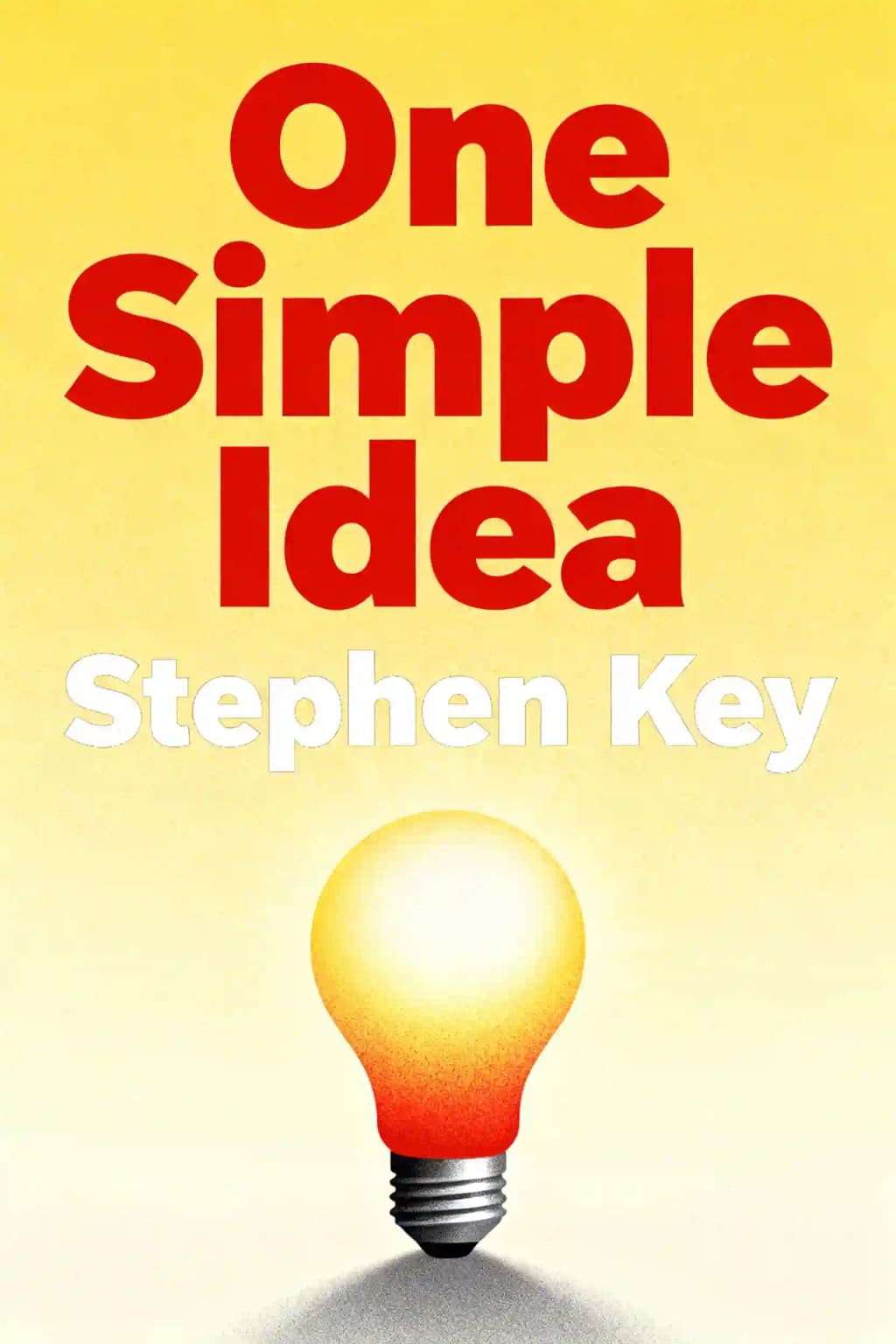
Have you ever wondered how some people manage to make money from their ideas without starting a company or quitting their day job? Stephen Key's "One Simple Idea" has become something of a cult classic among aspiring entrepreneurs, with Tim Ferriss of "The 4-Hour Workweek" fame being one of his earliest students. The book reveals the surprisingly accessible path of licensing - allowing others to manufacture and market your ideas while you collect royalty checks. This approach has garnered attention from celebrities and business leaders alike, with Key's methods being featured on shows like "Dr. Phil" and "The Big Idea with Donny Deutsch." What makes this book particularly compelling is how it challenges conventional wisdom about innovation and entrepreneurship, offering a blueprint for creative freedom that doesn't require venture capital, employees, or even a formal business structure.
Capítulo 2
The Licensing Advantage: Freedom Without Traditional Business Burdens
The traditional path to entrepreneurship often involves securing funding, establishing a business, hiring employees, and managing operations. But what if there was another way? Licensing offers a refreshing alternative that allows creative individuals to monetize their ideas without the typical business burdens.
When you license an idea, you're essentially renting your intellectual property to a company that already has the infrastructure to produce, distribute, and market products. This arrangement allows you to focus on what you do best - creating and innovating - while established companies handle the rest. The result? You receive royalty payments for each unit sold without dealing with manufacturing headaches, inventory management, or distribution challenges.
This approach is particularly appealing for those who value freedom and flexibility. Unlike traditional business owners who are often tied to their operations, licensors can work from anywhere, maintain their day jobs if desired, and pursue multiple ideas simultaneously. The financial model is also attractive - rather than investing substantial capital upfront, licensing requires minimal investment, primarily in protecting your intellectual property and creating simple prototypes or sales materials.
What makes licensing even more accessible today is the concept of "open innovation." Companies increasingly recognize that good ideas can come from outside their walls, and many have established formal channels for considering external innovations. This shift has created unprecedented opportunities for independent creators to partner with established brands, accessing their market reach and manufacturing capabilities while maintaining creative control.
The beauty of this model lies in its simplicity and scalability. One successful license can generate passive income for years, and multiple licenses can create a substantial revenue stream. And unlike starting a traditional business, the skills required for successful licensing - creativity, market awareness, and basic negotiation abilities - are accessible to most people with some practice and guidance.
Capítulo 3
Finding Your Million-Dollar Idea: It's Simpler Than You Think
Many people believe that revolutionary, complex innovations are the only ones worth pursuing. However, the reality of successful licensing tells a different story. The most licensable ideas are often simple improvements to existing products - what Stephen Key calls "sleeping dinosaurs" - rather than groundbreaking inventions.
Consider everyday frustrations and inefficiencies as your idea goldmine. That annoying product that never quite works right? The packaging that's difficult to open? The tool that could be more ergonomic? These pain points represent opportunities for innovation. By observing how people interact with products and identifying common complaints or wishes, you can uncover valuable ideas hiding in plain sight.
The key is to look for problems that affect many people and can be solved with relatively simple modifications. Paul Rago exemplified this approach by modernizing traditional children's games, turning tag into Lazer Tag using infrared technology. He didn't invent a new game; he simply applied modern technology to a classic concept, creating something fresh and marketable.
Market awareness is crucial in this process. Rather than creating something and then trying to find a market for it, successful licensors identify existing markets with established distribution channels and then develop ideas that fit within those frameworks. This approach significantly increases the chances of licensing success because companies are more likely to embrace ideas that complement their existing product lines and manufacturing capabilities.
Contrary to popular belief, creativity isn't about inventing something that has never existed before. It's about making connections between existing elements in new ways. Everyone possesses this ability, though many have forgotten how to access it. Recapturing a child-like perspective - questioning why things are done a certain way and imagining alternatives - can unlock your creative potential.
If you don't consider yourself particularly creative, you can still participate in the licensing economy as a product scout. By connecting innovative ideas with companies looking for new products, scouts can earn a portion of royalties without developing ideas themselves. This role requires understanding markets, building relationships with both inventors and companies, and recognizing commercially viable concepts.
Capítulo 4
Evaluating Your Idea's Potential: The Four Key Characteristics
Not all ideas are created equal when it comes to licensing potential. Before investing significant time and resources, it's essential to evaluate your concept against four critical characteristics that make an idea attractive to potential licensees.
First, does your idea solve a common problem? Companies are drawn to products that address widespread issues because they're easier to market. When consumers immediately understand how a product will improve their lives, the sales process becomes much more straightforward. The best ideas often make people wonder, "Why didn't I think of that?" because they solve problems in such obvious, elegant ways.
Second, does your idea have a "wow factor" that sets it apart? In crowded marketplaces, products need something special to capture attention. This could be a unique feature, an innovative design, or a novel application of existing technology. The wow factor doesn't need to be complex - sometimes it's as simple as a clever twist on a familiar product - but it should be immediately apparent and compelling.
Third, does your idea appeal to a large market? The size of the potential market significantly impacts licensing interest. Companies are naturally more attracted to ideas with broad appeal because they offer greater sales potential. While niche products can certainly be successful, those with wider applications typically generate more licensing opportunities and higher royalty potential.
Finally, can your idea be manufactured using common production methods and materials? This practical consideration is often overlooked by inventors but is crucial for licensing success. Ideas that require entirely new manufacturing processes or exotic materials face significant hurdles. Companies prefer concepts that can be produced using their existing equipment and supply chains, minimizing investment and risk.
When evaluating ideas, trust your instincts but also seek objective feedback. Finding someone who has successfully licensed products in your target industry can provide invaluable guidance. These mentors can help you navigate potential pitfalls and refine your approach based on real-world experience. While you don't need to be an expert in a field to innovate within it (in fact, fresh perspectives often lead to breakthrough ideas), understanding the basics of your target market is essential for making informed decisions.
Capítulo 5
Proving Your Idea: Focus on Benefits, Not Features
Once you've identified a promising idea, the next step is to prove its value - not through elaborate prototypes or patents, but by clearly demonstrating the benefits it offers to both consumers and potential licensees. This market-focused approach differs significantly from the traditional inventor's path, which often involves perfecting a product before considering its commercial potential.
The first question to answer is: "Will it sell?" Rather than assuming consumers will want your product, gather evidence through market research and feedback. Observe similar products, talk to potential users, and identify the specific problems your idea solves. This information not only helps refine your concept but also provides valuable material for your eventual pitch to companies.
Equally important is determining whether your idea is manufacturable at a reasonable cost. Many brilliant concepts fail at this stage because they're simply too expensive or complex to produce profitably. Understanding basic manufacturing processes and consulting with experts can help you design with production in mind, increasing your chances of licensing success.
When it comes to prototypes, the goal isn't perfection but demonstration. Three types of prototypes serve different purposes: a "works-like" prototype demonstrates functionality without necessarily looking like the final product; a "looks-like" prototype shows the aesthetic design without working mechanics; and a "works-like/looks-like" prototype combines both aspects but is often unnecessarily elaborate at the licensing stage.
Tom Christensen's flying disc example illustrates the power of simple prototyping. His crude but functional model effectively demonstrated the concept's unique benefit - the ability to throw the disc farther than competitors - which was enough to secure a licensing deal. The company later refined the design for production, but the initial prototype served its purpose by proving the core benefit.
Cost-effective prototyping methods include creating mock-ups from existing products, using materials like foam core or clay to sculpt models, making paper or cardboard representations, or utilizing technologies like silicone molding or 3D printing. The key is to invest just enough to demonstrate your idea's value without spending excessively on refinements that the licensing company will likely handle anyway.
This practical approach to proving your idea aligns with the overall licensing philosophy: focus on generating and presenting valuable concepts, then let companies with existing resources handle the details of production and distribution. By keeping investments minimal and emphasizing benefits over features, you maintain the low-risk, high-reward nature of the licensing model.
Capítulo 6
Protecting Your Idea: Smart Strategies Beyond Patents
When it comes to protecting intellectual property, many inventors immediately think of patents - often investing thousands of dollars before determining if their idea has market potential. While patents certainly have their place, Stephen Key advocates for a more strategic approach that balances protection with practicality.
Understanding the basics of intellectual property protection is essential. Patents come in three main types: utility patents for functional inventions, design patents for ornamental designs, and plant patents for new plant varieties. Utility patents, the most common type, last 20 years from filing but require maintenance fees throughout their lifetime. Design patents protect for 14 years from issuance without requiring maintenance fees.
The patent process can be expensive and time-consuming. A utility patent typically costs around $8,000 to obtain and can take years to be issued, with no guarantee of approval. This represents a significant investment for an unproven idea, which is why Key recommends a more measured approach, particularly for first-time inventors.
The Provisional Patent Application (PPA) offers an excellent middle ground. For a modest fee (around $65 for small entities), a PPA provides "patent pending" status for 12 months, during which you can test market interest and approach potential licensees. While not a patent itself, a PPA establishes a priority date and gives you time to determine if pursuing a full patent is worthwhile based on market response.
Margo's experience illustrates this approach perfectly. Rather than investing in a full patent upfront, she filed a PPA and quickly secured a licensing deal. The company was interested in her idea's market potential rather than its patent status, and they were willing to handle the more extensive patent work as part of the licensing agreement. This strategy allowed her to minimize risk while still protecting her intellectual property during the crucial negotiation phase.
Documentation is another vital aspect of protection. Keeping a detailed inventor's logbook with dated entries, witnessed by others, can help establish your claim as the original creator. This practice, combined with strategic use of PPAs, creates a cost-effective protection strategy that aligns with the licensing model's emphasis on efficiency and risk management.
When working with patent attorneys, be selective and involved. Choose someone with experience in your specific product category, do preliminary research before your first meeting, get clear quotes in writing, and actively participate in the process. Your intimate knowledge of your idea can help shape stronger patent claims and navigate potential obstacles.
Remember that protection is ultimately about creating value for potential licensees. Companies are interested in ideas they can profitably bring to market without legal complications. By taking a strategic approach to intellectual property - protecting what matters most without over-investing - you make your idea more attractive while maintaining the low-risk profile that makes licensing so appealing.
Capítulo 7
Creating Effective Sales Tools: The Power of Simple Presentation
In the licensing world, how you present your idea is often as important as the idea itself. Rather than relying on elaborate prototypes or technical specifications, successful licensors focus on creating simple, powerful sales tools that clearly communicate the benefits of their concepts.
The cornerstone of this approach is the one-line benefit statement - a concise, compelling description of what your idea does for the end user or the company. This isn't about features or technical details; it's about articulating the core value proposition in a way that immediately captures interest. A good benefit statement answers the question: "What problem does this solve, and how does it make life better?"
For example, rather than describing a new kitchen gadget as "a dual-action rotating blade system with ergonomic handle," a benefit statement might be: "Chops vegetables twice as fast with half the effort." The difference is subtle but crucial - the latter focuses on what matters to the user rather than how the product works.
Complementing the benefit statement is the one-page sell sheet - essentially a visual billboard for your idea. An effective sell sheet includes:
1. A compelling headline (your benefit statement)
2. Strong visuals (photos or professional renderings of your concept)
3. Bullet points highlighting key benefits
4. Your contact information
5. Patent status (if applicable)
The sell sheet should be clean, professional, and focused on benefits rather than technical specifications. Its purpose is not to explain every detail but to generate enough interest for a follow-up conversation.
These sales tools are designed to work in tandem with your initial outreach efforts, particularly cold calls. When you capture someone's interest with your benefit statement during a call, the sell sheet provides visual reinforcement that can be immediately emailed or sent. This one-two punch is often more effective than elaborate presentations or lengthy explanations.
Creating these materials doesn't require expensive professional services. With basic design software or even online templates, you can create effective sell sheets yourself. If design isn't your strength, consider outsourcing to students or freelancers who can provide professional-quality work at reasonable rates.
The key is to remember that you're not selling a product - you're selling an opportunity. Companies want to know how your idea will benefit them through increased sales, competitive advantage, or expanded market reach. By focusing your presentation materials on these aspects rather than technical details or personal attachment to the idea, you significantly increase your chances of licensing success.
Capítulo 8
Approaching Companies: Overcoming Fear and Making Contact
For many inventors, approaching companies with their ideas is the most intimidating part of the licensing process. Fear of rejection, theft, or simply not knowing what to say can prevent great ideas from ever reaching the market. Understanding how to overcome these fears and effectively contact potential licensees is crucial for licensing success.
The fear of idea theft is particularly common but largely unfounded. While stories occasionally surface about alleged misappropriation, reputable companies generally avoid such practices due to the potential for negative publicity and legal complications. Most companies have formal submission processes specifically designed to protect both parties. When misunderstandings do occur, they typically result from similar ideas being developed independently rather than outright theft.
Cold-calling - directly contacting companies by phone - remains one of the most effective ways to present your idea, despite being intimidating for many. Email submissions often get lost or ignored, while phone conversations create personal connections and allow for immediate feedback. The key to successful cold-calling is preparation: have your benefit statement ready, practice your delivery until it feels natural, and target the right person within the organization.
When making calls, timing matters. Mid-week mornings or late afternoons often yield better results than Mondays or Fridays. Avoid identifying yourself as an "inventor," which can carry negative connotations in corporate environments. Instead, present yourself as a "product developer" with a solution to a specific problem the company might face.
Identifying the right contact person is crucial. Legal departments typically serve as gatekeepers designed to say "no," while marketing or product development managers are more likely to be receptive to outside ideas. Research company websites, use professional networking sites like LinkedIn, or simply call the main number and ask for the appropriate department. Persistence is key - you may need to make multiple attempts before reaching the right person.
During the call, speak with confidence and enthusiasm, keep your pitch brief (focusing on your benefit statement), and ask permission to send additional information. Take detailed notes of every conversation, including names, dates, and key points discussed. If you receive a "no," politely ask for feedback that might help you improve your idea or approach.
Remember that licensing is a numbers game - not every company will be interested in your idea, regardless of its merit. By approaching multiple companies simultaneously, you increase your chances of finding the right partner while gaining valuable experience with each interaction. Start with companies lower on your priority list to practice your pitch before approaching your top choices.
By systematically addressing the common fears associated with presenting ideas and developing a structured approach to contacting companies, you can transform this intimidating process into a manageable and even enjoyable part of the licensing journey.
Capítulo 9
Negotiating Licensing Deals: Creating Win-Win Agreements
When a company expresses serious interest in your idea, negotiations begin - a process that can be both exciting and daunting for first-time licensors. While attorneys certainly have their place in finalizing agreements, understanding the basics of licensing deals empowers you to negotiate more effectively and create truly win-win arrangements.
The foundation of successful negotiation is approaching the process as equals, regardless of the company's size. This requires thorough preparation: understanding the company's market position, knowing your idea's value proposition, and being clear about your desired outcomes. Remember that you bring unique value to the table - a solution to a problem the company faces - which gives you legitimate negotiating power.
Several key elements form the backbone of most licensing agreements:
Exclusivity Rights: Companies typically want exclusive rights to produce your idea, often worldwide. While exclusivity is valuable and generally commands higher royalties, consider whether the company has the capacity to fully exploit your idea in all markets. Sometimes, dividing rights by territory, sales channel, or product category can maximize your idea's potential while still giving each licensee the exclusivity they desire.
Royalty Rates: Standard royalty rates typically range from 2% to 10% of wholesale price, depending on factors like industry norms, product category, and level of protection. Higher rates might apply for patented, unique products or those with strong brand recognition, while simpler or unprotected ideas might command lower percentages. Volume matters too - a 2% royalty on a mass-market item might generate more income than 10% on a niche product.
Advances: While large upfront payments are rare and often unnecessary, a modest advance against future royalties demonstrates the company's commitment. Sometimes, having the company cover patent costs serves as an effective advance. The goal isn't immediate profit but establishing a partnership where both parties are invested in the product's success.
Minimum Guarantees: These provisions ensure you receive a minimum amount regardless of sales performance, protecting you if the company fails to adequately promote or distribute your product. If a company balks at guarantees, an alternative is to establish an "inside/outside date" by which the product must be brought to market or rights revert to you.
Improvements Clause: This ensures that any enhancements or modifications to your idea remain within your licensing agreement, preventing companies from making small changes to circumvent royalty obligations. This protection is particularly important for ideas with technological elements that might evolve over time.
Audit Rights: The ability to verify sales figures against royalty payments provides important protection, though exercising this right requires careful consideration of the relationship dynamics. A fair approach is to agree that you'll pay for the audit if no significant discrepancies are found.
Before involving attorneys, summarize the agreed-upon terms in a simple "term sheet" that outlines the key points. This document serves as a roadmap for the formal contract while minimizing legal costs and ensuring both parties share the same understanding of the agreement.
Throughout negotiations, maintain a collaborative rather than adversarial approach. The goal is a sustainable partnership where both parties benefit from the idea's success. By understanding these fundamental elements and approaching negotiations with confidence and clarity, you can secure agreements that fairly reward your creativity while giving companies the incentive to fully develop and market your ideas.
Capítulo 10
Living the Licensing Lifestyle: Building Long-Term Success
Once you've secured your first licensing deal, you've taken a significant step toward what Stephen Key calls "the licensing lifestyle" - a way of working and living that offers remarkable freedom, creativity, and potential for ongoing income. But success in licensing isn't just about landing a single deal; it's about building a sustainable approach that generates ideas and income for years to come.
The relationship with your licensee doesn't end when the contract is signed. In many ways, it's just beginning. Successful licensors remain engaged partners, offering support during product development, providing marketing insights, and helping navigate challenges that arise. This collaborative approach not only helps ensure the product's success but also builds goodwill that can lead to future opportunities.
Monitoring your licenses is an essential part of the process. While most companies honor their agreements, oversights can occur. Review royalty statements carefully, stay informed about your product's market presence, and maintain open communication with your licensees. If discrepancies arise, address them promptly and professionally - most issues result from misunderstandings rather than intentional misconduct.
Legal disputes, while rare, can be costly and emotionally draining. Stephen Key shares his experience with a single court battle against a large corporation, emphasizing how such conflicts often stem from miscommunication and emotional reactions. When possible, resolve disagreements through direct conversation and negotiation rather than litigation.
The key to sustained success in licensing is maintaining a steady flow of ideas. Not every concept will find a licensee, and not every licensed product will become a bestseller. By continuously generating and presenting new ideas, you create multiple streams of potential income while refining your understanding of what companies seek.
This approach aligns perfectly with the lifestyle benefits licensing offers. Unlike traditional business ownership, which often demands full-time commitment and significant capital, licensing allows you to:
1. Work part-time while maintaining other employment
2. Operate without employees or facilities
3. Focus on creativity rather than operations
4. Enjoy location independence
5. Scale income without proportionally increasing work
Many successful licensors develop a rhythm of idea generation, presentation, and negotiation that becomes increasingly efficient over time. They build networks of industry contacts, develop reputations for quality concepts, and create portfolios of licensed products that generate ongoing royalties.
Perhaps most importantly, the licensing lifestyle allows you to align your work with your passions. Whether you're interested in toys, kitchen gadgets, sporting goods, or industrial equipment, you can focus your creative energy on areas that genuinely excite you. This alignment of interest and opportunity not only makes the work more enjoyable but often leads to better ideas and more successful products.
By embracing the principles outlined in "One Simple Idea" - focusing on simple, marketable concepts; protecting ideas strategically; presenting benefits clearly; approaching companies confidently; and negotiating win-win agreements - you can build a sustainable licensing practice that provides both financial rewards and personal fulfillment.
Capítulo 11
The Revolution of Simple Ideas: Changing How Innovation Happens
The licensing approach Stephen Key advocates represents more than just a business strategy - it's part of a fundamental shift in how innovation occurs in today's economy. This shift, often called "open innovation," recognizes that good ideas can come from anywhere, not just corporate R&D departments or venture-backed startups.
In the traditional innovation model, companies developed products internally, protected them with robust intellectual property portfolios, and brought them to market through established channels. This closed system favored large organizations with substantial resources and created significant barriers for independent inventors. The process was often slow, expensive, and resistant to outside influence.
Today's marketplace operates differently. Product lifecycles have accelerated dramatically, with companies constantly seeking new offerings to maintain competitive advantage. This acceleration has created gaps that independent innovators can fill, providing fresh ideas that help companies stay relevant without the overhead of expanded internal development teams.
The rise of global manufacturing, digital communication, and online retail has further democratized innovation. Ideas can move from concept to market more quickly than ever before, and consumers have unprecedented access to new products through both traditional and online channels. This environment rewards speed and creativity - precisely the advantages that independent licensors can offer.
What makes this shift particularly powerful is how it aligns with broader changes in how people view work and success. Many individuals now prioritize flexibility, purpose, and work-life balance over traditional career paths. Licensing offers a way to participate in entrepreneurship and innovation without sacrificing these priorities - you can create value and generate income while maintaining control over your time and focus.
The stories throughout "One Simple Idea" illustrate this new paradigm. From Margo licensing her product without a patent to Dario Antonioni transitioning from service provider to licensor with his Grid-It technology, these examples demonstrate how individuals with creativity and determination can succeed in the innovation economy without following conventional paths.
This approach also addresses a fundamental inefficiency in traditional innovation: the disconnect between idea generation and commercialization capabilities. Many creative individuals have no interest in running manufacturing operations or building distribution networks, while many companies excel at these functions but struggle to generate fresh concepts. Licensing bridges this gap, allowing each party to focus on what they do best.
As we look to the future, this model of innovation seems likely to expand rather than contract. Companies increasingly recognize the value of external ideas, and digital platforms continue to reduce friction in connecting creators with commercial partners. For individuals seeking to participate in this economy, understanding the principles of licensing provides a powerful entry point - a way to turn creativity into income without the traditional burdens of entrepreneurship.
By mastering the art of licensing simple ideas, you're not just pursuing a business opportunity - you're joining a revolution in how innovation happens, how value is created, and how creative individuals can participate in the global economy on their own terms.