Capítulo 1
A Web of Lies Unravels at Bayview High
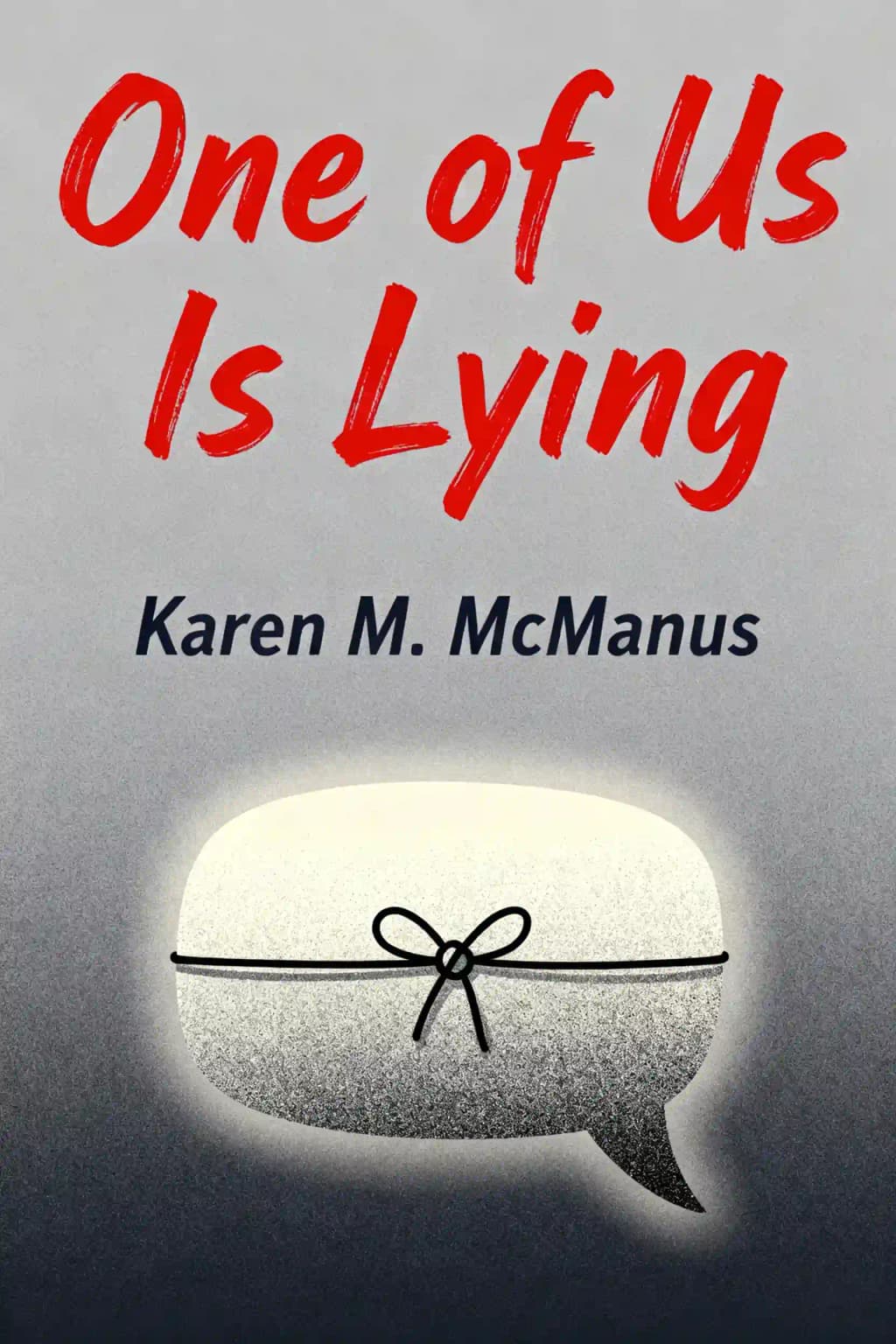
"One of Us Is Lying" isn't just another teen mystery-it's the book that revitalized the YA thriller genre, selling over two million copies and spawning a hit Netflix adaptation. When five students walk into detention but only four walk out alive, readers are immediately hooked by the modern twist on "The Breakfast Club" gone terribly wrong. Karen M. McManus crafts a narrative that's been praised by celebrities from Stephen King to Reese Witherspoon, who called it "the perfect high-school whodunit." The novel's exploration of identity, secrets, and the toxic culture of gossip resonates deeply with today's social media generation, asking the uncomfortable question: what happens when our darkest secrets are exposed for everyone to see?
Capítulo 2
Five Students Enter, Four Leave Alive
The story begins with five Bayview High students reporting to detention on a Monday afternoon, each representing distinct high school archetypes but harboring complexities beneath their labels. Bronwyn Rojas, the Yale-bound perfectionist known as "the brain," maintains a pristine academic record. Cooper Clay, "the athlete," stands as the school's star baseball pitcher with major league scouts watching his every move. Addy Prentiss, dubbed "the princess," carefully cultivates her image as the perfect girlfriend and social butterfly. Nate Macauley, labeled "the criminal," carries the weight of his troubled past and present legal troubles. Finally, there's Simon Kelleher, "the outcast" - feared and despised in equal measure for his infamous gossip app. All five vehemently protest their innocence, claiming someone planted phones in their backpacks to orchestrate this detention gathering.
Under Mr. Avery's supervision, the detention proceeds routinely until Simon reaches for a cup of water from the classroom dispenser. Within moments, he collapses, gasping for air - a severe allergic reaction taking hold. The scene descends into chaos as students and teacher scramble to locate Simon's EpiPen. Bronwyn calls 911 while Cooper performs CPR, but their efforts prove futile. Simon dies on the classroom floor, transforming an ordinary Monday detention into a life-altering tragedy.
The aftermath sends shockwaves through Bayview High. Each survivor processes the trauma distinctly: Bronwyn obsessively researches similar incidents, seeking logical explanations; Cooper maintains his composed baseball star facade while privately unraveling; Addy clings to her boyfriend Jake's support, her perfectly curated world crumbling; and Nate - already walking a thin line with his probation officer - recognizes the mounting danger of their situation.
The veneer of accidental tragedy quickly cracks under investigation. Detective Wheeler discovers all EpiPens were systematically removed from the nurse's office - not just missing, but deliberately taken. Forensic analysis reveals peanut oil in Simon's water cup, a substance guaranteed to trigger his documented severe allergy. The investigation takes a darker turn when police uncover Simon's final "About That" post, scheduled for the next day, containing devastating secrets about all four detention survivors.
The timing proves too precise to be coincidental. Each student had powerful motivation to silence Simon: Bronwyn's academic fraud, Cooper's athletic scandal, Addy's relationship betrayal, and Nate's expanded drug operation - all set to be exposed within 24 hours. Officer Budapest's pointed observation during interrogations echoes ominously through the halls of Bayview High: "Everybody's got secrets, right?" The question isn't just who had reason to want Simon dead - it's who had the most to lose when he lived.
Capítulo 3
Secrets That Kill
The heart of the novel lies in the secrets Simon planned to reveal - each representing a different kind of teenage pressure and identity crisis that resonates deeply with modern high school experiences. His calculated exposure of these secrets demonstrates how vulnerability and shame can be weaponized in today's digital age.
Bronwyn, the Yale-bound perfectionist from a Colombian-American family, cheated on a chemistry exam by accessing test questions from her teacher's unlocked Google Drive. Her entire identity is built around academic excellence and her future at Yale. She's the student who organizes study groups, leads multiple clubs, and maintains a perfect GPA. The revelation would destroy not just her college prospects but her carefully constructed self-image as the "good girl" who always does the right thing. Her single moment of weakness threatens to unravel years of dedication and her family's immigrant dreams of success.
Cooper, the baseball star with major league prospects, faces a more complex situation than Simon's false accusation of steroid use. His actual secret is that he's gay and cheating on his girlfriend Keely with a guy named Kris. Coming from a traditional Southern family with a father who's pinned all his hopes on Cooper's baseball career, this revelation could destroy everything he's worked for. His father's casual homophobic remarks at dinner and the macho culture of baseball have forced Cooper to live a carefully compartmentalized life, where every gesture and word must be calculated to maintain his facade.
Addy, the seemingly perfect girlfriend, cheated on her controlling boyfriend Jake with his friend TJ during summer break. Her entire identity is wrapped up in being Jake's girlfriend - she's molded herself completely to his preferences, from her long blonde hair to her passive personality. Her transformation from an independent young woman to Jake's accessory happened so gradually she barely noticed it happening. The secret of her infidelity represents more than just a moment of betrayal; it's her first real act of independence in years.
Nate, already known as the school drug dealer on probation, was allegedly selling drugs again - a violation that would send him straight to juvenile detention and possibly adult prison when he turns eighteen. His reputation as the school's bad boy masks a more complex reality: he's essentially raising himself, caring for an alcoholic father, and trying to survive in a system that's already labeled him as irredeemable. His secret represents not just legal jeopardy but the potential destruction of the fragile stability he's maintained.
As one character observes, "Simon was playing a sick game of Truth or Dare, except it was all Truth and no choice." This observation underscores the cruel power dynamics at play - Simon appointed himself judge and executioner of reputations, wielding secrets like weapons against classmates who never consented to his twisted game of social destruction.
Capítulo 4
Media Frenzy and Public Judgment
The investigation transforms into an uncontrollable media spectacle when an anonymous individual, claiming to be Simon's killer, launches a Tumblr blog meticulously detailing the murder and systematically framing the four students. The situation intensifies when local news outlets seize the story, branding them the "Bayview Four" - a nickname that would follow them like a shadow. Within days, what began as a local tragedy morphs into a national sensation, with media outlets from across the country descending upon their quiet suburban community.
McManus masterfully portrays the crushing weight of trial-by-media in our hyperconnected digital age. News vans maintain round-the-clock vigils outside their homes, turning their driveways into impromptu press camps. Inside school, classmates transform into amateur paparazzi, documenting their every expression, breakdown, and interaction on smartphones. Social media platforms become battlegrounds of speculation, with hashtags like #BayviewFour and #JusticeForSimon trending nationally. The students find themselves trapped in an endless cycle of notifications, alerts, and online harassment.
The situation reaches its apex when "Mikhail Powers Investigates" - a prestigious national investigative show - produces a special episode about the case. The program craftily edits interviews and carefully selects background music to paint each student in the most sinister light possible: Bronwyn becomes the ruthless overachiever willing to kill for grades, Addy the jealous girlfriend, Nate the hardened criminal, and Cooper the steroid-using athlete with anger issues.
The public's reaction serves as a stark mirror reflecting society's insatiable appetite for scandal and rush to judgment. Cooper's journey through the court of public opinion becomes particularly emblematic of this phenomenon. Initially embraced as the wholesome all-American athlete wrongly accused, he faces brutal backlash when his sexuality becomes public knowledge. The pendulum swings again when he heroically saves Addy from an attack, prompting yet another shift in public sentiment. As Cooper astutely observes, "The fame cycle is bizarre: first I was supported despite being accused of murder, then hated when I came out, and now loved again because I happened to knock Jake down with a good punch."
This penetrating commentary on society's consumption of tragedy resonates powerfully in our era of cancel culture, viral outrage, and instantaneous social media condemnation. Through the Bayview Four's ordeal, the novel raises disturbing questions about the fragility of reputation in the digital age, the speed at which lives can be destroyed by online speculation, and the troubling tendency of social media to act as judge, jury, and executioner before the full truth emerges. The story serves as a cautionary tale about the intersection of justice, privacy, and the court of public opinion in an age where everyone has a platform and accusations can go viral in minutes.
Capítulo 5
Unlikely Bonds Form Under Pressure
Perhaps the most compelling aspect of the story is how four students from different social circles gradually form a bond through their shared predicament. Initially suspicious of each other, they slowly begin to trust and rely on one another as they realize they're all being framed.
The relationship between Bronwyn and Nate forms the emotional core of this transformation. Their unlikely romance develops through late-night phone calls watching movies together and motorcycle rides that terrify and thrill Bronwyn. Their connection challenges both characters-Bronwyn must confront her good-girl image and family expectations, while Nate struggles with his belief that he doesn't deserve someone like her.
McManus writes their relationship with tender authenticity, capturing the vulnerability of first love amid crisis. When Nate is arrested and later pushes Bronwyn away, their separation is genuinely heartbreaking because we've witnessed how they've helped each other grow.
Similarly moving is Addy's journey from Jake's accessory to an independent person. After Jake dumps her for her infidelity, she cuts off her prized long hair-a symbolic rejection of the passive identity she maintained for his approval. Her friendship with her sister Ashton and later with Janae (Simon's best friend) helps her discover who she is outside of a relationship.
Cooper's struggle with his sexuality provides another powerful arc. His journey from hiding his relationship with Kris to finally kissing him publicly represents a hard-won victory over fear. When his father can barely look at him after learning he's gay, his grandmother Nonny provides the unconditional love he needs: "Well, he'll have to get used to it, won't he?"
Capítulo 6
The Toxic Power of High School Hierarchy
Through Simon's character and his gossip app "About That," McManus delivers a scathing critique of high school social dynamics. Simon weaponized secrets to control the narrative at Bayview High, positioning himself as judge and executioner of reputations. His methods revealed how digital platforms can amplify traditional high school power dynamics, turning private moments into permanent public spectacles.
We learn that Simon started his app after exposing a sexting scandal, earning Jake's approval: "It's not like he's lying. Stop doing sneaky shit and it won't be a problem." This black-and-white morality allowed popular students like Jake to feel superior while Simon did the dirty work of exposing others. The dynamic created a twisted symbiosis - popular students maintained plausible deniability while benefiting from the social chaos Simon created, and Simon gained protection through their tacit approval.
The novel meticulously reveals how Simon's app destroyed lives before the main characters'. Aiden Wu had a mental breakdown after Simon exposed his cross-dressing, leading to months of therapy and eventually transferring schools. Leah Jackson was targeted after a Model UN incident where Simon twisted her passionate outburst into a narrative about mental instability. These weren't isolated incidents - Simon maintained a calculated pattern of targeting students at their most vulnerable moments, ensuring maximum emotional damage.
Simon's online persona "AnarchiSK" frequented forums celebrating school shootings, revealing his disturbed mindset. His extensive posts detailed admiration for notorious shooters and their methods of achieving infamy. His suicide plan - framing others instead of using bullets - represents a twisted version of the school shooter mentality, seeking posthumous fame and control through destruction. This digital trail showed how his apparent crusade for "truth" masked deeper desires for power and vengeance.
The novel forces readers to consider how high school hierarchies enable this toxicity. As Bronwyn's sister Maeve points out when confronting Leah about Simon: "You all let him get away with it because he never targeted any of you." This observation cuts to the heart of how social power operates in high schools - through selective enforcement of moral standards and strategic silence. Popular students maintained their position not just through their own actions, but by allowing others to be destroyed while remaining safely above the fray.
The social ecosystem at Bayview High mirrors broader societal issues around digital privacy, cancel culture, and mob mentality. Simon's app created an atmosphere where redemption became impossible - every mistake was permanent, every secret eventually exposed. This digital panopticon forced students to live in constant fear of exposure, fundamentally altering how they behaved and related to each other.
Capítulo 7
The Truth Behind Simon's Death
As the investigation intensifies, the four students-driven by desperation and a shared need for vindication-begin their own amateur detective work, uncovering a web of inconsistencies that suggest a carefully orchestrated plot. Bronwyn's tech-savvy sister Maeve proves instrumental when she manages to hack into Simon's administrative panel on About That, discovering that Cooper's incriminating post was date-stamped several hours later than the other posts-a crucial detail overlooked by police investigators.
Their investigation takes a significant turn when they uncover the significance of a mysterious red Camaro that caused a strategic distraction on the day of Simon's death. The accident, which drew the school nurse away from her office at the precise moment Simon went into anaphylactic shock, initially appeared coincidental but proves to be anything but.
Bronwyn's persistent research leads her to Sam Barron, the Camaro's driver, who reveals a chilling truth: Simon himself orchestrated the entire incident, paying Sam $300 to stage the accident as what he claimed would be an elaborate senior prank. This discovery becomes the first piece in understanding Simon's elaborate endgame-a twisted version of a school shooting where reputation destruction replaced bullets as his weapon of choice.
The investigation takes an even darker turn with the revelation of Jake's involvement-Addy's controlling ex-boyfriend who maintained a facade of concerned supporter throughout the investigation. Simon had methodically blackmailed Jake using evidence of Addy's summer infidelity, manipulating him into becoming an accomplice. Jake's role was crucial: he agreed to plant evidence after Simon's death to ensure the frame-up would stick. When the original plan derailed, Jake coerced Janae-Simon's friend who carried the burden of knowing his true intentions-into planting evidence in Nate's locker instead.
The truth culminates in a dangerous confrontation when Addy and Janae manage to record Jake confessing his role in the conspiracy. Jake's carefully maintained facade crumbles when he discovers their deception, leading to a violent assault on Addy in the deserted school parking lot. The attack nearly proves fatal until Cooper's timely arrival saves her life. Jake's arrest finally brings the full scope of Simon's elaborate plan to light.
This resolution masterfully subverts reader expectations on multiple levels. Not only was the perpetrator the supposed victim himself, but his accomplice was someone who appeared to be a minor character in the drama-a popular student whose own motivations stemmed from toxic possessiveness and wounded pride. The twist forces readers to reevaluate their assumptions about victimhood and villainy, while highlighting how appearances and social dynamics in high school can mask deeply disturbing realities. Simon's final act reveals him as both victim and villain-a disturbing commentary on the devastating impact of social isolation and revenge in the digital age.
Capítulo 8
Identity, Reinvention, and Second Chances
At its core, "One of Us Is Lying" is about the masks we wear and the possibility of reinvention. Each character must confront who they truly are beneath their social labels.
Bronwyn learns that her worth isn't tied solely to academic perfection. When she publicly apologizes for cheating, she discovers that honesty brings more freedom than maintaining a flawless facade. Yale still wants her application, suggesting that owning our mistakes can be more valuable than pretending perfection.
Cooper's coming out journey is perhaps the most dramatic transformation. After years of hiding his sexuality, he finally embraces his authentic self despite the potential cost to his baseball career. His relationship with Kris represents his first truly honest connection.
Addy's evolution from Jake's accessory to an independent person is equally powerful. By the epilogue, she's living with her sister in a downtown apartment, healing both physically and emotionally from Jake's attack. Her refusal to date TJ shows her newfound self-respect and understanding that she doesn't need a relationship to define her worth.
Nate's journey is more complex. Initially pushing Bronwyn away after his release from jail, he eventually realizes that his fear of not deserving happiness was self-sabotage. In the epilogue, he approaches Bronwyn after her piano recital, admitting he was "an idiot" and asking for another chance.
The novel ends with cautious optimism. These characters have been through trauma that has forever changed them, but they've emerged with greater self-knowledge and authenticity. As Bronwyn and Nate smile at each other in the final scene, there's a sense that while they can't erase what happened, they can build something new from the wreckage of their former lives.
Capítulo 9
The Power of Truth in a World of Lies
"One of Us Is Lying" ultimately delivers a powerful message about truth in an era of fake news and social media manipulation. Throughout the novel, truth becomes a complex, multifaceted entity that shapes the characters' lives in profound ways. Simon's gossip app reveals truths without context, the media presents selective truths to craft narratives, and the characters themselves hide their truths behind carefully constructed personas - each illustrating how truth can be twisted to serve various agendas.
The journey of the Bayview Four demonstrates how selective truth can be more dangerous than outright lies. Simon's posts, while technically accurate, wielded truth like a weapon - exposing secrets without considering the human cost or complex circumstances behind each revelation. His app About That represented a modern form of digital vigilantism, where facts became ammunition in teenage power struggles. The media coverage of Simon's death similarly manipulated truth, cherry-picking details to craft sensational headlines and boost ratings, showing how even legitimate news organizations can distort reality through selective reporting.
Each character's relationship with truth evolves throughout the story. Bronwyn, the perfectionist, initially believes that maintaining her spotless reputation justifies hiding her academic dishonesty. Her journey reveals how the weight of carrying a lie can become more burdensome than facing its consequences. Cooper's struggle with his sexual identity shows how societal pressures can force people to live behind facades, making truth both terrifying and ultimately liberating. Addy's transformation is particularly striking - from a girl who defined herself through Jake's expectations to someone who learns to embrace her authentic self, even when that truth shatters her carefully constructed social status.
The novel explores how truth intersects with identity in the digital age. Social media platforms enable everyone to curate their personal narrative, leading to a culture where the line between authenticity and performance becomes increasingly blurred. The characters' Instagram feeds and public personas stand in stark contrast to their private struggles, reflecting the modern phenomenon of maintaining multiple versions of truth for different audiences.
By the novel's conclusion, each character discovers that authentic truth - messy, complicated, and sometimes painful - offers the only path to genuine connection. Bronwyn's admission of cheating, while initially devastating, opens the door to more honest relationships with her family and peers. Cooper's coming out journey illustrates how living truthfully, despite initial challenges, leads to deeper happiness with Kris and acceptance from those who truly matter. Addy's confrontation with the truth about Jake's manipulation empowers her to rebuild her life on more authentic terms. Nate's willingness to be vulnerable with Bronwyn demonstrates how emotional honesty can break down walls built by past trauma.
In a world increasingly dominated by curated social media identities and partisan news, McManus offers a compelling reminder that real truth requires context, compassion, and courage. The novel suggests that while truth may initially disrupt comfortable illusions, it ultimately provides the foundation for genuine human connection and self-acceptance. Through the Bayview Four's experiences, readers learn that truth isn't just about facts - it's about understanding the complex stories behind those facts and having the courage to live authentically despite the consequences.
Capítulo 10
The Aftermath: Healing and Moving Forward
The epilogue, set three months after Jake's arrest, shows each character beginning to heal and move forward. Cooper has decided to attend Cal State for baseball rather than going straight to the draft-the only school that stood by him when his sexuality was revealed. His relationship with his father remains strained but improving. Addy is recovering from her physical injuries and preparing to move in with her sister Ashton, embracing a fresh start. Bronwyn has applied to Yale despite her scandal, with the university publicly expressing interest in her application.
Nate's reconciliation with Bronwyn provides emotional closure to the story. After pushing her away following his release from jail, he finally admits he was scared of their connection. "Being arrested messed with my head. I thought you'd be better off without me in your life," he confesses. When Bronwyn hesitates to forgive him, he humbly accepts even friendship as a starting point for rebuilding trust.
This bittersweet ending acknowledges that while the characters have survived their ordeal, they will carry the experience with them forever. Simon's death and the subsequent investigation have permanently altered their lives and relationships. Yet in that alteration, they've discovered strengths and truths about themselves they might never have found otherwise.
As they move forward, they carry not just the trauma of what happened but also the unexpected gifts: genuine friendships across social boundaries, greater self-knowledge, and the resilience that comes from surviving a public crucible. The novel ends not with perfect resolution but with the promise that authentic connection-to oneself and others-offers the best path through life's darkest moments.