Capítulo 1
The Paradox of Power and Personality
Nelson Rockefeller's life was a study in contradictions. Born with the proverbial silver spoon, he spent his career trying to prove he was more than just a name and a fortune. When asked about his wealth, he would shrug it off like kitchen silverware-he knew he had enough without counting. Yet this same man who could casually give away millions would chase down staffers over a $10 expense report discrepancy. "The most liberal Republican in America," according to Time magazine, he also ordered the bloody retaking of Attica prison that left 39 dead. A man of boundless charm who could connect instantly with voters on a rope line, he remained fundamentally unknowable even to his own children.
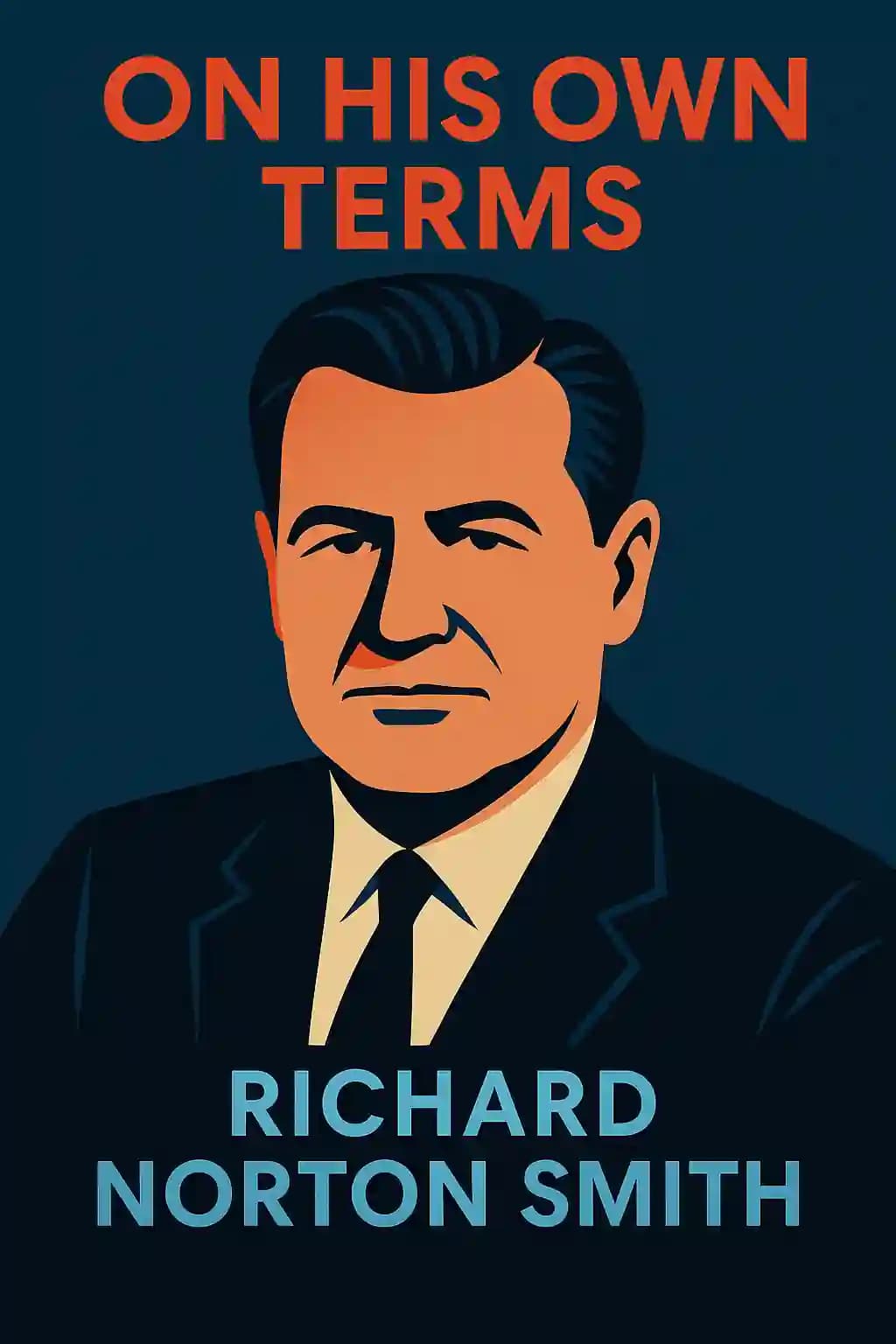
His biography became a bestseller upon publication, with The New York Times calling it "the political biography of the decade." Former Secretary of State Henry Kissinger, who first gained prominence as Rockefeller's foreign policy advisor, praised it as "the definitive account of one of America's most complex political figures." The book resonated particularly with readers interested in the evolution of American politics, as it traced the Republican Party's transformation from the moderate "Eastern Establishment" that Rockefeller represented to the conservative movement that ultimately rejected him.
Capítulo 2
The House That Privilege Built
Nelson Aldrich Rockefeller's life began at the intersection of two American dynasties. Born on July 8, 1908, in Bar Harbor, Maine, he was the product of America's most famous fortune and one of its most powerful political families. His maternal grandfather, Nelson Aldrich, was the "Boss of the Senate," while his paternal grandfather, John D. Rockefeller Sr., had built Standard Oil into the world's most profitable monopoly. Their children's marriage united raw economic power with political influence in a combination that would shape young Nelson's worldview and ambitions.
His childhood unfolded in an atmosphere of almost unimaginable privilege tempered by his parents' determination to instill values. His mother Abby, a vibrant, artistic woman who wore flamboyant hats "to cheer people up," balanced her husband Junior's stern Baptist morality. While Junior required meticulous accounting of his children's modest allowances (twenty-five cents weekly at age eight, with a third for saving and another third for church), Abby made learning a game and life a production. She gathered her children in the library each afternoon to read aloud or hear confidences, and supervised homework-setting aside extra time for Nelson's multiplication tables.
The family's Manhattan townhouse at 10 West Fifty-fourth Street, the largest private home in New York City, became what Nelson remembered as "an ongoing seminar in public responsibility" with visiting dignitaries like pianist Ignacy Paderewski and Theodore Roosevelt. Behind wrought-iron gates patterned after Hampton Court, he watched his parsimonious father turn off lights to avoid waste while enjoying the grandest of Rockefeller "Playhouses"-a $500,000 complex with swimming pool, tennis courts, and bowling alleys.
Despite this rigid upbringing, Nelson showed his rebellious spirit early, firing rubber bands at his kneeling brothers during prayers and singing off-key during Sunday evening hymns. He and brother Laurance formed an inseparable duo of mischief-makers-wiring trunks to lightbulbs for after-hours hot chocolate, staging nighttime potty races, and once pulling a rug from under a strict nurse. Nelson tormented his younger brother Winthrop mercilessly, bestowing the hated nickname "Wissy-Wissy," pulling chairs from under him, and tying him to trees. One day, the normally sweet-natured Winthrop retaliated by sinking a pitchfork into Nelson's leg.
The Rockefeller children witnessed history firsthand, including the aftermath of the "Ludlow Massacre" where National Guardsmen torched a miners' tent city in Colorado, killing women and children. This event transformed Junior from "bloodstained wretch" to progressive force in industrial relations after he personally visited the mines and implemented "the Colorado idea"-a plan for employee representation that improved conditions without unionization. This early exposure to both wealth's responsibilities and its limitations would profoundly influence Nelson's later approach to governance.
Capítulo 3
The Struggle Behind the Smile
Nelson's most formidable childhood challenge wasn't his domineering father or competitive siblings, but an undiagnosed learning disability. He suffered from dyslexia, a condition that caused him to read and write numbers backward, scramble words, and appear intellectually impaired. His tutor Wallace Worthley noted in 1920 that twelve-year-old Nelson could tackle difficult words yet misread simple ones like "the" and "as," failing to recognize how these errors changed sentence meanings.
This genetic disorder, which Nelson wouldn't hear identified until his fifties, was a source of deep shame that he buried for most of his life. Only late in his career did he speak publicly about his condition, refusing to present it as a "sob story" while acknowledging the humiliation of being unable to read the 23rd Psalm at family Vespers. The experience of struggling academically while being a Rockefeller created a complex psychological dynamic-simultaneously insecure about his intellectual abilities yet determined to prove himself through achievement.
Fortunately, Nelson found an educational environment suited to his learning style at Lincoln School. Founded on John Dewey's child-centered theories as interpreted by Abraham Flexner, the school emphasized learning by doing rather than traditional academics. Without conventional exams until senior year, students pursued interdisciplinary units based on real-life situations. Nelson excelled at mathematics despite his tendency to reverse numbers, and completed college-level physics and calculus. He gravitated toward practical subjects like carpentry, candle making, and sewing, while struggling with history and literature.
His natural leadership emerged when he spearheaded a fifth-grade constitution, complete with a chairman's oath, committee appointments, and strict rules against classroom misbehavior. Always curious, Nelson would burst into class asking, "What are we going to learn today that's new?" Headmaster Otis Caldwell cleverly channeled Nelson's attention-seeking into academic effort, assuring him he could overcome his intellectual challenges through concentration.
At Dartmouth College, Nelson found his footing. Though he might have been expected to attend an Ivy League institution with more prestige, Dartmouth's isolated location among the White Mountains, with its emphasis on physical activity and practical knowledge, suited him perfectly. Despite his name, Nelson avoided publicity, ducking photographers and requesting remote assignments when volunteering for flood relief, explaining, "If we get our picture in the paper, Father cuts our allowances."
Known as "Rocky," he cultivated relationships with professors, believing personal connections enhanced learning. Behind his sunny demeanor lurked a serious student who often retreated to Woodstock before exams for distraction-free study marathons. He advised his brother Laurance that students who "sit around in other fellows' rooms all the time and spill a lot of hot air usually don't get very far." His academic improvement culminated in Phi Beta Kappa honors-part of a strategy to convince his father to buy him a car. Through flattery and shared art gallery visits with Abby, he outmaneuvered Junior, ultimately receiving a customized black Buick deluxe roadster.
Capítulo 4
Art as Liberation and Expression
For Nelson Rockefeller, art provided both escape and expression-a realm of "absolute freedom" from conformity and family constraints. As Alfred Barr Jr. observed, "Nelson needs art more than any man I know." Preferring sculpture for its "strength and vitality" and art that "relates to life in our own day," Rockefeller rejected intellectual theorizing about aesthetics, favoring direct emotional communication. For the dyslexic Nelson, art offered a wordless language that bypassed his linguistic challenges.
His mother Abby's artistic horizons expanded as her annual art allowance doubled to $50,000. In May 1929, she met with fellow collectors Lillie P. Bliss and Mary Quinn Sullivan, along with A. Conger Goodyear, to establish the Museum of Modern Art-an institution she excitedly told Nelson would "be ready for you to be interested in when you get back to N.Y. to live." Under Churchill Lathrop's guidance at Dartmouth, Nelson immersed himself in modernism, taking drawing, sculpture, and painting classes, though his enthusiasm exceeded his talent.
Nelson's artistic passions led him to champion Diego Rivera, whose work his mother greatly admired. After hosting Rivera for lunch in January 1932, Nelson envisioned the RCA Building lobby as a showcase for modernist giants Rivera, Matisse, and Picasso. Using strategic persuasion with his father's conservative Art Advisory Committee, Nelson secured Rivera's commission despite Junior's tepid enthusiasm. Rivera promised Abby "the best of all the work I have done," and Nelson approved both the vision and Rivera's preferred fresco technique, with work beginning as Hitler gained power in Germany and Roosevelt launched the New Deal.
The Rivera mural controversy placed Nelson in an impossible position between his father's aesthetic conservatism and the artist's creative freedom. Junior, already offended by allegorical nudes above NBC's studio entrances, made his expectations clear: "My name is on this building, and I dictate what will adorn its walls." When Rivera defiantly added Lenin's portrait to his RCA Building mural, Nelson was forced to act. After requesting the artist substitute "the face of some unknown man," Rivera refused to "mutilate" his work. The standoff ended when Hugh Robertson ordered Rivera down from his scaffolding, paid his commission, and terminated the project. The mural was eventually destroyed, torn from the walls and carted away in oil drums.
This early clash between art and power, idealism and pragmatism, would foreshadow many of the contradictions in Rockefeller's later political career. His lifelong passion for collecting continued unabated, filling his homes with masterworks until he was "out of walls," creating outdoor galleries in Maine, and when costs exceeded even his means, commissioning tapestry reproductions of Picasso paintings he coveted but couldn't acquire.
Capítulo 5
A Latin from Manhattan
Nelson Rockefeller's 1937 trip to South America proved transformative, allowing him to synthesize his mother's artistic interests, his father's philanthropy, and his grandfather's business acumen into a coherent identity centered on Latin America. Though officially inspecting Venezuelan oil fields for Standard Oil of New Jersey, Nelson's true passion lay in discovering indigenous art and culture. After being rebuffed by the Metropolitan Museum when he proposed a joint archaeological mission, Nelson began assembling his own collection of Peruvian textiles, ceramics, and mummies.
In Venezuela, he was appalled by the stark contrast between Standard Oil's barbed-wire compounds for employees and the locals' pestilential shacks. Unlike many in the Eurocentric State Department who viewed Latin America with neglect or ridicule, Rockefeller had a genuine affinity for the region and its people. As John Camp, who later helped Nelson establish his Venezuelan mountain estate Monte Sacro, observed: "He was something of a Latino himself... He loved at his ranch to go out and ride horseback with local cowboys." This natural exuberance and curiosity about people served him well when engaging with everyone from campesinos to merchants in open-air mercados.
Concerned about Nazi economic inroads in South America and the negative impact of American oil companies' colonial approach, Nelson launched initiatives to improve U.S.-Venezuelan relations. During his 1939 Venezuelan trip, he challenged American indifference by meeting local newspaper editors and establishing the Venezuelan Basic Economy Corporation (VBEC). Under Nelson's direction, Creole Oil built schools, housing, hospitals, and infrastructure while combating tropical diseases. The VBEC's crowning achievement was the Hotel Avila in Caracas-a modern hacienda designed by Wally Harrison that offered first-class accommodations without the gambling casino that other developers demanded.
As Rockefeller Center reached completion in November 1939, Nelson recognized that Hitler's aggression would severely disrupt Latin American economies dependent on European trade. His diplomatic insight from negotiating with Mexico's President Cardenas served him well when crafting a proposal for U.S.-Latin American cooperation as Nazi influence spread. Despite his father's concerns about undermining Wendell Willkie's presidential campaign, Nelson accepted Roosevelt's offer to chair what would become the Office for Coordination of Commercial and Cultural Relations Between the Americas, with FDR's wry instruction to Anna Rosenberg: "When he's in trouble, he's your boy. You get him out of it."
Roosevelt dismissed concerns about Nelson's Standard Oil connections, saying "your name is connected with the Rockefeller Foundation," and gave him a free hand to choose subordinates while offering little guidance on budget: "Look, I didn't suggest this. You did. Go on, make up a program." The newly established Coordinator of Inter-American Affairs (CIAA) would report directly to the president while coordinating with other departments, placing Nelson at the heart of Washington's power structure.
Capítulo 6
The Wartime Diplomat
Nelson Rockefeller began his Washington career in August 1940 with $3.4 million from the president's emergency fund, quickly expanding from four people sharing his ornate office to supervising seventy-five employees that would eventually grow to fourteen hundred. The "Rockefeller Office" was Roosevelt's solution to the diplomatic establishment's conventional thinking, designed to counter Axis influence in Latin America. The CIAA operated in two phases: first countering Nazi influence through economic and cultural initiatives, then implementing the ambitious Basic Economy Program after Pearl Harbor to raise living standards throughout Latin America-positioning democratic capitalism against the anticipated postwar Soviet influence.
Rockefeller brought his real estate-honed organizational skills to Washington, maintaining detailed records on everyone who visited his office. He attracted top talent like Rhodes Scholar Paul Kramer, while learning crucial political lessons-such as when presidential secretary Edwin Watson advised him never to raise problems with Roosevelt without proposing solutions. Nelson proved effective in addressing Latin American economic challenges, successfully arguing for increased Export-Import Bank funding from $200 million to $700 million and implementing "preclusive buying" of strategic commodities to keep them from Nazi hands.
His most significant early achievement was confronting American companies with Nazi connections in Latin America, personally pressuring General Motors and other firms to replace over a thousand individuals identified as Nazi sympathizers. This commercial purge led to German and Italian management being ousted from Latin American airlines, with Pan American Airways becoming the beneficiary of $8 million in government contracts.
By January 1941, the Rockefellers were being invited to presidential birthday dinners and intimate Sunday suppers with the Roosevelts. FDR quickly established himself as Nelson's political father figure and role model. A master of political theater with perfect timing, Roosevelt deliberately fostered competition among his aides that created both heartbreak and creative energy-a management style that would influence Rockefeller's own approach to leadership.
After Pearl Harbor, Rockefeller secured $25 million from Roosevelt through Harry Hopkins for his Basic Economy Program. Rather than imposing unilateral aid, Nelson created partnerships called "servicios" through the Institute of Inter-American Affairs, providing U.S. technical assistance through local government agencies with gradually declining American financial support. The program included training local replacements through scholarships for some fifteen hundred public health officials. Rockefeller's initiatives introduced crop diversification, public health improvements in the Amazon Valley, and combat against diseases like yaws and bubonic plague across Latin America. By war's end, his agents had trained over ten thousand workers, making him second only to Roosevelt in popularity among Latin Americans.
Capítulo 7
United Nations and the Cold War
During a May 1943 Oval Office meeting, Roosevelt shared his vision for postwar tourism in Latin America and predicted the Soviet Union would move 40% toward capitalism while the U.S. would move another 20% toward Communism, creating a workable 40-60 relationship. Rockefeller disagreed, insisting the U.S. must lead the hemisphere against Russian influence. This fundamental difference in worldview would shape Rockefeller's approach to international relations for decades to come.
Nelson's effectiveness depended on proximity to Roosevelt, though influence didn't always follow access. He prepared meticulously for congressional appearances, memorizing committee members' faces and focusing on numerical data to compensate for his dyslexia. His father, impressed by Nelson's political skills, showed surprising tolerance when Nelson reported a $600,000 deficit over six years, attributing it to trust funds for his family, a stunning oceanfront home at Seal Harbor, art purchases, and charitable donations.
When Hull resigned as Secretary of State in November 1944, Stettinius became Secretary and appointed Nelson as assistant secretary for Latin American affairs. Rockefeller transformed his office with elegant furnishings but struggled to establish himself as a mature officer. He practiced his own brand of diplomacy, hosting Latin American representatives at his home to plan a hemispheric conference in Mexico City, and secretly dispatched an emissary to test Peron's intentions.
On February 20, 1945, delegates from twenty nations gathered at Mexico City's Chapultepec Castle for a confidence-building conference. Rockefeller's dual agenda was securing a mutual security pact and preventing Argentina from derailing proceedings. He divided his time between the American delegation and Latin delegates at La Reforma hotel, where he dramatically revealed the presence of listening devices in his suite. J. Edgar Hoover's larger surveillance operation provided Nelson with daily intelligence on delegate gossip and communications.
On April 21, Nelson flew to San Francisco for the UN conference, which mirrored many of the issues and personalities from Chapultepec but with far greater stakes. The Soviet Union sent Foreign Minister Molotov who sought voting privileges for Soviet republics and legitimization of their Polish client state. The Americans had fragmented ambitions with congressional representatives guarding against sovereignty dilution while State Department globalists pushed internationalism.
After Rockefeller's resignation was accepted, he refused to go quietly. When Secretary Byrnes told him President Truman was accepting his resignation despite Nelson's protests, Rockefeller threatened to deliver a scathing speech as a private citizen exposing what had happened since Byrnes took office. In his final meeting with Truman, Nelson made a halfhearted plea to keep his job, but found the president uncomfortably tearing paper "like a schoolboy caught with his hand in the cookie jar."
Capítulo 8
The Private Citizen as Public Entrepreneur
Following Nelson Rockefeller's dismissal from government service, his father sent a healing message praising his wartime contributions and welcoming him back to his position as President of Rockefeller Center. The New York to which Nelson returned in September 1945 was at its zenith-"the most successful place on earth" according to Daniel Patrick Moynihan. One in seventeen Americans called the city home, with Manhattan sending more representatives to Congress than Florida. The metropolis boasted 1.3 million factory workers, served as the nation's media capital, and headquartered forty-one of America's hundred largest industrial companies.
Immediately upon returning to civilian life, Nelson took on multiple civic roles while indulging his passion for art. As Abby Aldrich Rockefeller's son, he delighted in New York supplanting Paris as the world's art capital. He commissioned Fernand Leger for $5,000 to decorate the UN General Assembly walls (which Truman later compared to "a fried egg and a rabbit emerging from a hat") and supported emerging abstract expressionists including Motherwell, Pollock, Rothko, and de Kooning.
Nelson's return to Room 5600 was like a brass band at halftime. He swiftly replaced his father's aging advisers with his own team and commissioned Wally Harrison to redesign the offices with modern curves and minimalist furniture-much to Junior's dismay, though he still gifted Nelson the family townhouse at 13 West Fifty-fourth Street. Remodeled as "the Clubhouse," it served as Nelson's think tank, mess hall, and art storage facility. His boundless enthusiasm set him apart from Room 5600's hushed deference, where strict rules of discretion prevailed-one employee was dismissed after 23 years simply for being "indiscreet."
During the war, Nelson had boasted he could get anyone in Washington to take his call. Now those days were gone, with his Office of the Coordinator of Inter-American Affairs shuttered in 1946 and Latin America largely abandoned by Washington. Frustrated by his inability to influence events as the Cold War escalated, Nelson asked a revolutionary question: Could businesses function like charities? Despite lawyer John Lockwood's warning that profit motives and philanthropy were incompatible under tax law, Rockefeller stubbornly pursued his vision of "a better capitalism" that addressed social needs rather than merely seeking profit opportunities.
In July 1946, he incorporated the American International Association for Economic and Social Development (AIA), followed by the International Basic Economy Corporation (IBEC) in 1947. He personally supplied 70% of IBEC's initial $2 million capitalization, eventually investing $7 million in both ventures, with his brothers and father contributing additional millions. In Venezuela, where President Betancourt demanded a 6% profit cap and eventual Venezuelan ownership, Rockefeller launched ambitious but troubled ventures in farming, fishing, food distribution, and dairy. Despite early failures-rotting crops, spoiled butter, snake-infested fields, and wayward fishing boats-Nelson persevered, eventually establishing Venezuela's first pasteurized milk operation and successful supermarket chain that benefited local consumers through increased competition.
Capítulo 9
The Eisenhower Years and Political Awakening
As the 1948 election approached, Nelson Rockefeller, like most Republicans, anticipated a Dewey victory that would usher in a new administration. Truman's surprise victory upended these plans, though Nelson maintained cordial relationships with rising Democrats, including freshman Senator Lyndon Johnson. In January 1949, Truman's inaugural address introduced "Point Four"-"a bold new program for making the benefits of our scientific advances and industrial progress available for the improvement and growth of underdeveloped areas." Rockefeller enthusiastically supported this initiative, which echoed his own development philosophy.
By 1950, Nelson's Venezuelan business operations were losing approximately $9 million, while the outbreak of the Korean War heightened Cold War tensions. Concluding that "things were too serious in the world to just spend my time trying to get a whole bunch of little companies on a profitable basis, while Rome burnt," Rockefeller maneuvered for a return to government service. After navigating the complex relationship between President Truman and the imperious Secretary of State Dean Acheson, Nelson was appointed by Averell Harriman to chair the International Development Advisory Board implementing Point Four.
Eisenhower's presidency deeply disappointed Nelson Rockefeller, who viewed it as "an acceptance of the status quo" and "a slow retreat" before Soviet advances. Unlike his hero Franklin Roosevelt, Eisenhower's fiscal orthodoxy, reluctance to use the "bully pulpit," and dependence on subordinates like Secretary of State John Foster Dulles frustrated the action-oriented Rockefeller. Nevertheless, Nelson secured a position in the new administration when Eisenhower established the President's Advisory Committee on Government Organization (PACGO) in January 1953, naming Rockefeller as chairman.
In March 1953, Rockefeller helped create the Department of Health, Education, and Welfare by reorganizing various existing agencies around the New Deal-era Federal Security Agency. Though he might have coveted the Secretary position, Eisenhower had already selected Oveta Culp Hobby. Instead, Nelson accepted the role of HEW undersecretary-a shrewd move that would broaden his domestic policy knowledge and establish him as a team player among Republicans suspicious of his previous Democratic administration service.
As Cold War tensions escalated with both sides developing hydrogen bombs, Eisenhower declared "there is no longer any alternative to peace." Stalin's death opened possibilities for "competitive coexistence," with Soviet leaders making diplomatic overtures that necessitated a summit in Geneva. While Secretary Dulles wanted to limit the summit to identifying issues without substantive proposals, Rockefeller organized his "Vulnerabilities Panel" at Quantico-bringing together academic experts to develop bold initiatives including what would become the "Open Skies" proposal for mutual aerial inspection. When Eisenhower initially resisted the aerial inspection idea, Rockefeller boldly confronted him, eventually winning him over as public expectations for the summit grew.
Capítulo 10
Governor of New York: The Art of the Possible
In early 1957, Nelson Rockefeller targeted the New York governorship as his path to higher office, rejecting suggestions to run for NYC Mayor or U.S. Senate. He built his team around Bill Ronan, a 44-year-old NYU dean whose intimidating presence and intellectual prowess matched Rockefeller's preference for "aggressive people."
Rockefeller's campaign was intensely personal. In ten weeks, he traveled 8,500 miles, shook 100,000 hands, and gave 135 speeches. His operation, spread across three Manhattan buildings, crafted targeted appeals to diverse constituencies. Even Jackie Robinson, supporting his opponent, admitted it was "almost impossible not to like the man" due to his focused attention on each person he met.
His governorship began dramatically on New Year's Eve 1958, taking his oath on his grandmother's Bible at the Executive Mansion. Earlier that day, he had personally hung his abstract art collection, exemplifying his hands-on approach and impatience with convention.
Rockefeller excelled at tackling major challenges. "We created these problems," he would say, "and we can solve them if we put our minds to it." The New York governorship suited him perfectly, offering broad authority and no term limits. His bold style emerged immediately when he insisted on discussing tax increases in his first legislative message, declaring, "I intend to be honest with the people." He prioritized preventing crises over managing them, even when politically risky.
His most significant legacy was transforming higher education. When he took office, New York ranked 47th in public higher education support, with SUNY comprising just 29 underfunded institutions serving 39,000 students. By his departure in 1973, SUNY had become the world's largest university system with 250,000 students across 64 campuses. As SUNY Chancellor Clifton Wharton noted, "Only Nelson Rockefeller could have pulled it off," through his strategic use of trial balloons, expert panels, and adaptable planning.
Capítulo 11
The Presidential Quest: Ambition and Disappointment
Despite his success as governor, Rockefeller's presidential ambitions repeatedly met with frustration. His first serious consideration came in 1960, when he initially positioned himself as a candidate before abruptly withdrawing in December 1959. George Hinman maintained "the party was locked up, and Nelson was locked out," while Rockefeller himself admitted, "When I became insecure because of events getting out of control and beyond my capacity I always pulled back to a base which was controllable."
Rockefeller's divorce and subsequent remarriage to Happy Murphy in 1963 delivered a devastating blow to his presidential prospects. The fallout was swift and severe. Bill Mauldin published a cartoon showing Rockefeller hearing wedding bells that "first peal, and then toll." National Review publisher William Rusher quipped, "Rockefeller is the only candidate who has turned motherhood into a liability." Even liberal theologian Reinhold Niebuhr criticized him on moral grounds, while Senator Prescott Bush delivered a stinging rebuke questioning whether America had reached the point where a governor could "persuade a young mother of youngsters to abandon her husband and children."
Rockefeller's commanding 43-26 percent lead over Goldwater among Republican voters evaporated, with Goldwater pulling ahead 35-30 percent by month's end. The newlyweds attempted damage control through public appearances, but Happy struggled with her new public role despite conquering her shyness to please Nelson. At one reception, a woman spat on the floor rather than shake Happy's gloved hand. Albany insiders mockingly called the Executive Mansion "the Woman's Exchange."
The 1964 Republican convention in San Francisco marked a stark contrast to the party's confident 1956 gathering in the same city. Inside the Cow Palace, conservative forces loyal to Barry Goldwater dominated, steamrolling opposition from moderates like Rockefeller. The platform barely mentioned Eisenhower while criticizing the Moscow-Washington hotline. When Rockefeller called to congratulate Goldwater after his nomination, the senator snapped, "I don't want to talk to that son of a bitch." Goldwater's selection of William Miller as running mate and his acceptance speech declaring "extremism in the defense of liberty is no vice" further alienated moderates.
Rockefeller's 1968 presidential campaign was a study in contradictions: late-starting, poorly managed, and thematically incoherent. The campaign suffered from revolving-door leadership rather than unified direction, with Rockefeller shifting from a low-key delegate courtship that ignored Nixon to becoming Nixon's harshest critic after Bobby Kennedy's assassination. Despite spending as much as $10 million on the first-ever pre-convention television ad blitz, the campaign demonstrated what money couldn't buy: a candidate with sufficient fire in his belly and coherent direction.
Capítulo 12
Attica and the Rightward Turn
Rockefeller's fourth inaugural was subdued, held in a snowstorm with a half-empty assembly chamber. His thirteenth year marked a turning point as he faced a severe budget crisis, pushing for federal revenue sharing while proposing an $8.45 billion "stopgap crisis" state budget balanced through increased taxes and unprecedented borrowing.
Though he remained ambitious, proposing a $4 billion community development bond, his influence waned at 62. Republican legislators increasingly followed Assembly Speaker Perry Duryea, anticipating the post-Rockefeller era. Personal setbacks followed when Martha Baird Rockefeller's death in January 1971 halved his financial access to $500 million.
The prison system suffered from chronic underfunding, with its budget share falling to 3%. By 1971, Attica prison had become volatile-housing 2,243 inmates (mostly black) supervised by 398 almost exclusively white guards. Inmates faced poor conditions, confined to tiny cells for up to sixteen hours daily with inadequate food and facilities.
On September 9, while Rockefeller was in Washington, a minor incident at Attica escalated into a full-scale uprising. Inmates seized control of cell blocks, taking 38 hostages, and severely beating Officer William Quinn. Black Muslims protected the hostages while Commissioner Oswald managed the crisis.
Despite multiple appeals, including from civil rights leaders and Oswald himself, Rockefeller refused to visit the prison. The situation ended violently when state forces stormed the facility with shotguns and tear gas. In six minutes of chaos, troopers and officers fired into D Yard, resulting in the deaths of 26 inmates and 9 hostages.
Rockefeller initially celebrated the operation, telling Time magazine he was "absolutely overwhelmed" by hostage rescues. His public statement expressed sympathy only for hostage families while praising state forces' "restraint." In a recorded call, Nixon supported Rockefeller's decision "to the hilt," while Rockefeller defended his actions and called it "a beautiful operation."
Capítulo 13
The Closest He Would Ever Get
On August 7, 1974, Mel Laird informed Rockefeller he was being considered to succeed Ford as Vice President following Nixon's resignation. Initially skeptical, Nelson's prospects improved, with even liberal columnist William Shannon advocating for his selection.
Ford extended a conditional offer on August 16, which Rockefeller accepted despite family concerns and warnings from Bill Ronan about the constraints of White House service. Ford promised unprecedented domestic policy oversight-a pledge that would later evolve as Ford grew into his presidency.
When Dick Dunham questioned taking a position so misaligned with Rockefeller's style, Nelson confessed: "But Dick, this is the closest I'm ever going to get..." to the presidency. Initial media response was favorable, though conservative Republicans were privately outraged.
Tensions mounted between Rockefeller and Rumsfeld as they clashed over the vice president's role. Rumsfeld's reorganization of White House structure effectively diminished Ford's earlier promises of significant authority. Though Ford assigned Rockefeller various tasks in national security, personnel, and special projects, these proved largely ceremonial.
Rockefeller's policy initiatives-from inner-city youth programs to energy independence-faced consistent resistance from an administration focused on limiting spending. His comprehensive 800-page report from regional forums received minimal attention. As one associate noted, after his tenure as governor, Rockefeller struggled to accept his secondary role in the Ford White House.
Though Rockefeller eventually secured approval for $3.6 billion in federal loans to New York City, his influence was waning. Facing pressure from conservatives and polls showing Rockefeller could cost him significant Republican votes, Ford asked him to withdraw from the 1976 ticket. At their October 28 meeting, when Ford cited political advisers viewing him as "a liability," Rockefeller graciously stepped aside, stating he had "no ambitions" and was there only to help.
Capítulo 14
The Day of the Dead
"I'm 67 years old," Rockefeller told a friend after his 1976 ticket removal. "Why should I stay down here picking do-do with the chickens?" His newfound candor led to controversy when he claimed Communist sympathizers had infiltrated Senator Henry Jackson's office, forcing a public apology.
By summer 1976, Rockefeller's powers were waning. Staff found him increasingly difficult and prone to indiscretions, including revealing classified intelligence about Soviet phone monitoring to Time magazine. His confusion sometimes showed-after a briefing on chlorofluorocarbons, he asked, "How do all those spray cans get up there?"
At the Kansas City convention, Rockefeller worked tirelessly for Ford. "He worked himself to the bone," recalled Brent Scowcroft. His most notable moment came when he tossed a Reagan campaign sign under Dick Rosenbaum's chair, sparking chaos. Behind the scenes, he helped defeat Rule 16c, blocking Reagan's attempt to force Ford's early running mate selection.
In January 1977, he delivered a self-deprecating speech at the Alfalfa Club, joking about his vice presidency and unfulfilled presidential ambitions. Back in New York, he struggled to reorganize Room 5600 and secure Kykuit's future as a museum, decisions that divided both family and Republicans.
Despite declaring his intention to live to a hundred, his health deteriorated. His weight reached 220 pounds, and he installed mobility aids at his Japanese House. Friends noticed his diminished vitality, with Canzeri noting, "It was over. He had had his last hurrah."
On January 26, 1979, at 11:16 p.m., emergency services responded to a call at 13 West Fifty-fourth Street. Accounts of the scene varied-police found him clothed amid work papers, while paramedics reported finding him nude with unfinished Chinese food nearby. Despite resuscitation efforts, he was pronounced dead at 12:20 a.m.
His February 2 funeral at Riverside Church drew twenty-two hundred mourners, including President Carter, Gerald Ford, and representatives from forty-four nations. Henry Kissinger's eulogy captured Rockefeller's essence-"ebullient yet withdrawn, gregarious and lonely, joyful and driven." The service concluded with Lionel Hampton's jazz band playing "Sweet Georgia Brown," Rockefeller's chosen exit music.