Capítulo 1
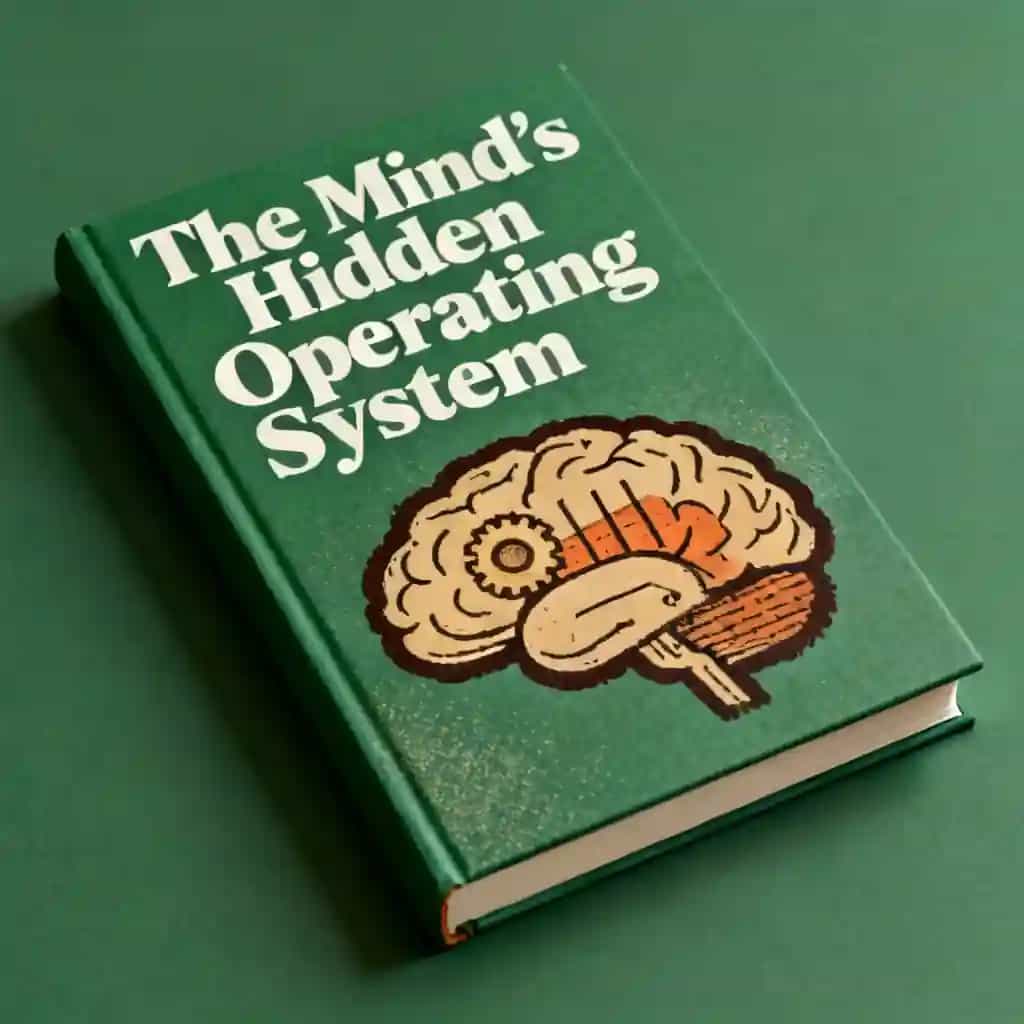
Your Brain's Hidden Operating System: A Journey Through Mind Hacks
Imagine being able to peer inside your own brain, to understand why you see faces in clouds, why you can't tickle yourself, or why your memory sometimes plays tricks on you. Tom Stafford and Matt Webb's "Mind Hacks" offers exactly this-a user's manual for the most complex device you'll ever operate: your own mind. Since its publication in 2004, this book has become a cult favorite among neuroscience enthusiasts, tech professionals, and anyone fascinated by how our minds work. Even celebrities like Tim Ferriss have cited it as inspiration for understanding cognitive biases and mental shortcuts. What makes this book revolutionary isn't just its accessible explanations of complex neuroscience, but its hands-on approach-each "hack" is a practical experiment that reveals how your brain processes information, often in surprising ways that challenge your perception of reality itself.
Capítulo 2
The Brain: Not a Computer, But a Prediction Machine
Our brains aren't passive receivers of information-they're active prediction machines constantly making educated guesses about the world. The book demonstrates this through numerous experiments showing how our perception is constructed rather than simply recorded. Take vision, for instance. We think we see everything in our visual field with perfect clarity, but in reality, only a tiny portion-about the size of your thumbnail held at arm's length-is in high resolution. The rest is a clever illusion created by your brain.
This predictive nature explains phenomena like the "broken escalator effect," where you feel a strange lurching sensation when stepping onto a stationary escalator. Your brain, having learned to expect motion, prepares your body for it even when you consciously know the escalator isn't moving. Similarly, when you tickle yourself, your brain predicts the sensory consequences of your actions and dampens the response, which is why you can't tickle yourself but others can tickle you.
These aren't just interesting quirks-they reveal fundamental principles about brain function. Our brains evolved to be efficient, not accurate. They make assumptions based on past experiences and environmental regularities, like assuming light comes from above (which is why shaded circles appear as either bumps or dents depending on where the shading is). When these assumptions are violated, we experience illusions or perceptual errors that reveal the shortcuts our brains take.
The book shows how these predictive mechanisms extend beyond perception to movement, memory, and even social interaction. When you see someone perform an action, mirror neurons in your brain activate as if you were performing that action yourself, creating an internal simulation that helps you understand and predict others' behavior. This explains why yawning is contagious and why we unconsciously mimic the postures and mannerisms of people we're interacting with.
Capítulo 3
Visual Processing: The Grand Illusion
Our visual system doesn't work anything like a camera. Instead, it's a sophisticated construction site where different brain regions process specific aspects of the visual scene-color in one area, motion in another, depth in yet another-before combining them into a seamless whole. This modular processing explains many visual illusions and quirks in our perception.
Consider change blindness-our surprising inability to notice even dramatic changes in a scene when they occur during a brief interruption. In one famous experiment, a researcher asked pedestrians for directions, and during the conversation, confederates carrying a door passed between them, allowing the researcher to switch places with someone else. Remarkably, half the participants failed to notice they were now speaking to an entirely different person! This happens because our brains don't store complete representations of scenes but instead focus on elements deemed important, filling in the rest as needed.
The book demonstrates how our visual attention is severely limited. In the famous "invisible gorilla" experiment, participants counting basketball passes often completely miss a person in a gorilla suit walking through the scene. This isn't a failure of vision but of attention-our brains actively suppress information deemed irrelevant to the current task.
Even more fascinating is how motion is processed. The book explains phenomena like the "motion aftereffect," where staring at a waterfall for a minute makes stationary rocks appear to flow upward when you look away. This happens because neurons that detect downward motion become fatigued, making the relative activity of neurons detecting upward motion appear stronger. The brain interprets this imbalance as upward motion, even though nothing is actually moving.
The book also explores how we perceive depth through various cues like perspective, occlusion, and binocular disparity. One particularly interesting demonstration shows how we use shadows to determine three-dimensional shapes-simple gradient-filled circles can create powerful illusions of bumps or dents depending on how they're shaded. This works because our visual system assumes light comes from above, a reasonable assumption in our evolutionary environment but one that can be easily exploited to create illusions.
Capítulo 4
The Attentional Bottleneck: What We Miss and Why
Our perception isn't limited by our senses but by our attention. The book demonstrates how attention acts as a filter, directing resources toward certain tasks while suppressing others. This filtering can be so effective that we become completely blind to obvious events occurring right before our eyes when our attention is focused elsewhere.
The "attentional blink" phenomenon shows how our ability to notice things suffers in the half-second after we've just spotted something else. This happens because processing one target requires attentional resources, temporarily reducing our ability to process new information. In experiments where letters flash by at ten per second, participants often miss the second target letter if it appears within half a second of the first one.
Interestingly, video games-particularly action-based first-person shooters-can train and improve these attentional capabilities. Research shows that regular gamers develop enhanced visual attention, with shorter attentional blink periods and improved ability to track multiple objects simultaneously. In one study, just ten days of playing a first-person shooter for an hour daily produced measurable improvements in visual attention metrics.
The book also explores how attention is allocated in physical space rather than independently across sensory modalities. When you focus attention in visual space, it affects what you hear in auditory space. This explains why drivers often quiet passengers or turn off the radio when navigating difficult situations-they're intuitively managing their attentional resources by reducing demands in one sensory channel to focus on another.
Even more fascinating is how our brain punishes features that "cry wolf." After ignoring a stimulus once, the brain becomes temporarily inhibited from responding to it-a psychological parallel to the fable. This "negative priming" explains why we struggle to notice things we've previously ignored, showing how our attention system doesn't just enhance what's relevant but actively suppresses what isn't.
Capítulo 5
The Sound of Thought: How Hearing Shapes Perception
Unlike vision, which processes ongoing scenes, hearing specializes in detecting events and changes-vibrations, collisions, movements, and breaks. The book explains how our auditory system excels at temporal processing, with resolution far superior to vision. While 24 frames per second in film creates the illusion of continuous movement, 24 clicks per second are clearly perceived as separate sounds. This difference becomes even more apparent in music, where listeners can distinguish between notes played just milliseconds apart, enabling the appreciation of complex rhythms and melodies that would be impossible to process visually.
This temporal precision allows us to detect silence gaps as brief as 1 millisecond and perceive timing differences between ears down to 20 microseconds-5,000 times faster than an eye blink. This remarkable capability explains why we rely on sound for timing information and vision for spatial information. When these senses combine, each dominates in its specialty area-vision for location, hearing for timing. This specialization is evident in everyday scenarios, such as locating a chirping bird in a tree or determining which car in traffic honked its horn. Our brains seamlessly integrate visual and auditory information, with each sense contributing its strengths to create a complete perceptual experience.
The book demonstrates how our brains extract meaning from speech through specialized processing. When your brain expects language, it activates assumptions that help extract meaning from sounds arriving at up to 50 phonemes per second. This explains why degraded speech becomes intelligible once you know what's being said-your brain uses context to fill in the gaps. This phenomenon is particularly evident in noisy environments like crowded restaurants, where we can follow conversations despite significant background noise, or when listening to accented speech that becomes clearer as our brain adapts to the speaker's patterns.
Fascinatingly, the book shows how words aren't just arbitrary labels-their sounds carry meaning too. The classic experiment with "maluma" and "takete" shapes demonstrates sound symbolism-people consistently match the rounded shape with "maluma" and the spiky shape with "takete." This reveals how sound and meaning naturally connect in our minds, with the sounds themselves providing clues to meaning. This connection extends beyond simple shapes to emotions and concepts - words containing long vowels often describe slower, larger things, while sharp consonants frequently appear in words describing quick or abrupt actions. Similar patterns appear across different languages, suggesting a universal aspect to sound symbolism. For instance, words for "small" often contain high-frequency sounds like 'i' (petit, piccolo, little), while words for "large" tend to use deeper vowels (grand, grande, large).
The integration of sound and meaning in language processing demonstrates the sophisticated nature of our auditory system, which not only processes temporal information with incredible precision but also helps shape our understanding of the world through subtle acoustic cues and patterns. This understanding has implications for everything from language learning to marketing, where sound symbolism can influence brand names and product perception.
Capítulo 6
Cross-Modal Integration: When Senses Collaborate
Our sensory systems don't operate in isolation but work together to create a unified experience. The book explores how this integration occurs and how it can sometimes lead to surprising perceptual effects.
The McGurk effect demonstrates how vision can completely alter what we hear. When watching a video of someone saying "ga ga" while the audio plays "ba ba," most people hear "da da"-a compromise between the visual and auditory information. This integration happens preconsciously and completely outside voluntary control, showing how deeply vision influences what we "hear."
Similarly, looking at your skin makes it more sensitive to touch, even when you can't see what's touching you. Research shows that people are significantly more accurate at distinguishing between one or two tiny rods pressed against their forearm when they can look at their arm beforehand. Most remarkably, when subjects viewed their forearm through a magnifying glass, their tactile sensitivity nearly doubled compared to when they couldn't see their arm at all.
Events that stimulate multiple senses simultaneously feel more intense in each sensory channel. People experience sounds as up to twice as loud when a small vibration is simultaneously applied to their finger, with the effect being strongest for quieter sounds. This multisensory enhancement occurs because information arriving through multiple senses is more likely to represent a real event rather than coincidence.
The book also explores how our attention operates as a central, spatially allocated resource across all senses. Processing information from multiple senses is most efficient when the sources are spatially aligned. In driving simulator experiments, participants made more errors, drove slower, and took longer at junctions when listening to speakers placed to the side rather than on the dashboard. This spatial constraint on attention likely reflects the physical organization of our cortical processing structures.
Capítulo 7
Memory: Construction, Not Recording
Memory isn't a faithful recording of past events but an active construction process influenced by our expectations, beliefs, and current context. The book demonstrates how easily memories can be manipulated and how their reconstructive nature makes them susceptible to distortion.
One striking demonstration uses the Deese/Roediger/McDermott paradigm. When shown lists of related words (like "thread," "pin," "eye" around the concept "needle"), people frequently "remember" seeing words that weren't actually presented. Subjects report genuinely remembering these phantom words rather than just guessing, with the false memories sometimes becoming stronger than memories of words actually seen.
This occurs because items are represented in relational networks, with each concept connected to its associates. When multiple associates are activated, the central connecting concept receives activation from all directions, making it feel familiar even though it was never presented. This demonstrates how internal representations can be elicited without intention and later confused with external events.
The book also explores how context affects memory retrieval. Because memories are entangled with one another, relearning part of a forgotten skill or knowledge set makes related memories more accessible too. For example, when relearning forgotten French vocabulary, studying just one category of words improves recall for other categories that weren't explicitly practiced.
This happens because the fundamental currency of memory is associations, not items. Human memory is content-addressable, meaning we can access information through anything associated with it, not just through specific tags assigned at storage time. This is unlike computer memory, which requires exact file paths or names.
The ancient memory technique known as the method of loci leverages this associative nature of memory. By placing items along a familiar route, we can recall them by mentally walking the route later. This technique works because the hippocampus, specialized for landmark recognition and spatial navigation, is also crucial for episodic memory. Recent evidence suggests our ability to remember events evolved from our capacity to encode locations in space.
Capítulo 8
The Social Brain: Mirrors and Mimicry
Our brains are fundamentally social, with specialized systems for understanding and interacting with others. The book explores how we automatically mimic others' behaviors, recognize emotions, and infer intentions from minimal cues. This social wiring is so deep that even newborns show preference for face-like patterns within hours of birth, demonstrating our innate capacity for social connection.
We have dedicated neural machinery for recognizing faces despite their remarkable similarity to one another. The fusiform facial area, located in the temporal lobe, activates more when viewing faces than other objects and specializes in processing upright faces. This region is so specialized that damage to it can result in prosopagnosia, a condition where individuals cannot recognize faces, even those of close family members. Our visual system focuses primarily on the mouth and eyes-features essential for face recognition and emotional expression. These areas contain the richest social information, allowing us to detect subtle emotional changes and social signals. Even with partial or degraded images like low-quality CCTV footage, we can still identify faces effectively, showcasing our brain's remarkable ability to reconstruct and recognize facial patterns.
The book demonstrates how we automatically follow others' eye gaze, a deeply ingrained behavior so powerful that even cartoon eyes can influence our mental processing. This happens because gaze direction provides valuable information about what others find important or threatening in the environment. Studies show that infants as young as three months old follow adult gaze patterns, and this behavior becomes increasingly sophisticated with age. In social situations, people unconsciously create "attention triangles" by following each other's gazes, facilitating shared attention and social learning.
Perhaps most fascinating is how we unconsciously mimic others' behaviors. In experiments on the "Chameleon Effect," participants unknowingly mirrored confederates' behaviors like face-rubbing or foot-shaking. Research shows this mimicry increases rapport and liking between individuals, serving as social glue. This nonconscious imitation extends to tone of voice, speech patterns, and sentence structure, explaining why long-married couples come to resemble each other both behaviorally and physically. Even subtle accents and linguistic patterns can be unconsciously adopted during brief conversations.
The mechanism involves mirror neurons in the frontal cortex that activate both when performing an action and when merely observing someone else perform it. These neurons represent the concept of actions like "grasp" regardless of who's doing it, creating a direct link between perception and action. This system is so sophisticated that it can distinguish between intentional and accidental actions, helping us understand others' goals and intentions. Just as hearing a word primes related words without conscious awareness, seeing someone's movements activates corresponding mirror neurons, making you more likely to perform similar actions. This mirror neuron system appears to be crucial for empathy, learning, and social bonding, with research suggesting its dysfunction may play a role in conditions like autism spectrum disorders.
Capítulo 9
Hacking Your Own Brain: Practical Applications
Beyond explaining how the brain works, the book offers practical techniques for enhancing cognitive function and manipulating your own mental states. These range from memory improvement strategies to mood manipulation techniques, providing a toolkit for optimizing mental performance and emotional well-being.
For memory enhancement, the book recommends changing learning contexts to build more robust memories. The contextual interference effect demonstrates that practicing skills in random order produces better learning than practicing in blocks. For example, when learning Japanese characters or handwriting, mixing up practice of different letters results in better retention than practicing one letter repeatedly before moving to the next. This principle extends to other skills like musical instruments, where practicing different pieces in alternation leads to stronger long-term retention than mastering one piece at a time. The book suggests creating varied learning environments by studying in different locations, at different times of day, or while listening to different background music.
Mental training alone can significantly increase physical strength, highlighting the profound mind-body connection. In one study, volunteers who only imagined tensing a finger muscle for 15 minutes daily improved strength by 35% after 12 weeks, compared to 53% improvement in those who physically exercised the muscle. Using EEG measurements, researchers determined that strength increases came primarily from enhanced brain-to-muscle signaling, not from physical muscle development. This principle has been successfully applied in sports psychology, where athletes use visualization techniques to improve performance in everything from basketball free throws to Olympic diving.
The book extensively explores how we can manipulate our own emotions through facial expressions and body posture. By placing a pen between your teeth (forcing a smile) or under your nose (creating a frown), you can actually change your emotional state. This works because emotional expressions aren't just byproducts of our affective system-they actively create and maintain our emotional experiences through a three-stage process: perception triggers mimicry, which produces emotion. Research shows that maintaining an upright posture can increase confidence and reduce negative emotions, while power poses can boost testosterone levels and reduce stress hormones.
Environmental factors have surprisingly powerful effects on our moods and behaviors. In one experiment, participants who spent just 5 minutes working with words related to impoliteness were four times more likely to interrupt a conversation afterward compared to those who worked with polite words. Similarly, merely thinking about stereotypes can dramatically alter our behavior-psychology undergraduates who solved word puzzles containing terms associated with elderly people walked significantly slower afterward, unconsciously adopting the stereotype. The book details how these priming effects influence everything from consumer behavior to academic performance, and offers strategies for using them advantageously, such as surrounding yourself with success-related imagery or using specific vocabulary to enhance desired behavioral outcomes.
The text also explores how simple environmental modifications can boost cognitive performance. Exposure to natural settings, even briefly, can improve attention and memory. Temperature, lighting, and ambient noise levels all significantly impact mental function, with research showing that slight background noise (around 70 decibels) can actually enhance creative thinking compared to complete silence.
Capítulo 10
The Illusion of Control: When Consciousness Lags Behind
Perhaps the most profound insight from the book is how little conscious control we actually have over our thoughts and actions. Our experience of self-caused actions isn't as straightforward as it seems. EEG readings show brain activity preparing for finger movement occurs about 400 milliseconds before we consciously decide to move. This suggests our feeling of conscious will may be added after our brain has already decided to act.
The pendulum experiment demonstrates how we can produce movements without feeling we've consciously caused them. When holding a pendulum over a cross and asking yes/no questions, the pendulum typically swings to indicate the correct answer through subtle, unconscious muscle movements we don't experience as self-caused. This ideomotor effect explains phenomena like Ouija boards and dowsing. We produce these movements ourselves but don't feel ownership of them.
Daniel Wegner suggests we experience conscious will only when we interpret our thoughts as causing our actions, based on three principles: priority (thought precedes action), consistency (thought matches action), and exclusivity (thought is the only plausible cause). With the pendulum, our tiny muscle movements produce disproportionately large swings, violating the consistency principle and leading us to disown the action.
This reveals our brain's limited insight into its own workings-it's often more efficient to infer mental causation than to have direct access to all decision-making processes. Our conscious experience is more like a story we tell ourselves about why we did something rather than an accurate record of the causal processes involved.
The book demonstrates how concepts aren't simply in or out of our thoughts but exist at varying levels of accessibility. Recently used concepts and those related to what we're currently thinking about remain closer to consciousness, ready to emerge with minimal prompting. This priming effect explains why we suddenly notice a new word everywhere after learning it, or why hunger makes everything remind us of food.
Even more remarkably, subliminal perception occurs below the threshold of consciousness but can still influence preferences. Brief exposures to images (as short as 5 milliseconds) that aren't consciously perceived can create subtle preferences for those images when encountered later. While this effect is limited to simple stimuli and cannot create powerful urges or override existing decisions, it demonstrates how our behavior can be influenced without our awareness.