Capítulo 1
The Frugal Revolution: Finding Freedom Beyond the Paycheck
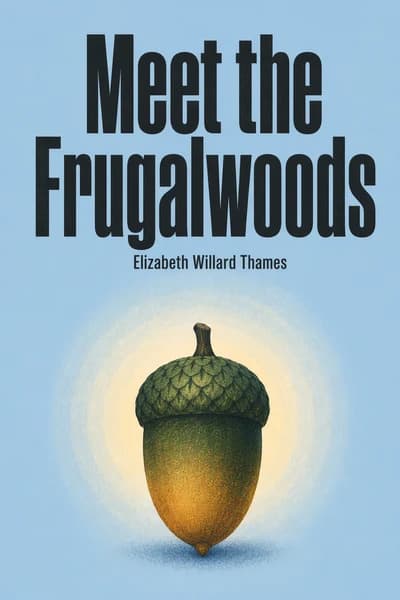
In a world obsessed with consumption, Elizabeth Willard Thames and her husband Nate discovered an alternative path to happiness. Before turning thirty-three, they achieved financial independence and moved to a 66-acre Vermont homestead-not because they were exceptional, but because they rejected consumer culture's definition of success. Their journey, chronicled in "Meet the Frugalwoods," has inspired thousands to reconsider their relationship with money and time. This isn't just another financial advice book; it's a radical reimagining of what constitutes a good life. As Thames asks her readers: "What would you do if you didn't need your paycheck?" The answer to this question transformed her family's existence from one of quiet desperation to deliberate joy.
Capítulo 2
From Cubicle Despair to Radical Reinvention
Fresh out of college with honors from the University of Kansas, Elizabeth found herself in a beige warehouse removing staples from documents-hardly the meaningful career she had envisioned. Despite sending her carefully crafted resume to fifty-three nonprofits nationwide, not one responded. The formula she'd trusted-college, good grades, good job, happily ever after-was failing her spectacularly. Like many of her generation, she discovered that traditional paths to success weren't as straightforward as promised.
After landing an AmeriCorps position in New York City, she experienced economic extremes that would shape her future perspective. Living on $833.33 monthly in a pre-gentrified Crown Heights apartment, she depended on food stamps while simultaneously visiting billionaire donors in their palatial Manhattan homes for her nonprofit work. Her daily commute became a study in contrasts - from her neighborhood's dollar stores and check-cashing outlets to the doorman buildings and luxury boutiques of the Upper East Side.
The contrast was jarring-wealthy people obsessed with household staff and summer homes yet appearing deeply unhappy, while her neighbors struggled with entrenched poverty. She witnessed billionaires argue over wine cellars and vacation schedules, while families in her building shared bedrooms and worked multiple jobs. "Neither world felt right," Thames reflects. "The wealthy obsessed over household staff and summer homes while appearing deeply unhappy. My neighbors struggled with poverty I was merely visiting. Both extremes seemed to miss something essential about what makes life meaningful."
This experience taught her about her own privilege and sparked a desire for a life where money wasn't central. She began saving aggressively, squirreling away 50% of her modest income, determined to find a middle path between extreme wealth and poverty. She tracked every penny, packed lunches, and discovered free entertainment options throughout the city. Meanwhile, her relationship with Nate continued long-distance via $15 Fung Wah bus rides between New York and Cambridge-the uncomfortable but affordable option that reflected their emerging values. These marathon bus rides became time for reflection and planning their future together.
When they finally reunited in Cambridge, the couple resisted the lifestyle inflation that trapped their peers. While friends upgraded to condos with stainless appliances and matching West Elm furniture, they kept Nate's once-white hide-a-bed and assembled IKEA furniture themselves. They watched as colleagues celebrated promotions with new cars and designer wardrobes, while they continued biking to work and shopping at thrift stores. This frugality wasn't deprivation but strategic preparation for a different future-one that would eventually lead them far from the corporate ladder they were expected to climb. They were laying the groundwork for financial independence, though they didn't yet have a name for it.
Their unconventional choices raised eyebrows among family and friends, but they remained committed to their developing philosophy that less could be more. Every decision to live below their means strengthened their resolve and their bank account, setting the stage for the radical life changes that would follow.
Capítulo 3
The Treadmill of Achievement and Empty Success
By her mid-twenties, Elizabeth had meticulously collected all the traditional markers of success that society deemed important-a sparkling engagement ring, a respectable job in public broadcasting, and a comfortable apartment shared with her fiance in Boston's vibrant cityscape. Yet beneath this carefully constructed facade of achievement, a persistent emptiness gnawed at her. Working in development at Boston's prestigious WGBH public broadcasting station, her days were filled with the mechanical precision of donor communications, each letter crafted from the confines of a sterile gray cubicle that seemed to mirror her growing sense of disconnection.
The reality of her role became increasingly clear: she was essentially a social coordinator for wealthy potential donors, orchestrating elegant events and writing perfectly worded letters that felt devoid of genuine impact. The mammoth machine of public broadcasting continued its operations while she questioned whether her small contributions made any meaningful difference in the world.
A pivotal conversation with Win, her boss's boss, shattered her preconceptions about career success. When Elizabeth anxiously sought guidance about measuring professional achievement, Win's response was revolutionary: success wasn't confined to office walls but extended into personal fulfillment, family connections, and building a well-rounded life. This perspective stood in stark contrast to Elizabeth's deeply ingrained belief that career accomplishments should be the primary source of life satisfaction.
"Within weeks, I was slumping at my desk, toggling through repetitive tasks-thanking donors, asking for donations, stewarding donations-wondering how I'd endure forty more years of this development associate deja vu," Thames writes. Her life had become a endless cycle of preparation and recovery: Monday through Friday trapped in office routine, weekends spent dreading Monday's return. This exhausting pattern left no room for self-discovery or pursuing genuine interests.
The 2008 financial crisis delivered a harsh wake-up call. When both Elizabeth and Nate's workplaces announced potential layoffs, the foundational belief their parents had instilled-that dedication and hard work guaranteed job security-crumbled before their eyes. Though they ultimately retained their positions, the experience fundamentally altered their relationship with money, pushing them toward aggressive saving habits born from newfound financial anxiety.
After three years of professional and domestic stasis, Elizabeth sought escape through academia. Graduate school represented both a retreat to familiar territory and a defensive move against future career uncertainty. This decision led them to Washington DC, where she pursued a master's degree driven not by genuine academic passion but by deep-seated insecurity about her professional credentials. The demanding program pushed her to physical limits, surviving on a diet of convenience food and stress-induced grape-eating sessions during late-night classes.
Their unexpected salvation came through discovering hiking, though Elizabeth initially resisted the activity. In nature's vast indifference to human concerns, she found a surprising source of comfort and perspective. During one memorable ninety-minute hike in Rock Creek Park, emotional barriers finally broke as she wept with relief, recognizing how desperately she needed release from her self-imposed pressures. The regular weekend hiking excursions gradually transformed both Elizabeth and Nate, providing what had been missing from their achievement-focused lives: authentic self-confidence, broader perspective, and most importantly, self-acceptance independent of professional accomplishments.
Capítulo 4
Finding Home and Purpose Through Frugality
After years of city-hopping in search of happiness, Elizabeth and Nate had become quasi-experts in Cambridge real estate, visiting roughly 270 open houses over eighteen months. This wasn't just weekend entertainment-it was a methodical education in property investment. They meticulously analyzed price per square foot, studied condo association rules line by line, and scrutinized reserve funds rather than getting emotional about granite countertops or trendy backsplashes. Their real estate agent, initially frustrated by their hesitancy to commit, eventually accepted that they were just "nutso nerd yuppies" determined to find the perfect intersection of value and potential.
Their data-driven approach paid off spectacularly when they purchased their Cambridge home for the lowest price per square foot that season - a full 15% below market average. Located in the rapidly gentrifying Inman Square neighborhood, it was a single-family home-a true rarity in Cambridge where over 80% of properties are condos-with four bedrooms and two baths. Despite being what Elizabeth playfully calls a Cambridge "McMansion," it had languished on the market for fifty days due to its aggressively dated decor and the notorious former crack den next door, which had since been renovated into luxury condos.
The true turning point in their journey came on March 29, 2014, during what started as an ordinary coffee shop conversation when Nate unveiled a meticulously calculated blueprint for radically transforming their lives. Starting from their shared love of hiking in the White Mountains and Vermont's Green Mountains, he proposed they actually move there permanently. With their combined income exceeding $200,000 and their impressive 40-50% savings rate, Nate had calculated that in exactly three years and five months, they could accumulate enough capital to buy a rural Vermont homestead, rent out their Cambridge house for passive income, and either take lower-paying jobs aligned with their values or no traditional jobs at all.
That night over frozen pizza and spreadsheets, they committed to the plan without hesitation. Nate also revealed he'd already purchased a domain name and set up a WordPress blog for Elizabeth, anticipating she'd need a creative vocation in their new rural life. Though initially furious at his presumptuous planning, she began writing experimental posts and published her first official entry on April 9, 2014, discovering an outlet for her long-dormant passion for storytelling and financial education.
Their extreme frugality wasn't about deprivation or penny-pinching, but rather about finding creative, less expensive options that yielded similar or even superior results. They discovered joy in cooking elaborate meals at home instead of dining out, hosting game nights instead of expensive entertainment, and finding free outdoor activities. This approach saved thousands monthly while maintaining their quality of life, creating momentum to find even more opportunities for savings. Frugality evolved from a necessary sacrifice into an invigorating challenge where they got to "win at their own life" by constantly optimizing their spending and happiness ratio.
Both Elizabeth and Nate discovered they were naturally wired for delayed gratification-classic "second-marshmallow kids" who could sacrifice immediate pleasures for greater future rewards. Since they were working toward their concrete goal of moving to the woods and achieving financial independence, frugality wasn't experienced as deprivation but rather as strategic positioning for their dream life. Every dollar saved wasn't just money in the bank-it was another step closer to their Vermont homestead and the freedom to design their ideal lifestyle.
Capítulo 5
Breaking Free from Consumer Culture's Beauty Myths
Elizabeth's journey toward financial independence unexpectedly led her to confront deeply ingrained beliefs about her appearance. Since freshman year of high school, she'd never gone anywhere without makeup, harboring deep-seated beliefs that her natural appearance needed fixing. Her morning routine had become absurd-putting on makeup while riding the bus to work just to save ten extra minutes of sleep. She calculated that she spent nearly an hour each day on her appearance, translating to over 300 hours annually devoted to maintaining societal beauty standards.
Six months into extreme frugality, when her concealer ran low, she couldn't justify spending money on makeup when they'd given up other meaningful purchases. A quick calculation revealed she'd been spending over $2,000 annually on beauty products alone. Breaking away from consumer norms had opened her eyes to how she'd molded herself to fit cultural expectations. She gradually eliminated makeup products one by one over a month, though kept mascara as her security blanket. Each discarded product represented both financial savings and emotional liberation.
"Going to work without makeup felt both terrifying and empowering," Thames writes. "I'd vanquished the voice whispering 'you're not good enough' in my ear." She documented her feelings during this transition, noting how the first week was the hardest, with constant urges to check her reflection and anxiety about colleagues' reactions.
She discovered that not wearing makeup didn't change her relationships or success. People didn't even notice. Her feminist interior monologue was now written as a declaration of independence on her face. The time and mental energy previously spent on appearance transformed into productivity and self-discovery. She also confronted her excessive clothing collection, realizing she could wear different outfits daily for two months straight. After cataloging her wardrobe, she found she owned 157 pieces of clothing, most worn only once or twice. She imposed an all-out ban on buying clothes-a ban that would ultimately last three years-recognizing that clothing purchases were emotional decisions filling a void in her self-worth rather than meeting actual needs.
For her hair, she debated for a year before letting Nate cut it. After researching on YouTube and creating bullet-point instructions, they achieved a decent layered cut that wasn't quite salon-perfect but was free. This brought a new level of intimacy to their marriage-another opportunity to collaborate and depend on each other. The bi-monthly haircut sessions became a ritual of trust and connection, saving them approximately $720 annually in salon expenses.
Through abandoning conventional beauty routines, Elizabeth recognized she'd been enslaved to a pursuit of perfection designed to keep her buying things she didn't need and working jobs she didn't care about. She calculated that her beauty-related expenses had consumed nearly 15% of her previous discretionary spending. By simply stopping these unnecessary acts of consumption, she transformed how she felt about herself. She was no longer preoccupied with appearance, but with personal growth. This shift freed up not just money, but mental bandwidth for more meaningful pursuits like writing, hiking, and developing genuine connections with others. Her journey became less about looking different and more about being different - more authentic, confident, and financially independent.
Capítulo 6
The Path to Financial Independence and Life on Your Own Terms
After over a year of extreme frugality, Elizabeth and Nate had reached their peak savings rate of 82% some months (not including 401(k) contributions or mortgage principal). Financial independence-the point where you no longer need to earn money to live-became their north star. Their plan rested on five key elements: maxed-out employer-sponsored retirement accounts, investments in low-fee index funds, real estate as a rental property, a donor advised fund for tax-advantaged charitable giving, and a cash reserve for emergencies. They meticulously tracked every dollar, using spreadsheets to monitor their progress and adjust their strategy as needed.
"The path to financial independence is straightforward," Thames explains. "With only three variables-income, expenses, and time-frugality becomes a compounding proposition that accelerates progress. The less you spend, the more you save, the faster you save it, and the less money you need overall." They discovered that reducing their annual expenses by just $1,000 meant needing $25,000 less in their retirement portfolio, based on the 4% safe withdrawal rate principle.
Their frugality extended to their approach to parenthood. When Elizabeth became pregnant after thirteen months of trying to conceive, they were determined to upend the conventional wisdom that children are always expensive. They sourced nearly everything secondhand-from cribs to car seats to clothes. When friends learned they wanted castoffs, a mother lode of baby goods came pouring in. They approached safety sensibly, researching hand-me-down items to ensure they weren't expired or recalled. This approach saved them an estimated $12,000 in the first year of their child's life compared to average new parent spending.
"For us, frugality wasn't deprivation but a way to teach our child to value ingenuity over consumption," Thames writes. "Instead of spending time shopping or working longer hours to buy more stuff, we chose to spend that time with our child. What kids truly need isn't expensive toys but their parents' presence, attention, and love." They created enriching experiences through free activities like nature walks, library visits, and community events, proving that meaningful childhood experiences don't require significant financial investment.
Their extreme frugality enabled them to pay cash for two used cars-a 2010 Subaru Outback ($12,000) and a 2010 Toyota Prius ($9,000)-just months after buying their homestead without selling their Cambridge home. By buying these six-year-old vehicles, they realized discounts of 55% and 62% off their original prices. Their research showed that both models had excellent reliability ratings and low maintenance costs, further supporting their long-term financial strategy. They calculated that avoiding car payments saved them over $700 per month in potential loan payments and higher insurance premiums.
"This exemplifies how frugality compounds," Thames explains. "By avoiding car payments and other non-mortgage debt, we saved at a higher rate, allowing us to pay cash for major purchases, enabling us to save even more." This compounding effect accelerated their path to financial independence, as each frugal decision created a cascade of future savings opportunities. They estimated that their combined frugal choices-from housing to transportation to daily expenses-reduced their annual spending by over $40,000 compared to their peers, while actually improving their quality of life through intentional living.
Capítulo 7
Finding Community and Creating a Third Way
After two years of searching for the perfect rural property, Elizabeth and Nate found a sixty-six-acre parcel with a beautiful house, barn, gardens, streams, fields, and a pond in central Vermont. Despite being eight months pregnant, they hiked the land, sat on the back porch eating apples from trees not fifty feet away, and Elizabeth knew-this was their home. The clincher? It had high-speed fiber internet.
By July 2016, just two months after moving to rural Vermont, they had found the community connection they'd always craved. At their town's Fourth of July celebration, they participated fully-bringing watermelons and pies, setting up tents, and helping with the chicken lunch. Their small town of 400 people offered a richness of community they'd never experienced in the city, where despite living mere inches from neighbors, they hardly knew anyone.
"Here, neighbors stopped by with homemade jam, offered help without expectation of payment, and formed cross-generational relationships that enriched our lives," Thames writes. "One neighbor even became our daughter's adopted grandmother, watching her weekly and allowing us monthly date nights-a gift we'd never experienced in urban life."
In this rural Vermont community, they discovered what was missing in their urban lives. Unlike empty offers to "stop by sometime" in the city, when Elizabeth made similar offers in Vermont, neighbors actually appeared in her garden the next morning. This community defied market forces and social norms-not much money changed hands, but work got shared around, from fixing the town's well to serving on nonprofit boards.
Elizabeth and Nate created their own rhythm of life-their personal "third way." They never set alarm clocks and aren't any one thing all the time (homesteaders, internet workers, parents) but an amalgamation. They wanted diversity in their days and now have it, experimenting without a handbook for this unconventional life.
"Just as we used money unconventionally for years, we now apply those lessons to how we use time," Thames explains. "Consumer culture dictates we should attend college, get jobs, marry, buy houses, have kids, and work forty years to support an expected lifestyle. But it's not the only way."
They've also charted a third path in balancing work and family-they both work and both stay home with their daughter daily without paid childcare. This arrangement, enabled by the internet and remote work, requires ruthless prioritization of time and money toward what matters most.
Capítulo 8
Smoothing Out the Happiness Curve: A Life Without Regrets
Rather than living for weekends and vacations, Elizabeth and Nate have created a life delivering ongoing happiness daily. Before embracing extreme frugality, their lives resembled a spiky graph with peaks of milestones and valleys of mundane workdays that they'd offset by spending money. Through frugality, they elevated their baseline to permanent contentment.
"We've stepped outside the loop of working jobs we don't enjoy to afford consumer goods that temporarily soothe our discontent," Thames writes. "Our culture's 'treat yourself' mentality masks fear that we'll never realize long-term dreams, becoming a self-fulfilling prophecy as spending derails progress toward actual goals."
Extreme frugality isn't penance but deliverance-they live luxuriously on their own terms, not beholden to anyone. They've discovered that rarity enhances enjoyment, and they savor experiences like dining out precisely because they're infrequent. They've simplified their lives by asking what they can stop doing, needing, and buying.
Their first weeks on the homestead, Elizabeth continued the marathon pace of their previous four months-unpacking in two days, applying minimalist principles to their possessions, then frantically tackling outdoor projects: repairing culverts, digging trenches, chopping firewood, and weeding gardens. Exhausted and overwhelmed, they finally realized they needed to stop.
One June evening, instead of working the land, they played Scrabble on the back porch with wine, sinking into gratitude for achieving their unusual dream so young. They accepted that not everything would get done that first year-the vegetable gardens, firewood, chickens, hiking trails, apple cider, and pond bridge repairs could wait.
"Living on sixty-six acres meant never being bored, but we needed to live with abundant gratitude rather than desperation over unfinished projects," Thames reflects. They established a daily family hike through their woods, continuing year-round, which refreshes her every time. She learned that joy isn't a completed to-do list but appreciating each day's simple routine and not needing vacation from your life.
Today, they clear their own hiking trails together, with their daughter Stella asleep in a hand-me-down Ergo on Elizabeth's chest. The trail loops around their property's perimeter, starting and ending at their house. For winter, they repurposed a hunter's game sled lined with blankets for Stella instead of buying a specialized child sled at four times the price. With snowshoes on, they can hike any day of the year right outside their front door-no planning, driving, or taking time off work required.
After four years of dedicated frugality, Elizabeth has reached profound contentment, freed from stressing about appearance, possessions, and conventional success. Financial independence has given them options and security against calamity, regardless of whether they continue working. They've created a balance between cerebral work and physical labor on their homestead, living in harmony with the seasons rather than disconnected from nature as they were in the city.
"What would you do if you didn't need your paycheck?" Thames asks again. For her family, the answer was creating a life so satisfying they never need to escape from it-a radical notion in our vacation-obsessed culture. Their story isn't about extreme deprivation but about the freedom that comes from aligning your resources with your deepest values. It's about creating a life you don't need a vacation from.