Capítulo 1
The Alchemy of Excellence: Transforming Potential into Mastery
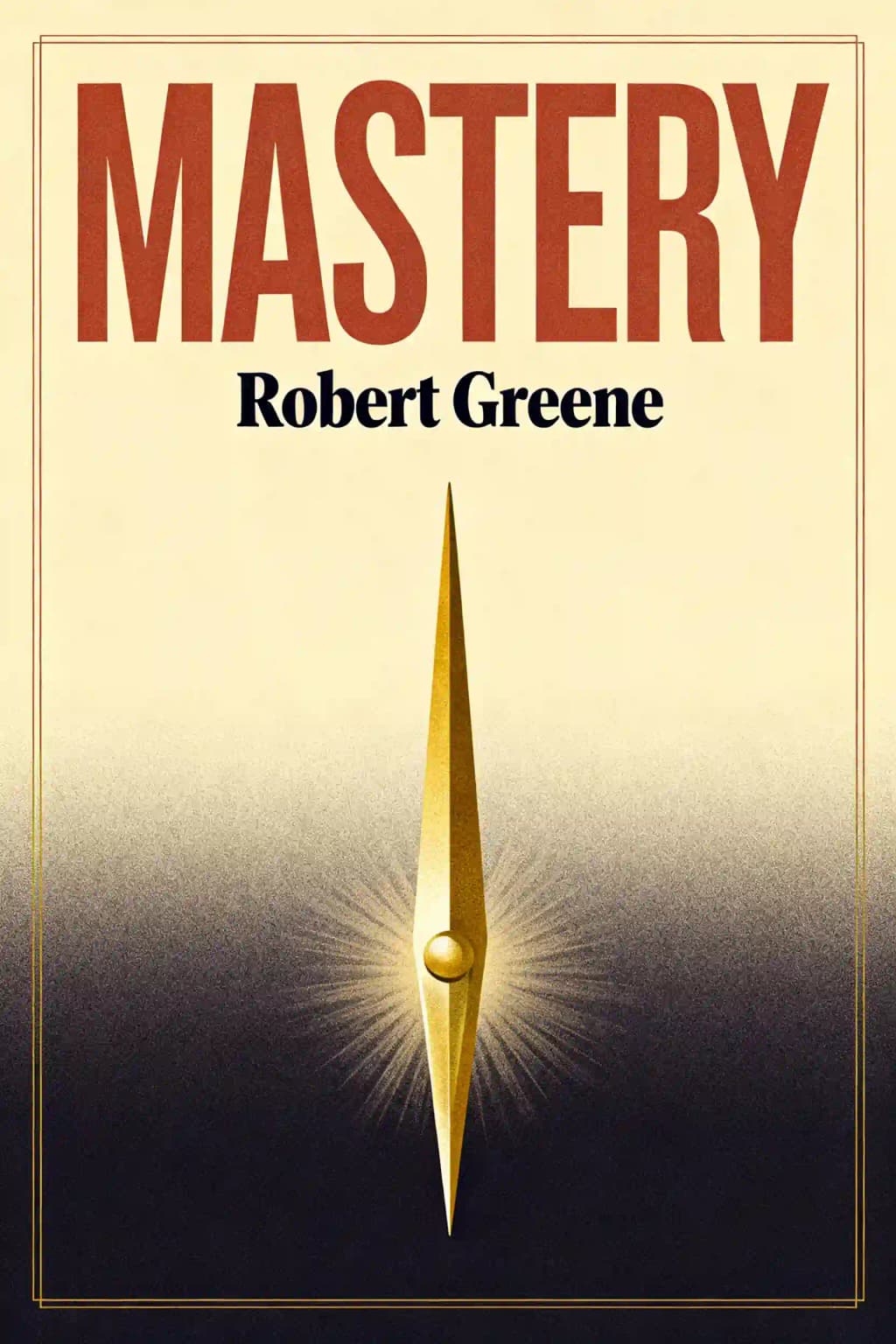
What if the greatest power available to humans isn't money, fame, or influence, but something far more profound? Robert Greene's "Mastery" has become a modern classic for a reason-it's the guidebook Elon Musk reportedly gives to his executive team, the manual Tim Ferriss calls "the book I recommend most often," and the text that countless artists, entrepreneurs, and innovators credit with transforming their approach to excellence. This isn't just another self-help book-it's a deeply researched exploration of how true mastery develops, drawing from both historical legends and contemporary experts to reveal the universal patterns behind extraordinary achievement.
Capítulo 2
The Path to Power: Understanding True Mastery
Mastery represents the highest form of power available to humans-a sensation of complete control and heightened intelligence in a field or skill. This power isn't mystical or reserved for geniuses. It's the natural outcome of a specific developmental journey that transforms our minds and connects us to reality in profound ways.
The journey begins with our evolutionary heritage. Our ancestors developed unique cognitive abilities that set humans apart: the capacity to detach and focus, mirror neurons that allow us to think inside others' experiences, and the ability to master time through planning. These evolutionary adaptations created the foundation for mastery.
What we often call "genius" isn't magical but the result of deep focus and dedicated practice. Charles Darwin, for instance, wasn't born brilliant-he followed his natural inclination toward natural history, engaged in intense practice, sought mentorship, and experienced creative breakthroughs. His journey reveals the universal pattern behind mastery.
Our culture's obsession with quick results and passive consumption threatens our potential for mastery. We're encouraged to seek immediate gratification rather than deep engagement. Yet the desire for mastery remains fundamental to human nature. Our brains are remarkably plastic, capable of reshaping themselves through practice and focused attention.
This path to mastery follows three distinct phases: the discovery of your Life's Task (your unique calling), an apprenticeship period where you acquire essential skills, and finally, a creative-active phase where you transform knowledge into innovation. The culmination is true mastery-where intuition and rationality fuse, allowing you to see more of reality than others can perceive.
Capítulo 3
Discovering Your Life's Task: The Inner Voice of Destiny
Leonardo da Vinci wasn't born into privilege-as an illegitimate child denied formal education, he faced significant barriers. Yet by following his natural curiosity and artistic talents, he achieved unparalleled mastery across multiple disciplines. How? He reconnected with his deepest inclinations-what Greene calls the "Life's Task."
Within each of us lies a seed of uniqueness that, when nurtured, blossoms into our authentic calling. This isn't supernatural destiny but a deep connection to our unique qualities and interests. Often, reconnecting with childhood inclinations reveals these authentic interests before social pressures intervened. Your perfect vocation emerges when you align work with these inner tendencies.
"I knew I wanted to be an artist when my father caught me melting my sister's dolls to make sculptures," confessed contemporary artist Teresita Fernandez. This early fascination with transforming materials foreshadowed her groundbreaking sculptural work that would eventually earn her a MacArthur "genius grant."
Finding your Life's Task requires specific strategies. You might examine your origins for primal inclinations, as Einstein's childhood fascination with a compass revealed his lifelong interest in invisible forces. Or you might seek your perfect niche, as neurologist V.S. Ramachandran did by investigating unusual neurological cases that others overlooked, using his cross-disciplinary knowledge to make breakthroughs.
Sometimes discovering your path requires rebellion against false paths imposed by others. Mozart eventually rebelled against his father's controlling influence, following his true musical vision despite financial risks. This rebellion led to his most innovative compositions.
Even apparent setbacks can reveal your Life's Task. When Parkinson's disease ended Freddie Roach's boxing career, he discovered his true calling as a trainer. His condition actually enhanced his teaching abilities by forcing him to develop extraordinary observational skills.
In moments of crisis, your authentic path may suddenly become clear. After contemplating suicide following business failures, Buckminster Fuller experienced a profound realization that his life belonged to the universe. This epiphany led him to dedicate himself completely to serving humanity through his unique gifts.
Temple Grandin's story offers a powerful counterpoint. Diagnosed with autism at age three, she struggled with language and social skills. Rather than internalizing others' judgments, she focused on her strengths: visual thinking, connection with animals, and building abilities. Her supposed limitation became her greatest strength, leading to revolutionary designs in livestock handling that now process half the cattle in the United States.
Capítulo 4
The Ideal Apprenticeship: Transforming Knowledge into Power
Charles Darwin's five-year voyage on the HMS Beagle represents the quintessential apprenticeship-a period of intense, self-directed learning that transformed a directionless young man into a revolutionary scientist. Despite initial seasickness and loneliness, Darwin adapted by focusing outward rather than on his discomfort. In Brazil, he was mesmerized by the intense variety of wildlife, observing fierce struggles for survival that would shape his thinking on natural selection.
The apprenticeship phase represents the most critical period in your life-a practical education that recurs whenever you change careers or acquire new skills. This phase contains many dangers: insecurities, emotional conflicts, and learning disabilities that can persist throughout life. To avoid these pitfalls, you must follow the path established by the greatest Masters-an Ideal Apprenticeship that transcends all fields.
This apprenticeship unfolds in three essential, overlapping steps:
First comes Deep Observation (The Passive Mode). When entering a new environment, you encounter a world with established rules, procedures, and social dynamics. Your task is to observe and absorb this reality deeply. You'll observe two essential realities: the rules governing success and the power relationships within the group. Every task, no matter how menial, offers opportunities to observe. You're like an anthropologist studying an alien culture, not there to change it but to understand it.
Next comes Skills Acquisition (The Practice Mode). Every career path involves mastering specific skills that should be reduced to something simple and essential that can be practiced. This learning process leads to tacit knowledge-a feeling for what you're doing that's hard to verbalize but easy to demonstrate. To master skills effectively, focus on one skill at a time rather than multitasking, embrace the inevitable tedium of early practice, and understand the neurological process: with enough quality practice time-typically 10,000 hours or 7-10 years-you'll reach a level where your mind organizes vast information and becomes creative with it.
Finally comes Experimentation (The Active Mode). As you gain skill and confidence, you must transition to a more active mode before you think you're ready. This involves taking on greater responsibility and exposing your work to criticism, testing your character and developing detachment from your work.
Throughout history, Masters in all fields have devised strategies to help them pursue and complete an Ideal Apprenticeship. When choosing where to apprentice, prioritize learning opportunities over pay, as Benjamin Franklin did by choosing his brother's printing business over his father's more lucrative candle-making shop. Keep expanding your horizons, as writer Zora Neale Hurston did by transforming even menial jobs into learning opportunities.
Approach learning with a sense of inferiority, as Daniel Everett did when he finally made progress with the Piraha language by abandoning his academic superiority and learning like a child. Trust the process, pushing through emotional barriers-boredom, panic, frustration-knowing that with sufficient practice, skills become hardwired and internalized.
Move toward resistance and pain, deliberately practicing what you find most difficult. Bill Bradley transformed himself from a slow, gawky basketball player into a star through relentless, creative practice-putting weights in his shoes, wearing vision-restricting glasses while dribbling, and creating elaborate training routines to overcome his natural limitations.
View failures as apprenticeships in themselves. Henry Ford's first two automobile ventures failed despite his mechanical genius, but he viewed these failures as invaluable lessons, identifying the root problem: financiers meddling in design matters. With this knowledge, he created a new assembly system with complete independence, producing the lightweight, simple Model A.
There are no shortcuts to mastery-even apparent prodigies like Mozart and Einstein required their full apprenticeship periods. Mozart didn't produce truly original work until after ten years of composing, and Einstein developed his first revolutionary theory after a decade of intense thought experiments. The apprenticeship phase cannot be circumvented-it's how our brains develop complex skills that become embedded deeply enough to enable true creativity.
Capítulo 5
The Mentor Dynamic: Accelerating Your Growth
Michael Faraday's transformation from a bookbinder's apprentice to one of history's greatest experimental scientists illustrates the extraordinary power of mentorship. Born into London poverty, seemingly destined for manual labor, Faraday's curious mind led him to books on electricity that ignited his scientific passion. His detailed notes from chemist Humphry Davy's lectures caught the scientist's attention, eventually leading to employment as Davy's assistant.
Under Davy's mentorship, Faraday learned experimental techniques and scientific thinking, particularly witnessing Davy's brilliant diamond experiment proving that diamonds were pure carbon. After eight years of apprenticeship, Faraday made his breakthrough discovery demonstrating electromagnetic rotation-the precursor to electric motors. Though their relationship eventually soured when Davy jealously tried to block Faraday's recognition, the knowledge transferred through mentorship had already transformed Faraday's potential into creative power.
Mentors don't provide shortcuts, but they streamline the learning process. Their knowledge becomes yours; they direct you away from errors and provide real-time feedback. This concentrated learning has added value-fewer distractions, deeper internalization through focused practice, and natural flourishing of ideas.
The mentor-protege relationship's power comes from its emotional quality: mentors feel invested in your education while you admire and model yourself after them, creating a two-way connection that transcends typical teaching. Think of learning as alchemy-knowledge exists like base metal, but needs to be heated and animated within you. The mentor serves as the philosopher's stone, efficiently transforming this knowledge into gold.
When choosing a mentor, align your selection with your Life's Task and future vision. Frank Lloyd Wright exemplified this by leaving a prestigious firm to work with Louis Sullivan, whose innovative approach matched Wright's architectural vision. Consider whether your path requires someone progressive or someone who will nurture your idiosyncrasies.
In our modern culture, where self-esteem is prioritized over honest criticism, finding a mentor who offers "tough love" is essential. Masters have suffered to reach their position and know what's required for mastery. They can gauge our weaknesses and prescribe necessary ordeals. Seek mentors who will hold up the mirror that reflects your true self, provide challenging feedback, and help you develop confidence based on realistic self-appraisal rather than grandiosity.
The solution to the apprentice's dilemma-balancing receptivity with developing your own voice-is subtle. You must be receptive to your mentors while gradually cultivating distance, adapting their ideas to your circumstances, and eventually even growing competitive with them. As Leonardo da Vinci said, "Poor is the apprentice who does not surpass his Master."
The mentor relationship naturally faces challenges: it can become stale, resentment can develop as skill gaps narrow, and generational differences in worldview may create distance. The solution is developing an interactive dynamic where both parties remain open to each other's ideas. This approach aligns with democratic values but shouldn't diminish respect. The protege must first demonstrate complete openness to instruction, earning the mentor's respect through teachability.
While mentors are invaluable, sometimes circumstances force self-education. Thomas Edison exemplifies this path to mastery. By age twelve, poverty compelled him to sell newspapers, developing curiosity about everything he encountered. Without formal schooling, he turned to books, particularly on science, conducting experiments and teaching himself watch repair. Those forced onto this path must develop extreme self-reliance-reading voraciously, applying knowledge through experiments, finding role models in public figures, and internalizing their wisdom.
Capítulo 6
Social Intelligence: The Hidden Dimension of Mastery
Benjamin Franklin's transformation from social naivety to mastery of human nature reveals a crucial truth: technical skill alone isn't enough. After early social failures, Franklin determined to step back emotionally in all interactions, focusing completely on others rather than his own insecurities. He adopted a philosophy of radical acceptance of human nature, recognizing that people possess ingrained qualities that are futile to change.
This approach proved remarkably effective. When his former employer Keimer rehired him with the secret intention of exploiting his knowledge before firing him, Franklin read the situation perfectly. Rather than reacting emotionally, he strategically built customer relationships, learned new skills, and prepared to launch his own business. Later, when politician Isaac Norris opposed his appointment as clerk to the legislature, Franklin again applied his social intelligence. By requesting to borrow a prized volume from Norris's rare book collection and showing genuine appreciation, Franklin transformed a potential foe into a lifelong ally.
Social intelligence requires accepting people as they are rather than trying to change them. We must learn to observe others deeply, turning our emotions outward to understand their perspectives instead of focusing on our own feelings. The Naive Perspective-our tendency to idealize or demonize others based on childhood patterns-blinds us to people's true nature.
To truly read people, we must access our natural but underdeveloped capacity for nonverbal understanding. By directing our attention outward rather than remaining self-absorbed, we can tap into the same sensitivity our ancestors possessed. The process begins by training yourself to notice tone, body language, and emotional cues rather than just words.
Throughout history, certain negative human traits have consistently appeared across cultures and time periods. These "Seven Deadly Realities"-Envy, Conformism, Rigidity, Self-obsessiveness, Laziness, Flightiness, and Passive Aggression-are particularly dangerous because people disguise them, revealing their true nature only through harmful actions that catch us by surprise.
Developing social intelligence not only improves your relationships but enhances your creativity and thinking. Benjamin Franklin exemplified this connection-his ability to recognize people's uniqueness and connect with diverse individuals directly translated into his scientific work, patient problem-solving approach, and literary character development. The human brain is interconnected-our social intelligence evolved alongside other reasoning abilities.
Your work is your greatest means of expressing social intelligence. By being efficient and detail-oriented, you demonstrate concern for the group. Clear communication shows care for your audience. Involving others and accepting feedback reveals comfort with group dynamics. Solid work also protects you from political machinations-results are hard to argue with.
Creating a conscious persona is another key element of social intelligence. We all wear masks in social settings, playing different roles in different environments. By consciously crafting an intriguing, masterful persona, you give people something compelling to witness while maintaining control over their perceptions.
Temple Grandin, despite her autism making social interaction difficult, developed a remarkable ability to see herself objectively. After experiencing professional setbacks, she realized her social deficiencies were threatening her career. Using her unique ability to view herself from outside, Grandin analyzed past mistakes as if watching another person. Though this realization came through intellectual analysis rather than empathy, she systematically corrected these behaviors.
When dealing with difficult people, follow Johann Wolfgang Goethe's example. Finding aristocratic court life unbearable, with courtiers obsessed over trivial gossip rather than substantive ideas, Goethe devised a strategy: he would talk little, listen attentively, and observe them as if they were characters in a play. Their petty dramas and inane ideas became endless material for his future novels and plays, transforming his social frustrations into a productive game.
Capítulo 7
The Creative-Active Phase: Awakening the Dimensional Mind
Wolfgang Amadeus Mozart's creative transformation illustrates the journey from technical mastery to true innovation. After twenty years of apprenticeship that gave him prodigious memory and technical mastery across all genres, Mozart broke free from his father's control and the provincial Salzburg court. This painful break triggered an unprecedented creative explosion.
Mozart transformed the symphony and piano concerto with larger orchestras, expanded movements, and emotional depth previously unknown. His opera Don Giovanni flowed as a continuous whole rather than static segments, using innovative techniques like character-specific musical motifs and ensemble counterpoint. Though initially too radical for audiences, Mozart's innovations permanently transformed European music.
As you accumulate skills and internalize the rules of your field, your mind naturally seeks to apply this knowledge creatively. What impedes this process isn't lack of talent but attitude-anxiety and insecurity make you conservative with knowledge, preferring to conform rather than innovate.
The creative task must involve your entire self-emotions, energy, character, and mind. The task you choose must have an obsessive element that connects deeply with you. This emotional commitment translates directly into your work; half-hearted efforts produce lackluster results.
As we progress on creative tasks, our minds naturally tighten, considering fewer alternative possibilities. The only solution is to consciously implement strategies to loosen the mind and welcome alternative thinking. Five strategies can stretch and loosen the mind in all directions:
First, cultivate Negative Capability-the ability to remain in uncertainty without rushing to judgment. Creative people temporarily suspend their ego to experience what they see without immediate judgment. They embrace mysteries and contradictions, willing to have cherished opinions challenged by reality.
Second, allow for serendipity. Keep a notebook with you constantly, recording any ideas or observations that come to mind-especially during fringe awareness moments before sleep or upon waking. This juxtaposition of disparate elements sparks new associations.
Third, alternate your mind through "The Current"-a constant alternation between observation and speculation. Darwin noticed strange phenomena during his voyage-extinct animal bones, marine fossils on mountaintops, island species differing from mainland counterparts-and began speculating on their meaning. This cycling between observation and theory allowed him to eventually perceive evolution.
Fourth, alter your perspective. Creative thinking is essentially expanded vision that sees beyond conventional boundaries. Pay attention to anomalies-those odd phenomena that don't fit existing explanations. Marie Curie's investigation of uranium's strange luminescent properties led to her discovery of radioactivity, completely transforming scientific understanding of matter.
Finally, revert to primal forms of intelligence. Our ancestors developed sophisticated forms of intelligence long before language existed-visual thinking, pattern recognition, spatial orientation, and mechanical aptitude. The most creative minds throughout history have accessed these pre-linguistic forms of intelligence. Einstein claimed words played little role in his thought process, relying instead on "certain signs and more or less clear images."
In the creative journey of Masters, a consistent pattern emerges: They begin with intuition and excitement about a project's potential. As they give their concept shape, they enter heightened focus. But Masters are never easily satisfied-they detect flaws in their original concept that weren't initially apparent. The work process becomes more conscious, less intuitive, and the once-vibrant idea begins feeling stale. They work harder, creating more inner tension and frustration. At the peak of tension, they let go-perhaps by sleeping, taking a break, or temporarily working on something else. Almost inevitably, the solution comes to them in this moment of release.
The Creative-Active phase brings new challenges beyond the intellectual-the work is more demanding, more public, and more scrutinized. Six common pitfalls threaten our progress: complacency, conservatism, dependency, impatience, grandiosity, and inflexibility. The greatest may be impatience-convincing yourself work is complete when it isn't, losing energy, and reusing old ideas as shortcuts.
Capítulo 8
The Ultimate Power: Fusing Intuition with Rationality
Marcel Proust's journey to mastery exemplifies the final transformation. Born frail and sickly, his childhood isolation led him to develop intense powers of observation and a passion for reading. Despite his social oddities-mixing past and present, dissecting emotions with unnerving precision-he possessed remarkable charm and sociability. His fascination with high society provided material for his writing, as he studied characters with entomological precision.
After early failures, including his poorly received first book and an abandoned novel, Proust found discipline through translating John Ruskin's works. Following his parents' deaths, he withdrew from society and began what would become "In Search of Lost Time"-a masterwork where real life and fiction intertwined, with Proust observing and incorporating actual people and experiences into his expanding narrative, feeling the social realm he depicted come alive within him like a spider sensing vibrations on its web.
Throughout history, Masters across all disciplines describe experiencing heightened intellectual powers after years of immersion in their fields. Chess master Bobby Fischer saw "fields of forces" beyond mere chess moves; pianist Glenn Gould perceived entire musical architectures; Einstein visualized new ways of understanding the universe. These practitioners all described "seeing more"-grasping entire situations through images or ideas, experiencing what we call intuition or "fingertip feel."
This intuitive intelligence has evolutionary roots in our survival as a species. While animals rely on instinct for immediate responses to danger, humans developed reasoning powers that required detachment from immediate circumstances. This detachment allowed pattern recognition but created a dangerous slowdown in reaction time. The solution was intuition-a higher form of instinct developed through years of immersed experience.
Modern intuition functions through memory networks in the brain. When confronted with problems, these networks activate below consciousness, searching for connections. Masters develop such extensive memory networks that their brains constantly discover connections between information. Rather than reasoning step-by-step, solutions arise with immediacy.
The path to mastery depends on recognizing our unique ways of thinking and perspectives. Even qualities that might seem like weaknesses-unusual empathy, visual thinking patterns, or other distinctive cognitive traits-are often our greatest strengths. Unfortunately, as deep conformists, humans often see their unique qualities as disabilities after being ridiculed or criticized.
Leonardo da Vinci's mastery began with his childhood fascination with nature. As an illegitimate son barred from traditional education, he spent his youth exploring the countryside around Vinci, drawing the insects, birds, flowers, and dramatic landscapes he encountered. Through drawing, thinking and observation became fused in his mind-a way of truly understanding the world.
Leonardo developed a philosophy that guided all his work: by focusing intensely on details-diverse noses, expressive lips, veins in hands, tree knots-he believed he was approaching the secret of life itself. He invented rigorous exercises to perfect his vision: taking endless walks to notice something new in familiar objects, sketching countless facial expressions from brothels to churches, capturing bodies in motion, and conducting meticulous anatomical dissections.
The reversal to mastery is denying its existence or importance, which leads only to powerlessness and disappointment-enslavement to what Greene calls "the false self." This false self consists of internalized voices from parents, friends, society, and your own ego, all protecting you from unflattering truths.
In reality, mastery isn't about genetics or luck but following your natural inclinations and deep desires. Everyone has such inclinations. By moving toward mastery, you make a profound contribution to society, enriching it with discoveries and insights. The true selfishness is merely consuming what others create while retreating into limited goals and immediate pleasures.
As Nietzsche observed, genius isn't miraculous but the result of active, directed thinking, zealous observation, and continual learning-activities available to all who refuse to be limited by false beliefs about their capabilities. The path to mastery is available to anyone willing to embark on the journey.





![[7db1fdd0-1099-4ec6-ad34-336671b38df6:c0001] The Laws of Human Nature.pdf p1-1](/_next/image?url=https%3A%2F%2Fd1y2du6z1jfm9e.cloudfront.net%2Fassets%2Fpodcast%2Fblue.png&w=1024&q=50)


