Transform your life with Joyce Meyer's practical guide to building 14 empowering habits. This Christian bestseller blends spiritual wisdom with actionable steps, resonating with thousands seeking intentional living. What daily "God Habit" do influential believers practice that revolutionizes their entire approach to personal growth?
Joyce Meyer, bestselling author of Making Good Habits, Breaking Bad Habits, is a globally influential Christian teacher, speaker, and founder of Joyce Meyer Ministries.
With a focus on practical biblical principles for personal growth, Meyer draws from her own journey of overcoming trauma and addiction to guide readers in transforming mindset and behavior. A leader in the self-help Christian genre, she has authored nearly 100 books, including Battlefield of the Mind and Living Beyond Your Feelings, which emphasize spiritual resilience and emotional healing.
Her daily TV and radio program, Enjoying Everyday Life, reaches millions worldwide, reinforcing her authority in faith-based habit formation. Meyer’s nonprofit ministry, established in 1985, hosts international conferences and distributes humanitarian aid across 120 countries.
Her works have been translated into 150 languages, with over 100 million copies sold, cementing her legacy as a trusted voice in Christian personal development.
Making Good Habits, Breaking Bad Habits provides actionable strategies to replace destructive behaviors with positive routines. Joyce Meyer emphasizes habit formation through repetition, environmental cues, and faith-based discipline, highlighting that habits take ~66 days to solidify. The book combines biblical principles with practical tools like “implementation intentions” (if-then planning) to address health, productivity, and relationships. A New York Times bestseller, it’s rooted in Meyer’s Christian teachings.
This book suits anyone seeking faith-aligned habit transformation, particularly Christians valuing biblical integration. It’s ideal for those struggling with procrastination, overspending, or emotional detachment from harmful routines. Professionals, parents, and personal development enthusiasts will find actionable frameworks for excellence, responsibility, and generosity.
Yes—it offers research-backed techniques (e.g., 66-day habit formation) paired with spiritual guidance, making it unique among self-help guides. Meyer’s emphasis on incremental progress (“one day at a time”) and resilience after setbacks provides a compassionate roadmap for lasting change. Critics note its heavy religious focus, but secular readers can adapt core strategies.
Meyer defines habits as automatic behaviors triggered by contextual cues (time, location, emotions) that operate with minimal conscious effort. Unlike deliberate actions, habits often lack emotional engagement, making them harder to change without intentional strategy.
The “God Habit” involves daily spiritual practices like prayer, gratitude journaling, or Bible study to build discipline. Meyer argues this foundation strengthens resolve to adopt other positive habits, as divine guidance provides motivation and accountability.
Meyer cites research indicating an average of 66 days for habit formation, stressing patience and celebrating small daily wins. This timeframe varies based on habit complexity and individual consistency.
Yes. Meyer advises breaking tasks into micro-steps (e.g., writing one paragraph) and pairing them with rewards. Using “implementation intentions” (e.g., “If it’s 9 AM, I’ll work on my project”) reduces decision fatigue, a key procrastination driver.
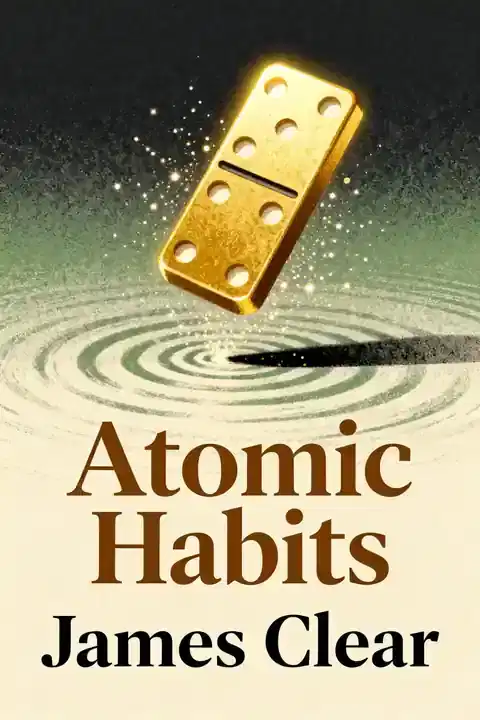
While both stress environmental cues and incremental change, Meyer’s work integrates Christian theology, whereas James Clear’s Atomic Habits relies on behavioral science. Meyer prioritizes spiritual discipline (“God Habit”), while Clear focuses on identity-based habits. Both are practical, but audiences differ.
Some critics argue the book’s heavy religious framing may alienate non-Christian readers. Others desire more empirical data on the 66-day rule, though Meyer balances this with scriptural references. The emphasis on self-reliance (“choose one habit at a time”) may undersell systemic barriers to change.
Siente el libro a través de la voz del autor
Convierte el conocimiento en ideas atractivas y llenas de ejemplos
Captura ideas clave en un instante para un aprendizaje rápido
Disfruta el libro de una manera divertida y atractiva
Self-criticism is itself a bad habit that needs breaking.
Procrastination may be the single greatest obstacle to forming good habits.
Don't divide your life into sacred and secular compartments.
The more time we spend with Jesus, the more we become like Him.
Desglosa las ideas clave de Making Good Habits, Breaking Bad Habits en puntos fáciles de entender para comprender cómo los equipos innovadores crean, colaboran y crecen.
Destila Making Good Habits, Breaking Bad Habits en pistas de memoria rápidas que resaltan los principios clave de franqueza, trabajo en equipo y resiliencia creativa.

Experimenta Making Good Habits, Breaking Bad Habits a través de narraciones vívidas que convierten las lecciones de innovación en momentos que recordarás y aplicarás.
Pregunta lo que quieras, elige la voz y co-crea ideas que realmente resuenen contigo.

Creado por exalumnos de la Universidad de Columbia en San Francisco
"Instead of endless scrolling, I just hit play on BeFreed. It saves me so much time."
"I never knew where to start with nonfiction—BeFreed’s book lists turned into podcasts gave me a clear path."
"Perfect balance between learning and entertainment. Finished ‘Thinking, Fast and Slow’ on my commute this week."
"Crazy how much I learned while walking the dog. BeFreed = small habits → big gains."
"Reading used to feel like a chore. Now it’s just part of my lifestyle."
"Feels effortless compared to reading. I’ve finished 6 books this month already."
"BeFreed turned my guilty doomscrolling into something that feels productive and inspiring."
"BeFreed turned my commute into learning time. 20-min podcasts are perfect for finishing books I never had time for."
"BeFreed replaced my podcast queue. Imagine Spotify for books — that’s it. 🙌"
"It is great for me to learn something from the book without reading it."
"The themed book list podcasts help me connect ideas across authors—like a guided audio journey."
"Makes me feel smarter every time before going to work"
Creado por exalumnos de la Universidad de Columbia en San Francisco

Obtén el resumen de Making Good Habits, Breaking Bad Habits como PDF o EPUB gratis. Imprímelo o léelo sin conexión en cualquier momento.
Have you ever felt trapped in a cycle of self-defeating behaviors, promising yourself "this time will be different" only to fall back into familiar patterns? Joyce Meyer's groundbreaking work on habit transformation reveals why willpower alone often fails us. Habits aren't just behaviors - they're neural pathways that become increasingly automatic with repetition. What begins as conscious choice gradually transforms into unconscious programming that shapes our character, relationships, and life trajectory. The good news? The same neurological principles that lock us into destructive patterns can be leveraged to create positive, life-giving routines. This isn't just about surface-level change - it's about rewiring your brain for lasting transformation.