Capítulo 1
The Glittering World of Wealth, Love, and Betrayal
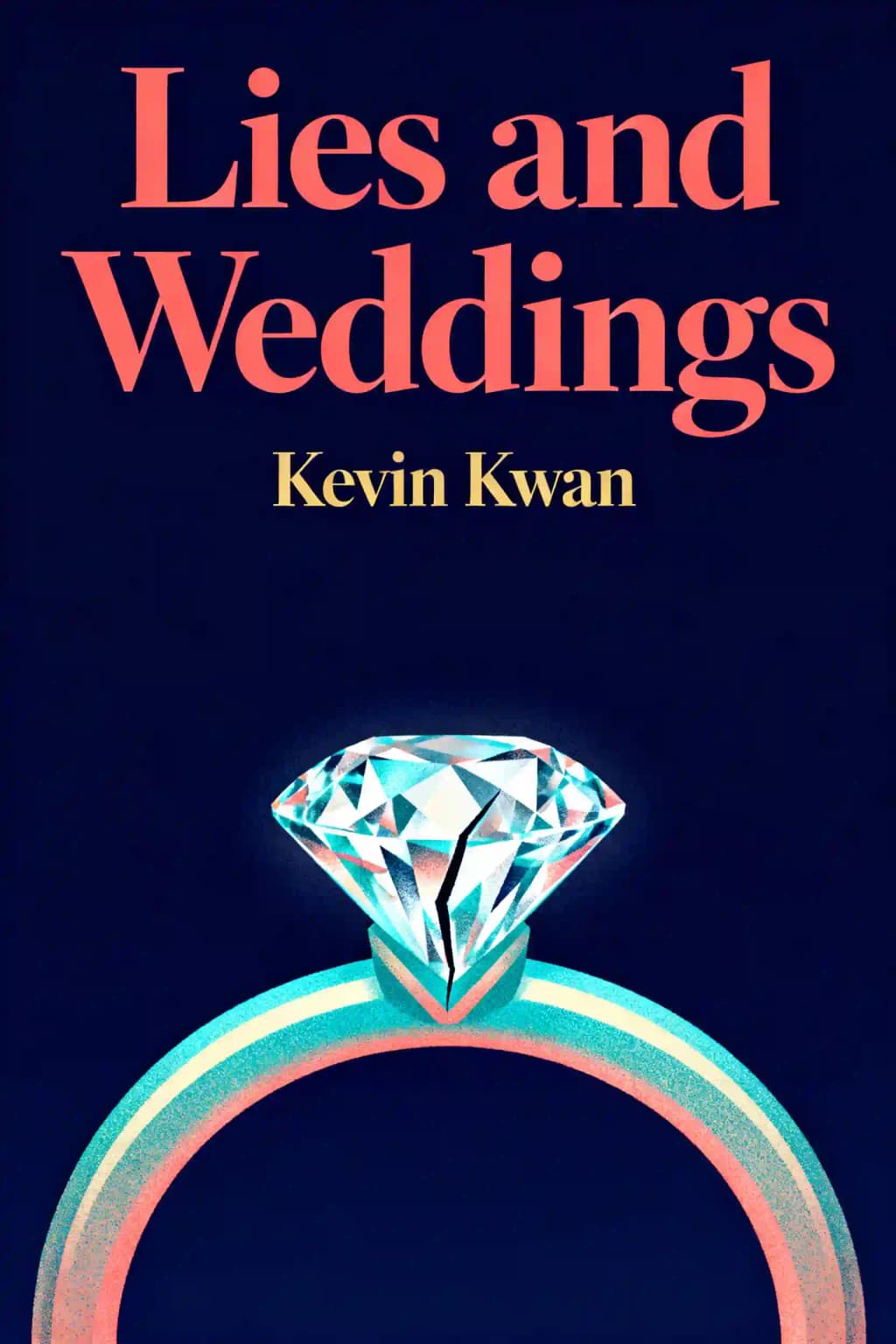
In a world where money can buy almost anything except genuine connection, Kevin Kwan's "Lies and Weddings" delivers a captivating exploration of love amid extreme wealth. This novel has become a cultural phenomenon, with celebrities like Reese Witherspoon and Mindy Kaling praising its perfect blend of romance, family drama, and social commentary. Following the massive success of "Crazy Rich Asians," Kwan once again demonstrates his unparalleled ability to dissect the lives of the ultra-wealthy with both humor and heart. The book has spent 16 weeks on the New York Times bestseller list, with readers drawn to its globe-trotting narrative that weaves through Hong Kong, Hawaii, London, Morocco, and Venice. What makes this story particularly compelling is how it examines the collision between old-world aristocracy and new-money ambition, all while exploring what truly matters when everything else can be bought.
Capítulo 2
A Tragic Beginning Sets the Stage
The novel opens with a shocking tragedy in 1995 Hong Kong. Henry Tong, a handsome 26-year-old who has just won $7.4 million in a high-stakes poker game, proposes to his girlfriend Gabriella Soong at Felix, the city's most exclusive nightclub. The celebration turns deadly when Roger Gao lunges at Henry in a fit of rage, causing him to fall over a glass railing and become fatally impaled on a crystal candelabra. This dramatic opening establishes the high-stakes world of wealth and passion that will define the novel.
What's particularly striking about this beginning is how it foreshadows the themes that will run throughout the story: impulsive decisions, the volatile mix of love and money, and how quickly fortune can turn to tragedy. The scene is rendered with cinematic precision-from the helicopter landing atop the Peninsula Hotel to the champagne flowing freely to the horrified faces of friends watching a life end in an instant. This tragedy will reverberate through decades and across continents, connecting characters in ways they cannot imagine.
The novel then introduces us to the aristocratic Gresham family, headed by the Earl of Greshamsbury, Francis, and his Hong Kong-born wife Arabella. Their children-Rufus, Augusta, and Beatrice-represent the perfect blend of British aristocracy and Asian heritage, at least on the surface. Living next door are Dr. Thomas Tong and his daughter Dr. Eden Tong, whose lives have been intertwined with the Greshams for decades. This seemingly simple neighborhood arrangement masks complex relationships that will unravel throughout the story.
Capítulo 3
Childhood Friends and Hidden Feelings
At the heart of the novel is the relationship between Eden Tong and Rufus Gresham, lifelong neighbors and closest friends who communicate primarily through daily text messages due to their busy lives. Their easy intimacy is immediately apparent as they discuss everything from Rufus's pre-wedding manicure to Eden's recurring dreams about her deceased mother appearing as Glinda the Good Witch in strange places.
Their friendship has a comfortable rhythm built over decades, yet there's an undercurrent of something deeper that neither seems ready to acknowledge. When Eden mentions she wasn't invited to Augusta's Hawaii wedding, Rufus is genuinely shocked and immediately confronts his sister about the exclusion. This small moment reveals volumes about the dynamics at play-Eden has always been part of their lives but somehow remains an outsider, particularly to Rufus's mother Arabella.
What makes this relationship so compelling is how organically it develops throughout the story. Unlike many romantic narratives that rely on instant attraction or contrived obstacles, Kwan gives us two people who know each other completely yet are still discovering new dimensions to their feelings. Their history provides a solid foundation, but it's also complicated by family expectations and social differences that become increasingly apparent as the story progresses.
The way Eden and Rufus interact-through text messages, comfortable silences, and shared references to childhood memories-creates an intimacy that feels genuine rather than manufactured for dramatic effect. This relationship becomes the emotional anchor in a world where appearances often matter more than substance.
Capítulo 4
Family Dynamics and Social Hierarchy
The Gresham family presents a fascinating study in contrasts. Countess Arabella, born in Hong Kong but now fully embraced by British aristocracy, is a complex character driven by ambition and insecurity. Her journey from being mistaken as her own child's nanny due to her Chinese heritage to becoming a style icon who revolutionized Greshamsbury Hall with her "Arabella Chic" design sensibility reveals how she's fought for her place in a world that initially rejected her.
Yet Arabella's triumph comes at a cost. She body-shamed Augusta as a child, calling her "jyu pa" (pork chop in Cantonese) and restricting her diet while indulging her siblings. This cruelty stems from Arabella's own childhood trauma in Hong Kong, where she was cruelly nicknamed "Goat Girl" for her height and unusual features. Despite academic excellence and eventual modeling success, these wounds never fully healed, manifesting instead as controlling behavior toward her children.
The Earl, Francis Gresham, presents himself as the quintessential British aristocrat but harbors a devastating secret-the family is "completely, utterly, flat broke," mortgaged to the hilt with hundreds of millions in debt after their Hawaiian resort Bellaloha is destroyed by volcanic activity. His financial desperation leads him to borrow extensively from mysterious billionaire Rene Tan, putting the family's ancestral home at risk.
The children each respond differently to their parents' expectations. Augusta rebels against her mother's control by stripping off her elaborate wedding gown to reveal a simple hemp dress underneath-to her mother's absolute horror. Beatrice, the runway sensation with "Titianesque hair and Swintonesque cheekbones," seems to follow her mother's fashionable footsteps until she shocks everyone by becoming pregnant by her sister's spiritual advisor. And Rufus, the "Viscount St. Abs" photographer and heartbreaker, struggles to reconcile his artistic ambitions with his duty as future Earl.
What makes these family dynamics so compelling is how they reflect broader social tensions-between old money and new, between Western and Eastern values, between appearance and authenticity. The Greshams may live in a rarefied world of titles and estates, but their struggles with identity, acceptance, and financial security feel surprisingly relatable.
Capítulo 5
The Hawaii Wedding: A Perfect Storm
Augusta's wedding in Hawaii becomes the catalyst for multiple storylines converging in spectacular fashion. The event, meticulously planned by Arabella to showcase the family's wealth and connections, brings together an eclectic cast of characters: European royalty, spiritual advisors, fashion journalists, and reluctant participants like Eden and her father Thomas, who are manipulated into attending.
The wedding setting itself becomes a character-the Bellaloha Resort features a Balinese pavilion for the ceremony that Augusta finds inauthentic compared to her dream of marrying in Bali. This tension between authenticity and appearance runs throughout the wedding scenes, culminating in Augusta's dramatic costume change that horrifies her mother but delights her new husband.
What makes this section particularly effective is how it balances humor with genuine emotional stakes. There's comedy in the over-the-top luxury-an ice palace carved as a replica of Norway's Borgund Stave Church created as a tribute to the groom's Norwegian heritage-but also poignancy in moments like Rufus's growing realization of his feelings for Eden as he watches her dance with another man.
The wedding becomes a pressure cooker for long-simmering tensions. Rufus's mother Arabella is determined to match him with wealthy heiress Solene de Courcy, while Eden finds herself pursued by the charming but superficial Freddy Farman-Farmihian. When Rufus finally confesses his love to Eden in a forest clearing, their intimate moment is broadcast to everyone at the banquet through his still-active microphone-a humiliation immediately followed by the news that a volcanic fissure has opened nearby, sending lava downhill toward them.
This perfect storm of emotional revelation and natural disaster forces characters to confront what truly matters when everything else is stripped away. It's a brilliantly constructed sequence that accelerates the narrative while deepening our understanding of the characters' true priorities.
Capítulo 6
Wealth as Both Prison and Power
Throughout the novel, Kwan explores the paradoxical nature of extreme wealth-how it simultaneously creates extraordinary freedom and invisible constraints. This theme is embodied most clearly in Luis Felipe Tan, the troubled heir to billionaire Rene Tan's fortune.
When Eden encounters Luis Felipe in Los Angeles, he's surrounded by sycophants and enablers, using his wealth to indulge his worst impulses. At Daddy Mustang restaurant, he orders his bodyguard to assault a host who dares to confront him, then boasts about keeping "art pets"-artists he houses in exchange for valuable artwork he later sells at profit. His cynical worldview-that "everyone has a price" and "anyone can be bought, sold, and controlled"-reveals how wealth has corrupted his perspective on human relationships.
Yet beneath this toxic behavior lies profound pain. Luis Felipe reveals that his father Rene "tormented" him throughout his life, preventing him from seeing his mother and even sleeping with his girlfriend. When Rene dies alone while Luis Felipe parties, the tragedy feels both preventable and inevitable-the culmination of a relationship poisoned by money and power.
In contrast, Martha Dung represents wealth wielded with purpose and perspective. Despite her staggering fortune (she transformed her father's $3 billion legacy into $50 billion), she faces sexism from her own mother who obsesses about her marrying rather than acknowledging her business success. When Martha and Rufus connect in Morocco, they bond over their parallel struggles-his extreme attractiveness and her extreme wealth creating similar barriers to genuine connection.
What makes Kwan's exploration of wealth so compelling is his refusal to offer simple morality tales. Money isn't inherently corrupting, nor does it guarantee happiness. Instead, it amplifies existing character traits and tests people's values in ways that ordinary circumstances might not. The most sympathetic characters aren't those who reject wealth entirely, but those who maintain their humanity despite it-who recognize that connections to people matter more than possessions or status.
Capítulo 7
Secrets, Lies, and Hidden Identities
The novel is structured around a series of revelations that gradually expose long-buried secrets. This creates a narrative momentum that keeps readers engaged while adding emotional depth to the characters' journeys.
The central mystery involves Eden's parentage. When Arabella attempts to blackmail Eden into marrying Luis Felipe to save Greshamsbury Hall, she reveals documents suggesting Eden isn't Thomas's daughter but his niece-born to Mary Gao, a former Miss Hong Kong, and Thomas's brother Henry, the gambler killed in the novel's opening scene.
This revelation forces Eden to question everything about her identity and her relationship with the man she's always known as her father. The truth, when it finally emerges, is even more complex: her uncle Roger Gao is actually Rene Tan, who changed his name after being released from prison. Rene had recognized Eden when they met but never revealed his identity, instead establishing a trust that would make her the heir to his entire business empire worth $90 billion.
What makes these revelations work is how they're grounded in character rather than mere plot convenience. Thomas's decision to raise Eden as his daughter stems from his compassionate nature, evident even in the flashback where he suggests using part of Henry's windfall to help the Gaos secure better legal representation after Roger/Rene killed Henry. Similarly, Rene's secret support of Eden represents his attempt at redemption after a lifetime of difficult choices.
The theme of hidden identities extends beyond Eden's parentage. Arabella has spent decades hiding her insecurities behind a carefully constructed facade of aristocratic perfection. Rufus conceals his artistic ambitions behind the mask of "Viscount St. Abs." Even Francis hides the family's financial ruin from his wife, preferring to maintain the illusion of prosperity rather than confront difficult truths.
By gradually peeling away these layers of deception, Kwan reveals the authentic selves beneath the social performances. The most satisfying moments come when characters finally embrace their true identities-when Eden accepts her complicated heritage, when Rufus pursues his passion for photography, when Beatrice chooses love over social expectation.
Capítulo 8
Cultural Collisions and Identity
As in his previous works, Kwan masterfully explores the intersection of Eastern and Western cultures, examining how identity is shaped by heritage, environment, and personal choice. This theme is embodied most clearly in Arabella, whose journey from Hong Kong outsider to British aristocrat comes at the cost of rejecting her Chinese identity - a transformation that required decades of careful social climbing and deliberate self-erasure. Her carefully curated accent, meticulously selected wardrobe, and obsession with British traditions all serve as armor against her past.
When Eden confronts Arabella about her lifelong prejudice, she delivers a devastating insight: Arabella hates Eden for being Chinese because she hates that part of herself. This moment crystallizes Arabella's internal conflict - her success in becoming the Countess of Greshamsbury required suppressing the very heritage that makes her unique. The scene, set in Arabella's immaculate English garden with its pristine roses and perfectly trimmed hedges, symbolizes the artificial nature of her carefully constructed identity.
The novel is filled with moments of cultural collision that reveal deeper truths about the characters. When Augusta's Norwegian in-laws arrive for the wedding, Arabella's elaborate attempts to impress them with an ice palace replica of a Norwegian church reveal more about her insecurities than her hospitality. Her excessive attention to Nordic customs and traditions - from serving lutefisk to hiring authentic Scandinavian musicians - highlights her desperate need for validation from European aristocracy. Similarly, when Penelope Cabot mistakes Arabella for Chinese at Beatrice's wedding, the awkward moment exposes the persistent othering that Arabella has fought against her entire life. Her reaction - a barely concealed flinch followed by an overly bright smile - speaks volumes about her unresolved trauma.
What makes Kwan's exploration of cultural identity so effective is his refusal to offer simple resolutions. Characters don't need to choose between Eastern and Western identities but rather find ways to integrate these different aspects of themselves. The most fulfilled characters - like Eden, who embraces both her British upbringing and her newly discovered Hong Kong heritage - find strength in this cultural hybridity rather than seeing it as a source of conflict. This is particularly evident in Eden's approach to her wedding, where she seamlessly blends Chinese traditions with Western customs, creating something uniquely her own.
The novel also explores how different generations approach cultural identity. While Arabella's generation felt pressured to assimilate completely, younger characters like Eden and Augusta navigate their multicultural identities with more confidence and less anxiety. Through dinner party conversations, family gatherings, and social events, Kwan illustrates how these generational differences play out in both subtle and dramatic ways - from food choices to marriage partners to child-rearing philosophies.
Capítulo 9
The Transformative Power of Love
Beneath the novel's satire of wealth and privilege lies a surprisingly earnest belief in love's power to transform lives. This theme manifests in various relationships, each offering a different perspective on what love means and what it requires.
The central romance between Eden and Rufus evolves naturally from deep friendship to passionate love. What makes their relationship compelling is how it's built on genuine knowledge of each other rather than superficial attraction. When Rufus finally confesses his love to Eden in Hawaii, it feels like the culmination of a lifetime of connection rather than a sudden revelation.
Their relationship stands in stark contrast to the transactional approach to marriage advocated by characters like Arabella and Rosina, who view matrimony primarily as a financial arrangement. When Rosina urges Rufus to seduce Martha Dung for her billions, dismissing his protests with "What's love got to do with it?", she represents a worldview that reduces human connection to strategic advantage.
Even more toxic is Luis Felipe's proposal to Eden-he offers not to evict the Greshams if she agrees to marry him, attempting to use financial leverage to force an emotional connection. Eden's refusal affirms her belief that love cannot be coerced or purchased, regardless of the stakes involved.
The most surprising love story might be Beatrice and Gopal Das, whose relationship initially appears to be a rebellious fling but develops into something genuine enough that Beatrice defies her family to marry him. Their union represents the possibility of connection across cultural and social boundaries, suggesting that authentic love can transcend the limitations of background or expectation.
By the novel's end, when Rufus spontaneously sweeps Eden into his arms and whisks her to the airport, requesting tickets to "Anywhere. As long as it's with her, and as long as my mother can't ever find us," we see the ultimate triumph of love over social obligation. Their choice to forge their own path, free from family expectations and societal pressure, offers a hopeful conclusion to a story filled with manipulation and deception.
Capítulo 10
The Price of Authenticity in a World of Appearances
Throughout the novel, characters struggle to reconcile their authentic selves with the roles society expects them to play. This tension between being and seeming drives much of the conflict and character development.
Rufus's journey exemplifies this struggle. As "Viscount St. Abs," he's valued primarily for his appearance-his "smoldering beauty" and magnificent physique that transformed him from an awkward child into a magazine cover star at sixteen. Yet he yearns to be recognized for his artistic talent and inner qualities rather than his external attributes. His decision to pursue photography under the alias "Francisco Ives" represents his attempt to create an identity based on achievement rather than inheritance or appearance.
Similarly, Augusta's dramatic wedding gesture-shedding her elaborate Valentino gown to reveal a simple hemp slip dress underneath-symbolizes her rejection of the ornate facade her mother has constructed around her. This moment of authenticity, though it horrifies Arabella, delights her husband Max, suggesting that true connection requires seeing beyond surface appearances.
Eden faces a different challenge to authenticity. As a Chinese woman in predominantly white British society, she's spent her life "carefully managing her behavior around the Greshams-always looking immaculate, displaying perfect manners, never outshining Bea or Augie." Her journey involves recognizing how this performance has limited her and finding the courage to express her true feelings and desires, particularly her love for Rufus.
Even Arabella, despite her seemingly superficial obsession with status and appearance, reveals moments of authentic vulnerability. When she recalls the childhood memory from 1970s Hong Kong where she witnessed colonial hierarchy firsthand as a British woman took their taxi, we understand how her ambition to become the Countess of Greshamsbury was driven by a genuine desire for respect and security.
The novel suggests that authenticity requires courage-the willingness to risk rejection or failure by showing one's true self. The characters who find happiness are those who ultimately make this choice, while those who remain trapped in performance and pretense continue to suffer regardless of their wealth or status.
Capítulo 11
A World of Privilege Examined
Kevin Kwan's "Lies and Weddings" delivers a masterful exploration of wealth, love, and identity across continents and cultures. Through the intertwined stories of the Gresham family - with their centuries of old-world British wealth - Eden Tong's nouveau riche Asian dynasty, and the enigmatic Rene Tan, the novel examines how money shapes relationships, how secrets can both protect and destroy, and how authentic connection offers the only true security in a world of shifting fortunes.
What makes the novel particularly effective is its delicate balance of satire and sincerity. Kwan skewers the excesses of the ultra-wealthy with precise detail - their ice sculptures that double as caviar bars, their wardrobes sorted by color and season across multiple climate-controlled rooms, their fleet of private jets customized with rare art collections, and their homes staffed with small armies of specialized servants. Yet beneath this glittering surface, he treats his characters' emotional struggles with genuine empathy. Whether it's Rufus Gresham's struggle to escape his family's suffocating expectations, Eden's quest to reconcile her Asian heritage with her Western education, or Rene's calculated climb through Singapore's social hierarchy, each character's journey feels authentic and compelling.
The novel's rich cultural tapestry spans London's old-money circles, Hong Kong's dynamic business world, and Singapore's exclusive social clubs. Through these varied settings, Kwan masterfully illustrates how wealth operates differently across cultures while revealing the universal human desires that money can't satisfy. The lavish wedding preparations - featuring rare orchids flown in daily from Thailand and a guest list that reads like a Forbes billionaires index - serve as both spectacle and metaphor for the hollow nature of materialism.
By the final pages, when Rufus and Eden escape the gilded cages of their families to forge their own path together, we're left with the hopeful message that even in a world where everything seems to have a price tag, the most valuable connections remain priceless. Their decision to open a modest art gallery in Taipei - choosing passion over inheritance - symbolizes the novel's core theme. In choosing love over obligation, authenticity over appearance, and personal fulfillment over social expectation, they offer a model for finding happiness that transcends the limitations of wealth and status - a surprisingly heartfelt conclusion to a novel that began with tragedy and deception.
The strength of Kwan's narrative lies in its ability to both entertain and illuminate, using the extreme privilege of its characters to highlight universal truths about human nature, family dynamics, and the eternal search for meaningful connection in an increasingly materialistic world.