Capítulo 4
The Elixir of Immortality: K23
At the heart of "Jitterbug Perfume" lies K23, the mysterious perfume that becomes both the symbol and substance of immortality. After meeting the Bandaloop tribe - practitioners of ancient longevity techniques in the remote Himalayas - Alobar and Kudra begin developing their own comprehensive regimen for extending life. Their system meticulously incorporates practices related to the four elements: air (through specialized breathing techniques including pranayama and circular breathing), water (elaborate bathing rituals performed at specific times of day), earth (a carefully curated diet centered on beets and other root vegetables), and fire (tantric sexuality and energy cultivation).
The perfume they create, initially called K23, represents years of experimentation and refinement. Its composition includes jasmine absolute for its transcendent qualities, citrus notes that capture vitality and awakening, and a mysterious base note derived from beets - specifically, beet pollen harvested during the full moon. Each ingredient serves both a practical and symbolic purpose in their immortality practice. The jasmine connects to higher consciousness, the citrus maintains alertness and presence, while the beet essence grounds the mixture in earthly immortality. This fragrance becomes not just a scent but a sophisticated tool in their immortality practice - its creation and use representing the alchemical transformation they seek in themselves.
When Kudra mysteriously disappears - possibly crossing to "the Other Side" through a meditation practice gone too deep - Alobar continues his journey alone, carrying the precious perfume as both talisman and treasure. The scent becomes his lifeline to Kudra, a way of maintaining her presence despite her physical absence. Through the perfume's lingering notes, he experiences vivid memories of their centuries together - the scent triggering not just remembrance but something closer to time travel, illustrating how fragrance transcends ordinary boundaries of time and space.
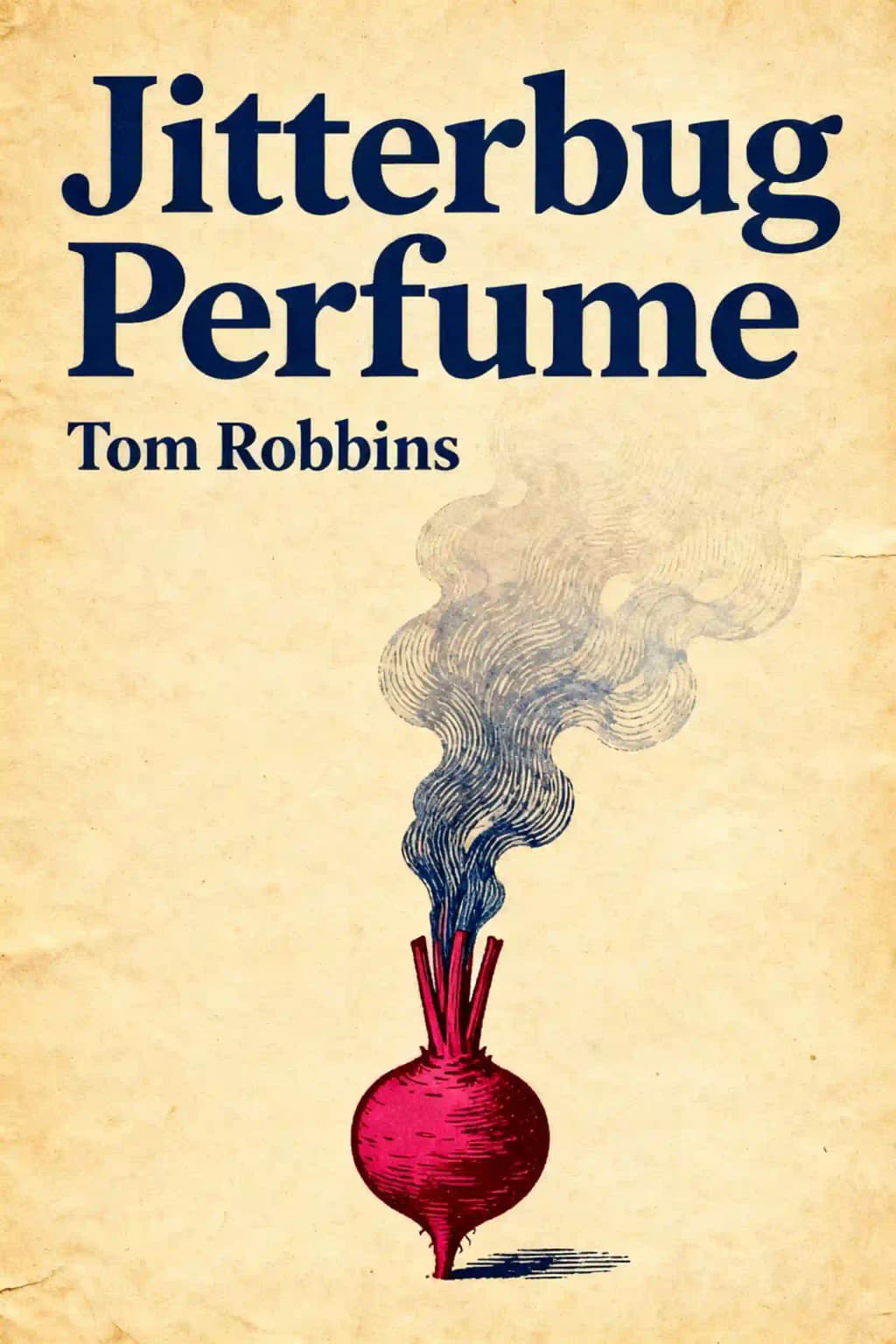
The narrative reveals that K23's formula contains a crucial secret ingredient: beet pollen collected under specific astronomical conditions. This detail connects to the novel's recurring motif of beets as primordial, ancient vegetables with mysterious properties. The beet - described as "the most intense of vegetables" in the novel's opening lines - becomes a powerful symbol of resilience and authenticity. Just as beets maintain their essential redness throughout digestion (unlike other vegetables that turn brown), the immortal must maintain their "divine blush" and "innate rosy magic" despite society's homogenizing forces. The beet represents unwavering authenticity in the face of time and change.
As the perfume passes through centuries, it becomes the connecting thread between the novel's multiple storylines, linking characters across time periods and continents through their shared fascination with its mysterious properties. From ancient India to modern Seattle, from Parisian perfume houses to New Orleans jazz clubs, K23 weaves together disparate lives and quests for meaning. The perfume serves as both catalyst and witness to the novel's exploration of immortality, desire, and the eternal human struggle against time's limitations.
Capítulo 5
Modern Seekers: Priscilla, Madame, and Marcel
In contemporary Seattle, Priscilla works as a waitress while secretly conducting perfume experiments in her apartment. Though trained in her stepmother's New Orleans perfumery, she fled with a mysterious ancient perfume bottle found in Mississippi mud. Now she struggles to recreate its formula, receiving mysterious beets on her doorstep that hint at connections to Alobar's story.
Priscilla embodies modern alienation - disconnected from her past, working a job beneath her talents, and pursuing a seemingly impossible quest. Her apartment smells of chemicals rather than food, symbolizing how she has substituted scientific pursuit for basic human comforts. Her emotional life is similarly stunted - she weeps briefly at her pallid reflection but quickly dons her lab coat, prioritizing her work over her well-being.
Meanwhile in New Orleans, Madame Lily Devalier and her assistant V'lu continue the ancient tradition of perfumery in their shop with "a colorful history of selling various magical potions." When they acquire extraordinarily potent jasmine from a mysterious Jamaican man who wears bees "like a crown," they too begin receiving beets - signals from the immortal Alobar who is orchestrating events across continents and centuries.
In Paris, the LeFever cousins represent opposing approaches to perfumery - Claude handling finances while Marcel (nicknamed "Bunny" for his exceptional sense of smell) oversees creativity. Marcel's genius keeps their company among the top five perfume makers worldwide, but he grows increasingly uncomfortable with their new synthetic perfume "New Wave," feeling it carries "the sinister vapors of fascism." This tension between natural and synthetic fragrances reflects larger themes of authenticity versus artifice, tradition versus innovation.
These three modern storylines - in Seattle, New Orleans, and Paris - gradually converge as the characters are drawn together by their connection to the ancient perfume. Their professional and personal lives become intertwined with Alobar's immortality quest, suggesting that the pursuit of transcendence continues in the modern world, albeit in different forms.
Capítulo 6
The Last Laugh Foundation: Where Science Meets Immortality
The Last Laugh Foundation serves as the nexus where the novel's disparate characters and themes converge. Founded by eccentric Irish psychiatrist Wiggs Dannyboy, the foundation researches immortality through scientific means. After being imprisoned for drug offenses, Dannyboy dedicated himself to "the eradication o' death," developing theories that combine cutting-edge science with mystical insights.
When Priscilla receives a mysterious invitation to a dinner party at the foundation honoring Nobel-winning chemist Wolfgang Morgenstern, she enters a world where her private obsessions suddenly connect to larger movements. At the foundation, she meets Dannyboy himself - a charismatic figure who challenges her pessimism with his insistence that "unhappiness is the ultimate form o' self-indulgence."
Dannyboy explains his theory that aging is essentially cellular "rusting" - the degeneration of cells through superoxide free radicals, toxins, and deterioration of nucleic acids. Despite Priscilla's skepticism, he insists this process can be prevented, comparing modern doctors' ignorance of this fact to medieval mariners not knowing the world was round.
The foundation becomes a meeting point for characters pursuing immortality through different paths: Priscilla with her perfume experiments, Marcel LeFever with his extraordinary olfactory gifts, and Alobar himself - revealed to be Dannyboy's former cellmate "Al Barr" who was imprisoned for bombing an MIT laboratory conducting aging research.
Through Dannyboy, the novel presents a scientific explanation for Alobar and Kudra's longevity practices. Their breathing techniques addressed how cellular damage leading to aging is caused by toxic by-products of metabolizing oxygen. Their bathing rituals lowered blood temperature, potentially resetting their hypothalamus to maintain a temperature below the standard 98.6 degrees. Their diet - particularly their consumption of beets - supplied nucleic acids essential for youthful cell reproduction.
The foundation represents the modern scientific pursuit of what Alobar sought through more intuitive means - suggesting that the ancient quest for immortality continues in contemporary forms, with science potentially validating what mystical traditions have long claimed.
Capítulo 7
The Evolutionary Leap: Dannyboy's Theory of Consciousness
Perhaps the most intellectually ambitious aspect of "Jitterbug Perfume" is Wiggs Dannyboy's theory of consciousness evolution. According to Dannyboy, humanity is entering the "floral stage" of evolutionary development, signaled by the mythological death of Pan (representing animal consciousness). He explains how our brains evolved through reptilian, mammalian, and now floral stages, with the neocortex representing our emerging floral brain.
This theory suggests that while reptilian consciousness is cold and aggressive, and mammalian consciousness brought warmth and social bonds, floral consciousness offers spiritual transcendence, particularly through altered perception of time. As floral consciousness matures, humans will develop enhanced abilities with light processing and olfactory perception, possibly including telepathy.
Dannyboy connects this evolutionary shift to religious history, suggesting that Christ and Buddha came not to deliver us from evil but from mammalian consciousness, preparing the way for floral consciousness. The real cosmic drama isn't good versus evil but "destined versus obsolete." Just as the reptilian dragon gave way to Pan, Pan must now yield to floral consciousness despite our attachment to his lusty, prankish nature.
A Jamaican named Bingo Pajama appears in New Orleans as a possible prototype of floral man - laughing, defying convention, and producing a "neocortical honey" that attracts bees. Dannyboy suggests the traditional halo in religious art might represent either an illuminated brain or symbolically, a swarm of bees - connecting religious iconography to his evolutionary theory.
When Dannyboy's daughter Huxley Anne encounters a swarm of bees that settle on her head like a skullcap, pulsating as if absorbing something through osmosis, Dannyboy sees this as confirmation of his theory. This event leads him to whisk her away to an orchid farm or jasmine plantation - places where floral consciousness might flourish.
This theory provides a framework for understanding the novel's seemingly disparate elements - connecting Alobar's immortality quest, the importance of perfume, the fading of Pan, and the emergence of new forms of consciousness. It suggests that immortality isn't merely about extending life but about evolving consciousness to transcend conventional limitations of time and space.
Capítulo 8
Perfume as Magic: The Bridge Between Worlds
Throughout "Jitterbug Perfume," fragrance serves as more than just a plot device - it becomes a metaphysical medium connecting worlds, times, and dimensions. Marcel LeFever explains in his convention speech that perfume is fundamentally the "sexual attractant" of flowers and animals, connecting fragrance to magic, memory, and eternity. He criticizes modern perfumes named after designers rather than evoking magic or eroticism - suggesting that contemporary culture has lost touch with fragrance's profound significance.
The novel presents perfume as a bridge between the material and spiritual realms. When Madame Devalier finally smells the contents of the ancient bottle on St. Ann Street, the experience transforms her - she detects jasmine, citrus, and a mysterious base note that captivates her senses and alters her consciousness. This transformative power of scent suggests that olfaction provides access to realms beyond ordinary perception.
Perfume also serves as a time capsule, preserving moments and memories across centuries. The bottle that travels from ancient times to modern New Orleans carries not just a scent but the essence of Alobar and Kudra's relationship and their immortality practices. When modern characters encounter this fragrance, they're connecting directly with the past in a way more immediate than through texts or artifacts.
The novel's title itself - "Jitterbug Perfume" - suggests a fragrance that makes one dance, that animates the body and spirit. This connects to Pan's role as the god of revelry and physical pleasure, suggesting that the right perfume might reawaken primal energies suppressed by civilization. The "jitterbug" - a dance popular in the early 20th century - represents vitality and spontaneity, qualities the novel associates with authentic living.
In the final sections, when Kudra mysteriously reappears in Paris after visiting "the Other Side," perfume serves as the connective tissue between life and afterlife. She describes how the dead have their hearts weighed against a feather to determine immortality - those with hearts light enough achieve immortality, while others board ships to different "energy realms." Her return through a door marked "ERLEICHDA" (the novel's recurring mantra meaning "lighten up") suggests that maintaining a light heart - free from the weight of fear and attachment - is the true secret to transcendence.
Capítulo 9
The Final Message: Lighten Up, But Keep Your Beet-Red Heart
As "Jitterbug Perfume" reaches its conclusion, Alobar prepares to depart after the Mardi Gras celebration. His parting reflections reveal a philosophical ambivalence about modern times: "So much is artificial, synthetic, watered-down, and standardized." He notes how even agricultural diversity has diminished - California once had sixty-three varieties of lettuce but now has only four standardized types. This observation connects to the novel's larger concern with authenticity and diversity versus homogenization.
Despite this pessimism, Alobar remains curious about the future and believes he'll return someday, guided by the perfume they've named "Kudra" (though Priscilla half-jokingly suggested "The Perfect Taco"). His parting advice encapsulates the novel's practical philosophy: "Make our perfume, my friends. Make it well. Breathe properly. Stay curious. And eat your beets."
The novel's final section returns to the beet metaphor introduced at the beginning. Unlike other vegetables that turn brown during digestion, the beet remains vibrant red throughout - representing resistance to homogenization. This becomes a metaphor for human life: we begin as vibrant, intense beings but are gradually "digested" by society's institutions until we become a uniform brown. The lesson? Hold onto your "divine blush" and "innate rosy magic" or risk becoming blue as indigo. And once you're indigo, you're "indigoing" and ultimately "indigone."
This playful wordplay carries a serious message about maintaining individuality and vitality in a world that demands conformity. The novel's recurring mantra - "ERLEICHDA" (lighten up) - suggests that taking life too seriously paradoxically makes it heavier and shorter. True immortality, the novel suggests, comes not just from physical practices but from maintaining a light heart while preserving one's essential nature - remaining "beet-red" in a world that wants everyone brown.
In the novel's final developments, Claude LeFever meets Kudra outside his building in Paris - somehow transported through time. Their meeting, and the subsequent reunion with Alobar, Marcel, and V'lu at Orly Airport, suggests that the boundaries between past and present, life and death, are more permeable than conventional wisdom allows. The perfume that connected them across centuries has finally brought them together in the same time and place - a testament to fragrance's power to transcend ordinary limitations.
Capítulo 10
The Eternal Dance of Mortality and Desire
"Jitterbug Perfume" ultimately presents immortality not as an escape from life but as its fullest expression. Through Alobar and Kudra's journey, the novel suggests that extending life requires not rejection of the body but deeper engagement with its processes and pleasures. Their longevity practices - breathing, bathing, eating, and sexuality - represent not ascetic denial but conscious celebration of embodied existence. These practices, detailed meticulously throughout their centuries-long journey, demonstrate how awareness can transform routine physical maintenance into sacred ritual. Their morning breathing exercises become a dance with the cosmos, their shared baths a baptism in sensuality, their meals an alchemical communion with nature's essence.
The novel presents desire not as something to be transcended but as a force to be harnessed and refined. Alobar's initial desire to escape death evolves into Kudra's more sophisticated understanding that "perhaps the Buddha meant we already have everything we need, making desire unnecessary." This transformation mirrors ancient Tantric teachings where desire becomes a vehicle for enlightenment rather than an obstacle to it. Through their centuries together, Alobar and Kudra discover that longevity requires both passionate engagement and profound detachment - the ability to burn with desire while remaining unburned by it.
The convergence of ancient wisdom and modern science in Dannyboy's theories suggests that humanity stands at a threshold of evolutionary development. The "floral consciousness" he describes represents not rejection of our animal nature but its integration into a more expansive awareness - one that includes but transcends earlier forms of consciousness. His research into the olfactory-consciousness connection reveals how scent bridges the primitive and sophisticated aspects of human awareness, suggesting that evolution proceeds not by abandoning our origins but by transforming them.
Through its intertwined storylines spanning a thousand years, "Jitterbug Perfume" presents immortality as both literal and metaphorical - achieved through physical practices, consciousness evolution, and the creation of art that transcends time. The novel weaves together the ancient art of perfumery with quantum physics, suggesting that consciousness itself might be the ultimate perfume - an essence that transcends material boundaries. The development of Pan's perfume becomes a metaphor for human evolution itself: raw animal musk transformed through artistic refinement into something that bridges worlds.
The novel's final image of Claude and Kudra driving to meet Alobar, Marcel, and V'lu suggests that when boundaries between times and worlds dissolve, what remains is not eternal solitude but eternal connection. The perfume that began as a personal quest becomes the medium through which souls find each other across the vastness of time. This convergence of characters from different centuries suggests that immortality exists not in endless individual existence but in the eternal dance of consciousness finding itself through countless forms and relationships. The scent that draws them together becomes both medium and message - a reminder that the eternal exists not in escape from the temporal but in its complete embrace.