Capítulo 1
A Feminist Sci-Fi Revolution That Shatters Expectations
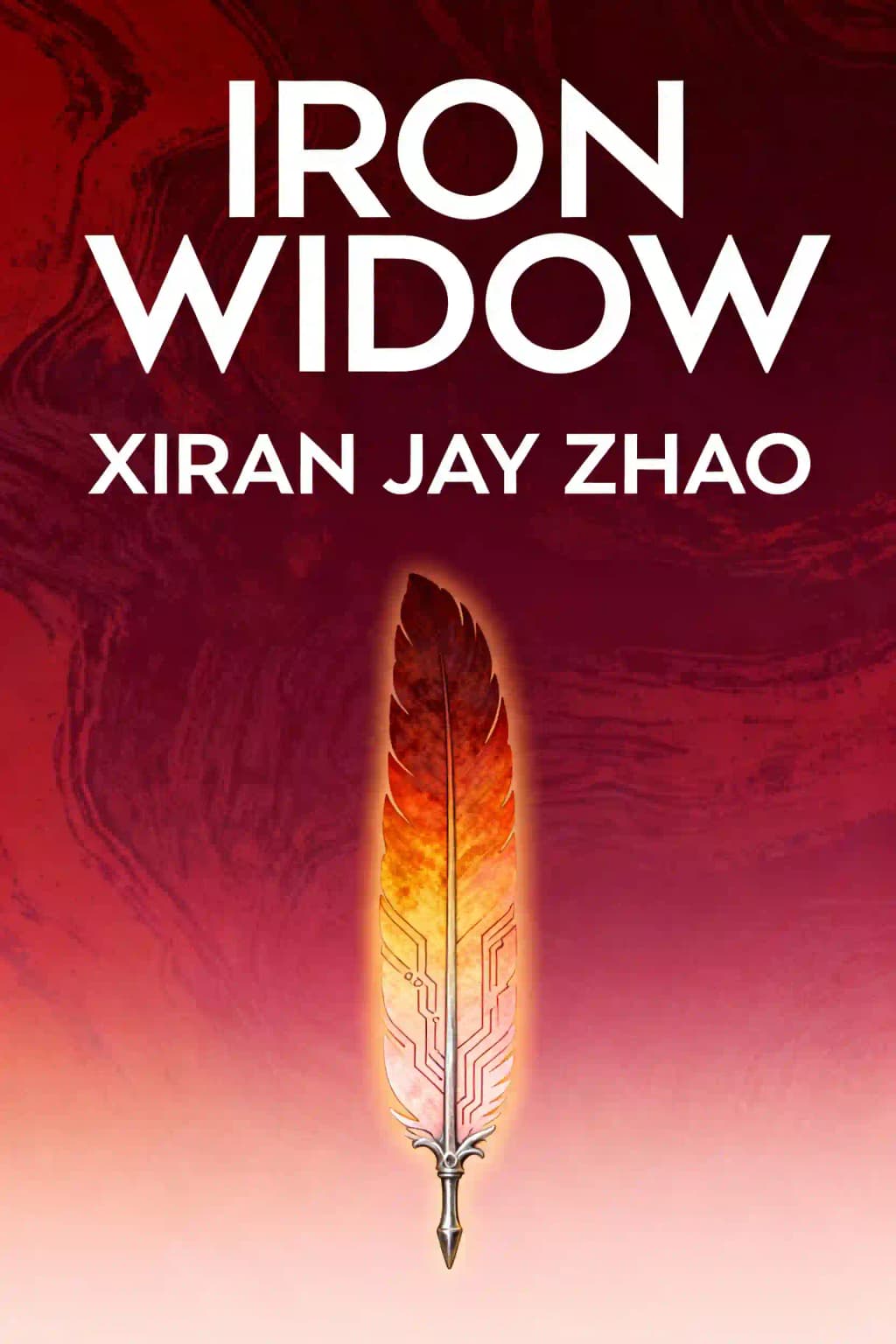
Iron Widow by Xiran Jay Zhao exploded onto the YA sci-fi scene in 2021, becoming an instant New York Times bestseller and cultural phenomenon. This Chinese-inspired futuristic tale reimagines a world where giant mecha suits called Chrysalises are humanity's only defense against alien Hunduns-but with a devastating cost. Young women are sacrificed as "concubine-pilots," their qi drained to power male pilots in battle. When Wu Zetian, named after China's only female emperor, enlists to avenge her sister's death at the hands of a celebrated pilot, she discovers she has the power to reverse the system and kill her male co-pilot instead. Championed by BookTok and praised for its unapologetic feminist rage, Iron Widow offers a brutal examination of patriarchal systems while delivering exhilarating mecha battles, a polyamorous romance, and a protagonist determined to burn everything down rather than accept her assigned place.
Capítulo 2
A World Built on Female Sacrifice
The novel opens in Huaxia, a futuristic Chinese-inspired society where massive war machines called Chrysalises stand as humanity's last line of defense against the alien Hunduns - monstrous creatures that emerge from the wilderness to terrorize cities. These Chrysalises aren't simply piloted - they're psychically bonded to their operators through a brutal system that pairs a male pilot with a female "concubine-pilot" whose qi energy he drains to boost his own power. The girls invariably die in battle, their minds and life force consumed by their male counterparts, leaving behind nothing but empty shells of their former selves.
This system isn't merely accepted - it's celebrated and deeply institutionalized. Families actively compete to sell their daughters as concubine-pilots, considering it an honor when they're chosen and celebrating with elaborate ceremonies. The propaganda machine works overtime, glorifying these sacrifices as noble contributions to humanity's survival, while the reality is far more sinister. Girls are raised from childhood to embrace their fate, trained in specialized academies to be beautiful, obedient, and ultimately disposable. Their deaths are justified as necessary casualties in an endless war, with their names added to memorial walls that serve more as recruitment tools than tributes to their sacrifice.
The worldbuilding brilliantly interweaves ancient Chinese mythology with futuristic technology, creating a rich tapestry of tradition and innovation. The Chrysalises take forms inspired by mythological creatures - the Nine-Tailed Fox with its ability to create illusions, the Vermilion Bird wielding flames, the White Tiger commanding lightning - each with unique abilities based on their pilot's qi type. The spirit metal technology that powers these machines responds to mental commands, creating a seamless extension of the pilot's will, while incorporating elements of traditional Chinese medicine and qi cultivation techniques.
What makes this world particularly chilling is how familiar its justifications feel in the context of historical and contemporary gender politics. The subjugation of women isn't portrayed as some alien concept but as the logical extension of patriarchal values we recognize: women's bodies as vessels for male advancement, their suffering as necessary sacrifice, their worth measured by their utility to men. The system is reinforced through every aspect of society - from education and media to family structures and religious beliefs. When Wu Zetian begins questioning this system, she's not just challenging the military hierarchy - she's threatening the fundamental social order that keeps Huaxia functioning, exposing the deep-rooted misogyny that has been normalized through generations of tradition and warfare.
The economy of Huaxia itself is built upon this exploitation, with powerful families maintaining their status through the sacrifice of young women, creating a cycle of oppression that serves both the war effort and the ruling class. This reflects real-world patterns of how societies often justify systematic oppression through appeals to necessity, tradition, and the greater good.
Capítulo 3
Wu Zetian: From Vengeance to Revolution
Wu Zetian is a protagonist fueled by righteous fury. After her sister Ruyi dies as a concubine-pilot under mysterious circumstances, Zetian deliberately enlists to exact revenge on Yang Guang, the pilot responsible. Her plan is simple yet desperate: get close enough to kill him, even if it means sacrificing herself in the process.
What makes Zetian compelling isn't just her determination but her complexity. She's been shaped by a lifetime of oppression-from her grandmother breaking her feet in the painful lotus binding ritual to increase her market value, to her parents treating her as a commodity rather than a daughter. Despite this, she's maintained a fierce independence, growing facial hair to make herself less desirable and secretly learning to read with the help of Yizhi, the son of a wealthy family.
When Zetian discovers she can reverse the pilot system-killing Yang Guang and taking control of his Chrysalis-she becomes something unprecedented: an Iron Widow, a girl who sacrifices boys instead of being sacrificed. This transformation isn't portrayed as a simple triumph but as a traumatic evolution. Zetian doesn't emerge as a flawless heroine but as someone dangerously close to becoming what she hates.
Her character arc follows a compelling progression from personal vengeance to systemic revolution. Initially, Zetian only wants to avenge her sister, but as she uncovers more about how deeply rigged the system is against girls, her mission expands. She begins to question not just the pilot program but the entire social structure that enables it. By the novel's end, her rage has transformed from a personal flame to a revolutionary inferno as she declares, "You've been living a dream for long enough! Welcome to your nightmare!"
What's particularly refreshing about Zetian is that she isn't softened to make her more palatable. She remains angry, sometimes cruel, and increasingly willing to embrace violence as a solution. Yet we understand her choices because we've witnessed the system that created her-a system that left no room for gentle rebellion.
Capítulo 4
The Subversive Love Triangle
Perhaps the most revolutionary aspect of Iron Widow is its approach to romance. Rather than forcing Zetian to choose between two love interests-Li Shimin, her co-pilot with a violent past, and Gao Yizhi, her childhood friend and intellectual equal-the novel boldly embraces a polyamorous relationship that defies traditional YA tropes.
Li Shimin initially appears as the stereotypical bad boy-a convicted murderer known as the "Iron Demon" whose concubine-pilots always die. He's kept on a leash, muzzled, and addicted to alcohol by military handlers who use him as a weapon. Yet as Zetian discovers, his story is far more complex. He killed his brothers after catching them assaulting a girl, only to watch that same girl be drowned by her family for being "dishonored." His addiction was forced upon him by military strategists to make him compliant. Behind his fearsome reputation is someone fighting his own battle against a system that weaponized his trauma.
Gao Yizhi represents a different kind of masculinity-intellectual, supportive, and willing to follow Zetian's lead rather than control her. As the son of Huaxia's wealthiest man, he has privilege but chooses to use it to support Zetian's goals. When he tells her, "When you cherish someone for how amazing they are, you don't pluck them from their roots just to watch them wither in your hands," he demonstrates an understanding of love as partnership rather than possession.
What makes this triangle subversive isn't just that it ends with all three characters in a relationship, but that it explicitly rejects the idea of love as a scarce resource. When Zetian questions whether her feelings for Shimin hurt Yizhi, he explains his belief that "love isn't finite" but can be "infinite" based on compatibility between people. This perspective directly challenges not just traditional romance narratives but the possessive, zero-sum thinking that underlies patriarchal systems.
The relationship develops organically through shared trauma, mutual respect, and genuine connection. By the novel's end, all three characters have formed bonds that strengthen rather than diminish each other, creating a powerful unit that challenges Huaxia's rigid gender norms and relationship expectations.
Capítulo 5
The Psychology of Oppression
Iron Widow offers a masterful examination of how oppressive systems perpetuate themselves not just through external force but through psychological manipulation. The novel shows how women are conditioned to accept their subordination and even enforce it on others.
Zetian reflects on this phenomenon when she observes how women perpetuate their own oppression: "from her grandmother who bound her feet to the village aunties who celebrated sons over daughters." She wonders, "How do you take the fight out of half the population and render them willing slaves?" The answer lies in socialization so thorough that resistance becomes unthinkable.
We see this psychology at work in characters like Dugu Qieluo, a female pilot who initially attacks Zetian rather than recognizing their common struggle. When Zetian gains male attention, Qieluo calls her a "man-killing whore" instead of questioning why women must compete for male approval in the first place. This internalized misogyny represents how oppressive systems turn the oppressed against each other, preventing unified resistance.
The novel also explores how privilege blinds people to injustice. When Zetian suggests the pilot system might be deliberately rigged against women, even sympathetic characters initially dismiss her concerns. The idea that the entire foundation of their society could be built on such deliberate cruelty is too overwhelming to accept without irrefutable evidence.
Perhaps most insidiously, the novel shows how systems of oppression create impossible choices that make complicity seem necessary for survival. Li Shimin's admission that he sacrificed concubine-pilots "to save himself" illustrates this terrible calculus. When faced with death or becoming an oppressor, many choose the latter, perpetuating the cycle of abuse.
By examining these psychological mechanisms, Iron Widow goes beyond simply depicting oppression to dissecting how it maintains its hold on both the privileged and the marginalized. This nuanced understanding makes Zetian's eventual rejection of the entire system-rather than seeking a better position within it-all the more powerful.
Capítulo 6
The Mind Realm: Battleground of Wills
One of the novel's most innovative elements is its depiction of the "mind realm" where pilots battle for control of their Chrysalis. These psychic landscapes serve as both literal battlegrounds and metaphorical representations of each character's inner world.
When Zetian enters Yang Guang's mind realm, she finds herself in a humid, slimy jungle where vines try to trap her and flesh-colored fruits contain memories of his previous concubines. This grotesque landscape reveals his predatory nature and the way he's objectified the girls whose lives he's taken. By confronting and defeating him in this realm, Zetian isn't just winning a physical battle but rejecting the entire system of male dominance he represents.
Li Shimin's mind realm is equally revealing-a crevasse of swords leading to a sea of fire, populated by flaming birds carrying human screams. This hellscape reflects his trauma and self-hatred, the constant pain he lives with after being forced to sacrifice so many concubine-pilots. When Zetian and Shimin reach a stalemate in this realm rather than one consuming the other, it represents the possibility of a more equal partnership.
The mind realms also serve as spaces where characters must confront their deepest fears and truths. When Zetian loses her memory in Emperor Qin's freezing mind realm, her journey to remember who she is becomes a powerful metaphor for reclaiming her identity from a system designed to erase it. The egui (hungry ghosts) that pursue her represent the collective weight of societal expectations trying to drag her back into compliance.
These psychic battles elevate the novel beyond typical mecha combat, creating a space where internal and external conflicts merge. The mind realms make tangible the book's central theme: that true revolution begins not just with fighting external systems but with rejecting the ways those systems have colonized our thinking.
Capítulo 7
The Revelation: A System Designed to Fail
The novel's most devastating revelation comes when Zetian and her companions torture a confession from Chief Strategist An Lushan: the piloting system is deliberately rigged against women. The "yin seat" occupied by female pilots has less active input and more passive input, meaning a woman's spirit pressure is artificially dampened while she supplies more qi. This design ensures that women die while men survive, regardless of their natural abilities.
This discovery transforms our understanding of the entire novel. What appeared to be a tragic but natural consequence of biological differences is exposed as deliberate engineering to maintain male dominance. The system isn't failing women-it's working exactly as designed, sacrificing them to protect men who are often naturally weaker.
The revelation explains previously mysterious elements: why Zetian could feel that other female pilots had stronger spirit pressure than their male partners, why the military was so threatened by her ability to reverse the system, and why they paired her with Li Shimin hoping he would kill her. It confirms that the entire social order of Huaxia is built on a lie-the lie that women's sacrifices are necessary rather than engineered.
This twist elevates the novel from a story about individual rebellion to one about systemic revolution. It's not enough for Zetian to succeed within the system or even to change her personal circumstances-the entire structure must be torn down and rebuilt. As she realizes, "It's not me who is wrong-it's everyone else."
The revelation also forces characters like Li Shimin to confront their own complicity. His discovery that his former partner Wende didn't die because she was weaker but because the system prevented her from using her full potential shatters his understanding of his own survival. This knowledge transforms his guilt into rage against the system rather than himself.
Capítulo 8
The Cost of Revolution
As Zetian's journey evolves from a quest for personal vengeance to spearheading systemic revolution, the novel unflinchingly examines the devastating moral costs of such transformation. The pivotal moment arrives when the Sages attempt to control her by holding her family hostage - a classic tactic of oppressive systems. Zetian's response is chillingly decisive: "Sorry. You're in my way." With calculated precision, she crushes the entire palace complex, sacrificing not only her parents and siblings but also countless others, dismantling the power structure they represent in a single, brutal act.
This moment marks Zetian's complete severance from conventional morality, transforming her into something both terrifying and necessary - a revolutionary force willing to destroy everything, including the most intimate personal connections, to achieve fundamental change. The novel presents this transformation with unflinching clarity, neither glorifying nor condemning her choices. Instead, it challenges readers to grapple with uncomfortable questions about the nature of resistance: When systems are designed to weaponize love and loyalty, what moral choices truly remain available to those who seek to dismantle them?
The theme of revolutionary transformation extends beyond Zetian. Yizhi's evolution from a gentle scholar to a patricide provides a parallel narrative of radicalization. When he reveals the spirit armor pieces concealed beneath his robes and kills his father, his casual reference to inheriting billions while standing over the corpse represents a complete rejection of traditional filial piety and wealth-based power structures. His transformation suggests that revolution inevitably changes not only social systems but also the fundamental nature of those who wage it.
The novel's conclusion presents its most provocative examination of revolutionary cost. As Zetian assumes control of Emperor Qin Zheng through the Yellow Dragon Chrysalis and declares herself "Empress Wu," she embodies the central paradox of revolution: How can one dismantle systems of oppression without wielding oppressive power? Her methods of crushing opposition and forcing submission mirror the very tyranny she fought against, raising disturbing questions about whether true systemic change is possible without recreating cycles of dominance.
The final revelation about humanity's status as invaders on the Hunduns' planet adds a cosmic dimension to these moral questions. If human civilization itself is founded on invasion, colonization, and carefully maintained lies, then perhaps conventional moral frameworks are inadequate for addressing its fundamental injustices. The appearance of the "Heavenly Court" suggests that the systems of oppression Zetian fights extend far beyond Huaxia's borders into a vast cosmic hierarchy, implying that her brutal methods might be not just justified but necessary for confronting evil on such a scale.
Through these layers of moral complexity, the novel forces readers to confront uncomfortable truths about revolution: that it demands terrible sacrifices, transforms its actors in fundamental ways, and may require actions that seem monstrous by the very moral standards it seeks to defend.
Capítulo 9
The Truth Behind the War
The epilogue delivers the novel's final devastating twist: humans are not the native species of this planet - the Hunduns are. This revelation recontextualizes the entire conflict, suggesting that humans are the invaders rather than the defenders they've portrayed themselves as for centuries. The carefully maintained historical records of Huaxia, which depicted humans as the planet's original inhabitants fighting against alien invaders, crumble in the face of this truth. Archaeological evidence, long suppressed by the government, points to Hundun civilizations predating human settlement by thousands of years.
This cosmic perspective explains why the Metal Emperor Hundun could communicate telepathically, telling Zetian "Humans...scourge of the universe...Get out! Leave us alone!" It wasn't mindless aggression but a desperate attempt to reclaim their homeland from colonizers who've forgotten their own origins. The Hunduns' sophisticated neural network, previously dismissed as a weapon system, reveals itself as the remnant of an advanced civilization - one that lived in harmony with the planet's unique electromagnetic field before human arrival forced them underground.
The appearance of the mysterious "Heavenly Court" that hijacks Yizhi's transmission suggests an even larger power structure manipulating both humans and Hunduns. Their possession of what appears to be Shimin's body kept alive in a tank hints at technology far beyond what Huaxia possesses. The facility where they maintain these specimens shows evidence of studying both human and Hundun biology for centuries, suggesting a long-term experiment in species interaction. Their offer to Zetian - "do their bidding like the Sages did, or lose everything" - reveals that the corruption extends beyond Earth to cosmic proportions. The Sages, it seems, were never truly autonomous leaders but puppets of this greater cosmic authority.
This final twist brilliantly expands the novel's examination of oppressive systems to a universal scale. Just as Huaxia's pilot system was built on lies that justified female sacrifice, humanity's entire presence on this planet appears to be built on lies that justify the extermination of native species. Each layer of truth Zetian uncovers reveals deeper and more extensive systems of control. The parallel between Huaxia's exploitation of female pilots and humanity's exploitation of the Hunduns becomes painfully clear - both justified through carefully constructed narratives of necessity and superiority.
The epilogue leaves readers with the unsettling question of what true liberation looks like in a universe where oppression exists at every level. Can Zetian's revolution succeed against cosmic powers that have manipulated humanity for centuries? And if humans are themselves colonizers, what does justice truly require? The moral complexity deepens as readers must grapple with whether humanity's own survival justifies their continued occupation of the planet, and whether coexistence with the Hunduns is possible after centuries of mutual destruction.
These questions echo contemporary debates about colonialism, indigenous rights, and historical justice, elevated to an interstellar scale. The revelation forces both characters and readers to confront uncomfortable truths about their own place in systems of oppression, and whether breaking free from one system of control only leads to discovering another, more extensive one.
Capítulo 10
Breaking the Cycle: The Promise and Peril of Power
Iron Widow concludes with Zetian poised between tremendous power and terrible vulnerability. Controlling the Yellow Dragon Chrysalis with Emperor Qin Zheng as her co-pilot, she has become the most formidable force on the planet. Yet she feels Qin's spirit growing stronger within her, threatening her control. The Heavenly Court's revelation about Shimin and the true nature of humanity's presence on the planet leaves her screaming in anguish, caught between cosmic powers beyond her understanding.
This precarious position perfectly encapsulates the novel's central question: Can one break cycles of oppression without becoming a new oppressor? Zetian has shattered the system that sacrificed girls to empower boys, but in doing so, she's embraced violence and domination as tools. When crowds prostrate themselves before her and chant "Long live the Iron Widow!" she has become a new kind of ruler-perhaps more just than those before her, but a ruler nonetheless.
The relationship between Zetian, Shimin, and Yizhi offered a glimpse of a different possibility-a world where power is shared rather than hoarded, where love expands rather than constrains. Their connection represented a microcosm of what society could become. Shimin's apparent death and the revelation of his body being kept by the Heavenly Court threatens this vision of a better world.
Yet hope remains in the novel's final moments. When Yizhi declares "Fuck the cabin in the mountains. Let's rule the world," there's both danger and promise in his words. Together, they possess knowledge of the system's corruption, the power of the Yellow Dragon, and Yizhi's vast resources. If they can resist becoming what they've fought against, they might still create something better than what came before.
The true resolution awaits in the sequel, but Iron Widow leaves us with the powerful message that liberation requires not just overthrowing existing systems but imagining entirely new ways of relating to power. As Zetian's journey shows, the path to revolution begins with rage at injustice but must ultimately be guided by a vision of what could exist beyond the structures we've always known.