Capítulo 1
The Magnetic Power of Genuine Connection
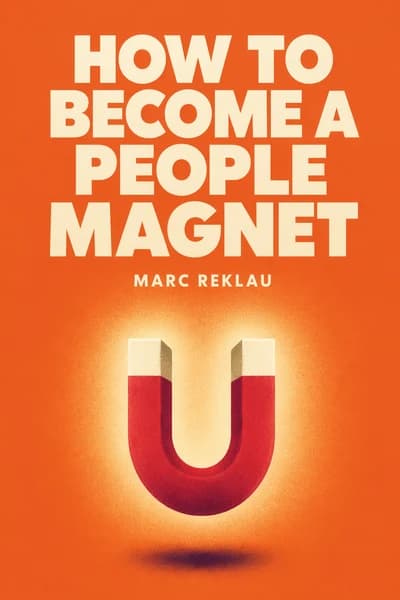
Have you ever wondered why some people effortlessly draw others to them like moths to a flame? What if the ability to connect deeply with anyone wasn't just a gift bestowed upon the lucky few, but a learnable skill? Marc Reklau's "How to Become a People Magnet" offers precisely this promise-a roadmap to becoming someone who positively influences everyone they meet. This international bestseller has transformed countless relationships across cultures, with readers reporting dramatic improvements in both personal and professional connections. Celebrities like Tony Robbins and Simon Sinek have endorsed similar relationship principles, recognizing that in our increasingly isolated digital age, genuine connection skills have never been more valuable. As studies consistently show that our relationships determine up to 85% of our success and 99% of our happiness, mastering these skills isn't just nice-it's essential for a fulfilling life.
Capítulo 2
The Foundation: Understanding Human Nature
To truly connect with others, we must first understand the fundamental truth about human nature: people are primarily interested in themselves. This isn't cynicism-it's reality. In every interaction, people are constantly thinking, "What's in it for me?" This doesn't make them selfish; it makes them human. We all share this trait.
Once you accept this truth, you can use it advantageously in all your interactions. Rather than fighting against human nature, work with it. When you meet someone new, resist the urge to impress them with your accomplishments or dominate the conversation. Instead, show genuine interest in them.
The most important subject anyone wants to talk about is themselves. When you engage people about their lives, interests, and experiences, they'll find you fascinating-simply because you made the wise choice of subject. The key is shifting your language from "I," "my," and "mine" to using the word "YOU." Questions like "How are YOU today?" or "What are YOUR favorite activities?" will significantly increase your influence.
Get people talking about themselves by showing authentic interest and asking questions about their lives. Listen attentively to their answers rather than waiting for your turn to speak. This simple shift-stopping talking about yourself and starting to talk about the person in front of you-creates an immediate connection that most people rarely experience.
Remember, understanding human nature isn't about manipulation; it's about recognizing reality. When you acknowledge that everyone (including yourself) is primarily self-interested, you can approach relationships with greater empathy and effectiveness.
Capítulo 3
The Magnetic Force of Making Others Feel Important
What truly motivates people at their core? Beyond basic needs, the desire to be recognized, to feel important, and to be noticed drives much of human behavior. This powerful human need can lead to both positive achievements and destructive actions when unfulfilled.
The greatest people magnets share one common trait: they make everyone "feel like they were the most important person in the room." To achieve this effect, give everyone the importance they deserve through several key practices. Listen attentively without interruption-a rare gift in today's distracted world. Use their name frequently in conversation, as one's name is the sweetest sound they can hear. Let people finish their sentences completely before responding, then pause briefly to show you're truly considering their words.
Perhaps most importantly, simply notice people. When you acknowledge someone's presence with genuine attention, you're sending the powerful message: "You are important to me." This small act creates an immediate connection that most people rarely experience in their daily interactions.
Making others feel important isn't just a technique-it's a mindset that transforms relationships. When you consistently prioritize others' sense of significance, they'll naturally gravitate toward you. People will go to extraordinary lengths for those who make them feel valued.
Think about how you feel when someone truly listens to you, remembers details about your life, or acknowledges your contributions. That warm glow of appreciation is exactly what you can create for others through these simple practices. By making others feel important, you're not just being kind-you're fulfilling one of their deepest psychological needs.
Capítulo 4
The Power of Agreement and First Impressions
Being agreeable is perhaps the most powerful characteristic for building rapport. People naturally like those who agree with them and dislike those who disagree. This doesn't mean compromising your values, but rather adopting an agreeable attitude in your interactions.
Show agreement explicitly through nodding, saying "yes," "right," "I totally agree with you," or "I totally get you." These simple affirmations build rapport and make people feel validated. When faced with potential conflict, ask yourself: "Do I want to be right or do I want to be at peace?"
Never argue-nobody ever wins an argument. Both parties lose, even if one is technically correct. Refuse to fight, ignore provocateurs, change the subject, or walk away when necessary. If you make a mistake, admit it quickly-it's a sign of strength that average people avoid.
First impressions form within seconds, and these initial judgments are extremely difficult to change later. The most powerful way to make a positive first impression is to SMILE-and smile a lot! Smile the moment you make eye contact, even before speaking. Smiling is contagious; people will usually smile back and respond positively.
What you project comes back to you in relationships. If someone remains rude despite your friendliness, become even nicer-make it a challenge. Beyond improving relationships, smiling benefits your health by improving your mental state, enhancing creativity, decreasing stress levels, and even contributing to longevity.
Remember that people perceive those who smile as more confident, competent, and trustworthy. A genuine smile opens doors that might otherwise remain closed. It's the simplest yet most effective tool in your relationship-building arsenal.
Capítulo 5
Building Authentic Connections Through Genuine Interest
One powerful way to connect with people is by being genuinely interested in them and what interests them. Find out what excites others and initiate conversations about those topics. Whether it's local football in Barcelona or their collection of vintage records, engaging people about their passions creates immediate rapport.
In today's digital world, you can research people's interests on social media before business meetings or networking events. The most successful salespeople study their clients' interests beforehand and engage them with authentic curiosity. This isn't manipulation-it's preparation that shows you value the relationship enough to do your homework.
Move away from constantly saying "I" and trying to impress with your achievements. Connection starts with small gestures-being friendly, greeting people warmly, smiling (even on the phone, as people can hear it in your voice). Remember birthdays, perform thoughtful acts, and show sincere interest-people can detect false praise from a mile away.
To develop an attractive personality, practice the three A's: Acceptance, Approval, and Appreciation. Accept people exactly as they are-imperfect, different from you, with values and limitations you can't change. Approval means finding something positive in everyone and acknowledging it. Appreciation, nearly as powerful as love, transforms relationships through punctuality, gratitude, thank-you notes, and treating people as special.
When influencing others, focus on their desires, not yours. We're all interested in what we want, but everyone else is just like us-interested in what they want. To influence effectively, talk about what they want and show them how to get it. Put yourself in their shoes, see things from their perspective, and speak their language. Make them genuinely desire what you're offering by framing everything in terms of their wants and needs.
Capítulo 6
The Art of Active Listening and Influence
One of the most critical skills of a "people magnet" is active listening. The more you listen, the smarter you'll appear and the more people will enjoy conversing with you-because you're a rare breed. Most people never truly listen; they're simply waiting for their turn to speak.
A good listener always has an advantage over a good talker by allowing others to hear their favorite speaker: themselves. To become a good listener, give people your full attention-listen with your eyes, ears, and entire body. Look at them, nod in agreement, smile, and lean toward them to show interest. Ask questions that demonstrate you're engaged. Don't listen to answer; listen to understand.
Quiet that inner voice that rushes to provide advice. Don't interrupt, change subjects, or rehearse your response while they're speaking. When people feel truly heard, they'll naturally want to be around you.
To become an influencer, discover what motivates each person. The biggest mistake we make is assuming others are motivated by the same things we are. Everyone has different values and motivators. Once you know what someone wants, you can show them how they can achieve their desires by doing what you want them to do.
When convincing others, leverage the power of social proof. Most people are skeptical of direct claims but readily believe third-party endorsements. Instead of answering questions directly, let customers, suppliers, or former employers speak for you through their testimonials. Quote statistics, relate facts, and tell success stories rather than making unsupported assertions about yourself.
Master the skill of getting people to say "yes" by giving them reasons that benefit them, asking "yes questions" that create a positive mindset, and offering choices between two positive options rather than yes-or-no decisions.
Capítulo 7
Communication Fundamentals That Transform Relationships
You are what you do, not what you say you'll do. Actions speak louder than words when it comes to impressing and attracting people. Those who constantly talk about their great plans but never follow through lose credibility and eventually aren't taken seriously. To make a real impact, stop just talking about change and start taking action-whether it's helping friends, donating to charity, or letting your work speak for itself.
You won't always be right, and even when you are, it's more beneficial not to prove others wrong. People resist having their intelligence or pride hurt, making it impossible to change their opinions after hurting their feelings. Start conversations with "I might be wrong, but let's look at it"-this disarms opposition and inspires honesty and open-mindedness.
To truly connect with people, be real and authentic-no roles, no masks. While initially frightening to show your true self, people will actually connect with you more deeply when you're genuine. Know your strengths, acknowledge your weaknesses, embrace vulnerability, and take responsibility for mistakes. The paradoxical reward of authenticity is that the more genuinely yourself you are, the more people will be attracted to you.
Successful people share one common trait: excellent communication skills. They express their ideas, emotions, wants and wishes clearly-a significant advantage over those who struggle with conversation. If you're in the latter group, you can improve quickly by: 1) Stop fearing saying something trivial or inadequate, 2) Release the need for perfection-nobody fascinates others all the time, and 3) Remember that small talk is meant to be casual, not brilliant.
As humans, we're innately selfish and tempted to talk about ourselves. We want to shine, be admired, acknowledged, and impress others. But resist this temptation! When you focus conversations on others rather than yourself, they'll have a much higher opinion of you.
Capítulo 8
Essential Habits That Win Hearts and Minds
Gratitude is one of the universe's most powerful forces. Being grateful not only brings good things into our lives but helps us notice what's already there. Don't just feel appreciative-show it to everyone who deserves it! People naturally like those who appreciate them. Practice sincere thanks with eye contact, using people's names: "Thank you, Peter." Thank people for both obvious and not-so-obvious things.
Make admitting your mistakes a habit-it's a sign of strength, not weakness. It takes more courage to admit errors than to deny them, and it's much healthier too. When you admit mistakes, you build trust and influence with others. Recognizing mistakes shows maturity-the only problem comes when you don't learn from them and repeat the same errors.
If you want success with people, abandon the toxic habit of gossiping. Though hearing rumors can be tempting, remember that those who share gossip with you likely spread stories about you when you're not present. When someone starts gossiping, change the subject or simply state, "Sorry, I really don't like talking about people who aren't present."
To become an influencer, abandon the habit of judging others. People don't want to be judged-they want to be liked, appreciated, and made to feel important. Before judging someone, put yourself in their shoes and remember everyone is fighting their own unique battle that you know nothing about. Often, what bothers us most about others reflects what we dislike in ourselves.
Forgiveness is the fast track to success and happiness. Being resentful is toxic to your relationships, energy, and health. It's like drinking poison and hoping the other person dies from it. Forgiving doesn't mean people can walk over you-set clear boundaries, put limits on others' behavior, and remove those who hurt you from your life, but don't hold grudges.
Keep your word-a good reputation built over a long time can be destroyed in seconds by not following through. When you don't follow through, people lose trust in you-and worse, you lose trust in yourself. Every commitment you make is ultimately a commitment to yourself.
Capítulo 9
Leadership Through Example and Influence
Praise and acknowledgment are fundamental human needs-we all crave appreciation. Studies show teams with managers who acknowledge their work are up to 31% more productive. Never let kind words go unsaid, but ensure your praise is sincere. Praise the behavior rather than the person: "Your work is excellent" rather than "You are a great guy."
Show kindness and respect to everyone you meet. Each person has a story as compelling and complicated as your own. Give people a fair chance to interact with you without judging them immediately-you can learn something from everybody. Even rude people deserve your kindness-they probably need it most.
People naturally resist direct orders. You can convince people more effectively by asking questions like "Did you consider this option?" or "What would you think of this?" This subtle approach gives people the opportunity to solve problems themselves, maintain their dignity, and feel important.
When an employee's performance drops, instead of threatening or firing them, invite them for a heart-to-heart talk. If you want to improve a specific skill in someone, treat them as if they already possess that skill. As Goethe said, "If we treat people as they ought to be, we help them become what they are capable of becoming."
We constantly influence others through example-treat others as you wish to be treated. Don't tell your partner to exercise-you go to the gym first. Don't demand employees answer every call while you ignore the phone. Accept that you cannot change others directly-you can only change yourself and be the best example possible.
Remain humble. While some mistake humility for weakness, science and religious scholars recognize it as a virtue and character strength. Humble people have a clear idea of their abilities, acknowledge flaws, admit limitations, and are open to new ideas. Studies show humble people are more admired-humble teachers are rated more effective and humble lawyers more likeable by jurors.
Capítulo 10
Navigating Difficult Conversations With Grace
Criticism is useless-it only puts people on the defensive and makes them justify themselves. It's dangerous because it hurts pride and causes resentment. We learn more, become better and more productive when our good behavior is praised rather than when we're punished.
When you must give feedback, follow these golden rules: 1) Criticize in absolute privacy, following "praise in public, criticize in private"; 2) Start with praise using the sandwich method; 3) Always criticize behavior, never the person; 4) Provide solutions together; 5) Ask nicely for cooperation rather than demanding it; 6) Say it once if possible; 7) Finish on a friendly note with praise; 8) Watch your body language and tone of voice.
The best way to handle complaints is to let the other person do the talking. Don't get defensive-people simply want their problems solved and value the attention given to them. Let them speak (aim for an 80:20 or even 90:10 ratio where they do most of the talking), ask questions, and listen patiently. Encourage them to express everything, give them space to vent, and repeat their points back to show understanding.
Taking a moment to let someone save face when they make a mistake can prevent relationship destruction. Many leave jobs because of bosses, not the work itself. Be encouraging, normalize mistakes, and show confidence in people-this can boost their performance as they strive to meet your expectations.
We naturally resist being told what to do. The key is making people happy about your requests. If someone is unhappy about not being chosen for a task, tell them they're too important or that you have better projects for them. Make them feel essential and that they're doing you a favor.
Your body doesn't lie-it will eventually reveal your true feelings despite attempts to control it. One powerful technique is mirroring-adjusting your body language to match your companion's. When you mirror someone leaning forward or head tilts, you communicate subconsciously "I'm like you and agree with you." This builds trust quickly by making people comfortable.
Capítulo 11
Transformative Habits for Lasting Connection
The simplest recipe for making friends and influencing people is remarkably straightforward: be nice. Dismiss old beliefs like "good guys finish last" and fears that kindness invites exploitation. In the real world, nice people actually finish first. This doesn't mean becoming a doormat; when people abuse your goodwill, confront them and remove them from your life.
To become a people magnet, radiate positivity wherever you go. The good news is optimism can be learned-it's not genetic but simply a different way of interpreting events. Pessimists see setbacks as permanent and personal ("I'll never learn"), while optimists view them as temporary ("I wasn't in good shape today; I'll do better tomorrow").
Praise and acknowledgment have transformative power. Studies confirm what we intuitively know: people who receive praise quarterly stay longer in jobs and perform significantly better. When you praise people's smallest improvements and highlight their hidden talents, you inspire continued growth.
We often avoid challenges because they seem too difficult or we believe we lack talent. We forget that practice and consistency beat natural ability. When teaching others, patience and encouragement are crucial. Instead of telling someone they're incapable, make things seem achievable, explain that mastery comes with practice, and inspire confidence in others' abilities.
Science has found that how we talk about ourselves profoundly impacts our mindset and reality. People speaking positively in the morning experience better days with more opportunities, while pessimistic talkers experience worse days. Being around positive people is simply more enjoyable than those who constantly complain.
The most effective way to get something from people is through friendliness. When you need something, remaining friendly-even when difficult-typically generates friendliness in return, while anger rarely gets results. Dr. Joseph Murphy recommends: "Become friendlier, the ruder they get and you will win them over."
Writing thank you notes is a magical relationship-improving technique that benefits both receiver and sender. Taking it further with gratitude letters can increase your happiness and decrease depression for up to three months. Make showing gratitude a daily habit, whether to colleagues, service workers, family members, or others.
Capítulo 12
Final Wisdom for Authentic Human Connection
To become attractive to others, develop real self-esteem rather than associating with narcissistic, arrogant people displaying false self-esteem. Someone who brags and shows off likely has low self-esteem, not high. Instead, seek people with genuine self-esteem who tend to be humble.
Empathy is essential for successful relationships. While judging others is easy, understanding them requires patience and effort. By putting yourself in others' shoes-considering their motivations, feelings, and perspectives-you'll transform your human connections. When you treat others' viewpoints as equally important as your own, you'll receive positive reactions.
"I don't blame you. If I were you, I would feel just as you do." Adding this phrase to your vocabulary stops arguments and creates goodwill. Rather than judging people who seem rude or irritated, recognize they're fighting their own battles and offer sympathy.
Assumptions destroy relationships by creating unnecessary drama. We suppose what others think, treat these assumptions as reality, and react accordingly-but most of the time, our suppositions aren't true. The solution is simple: ASK. Get clarity instead of making assumptions.
Not taking things personally is challenging but essential. Whatever people say about you-good or bad-reflects their reality, not yours. Only YOU need to know who you are. When someone calls you an idiot, it's their projection, not your truth. What truly hurts isn't what others say but what you tell yourself afterward.
You can't get along with everyone, no matter how well you apply people skills. Wayne Dyer suggested accepting that 50% of people won't like you regardless of what you do-when you meet someone who doesn't like you, simply think "they're from the other 50%" and move on.
If you're a perfectionist in relationships, you're setting yourself up for unhappiness as no one can meet impossible standards. Perfectionism damages relationships directly through criticism and disappointment, and indirectly by hurting your self-esteem.
Face your challenges immediately instead of postponing them, as unresolved issues will only grow larger or repeat until you learn their lesson. Reframing problems as "learning opportunities" or "challenges" makes them easier to tackle. Life consists of facing one problem after another-the difference lies in how you approach them and what you learn.