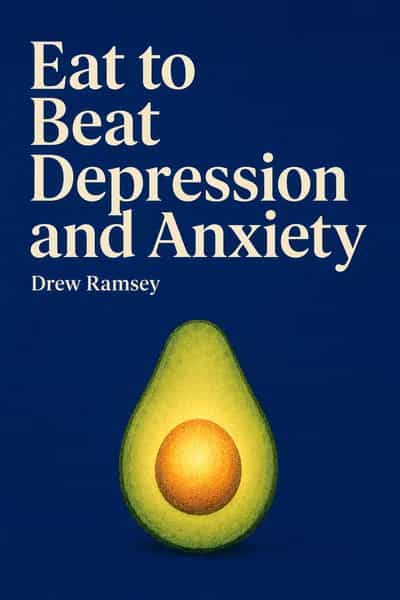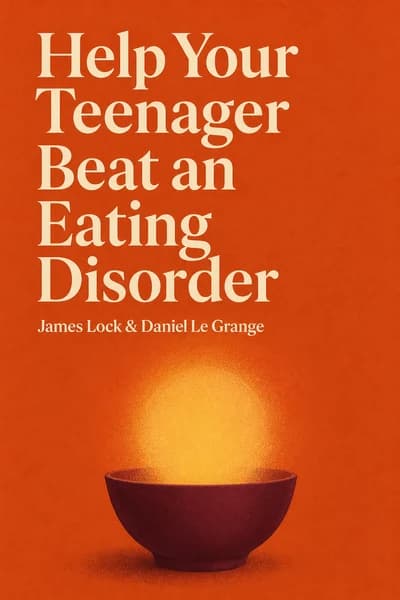
The revolutionary guide that transformed eating disorder treatment by empowering parents. With 90,000+ copies sold, this evidence-based approach challenges traditional therapy methods. What if the most effective treatment doesn't isolate teenagers from family but actually depends on parental involvement?
James Lock and Daniel Le Grange, co-authors of Help Your Teenager Beat an Eating Disorder, are renowned clinical psychologists and pioneers in evidence-based treatments for adolescent eating disorders. Lock is a professor of psychiatry at Stanford University, and Le Grange is the Benioff UCSF Professor in Children’s Health and Director of the Eating Disorders Program at UCSF. They developed family-based treatment (FBT), the gold-standard approach for anorexia and bulimia nervosa.
Their work, grounded in decades of research, empowers parents to take an active role in their teen’s recovery through structured meal support and behavioral interventions.
The duo’s collaborative titles, including Treatment Manual for Anorexia Nervosa: A Family-Based Approach, are widely used by clinicians and recommended by organizations like Kelty Eating Disorders. Their practical, compassionate guidance bridges academic rigor with real-world application, reflecting their leadership in over 30 peer-reviewed studies on eating disorder therapies. Help Your Teenager Beat an Eating Disorder has become a cornerstone resource for families navigating these challenges, praised for its actionable strategies and emphasis on parental collaboration in recovery.
Help Your Teenager Beat an Eating Disorder provides parents with evidence-based strategies to support teens battling anorexia, bulimia, binge-eating disorder, or ARFID. Authored by Stanford experts James Lock and Daniel Le Grange, it emphasizes Family-Based Treatment (FBT), teaching parents to monitor meals, resolve power struggles, and collaborate with healthcare providers. The second edition includes updated research on binge-eating disorder and relapse prevention.
This book is essential for parents, caregivers, or educators of teens with eating disorders. It’s also valuable for mental health professionals seeking insights into family-centered treatment. The practical advice suits families at any stage of their child’s recovery journey, offering tools to address anorexia, bulimia, and avoidant/restrictive food intake.
Yes, with over 90,000 copies sold, this bestselling guide is praised for its actionable, science-backed methods. It counters outdated approaches that marginalize parents, instead empowering families to lead recovery. The second edition’s expanded content on binge-eating disorder and relapse tactics makes it a critical resource.
FBT positions parents as central to recovery, training them to supervise meals, normalize eating habits, and reduce confrontations. The method, validated by Lock’s NIH-funded research, rejects blaming families and focuses on behavioral intervention. Studies show higher recovery rates when parents actively manage treatment.
The book offers step-by-step meal management techniques, communication strategies to avoid power struggles, and guidelines for collaborating with clinicians. Updated chapters cover binge-eating disorder, neurobiological insights, and relapse prevention. Real-world examples and diagnostic criteria help parents identify symptoms early.
Unlike traditional approaches that sideline parents, Lock and Le Grange emphasize familial involvement as crucial. The book rejects “parent-blaming” myths, instead providing tools to address behavioral triggers and restore healthy eating. Its focus on FBT’s efficacy sets it apart from therapist-only models.
Some critics note the book’s heavy reliance on FBT, which may not suit all families or cultural contexts. Others highlight the need for supplementary therapy for co-occurring conditions like anxiety. However, its strengths in structure and evidence-based methods are widely acknowledged.
The updated edition includes dedicated chapters on binge-eating disorder, explaining its neurobiological roots and tailored FBT strategies. It provides scripts for discussing emotional eating and techniques to interrupt bingeing cycles, reflecting the latest DSM-5 criteria.
Dr. James Lock, a Stanford professor and director of its Eating Disorder Program, co-developed FBT and has 300+ publications. Dr. Daniel Le Grange pioneered FBT research through NIH-funded trials. Their combined expertise informs the book’s rigorous, clinically tested approach.
The guide teaches relapse prevention through consistent meal monitoring, recognizing early warning signs (e.g., secretive exercise), and maintaining open communication with treatment teams. Case studies illustrate how families sustain progress post-recovery.
Yes, it addresses ARFID’s unique challenges, such as extreme pickiness and fear of choking. Practical strategies include graded food exposure and family meals to expand dietary variety. The authors clarify how ARFID differs from traditional eating disorders.
While focused on eating behaviors, the book advises coordinating care for anxiety or depression with specialists. It stresses the importance of treating underlying mental health issues alongside nutritional rehabilitation.
Siente el libro a través de la voz del autor
Convierte el conocimiento en ideas atractivas y llenas de ejemplos
Captura ideas clave en un instante para un aprendizaje rápido
Disfruta el libro de una manera divertida y atractiva
When it comes to eating disorders, time is not your ally.
Don't wait until your child reaches some arbitrary threshold.
Guilt only undermines their ability to help.
Dwelling on causation diverts energy from helping your child.
Desglosa las ideas clave de Help Your Teenager Beat an Eating Disorder en puntos fáciles de entender para comprender cómo los equipos innovadores crean, colaboran y crecen.
Destila Help Your Teenager Beat an Eating Disorder en pistas de memoria rápidas que resaltan los principios clave de franqueza, trabajo en equipo y resiliencia creativa.

Experimenta Help Your Teenager Beat an Eating Disorder a través de narraciones vívidas que convierten las lecciones de innovación en momentos que recordarás y aplicarás.
Pregunta lo que quieras, elige la voz y co-crea ideas que realmente resuenen contigo.

Creado por exalumnos de la Universidad de Columbia en San Francisco
"Instead of endless scrolling, I just hit play on BeFreed. It saves me so much time."
"I never knew where to start with nonfiction—BeFreed’s book lists turned into podcasts gave me a clear path."
"Perfect balance between learning and entertainment. Finished ‘Thinking, Fast and Slow’ on my commute this week."
"Crazy how much I learned while walking the dog. BeFreed = small habits → big gains."
"Reading used to feel like a chore. Now it’s just part of my lifestyle."
"Feels effortless compared to reading. I’ve finished 6 books this month already."
"BeFreed turned my guilty doomscrolling into something that feels productive and inspiring."
"BeFreed turned my commute into learning time. 20-min podcasts are perfect for finishing books I never had time for."
"BeFreed replaced my podcast queue. Imagine Spotify for books — that’s it. 🙌"
"It is great for me to learn something from the book without reading it."
"The themed book list podcasts help me connect ideas across authors—like a guided audio journey."
"Makes me feel smarter every time before going to work"
Creado por exalumnos de la Universidad de Columbia en San Francisco

Obtén el resumen de Help Your Teenager Beat an Eating Disorder como PDF o EPUB gratis. Imprímelo o léelo sin conexión en cualquier momento.
Imagine discovering your vibrant teenager has been secretly skipping meals, exercising obsessively at night, or purging after dinner. What was once dismissed as a "phase" now threatens their life. This nightmare scenario unfolds in thousands of homes annually, yet many parents feel powerless against eating disorders. The revolutionary approach developed by Lock and Le Grange challenges the traditional practice of excluding parents from recovery, instead positioning families as the primary healing force. This method, known as the Maudsley approach, has transformed eating disorder treatment worldwide. Why does this matter so deeply? Because eating disorders have the highest mortality rate of any mental illness. They're not choices or phases - they're serious medical conditions that progressively worsen without intervention. When your child develops an eating disorder, every instinct tells you to help, yet traditional treatment approaches often push parents away precisely when their children need them most. What if, instead, your parental knowledge, love, and determination became the most powerful medicine available?