Capítulo 1
When Death Makes You Visible: A Story of Racial Injustice
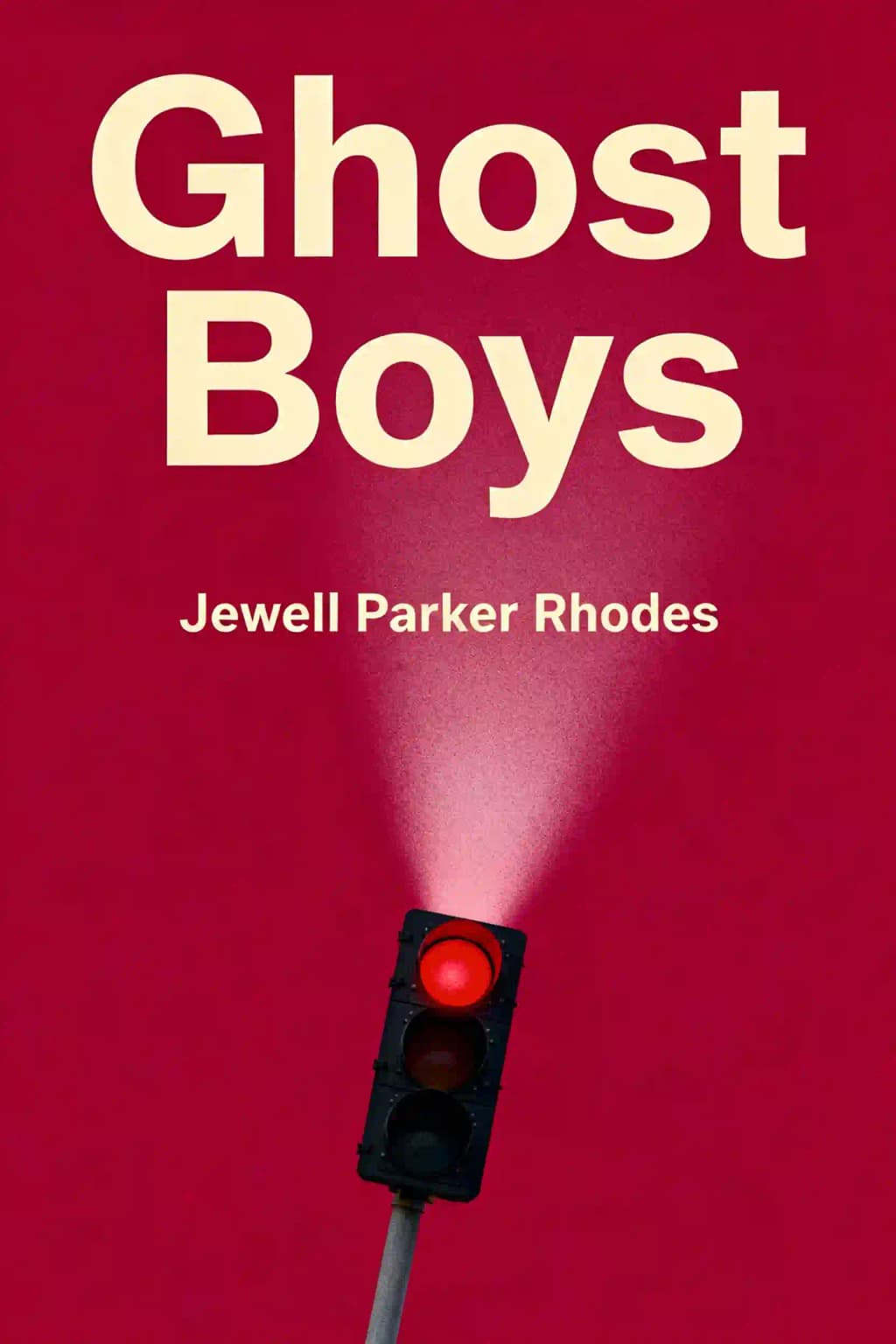
Imagine waking up to find yourself watching your own dead body, lying flat on the ground with blood-stained sneakers. This is how Jewell Parker Rhodes begins her haunting novel "Ghost Boys," a book that has become required reading in middle schools across America since its 2018 publication. The novel has been praised by The New York Times as "an essential read for confronting the ongoing tragedy of racial injustice in America," while celebrities like Oprah Winfrey have highlighted it as crucial literature for understanding systemic racism through the eyes of children. What makes this book particularly powerful is how it connects contemporary police violence against Black youth with historical racial violence, creating a timeless meditation on justice that resonates across generations.
Capítulo 2
The Invisible Witness: Jerome's Death and Ghostly Awakening
Jerome Rogers is just twelve years old when we meet him-both alive and dead. In the opening scenes, he observes his own body lying on the ground after being shot by a police officer. "How small I look," he reflects, surprised by his diminutive appearance in death. "I thought I was bigger. Tough. But I'm just a bit of nothing." This stark beginning immediately establishes the novel's unflinching approach to violence against Black children.
As a ghost, Jerome watches his family's devastation unfold-his mother wailing as she's held back by police, his father punching walls in grief, his grandmother insisting that "every goodbye ain't gone," and his sister Kim retreating into books as her coping mechanism. What's particularly heartbreaking is Jerome's inability to comfort them. When he tries to touch his mother as she lies on his basketball-themed bed with swollen eyes, his hand passes right through her.
The apartment fills with mourners bringing food in what would seem like a celebration if not for the grief-stricken faces. Jerome discovers that while the living can't see him, they unconsciously make space for him-sensing his presence without knowing it. Only his grandmother seems to detect something, turning when he moves or humming louder when he sits beside his father.
As the family discusses his funeral, comparisons are drawn between Jerome and other Black boys killed because of racial prejudice. His grandmother mentions Emmett Till, another Chicago boy murdered in 1955, while his father references Tamir Rice-"Another boy shot just because he's black." This connection across time becomes a central theme, as Jerome soon discovers he's part of a long, tragic lineage of "ghost boys" who wander between worlds after violent deaths.
Capítulo 3
Life Before Death: Jerome's Final Day
Through flashbacks, we learn about Jerome's life before the shooting. He was the "good kid" who didn't get in trouble, though he was often teased for being pudgy. His family worked hard-mother at Holiday Inn, father driving a sanitation truck, grandmother keeping house-while Jerome and Kim focused on education. Every morning began with his mother's ritual warning: "Come straight home. You hear me, Jerome? Come straight home."
Jerome and Kim navigated their dangerous neighborhood with careful precision-walking at just the right pace, neither too fast (which might look like running) nor too slow (which might seem like a challenge). They passed drug dealers and abandoned buildings on their way to school, but as Jerome noted, the school bullies were the worst threat of all.
His grandmother, who worried about "premonitions," made Jerome tell her "three good things" each day-her magical number representing "All. Optimism. Joy." This ritual of finding goodness in a difficult world becomes poignant in retrospect, knowing Jerome's fate.
On his final day alive, Jerome meets Carlos, a new student from San Antonio who becomes his first and only friend. When bullies corner them in the bathroom, Carlos produces what appears to be a gun to scare them away. Later, he reveals it's just a plastic toy, and the boys collapse in relieved laughter. Before they part ways, Carlos offers Jerome the toy gun to borrow-a seemingly innocent gesture with fatal consequences.
Capítulo 4
The Courtroom: Justice on Trial
The courthouse scenes provide some of the novel's most powerful moments, as Officer Moore (who shot Jerome) testifies that he thought the boy was "at least twenty-five" and "a dangerous man." He describes Jerome as "big, hulking, scary" while the ghost of Jerome stares directly into his eyes, invisible to all except, strangely, the officer's daughter Sarah.
When Jerome's father erupts in court-"A grown man. Two grown men. You. Your partner, Officer Whitter. Armed. Threatened by a boy?"-chaos follows with cries of "Black lives matter!" Throughout the testimony, inconsistencies emerge: the officer admits he never announced himself as police, never ordered Jerome to put down the gun or raise his hands, and fired before his cruiser had fully stopped. When asked if he rendered aid after shooting Jerome, he answers a quiet "No."
Perhaps most damning is the testimony of the 911 operator who received a call about "a boy with a toy gun" but only relayed that there was "a boy with a gun," omitting the crucial detail that might have saved Jerome's life. When questioned why she didn't communicate this information to officers, she repeatedly says, "I don't know."
The courtroom becomes a stage where America's racial dynamics play out in microcosm. The judge, despite showing personal regret for Jerome's death, ultimately rules there isn't enough evidence to charge Officer Moore with excessive force, manslaughter, or murder. Justice, it seems, remains elusive for Black boys like Jerome.
Capítulo 5
Sarah: The Bridge Between Worlds
In an unexpected twist, Officer Moore's daughter Sarah possesses the unique ability to see Jerome's ghost - a supernatural element that transforms into a powerful metaphor for seeing beyond racial barriers. Their unlikely connection becomes central to the story's exploration of racial reconciliation, with Sarah's privileged existence serving as a stark counterpoint to Jerome's life. Her bedroom - three times the size of Jerome's entire living space - is initially described as a shrine to childhood innocence, filled with pink decor, collector's dolls, and plush animals, highlighting the profound economic and social disparities between their worlds.
When they first meet, Jerome's anger is palpable. He sees in Sarah's life everything his family lacks: security, abundance, and the unearned privileges of whiteness. The toys scattered across her floor cost more than his mother's weekly paycheck, and the casual waste of food at dinner makes him think of his sister's carefully rationed meals. Sarah, meanwhile, grapples with her own complex position - caught between defending her father and confronting uncomfortable truths. "I don't want to be liked because my dad killed you," she confesses, a statement that marks the beginning of their tentative understanding and Jerome's softening resentment.
Sarah's transformation accelerates as she delves deeper into Jerome's story. The pivotal moment comes when they watch the viral video footage of the shooting together. Unlike the blurred versions shown on news channels, this raw footage reveals the truth Sarah's father couldn't - or wouldn't - see: Jerome was clearly just a child playing with a toy gun. "He didn't see you," she whispers through tears, the weight of recognition heavy in her voice. "My father didn't really see you at all." This moment becomes a turning point in Sarah's understanding of systemic racism and privilege.
Driven by this newfound awareness, Sarah channels her guilt and anger into action. She creates a comprehensive website called "End Racism, Injustice," meticulously documenting statistics about police violence against Black Americans. Her research reveals disturbing patterns: Black people are shot by police at 2.5 times the rate of white people despite comprising only 13% of the population, and Black children are often perceived as older and more threatening than their white peers. Her bedroom undergoes a symbolic transformation - the pink comforter and frills disappear, her collection of stuffed pigs (a pointed reference to her father's profession) is donated, and her ballerina lamp is banished to the closet. In their place appear protest posters, civil rights literature, and printouts of news articles about similar cases across the country.
Through Sarah's evolution, Rhodes crafts a powerful message about the role of white allies in confronting racial injustice. Her character suggests that true change begins with the willingness to see uncomfortable truths, acknowledge privilege, and take concrete action toward justice. Sarah's journey from naive privilege to informed activism demonstrates that acknowledging truth isn't just the first step toward healing - it's an ongoing process that requires continuous learning, growth, and commitment to change.
Capítulo 6
Emmett Till: The Ghost Who Guides
Jerome's understanding deepens when he meets Emmett Till, another ghost boy who died in 1955. Dressed in old-timey clothes with a rimmed hat, Emmett reveals a shocking truth: hundreds of ghost boys like them exist-all Black boys killed under similar circumstances across American history.
Initially resistant to knowing Emmett's story, Jerome eventually listens as Emmett takes him to his old West Woodlawn home and recounts his tragic death. In August 1955, fourteen-year-old Emmett visited relatives in Money, Mississippi. Despite warnings about how to behave around white people in the South, Emmett-used to Chicago ways-entered Bryant's Grocery, bought bubble gum, put a penny directly in Mrs. Bryant's hand, and said "Goodbye." When his speech impediment made him stutter "W-w-what's wrong?" Mrs. Bryant thought he was whistling at her.
The misunderstanding escalated to violence when Mrs. Bryant's husband and another man kidnapped Emmett at night, brutally beat him, shot him, and tied his body to a wheel before sinking it in the Tallahatchie River. Witnessing this tragedy, Jerome joins Emmett and other ghost boys in a mournful wail: "Not fair. I died too young. Too soon."
Through Emmett's story, Jerome realizes he's part of a historical continuum-that his death, while personal and unique, connects to a larger pattern of racial violence in America. Emmett teaches Jerome that "bearing witness" is crucial-telling these stories honors the dead and creates possibility for change among the living.
Capítulo 7
Carlos: Friendship Beyond Death
Though Jerome's friendship with Carlos lasted only one day, it proves meaningful beyond measure and reverberates throughout the story. After Jerome's death, Carlos transforms his brief connection with Jerome into a lasting commitment to Jerome's family. He becomes Kim's dedicated protector, faithfully meeting her and Grandma on the school steps each morning and walking Kim home afterward - a daily ritual that provides structure and safety during their time of grief. He brings small gifts like colorful pencils and origami animals, and makes Kim laugh with his silly jokes and impromptu cartwheels in the playground, helping her find moments of joy amid her sorrow.
The relationship between Carlos and Jerome's family reaches a pivotal turning point when Carlos, wracked with guilt, confesses that he gave Jerome the toy gun - the same gun that became a tragic factor in Jerome's death. In a deeply moving scene, Grandma demonstrates extraordinary grace and wisdom. Instead of anger or blame, she pulls both Carlos and Kim close, rocking them as they cry together in shared grief. She reveals her own feelings of guilt for allowing Jerome to go play instead of doing homework that fateful day, though she adds with bittersweet fondness that she was secretly pleased to see him "being a bit naughty" for once, like a normal twelve-year-old boy.
Grandma's profound wisdom emerges when she tells them, "Can't undo wrong. Can only do our best to make things right." This philosophy becomes a guiding light throughout the novel, illustrating how communities can move forward from racial trauma without forgetting or diminishing the past. Her words acknowledge both the permanence of loss and the possibility of healing.
Carlos honors Jerome's memory by creating an elaborate altar in his home, carefully arranged with handmade candlesticks, colorful drawings, Jerome's favorite drumstick from music class, and his seventh-grade photo - the one where his smile lights up his whole face. He and his family bring their San Antonio traditions to Chicago, introducing Jerome's family to Day of the Dead celebrations, complete with papel picado decorations and pan de muerto. This cultural practice of remembering and celebrating the dead becomes more than just a memorial - it evolves into a beautiful metaphor for how different communities can bridge divides and come together in shared humanity and grief. Through Carlos's dedication to keeping Jerome's memory alive, the story shows how friendship can transcend both death and cultural boundaries, creating new bonds from tragedy.
Capítulo 8
The Burden of Truth: Revealing What Happened
As Jerome watches his family struggle with grief, he realizes there's unfinished business - the truth about the toy gun needs to be told. Kim knows Carlos gave Jerome the gun but hasn't revealed this to their parents or grandmother. Similarly, Carlos carries the weight of guilt, knowing his gift indirectly led to Jerome's death. This secret creates an invisible barrier between the families, adding another layer of pain to an already devastating situation.
The burden of this knowledge manifests differently in both children. Kim becomes withdrawn at school, her grades slipping as she wrestles with whether to reveal what she knows. Carlos experiences nightmares and anxiety attacks, his mother noting how he's become a shadow of his former self. The truth weighs particularly heavy on him as he watches news coverage of protests following Jerome's death, knowing he holds a crucial piece of information.
When Carlos finally gathers the courage to visit Jerome's family, the scene unfolds with raw emotion. "I gave him the gun," he admits, his voice barely above a whisper. The confession causes everyone to break into tears - not just of sadness, but of relief. Rather than creating more pain, this truth-telling becomes a catalyst for healing. It allows Jerome's family to understand the full circumstances of his death while giving Carlos a chance to process his guilt and begin his own journey toward forgiveness.
This subplot powerfully illustrates how truth, however painful, is necessary for genuine reconciliation. The scene parallels larger societal needs for acknowledgment of historical and ongoing racial injustices - only by facing uncomfortable truths can healing begin. Just as Carlos's confession creates a path forward for both families, the novel suggests that broader social healing requires similar courage and honesty about systemic racism and its impacts.
The novel also addresses how trauma affects different people in different ways. Jerome's parents become emotionally withdrawn, "acting like robots, barely eating or speaking, trying to forget." His father throws himself into work, while his mother spends hours staring at old photographs. In contrast, Grandma and Kim "don't mind showing their grief, talking about me and crying, which makes them seem more alive." Kim writes letters to Jerome in her journal, while Grandma keeps his memory alive through stories. These contrasting responses highlight that there's no single "right way" to process racial trauma, and that healing takes different forms for different people.
The aftermath of the confession brings subtle but significant changes to both families. Small gestures of connection begin to emerge - shared meals, quiet conversations, and eventually, the possibility of forgiveness. Through this, the novel demonstrates how truth-telling, though initially painful, creates space for authentic healing and connection.
Capítulo 9
Day of the Dead: Celebration of Life
The novel culminates on November 1st-All Saints' Day for Grandma and Day of the Dead for the Rodriguez family. They gather for a picnic on Jerome's grave, bringing together different cultural traditions in a celebration of his life. Jerome's parents look better, "less strained," suggesting the beginning of healing.
Carlos's family brings tamales, and his mother wears a ruffled dress with pink flowers. What's remarkable about this scene is how Jerome's family and friends talk to him as if he's present-which he is, though they can't see him. Kim tells Jerome about Sarah sending her a copy of Little Women, while Carlos places a basketball where Jerome's hand might be inside the casket, promising to return year after year.
Mrs. Rodriguez shares sugar skulls, explaining they celebrate life, not death. This perspective transforms mourning into something life-affirming, suggesting that remembering the dead can strengthen the living. As Emmett appears beside Jerome, along with thousands of ghost boys, he explains their purpose: "Only the living can make change." They'll wander together until there aren't any more murders, until skin color doesn't matter-only friendship, kindness, understanding.
The Day of the Dead celebration becomes a powerful metaphor for cultural exchange and healing. It suggests that different communities coming together-African American and Latino, living and dead-creates possibility for transformation. The sugar skulls, bright colors, and shared food represent joy in the midst of sorrow, a way of honoring those lost while affirming life.
Capítulo 10
Bear Witness: A Call to Action
In the novel's final moments, Jerome recounts his death in vivid detail-running through Green Acres with Carlos's toy gun, feeling powerful "like in a video game," until a police car approaches. "Pow. Pow. I fall. Blood flows into the dirt and snow." As he lies dying, he tries to say "Toy," his hand opening and closing, but no one hears. His final thoughts are of wanting to see his mother and have his grandmother hold his hand.
This unflinching account forces readers to confront the reality of police violence against Black children. By placing us directly in Jerome's consciousness during his final moments, Rhodes creates empathy that transcends racial and generational divides.
The novel ends with Jerome's powerful directive: "Bear witness. My tale is told. Wake. Only the living can make the world better. Live and make it better. Don't let me (or anyone else) tell this tale again." This call to action transforms readers from passive observers into potential agents of change. The imperative "Wake" suggests both awakening to racial injustice and the funeral wake-a communal acknowledgment of loss that precedes healing.
Rhodes's afterword explains her motivation for writing the novel: Tamir Rice's death at twelve, like Emmett Till's at fourteen, deeply disturbed her by criminalizing Black boys as children. She hopes parents and teachers will read this book with children to discuss racial prejudices that still haunt America. Through discussion and civic action, she believes youth can dismantle systemic racism.
"Bearing witness," she explains, is crucial to oppressed communities-using personal stories to testify against injustice. Jerome's storytelling provides catharsis while empowering Sarah to fight racial bias. As an artist, Rhodes bears witness hoping to empower readers to make the world better.
Capítulo 11
When the Dead Speak: Finding Hope in Tragedy
"Ghost Boys" ultimately offers hope without sentimentality. It acknowledges the brutal reality of racial violence while suggesting pathways toward healing and justice. The novel's power lies in its refusal to look away from difficult truths while still affirming the possibility of change - a delicate balance that makes its message both accessible and profound for young readers grappling with these complex issues.
Through Jerome's ghostly perspective, readers gain unique insight into racial injustice - seeing both the immediate tragedy of his death and its ripple effects across his family and community. We witness his mother's devastating grief, his sister's confused silence, and his grandmother's quiet strength. By connecting contemporary police violence with historical lynching through the presence of Emmett Till's ghost, Rhodes illustrates how racism evolves but persists across generations. The parallel between Jerome's death and Till's murder, separated by decades yet linked by similar prejudices, creates a powerful commentary on America's ongoing struggle with racial violence.
The novel's exploration of understanding and reconciliation unfolds through multiple characters' journeys. Sarah's transformation from privileged innocence to racial awareness suggests that education and empathy can create allies in the struggle for justice. Her growing understanding - sparked by her ability to see Jerome's ghost and deepened by conversations with her father - demonstrates how confronting uncomfortable truths can lead to meaningful change. Carlos's dedication to honoring Jerome's memory shows how friendship transcends death, while also highlighting the trauma experienced by those left behind. His continued visits to Jerome's family and his efforts to keep Jerome's story alive represent the importance of remembrance and advocacy.
The ghost boys themselves serve as both witnesses and warning signs - spiritual sentinels wandering until there are no more murders like their own. Their collective presence creates a powerful metaphor for the generational trauma of racial violence, while their persistence embodies the hope that someday their vigil will end. Through their stories, Rhodes connects individual tragedies to a larger historical narrative of systemic racism and the ongoing fight for justice.
"Peace out," Jerome concludes - a casual farewell that carries profound weight in the context of his violent death. Peace is precisely what these ghost boys seek, not just for themselves but for a world where Black children can live without fear. By bearing witness to Jerome's story, readers are invited to join in creating that world - one where toy guns don't become death sentences, where police officers see children as children regardless of race, and where the ghost boys can finally rest. The novel suggests that this change begins with understanding, continues through action, and requires the commitment of each new generation to break the cycle of violence and prejudice.