Capítulo 1
From Tribal Chief to World Conqueror: Genghis Khan's Enduring Legacy
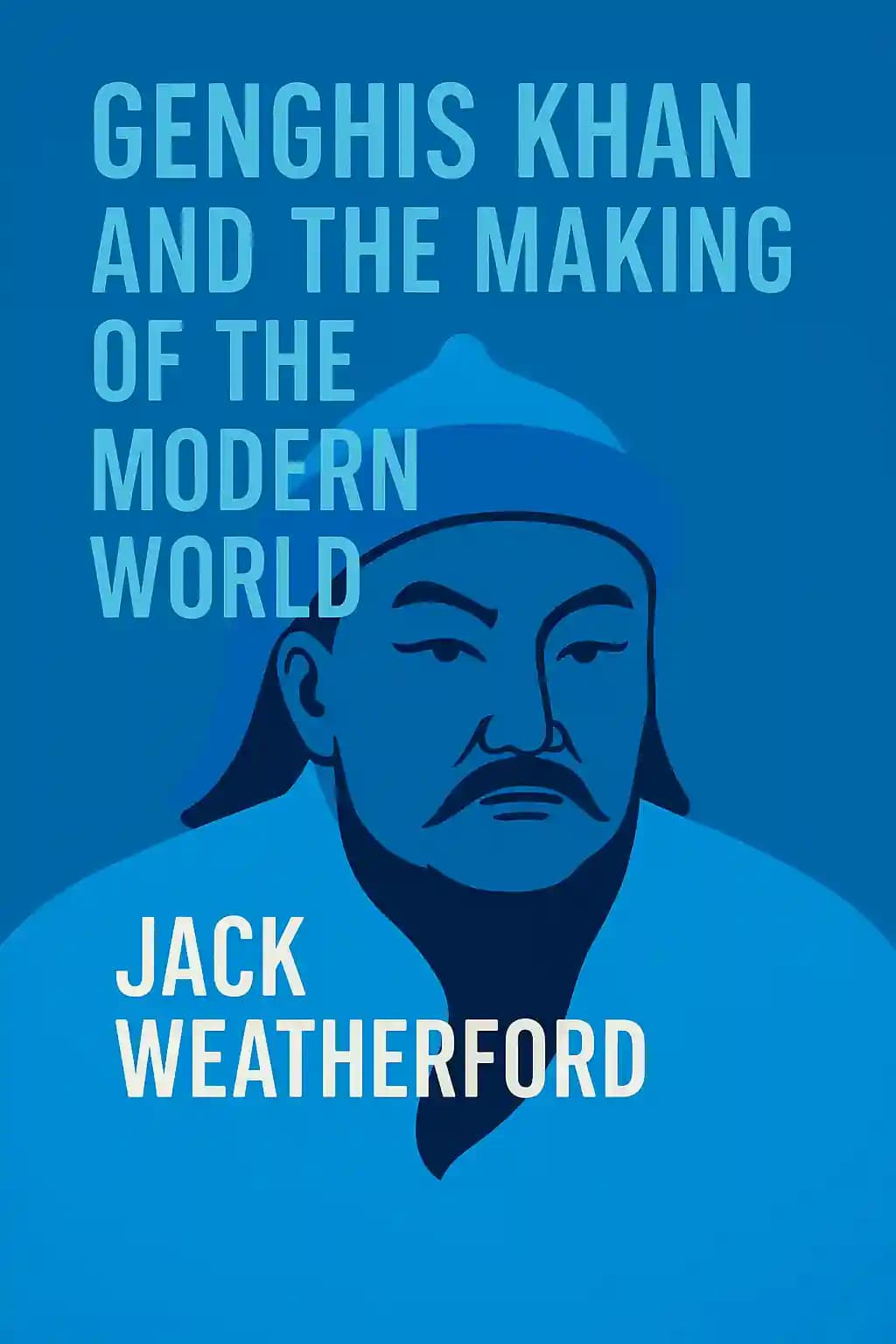
In the vast, unforgiving steppes of Mongolia, a child was born clutching a blood clot in his tiny hand-an omen of extraordinary destiny. This boy would grow to become Genghis Khan, arguably history's most influential conqueror and nation-builder. Jack Weatherford's masterful exploration of this remarkable life reveals not the barbarian of Western imagination, but a visionary whose innovations in warfare, governance, and commerce continue to shape our modern world.
Named one of Time Magazine's most influential books of the last decade, "Genghis Khan and the Making of the Modern World" has captivated readers from Bill Gates to cultural icons across the globe. Its revelations about the Mongol Empire's progressive policies-religious freedom, merit-based advancement, and international trade networks-challenge centuries of historical mischaracterization. The book's enduring popularity stems from its ability to overturn entrenched prejudices while delivering a riveting human story of transformation against impossible odds.
As we journey through Weatherford's narrative, we'll discover how a desperate orphan boy on the Mongolian steppes created an empire that connected disparate civilizations, spread technologies across continents, and established the foundations for our globalized society. His story reminds us that history's most transformative figures often emerge from the most unlikely circumstances-and that true understanding requires us to look beyond our cultural biases to see the complex humanity in those we've been taught to dismiss.
Capítulo 2
The Blood Clot: Birth of a Legend in Harsh Lands
The story begins in 1162 on the windswept banks of the Onon River, where Hoelun-a young woman kidnapped from her betrothed-gave birth to a boy named Temujin. The harsh Mongolian landscape, with its extreme temperatures and unforgiving terrain, mirrored the violence and unpredictability that would define his early years. Born clutching a mysterious blood clot, the infant's arrival was seen as portentous, a sign of extraordinary destiny amid ordinary tribal struggles.
Imagine this world: vast, open steppes where survival demanded constant vigilance. Summer brought scorching heat that parched the land; winter delivered bone-chilling cold that could kill the unprepared. In this environment, the Mongols developed remarkable resilience, living in felt-covered gers that could be dismantled and moved with the seasons. Their lives followed ancient rhythms of nomadic herding, punctuated by raids and alliances that maintained a delicate balance of power among competing clans.
Hoelun's own story exemplified the harsh realities of steppe life. Kidnapped by Temujin's father Yesugei during her wedding journey, she was forced to adapt to a new tribe and new husband. Yet within this culture of violence and abduction existed profound expressions of loyalty and love. When Hoelun was taken, she left behind a blouse carrying her scent for her first betrothed-a poignant gesture of farewell in a world where sentimentality rarely survived the demands of pragmatism.
"The nomadic people of the steppes lived in a world where love and war, kindness and cruelty existed side by side," Weatherford writes. "Their survival depended on understanding this duality and navigating its complexities with skill."
For young Temujin, these lessons came early and brutally. His father's poisoning by Tatar enemies when the boy was just nine years old plunged his family into desperate poverty. Abandoned by their clan, the widow Hoelun and her children survived by digging for roots and hunting small animals. They wore clothing made from rat skins instead of the traditional sheep and marmot furs-a visible symbol of their social degradation.
What transforms a desperate child into history's greatest conqueror? Perhaps it begins with the fierce determination of a mother like Hoelun, who refused to accept defeat even when abandoned by her tribe. Or perhaps it's forged in the crucible of extreme deprivation, where survival itself becomes a daily victory against overwhelming odds.
Capítulo 3
From Outcast to Khan: Temujin's Rise Through Alliance and Cunning
Temujin's journey from abandoned orphan to Mongol leader reveals his extraordinary ability to forge alliances beyond traditional kinship bonds. At a time when tribal loyalties determined one's place and prospects, he began building relationships based on personal loyalty and mutual benefit-a revolutionary approach that would later transform Mongol society.
His blood brotherhood with Jamuka exemplifies this talent. The two boys exchanged gifts-Temujin offering a knucklebone from a black ox he had killed, Jamuka reciprocating with a piece of agate he had found. These tokens sealed a bond as anda, or sworn brothers, creating a connection that transcended clan affiliations. Such relationships became the foundation of Temujin's growing network of loyal followers.
Yet the path to leadership required more than friendship-it demanded ruthless pragmatism. When his half-brother Begter claimed authority over the family and attempted to take food from Temujin's younger siblings, Temujin made a fateful decision. Together with his full brother Khasar, he confronted and killed Begter-a shocking violation of kinship bonds that demonstrated his willingness to break with tradition when necessary.
The consequences were swift. The Tayichiud clan, already hostile to Hoelun's children, hunted down Temujin and captured him, placing him in a wooden cangue-a portable pillory that marked him as both prisoner and outcast. Yet even in this degradation, Temujin's charisma attracted allies. A kind-hearted captor freed him from the cangue at night to ease his suffering, and eventually helped him escape altogether.
What makes this period so fascinating is watching Temujin's developing philosophy of loyalty and merit. When he later reunited with those who had helped him, he rewarded them generously, regardless of their clan affiliations. Conversely, he never forgot those who had abandoned his family after his father's death. This selective memory-remembering both kindness and cruelty with equal clarity-would inform his approach to leadership throughout his life.
At sixteen, Temujin reclaimed his betrothed, Borte, cementing an alliance with her family. When she brought a valuable sable coat as her dowry, he made a strategic decision that revealed his growing political acumen. Rather than keeping this luxury for himself, he presented it to Ong Khan, the powerful leader of the Kereyid tribe who had once been his father's ally. This gesture reestablished a crucial connection that would protect Temujin's growing band of followers.
"In the harsh reality of the steppes," Weatherford notes, "Temujin understood that survival depended not on what you owned, but on who you could count as an ally."
Capítulo 4
Forging an Empire: Military Innovation and Social Revolution
By 1206, Temujin had achieved what many thought impossible: the unification of the notoriously fractious Mongol tribes under a single leader. At a grand assembly called a khuriltai, he was proclaimed Genghis Khan-ruler of the "Great Mongol Nation." But how did he accomplish this remarkable feat, and what made his approach to leadership so revolutionary?
The answer lies in his willingness to overturn centuries of tribal tradition in favor of a meritocratic system that rewarded loyalty and ability rather than birth. After defeating rival tribes, Genghis Khan systematically dismantled the old aristocratic hierarchies. He executed tribal leaders who opposed him but-crucially-incorporated their followers into his own people, not as slaves but as equals. This practice of adoption rather than subjugation created a rapidly expanding force united by loyalty to Genghis Khan himself.
His military reorganization was equally innovative. Traditional Mongol warriors fought in tribal units under hereditary leaders-an arrangement that perpetuated old rivalries and limited tactical flexibility. Genghis Khan abolished this system, creating decimal units of 10, 100, 1,000, and 10,000 warriors drawn from different tribes and clans. This not only broke down tribal divisions but also created a more efficient fighting force where advancement depended on merit rather than birth.
"Why would I want the sons of chiefs as my commanders?" Genghis Khan reportedly asked. "The sons of herders and blacksmiths are just as valuable to me if they are loyal and brave."
This meritocratic approach extended beyond the military into all aspects of Mongol society. Genghis Khan's legal code, the Yassa, established principles that were remarkably progressive for the 13th century. It outlawed the kidnapping of women (the very practice that had brought his mother to his father), abolished the traditional system of inherited slavery, and guaranteed religious freedom throughout his domains. Most significantly, it held all people-from the humblest herder to Genghis Khan himself-accountable to the same law.
Consider how revolutionary this was in a world where most societies were rigidly hierarchical, with different legal standards for nobles and commoners. In medieval Europe, for example, nobles enjoyed legal privileges that commoners could never access. In China, Confucian principles emphasized rigid social hierarchies. Genghis Khan's insistence on a single standard of justice for all represented a radical departure from the norms of his time.
His approach to conquered territories showed similar innovation. Rather than imposing Mongol customs on subjugated peoples, he adopted useful elements of their cultures and technologies. From the Chinese, he learned siege warfare techniques; from Muslim administrators, he adopted sophisticated systems of governance and taxation. This pragmatic openness to foreign ideas accelerated the Mongols' military success and laid the groundwork for the remarkable cultural exchange that would characterize the Mongol Empire at its height.
Capítulo 5
The Mongol War Machine: Strategy, Psychology, and Innovation
The Mongol military machine that Genghis Khan created was arguably the most effective fighting force the world had seen. Popular imagination often attributes Mongol success simply to overwhelming numbers and savage ferocity, but the reality was far more sophisticated. Genghis Khan's armies conquered through superior strategy, psychological warfare, and technological adaptation.
Consider their approach to siege warfare. Initially, the nomadic Mongols had little experience attacking fortified cities, a significant disadvantage when confronting the walled urban centers of China and Central Asia. Rather than stubbornly applying ineffective tactics, Genghis Khan systematically recruited engineers and artisans from conquered territories, rapidly building expertise in constructing and operating siege engines. Soon, his armies deployed catapults, trebuchets, and other sophisticated machinery with devastating effectiveness.
Their battlefield tactics were equally innovative. The Mongol cavalry's ability to execute complex maneuvers at high speed gave them a decisive advantage over more static opponents. One signature tactic was the feigned retreat-Mongol units would appear to flee in disorder, luring enemy forces into breaking formation to pursue them. Once the enemy was overextended and disorganized, hidden Mongol forces would emerge to encircle and destroy them.
"The greatest victory is that which requires no battle," goes an ancient saying often attributed to Sun Tzu. Genghis Khan embodied this principle through his masterful use of psychological warfare. Before attacking a city, he would often offer generous terms for surrender. Those who accepted were spared; those who resisted faced the prospect of total destruction. This carrot-and-stick approach encouraged many cities to surrender without fighting, preserving both Mongol and enemy lives.
The Mongols also excelled at intelligence gathering and deception. They maintained extensive networks of spies and informants, giving them detailed knowledge of enemy territories before invasion. During campaigns, they would light extra campfires to exaggerate their numbers, spread misinformation about their movements, and use multiple columns to confuse defenders about their true objective.
What truly distinguished the Mongol approach to warfare was its systematic nature. Unlike many contemporary armies that relied on individual heroism or overwhelming numbers, the Mongols operated as a disciplined, coordinated force. Every aspect of their campaigns-from logistics to battlefield communications-was carefully planned and executed.
"Genghis Khan approached warfare as a science rather than an art," Weatherford writes. "He studied problems methodically, tested solutions in the field, and incorporated successful innovations into standard practice."
This scientific approach extended to their treatment of conquered peoples. Rather than indiscriminately slaughtering populations (as they were often accused of doing), the Mongols typically targeted the ruling elites while preserving skilled workers and merchants who could contribute to the empire's prosperity. Cities that surrendered peacefully were generally treated well; those that resisted might be made examples of, but even then, the Mongols preferred to spread terrifying rumors rather than waste resources on actual massacres.
Capítulo 6
The Mongol World System: Trade, Technology, and Cultural Exchange
Perhaps Genghis Khan's most enduring legacy was not his conquests but the unprecedented system of global exchange he created. By establishing the largest contiguous land empire in history-stretching from Korea to Eastern Europe-the Mongols connected civilizations that had previously had little contact, facilitating a remarkable flow of goods, ideas, and technologies.
The Pax Mongolica ("Mongol Peace") created conditions for trade on a scale never before seen. Merchants could travel safely along protected routes spanning thousands of miles, carrying luxury goods, staple commodities, and new technologies. The Mongols themselves became enthusiastic participants in this commerce, using their military power to secure trade routes and eliminate barriers to exchange.
"For the first time in history," Weatherford observes, "goods could flow from the Pacific shores of China to the Mediterranean and the Baltic Sea with minimal interference from bandits or petty local officials."
This commercial revolution transformed economies across Eurasia. Chinese silk, porcelain, and tea found eager markets in the Middle East and Europe. Persian textiles and glass traveled east to China. Indian spices, European wool, and Russian furs circulated throughout the empire. The volume and variety of goods exchanged during this period dwarfed anything seen in previous eras.
Equally important was the exchange of ideas and technologies. Paper money, already used in China, spread westward under Mongol rule. Printing technology traveled from East to West, laying the groundwork for Gutenberg's later innovations. Gunpowder, originally a Chinese invention, was refined through Persian and Arab contributions before revolutionizing European warfare. Agricultural techniques and crops moved across continents, improving food production and diversifying diets.
The Mongols' religious tolerance further facilitated cultural exchange. Unlike many contemporary rulers who imposed their faith on conquered peoples, Genghis Khan and his successors allowed freedom of worship throughout their domains. This policy attracted scholars, artists, and religious leaders from diverse traditions to Mongol courts, creating vibrant centers of intellectual and cultural activity.
Under Khubilai Khan, Genghis Khan's grandson and the founder of China's Yuan Dynasty, this cosmopolitanism reached its peak. His capital at Khanbaliq (modern Beijing) hosted Muslim astronomers from Persia, Nestorian Christian physicians from Syria, Buddhist monks from Tibet, and Confucian scholars from southern China. This unprecedented gathering of diverse intellectual traditions stimulated new discoveries and syntheses across multiple fields of knowledge.
The Mongols also revolutionized communications across their vast territories. They established the yam system-a network of relay stations where messengers could obtain fresh horses and supplies-allowing information to travel at unprecedented speeds across Eurasia. Marco Polo marveled at this system, noting that news could travel from the edges of the empire to the capital in a matter of days rather than months.
"The Mongols didn't invent many technologies themselves," Weatherford writes, "but they excelled at recognizing useful innovations and spreading them across cultural boundaries. They were history's greatest agents of technological diffusion."
Capítulo 7
The Women Behind the Empire: Hoelun, Borte, and Sorkhokhtani
While Genghis Khan dominates historical accounts of the Mongol Empire, women played crucial roles in its foundation and expansion. Mongol society granted women unusual autonomy compared to many contemporary cultures, and several remarkable women shaped the empire's destiny through their intelligence, resilience, and political acumen.
Hoelun, Genghis Khan's mother, laid the foundation for his rise through her extraordinary determination. After her husband's murder left her family destitute and abandoned by their clan, she refused to accept defeat. Gathering roots and hunting small animals, she kept her children alive through desperate times. More importantly, she instilled in young Temujin the values that would guide his leadership: loyalty to allies, remembrance of both kindness and cruelty, and the importance of family solidarity.
"Without Hoelun's fierce will to survive and protect her children," Weatherford notes, "Temujin would never have reached adulthood, let alone conquered an empire."
Borte, Genghis Khan's primary wife, demonstrated similar resilience. Kidnapped by the Merkid tribe shortly after her marriage, she endured months of captivity before Temujin rescued her. Their reunion was complicated by her pregnancy-possibly by one of her captors-but Genghis Khan chose to accept the child, Jochi, as his own. This decision, though pragmatic, created succession tensions that would trouble the empire after his death.
Despite this difficult beginning, Borte became Genghis Khan's trusted advisor. When his alliance with blood-brother Jamuka began to fracture, it was Borte who urged him to break away and establish his own following. This pivotal decision set Temujin on the path to independent leadership and eventual supremacy over the Mongol tribes.
Perhaps most influential was Sorkhokhtani, a Nestorian Christian who married Genghis Khan's youngest son Tolui. After her husband's death, she declined remarriage offers from powerful men, including the Great Khan Ogodei, choosing instead to focus on educating her sons and managing her territories. Her administrative skill made her lands the most prosperous in the empire, while her political acumen helped her navigate the dangerous currents of Mongol succession struggles.
Sorkhokhtani's greatest achievement was preparing her sons for leadership. She ensured they learned multiple languages, understood diverse religions, and mastered the arts of both warfare and governance. Her foresight paid off spectacularly-all four of her sons rose to positions of immense power. Most notably, her son Khubilai became both Great Khan of the Mongol Empire and Emperor of China, founding the Yuan Dynasty.
"In a world where women were typically valued primarily for producing male heirs," Weatherford observes, "Sorkhokhtani distinguished herself not just as a mother but as a political strategist and administrator of the highest caliber."
The prominence of these women reflects broader patterns in Mongol society. Unlike many contemporary cultures that secluded women or excluded them from public life, Mongol women participated actively in tribal councils, managed household economies, and sometimes even fought alongside men in battle. They owned property independently and could initiate divorce-rights that women in many "more advanced" sedentary civilizations lacked.
This relative gender equality stemmed partly from practical necessity. In a nomadic society where men were frequently absent on hunts or military campaigns, women necessarily assumed significant responsibilities. The mobility of nomadic life also made it difficult to seclude women as was common in many agricultural societies.
Capítulo 8
Global Impact: How the Mongols Shaped Our Modern World
The Mongol Empire's influence extends far beyond its historical moment, shaping aspects of our modern world in ways we rarely recognize. From international trade networks to technological diffusion, from postal systems to paper currency, Genghis Khan's legacy continues to touch our daily lives.
Consider global commerce. The Mongols created the first truly international trading system, connecting markets across Eurasia and establishing practices that foreshadowed modern global trade. They standardized weights and measures, issued universally recognized passports for merchants, and established consistent taxation policies across vast territories. These innovations reduced transaction costs and uncertainty, encouraging commercial activity on an unprecedented scale.
"The silk roads became highways of commerce under Mongol protection," Weatherford writes. "For the first time, merchants could travel from Venice to Beijing with reasonable assurance of safety-a journey that would have been suicidal before the Mongol conquests."
The Mongols' influence on technology transfer was equally profound. By connecting previously isolated civilizations, they accelerated the spread of innovations across cultural boundaries. Chinese inventions like printing, paper money, and gunpowder traveled westward, while Middle Eastern advances in astronomy, mathematics, and medicine moved east. This cross-fertilization of ideas stimulated new developments in multiple fields, laying the groundwork for the scientific and technological revolutions that would follow.
In governance, too, the Mongols left lasting marks. Their meritocratic approach to leadership-promoting individuals based on ability rather than birth-challenged traditional aristocratic systems throughout Eurasia. While they didn't eliminate hereditary privilege entirely, they demonstrated that more inclusive governance could produce more effective results. This lesson wasn't lost on later reformers seeking to modernize their societies.
The Mongols' religious tolerance also set important precedents. At a time when most rulers identified closely with a single faith and often persecuted religious minorities, Genghis Khan established freedom of worship as a fundamental principle. This policy wasn't merely idealistic-it was pragmatic, recognizing that religious diversity could strengthen rather than weaken an empire. In today's multicultural societies, we're still grappling with the challenges and opportunities of religious pluralism that the Mongols navigated centuries ago.
Even our modern postal and communication systems owe something to Mongol innovations. Their yam system-a network of relay stations for rapid communication across vast distances-established principles that later postal services would adopt and refine. The importance they placed on swift, reliable information flow across their territories foreshadowed our contemporary emphasis on communications infrastructure.
Perhaps most significantly, the Mongols helped create a more interconnected world. By linking East and West, they facilitated the exchange not just of goods and technologies but of worldviews and cultural perspectives. Marco Polo's famous journey to China-possible only because of the Pax Mongolica-introduced many Europeans to Asian civilizations, challenging their provincial assumptions and expanding their mental horizons.
"Before the Mongols," Weatherford observes, "most people lived and died without ever knowing what lay beyond their immediate surroundings. After the Mongols, the world became a more connected place-a transformation that continues to define our modern experience."
Capítulo 9
The Empire's Decline: Black Death and Cultural Backlash
The Mongol Empire's decline was as dramatic as its rise, triggered by a combination of natural disaster, succession disputes, and cultural backlash. The pivotal event was the Black Death-a catastrophic pandemic that emerged in the Mongol territories of Central Asia in the 1330s before spreading throughout Eurasia.
The plague devastated populations across the empire, killing millions and disrupting the commercial networks that had been the lifeblood of Mongol rule. Trade routes that once carried silk and spices now transmitted deadly bacteria, turning the Mongols' greatest achievement-connecting distant civilizations-into a vector for unprecedented disaster.
"The very interconnectedness that had made the Mongol Empire prosperous now accelerated its collapse," Weatherford writes. "The roads that carried goods and ideas also carried disease with terrifying efficiency."
As the plague spread, the Mongol World System began to fragment. Communication between different parts of the empire became difficult or impossible. Local rulers asserted independence from weakened central authorities. Trade declined precipitously as cities emptied and merchants died or fled. The carefully constructed commercial infrastructure that had sustained the empire fell into disrepair.
Succession disputes further accelerated the fragmentation. Without Genghis Khan's unifying presence, the empire had already begun dividing along regional lines, with different branches of his family controlling separate khanates. As these regional rulers died-many from the plague-fierce struggles erupted over their succession, further weakening Mongol cohesion.
Cultural backlash also played a crucial role in the empire's decline. As Mongol rule weakened, conquered peoples reasserted their traditional identities, often rejecting the cosmopolitan values that had characterized the empire at its height. In China, the Ming Dynasty that overthrew Mongol rule emphasized Confucian orthodoxy and Chinese cultural purity. In Russia, Orthodox Christianity became increasingly identified with resistance to "the Tatar yoke." In the Middle East, stricter interpretations of Islam gained prominence.
This cultural retrenchment had lasting consequences. Many of the Mongols' most progressive policies-religious tolerance, meritocratic advancement, women's relatively high status-were abandoned or reversed. Trade barriers that the Mongols had dismantled were rebuilt. The free flow of ideas across cultural boundaries diminished.
"The post-Mongol world," Weatherford observes, "often rejected Mongol innovations precisely because they were associated with foreign rule, regardless of their practical value."
Yet even as the unified empire collapsed, Mongol influence persisted in transformed forms. In the Islamic world, Turkic and Mongol military elites established new dynasties that combined Mongol military techniques with Islamic legitimacy-most notably the Mughals in India and the early Ottoman Empire. In Russia, Mongol administrative practices shaped the emerging Muscovite state. In China, despite official rejection of the "barbarian" Yuan Dynasty, many Mongol innovations in governance and commerce quietly persisted.
The Mongol collapse also had unintended positive consequences. As direct east-west trade became more difficult, Europeans began seeking alternative routes to Asian markets-eventually leading to the age of maritime exploration. Columbus was searching for a route to the wealth of Cathay (China), described so tantalizingly by Marco Polo, when he stumbled upon the Americas.
Capítulo 10
Legacy Distorted: How History Misremembered Genghis Khan
Few historical figures have been as systematically misrepresented as Genghis Khan. In Western imagination, he became the archetype of the savage conqueror-a one-dimensional barbarian driven solely by bloodlust and destruction. This caricature, perpetuated through centuries of literature, art, and later film, bears little resemblance to the complex leader revealed in more objective historical sources.
The distortion began during the Mongol conquests themselves, when terrified opponents spread exaggerated stories of Mongol atrocities. These accounts, often written by clerics or officials of defeated regimes, emphasized the destructive aspects of Mongol warfare while ignoring their administrative achievements and cultural contributions.
"Fear magnified numbers and transformed tactical destruction into mindless savagery," Weatherford notes. "A city that lost several thousand defenders in battle might be described as having lost hundreds of thousands of innocent civilians to Mongol bloodlust."
These distortions hardened into conventional wisdom as they were repeated by generations of historians, few of whom had access to Mongolian sources or perspectives. European chroniclers, writing from within the Christian tradition, portrayed the Mongols as God's punishment for human sins-a "scourge" rather than a civilization with its own values and achievements.
During the Enlightenment, European philosophers repurposed the Mongol stereotype to contrast "Oriental despotism" with emerging Western ideals of liberty and reason. Voltaire and Montesquieu used Genghis Khan as a symbol of arbitrary power and cruelty, further cementing his negative image in Western thought.
The 19th century added racial dimensions to this distortion. As European colonial powers expanded into Asia, they developed theories of racial hierarchy that placed Mongolian peoples near the bottom. The term "Mongoloid" became associated with intellectual disability, reflecting and reinforcing prejudices against Asian peoples. Genghis Khan was reimagined as the embodiment of the "Yellow Peril"-a threat to Western civilization and racial purity.
Soviet and Chinese Communist regimes added their own distortions. In Mongolia, which fell under Soviet influence, traditional veneration of Genghis Khan was suppressed as "feudal" and contrary to socialist values. In China, he was portrayed as a foreign oppressor who had subjugated the Chinese people. Both regimes systematically destroyed or concealed historical materials that might have offered more balanced perspectives.
Only in recent decades, with the opening of Mongolia after the collapse of the Soviet Union and the discovery of new historical sources, has a more accurate picture begun to emerge. Archaeologists, historians, and geneticists have collaborated to piece together a more nuanced understanding of Genghis Khan and his empire.
"The real Genghis Khan," Weatherford argues, "was neither the bloodthirsty barbarian of Western imagination nor the flawless national hero of modern Mongolian patriotism. He was something more interesting: a pragmatic visionary who combined traditional nomadic values with revolutionary innovations to create something history had never seen before."
This reassessment reveals a leader who certainly used violence-often strategically and terrifyingly-but who also created systems of governance, commerce, and cultural exchange that transformed Eurasia. His conquests caused tremendous suffering, yet also broke down barriers between civilizations and facilitated unprecedented sharing of goods, technologies, and ideas.
Capítulo 11
The Eternal Blue Sky: Genghis Khan's Enduring Significance
In April 2000, a small group of Mongolians and foreign guests gathered at a sacred site in northern Mongolia. They had come to commemorate Genghis Khan at the place where, according to tradition, he had prayed to the Eternal Blue Sky after escaping from the Merkid tribe as a young man. Following ancient customs, they offered milk, airag (fermented mare's milk), and blue scarves to the spirit of the great khan.
This ceremony, impossible during the Soviet era when veneration of Genghis Khan was suppressed, symbolizes his enduring significance in Mongolian culture and identity. For Mongolians, he remains not just a historical figure but a spiritual presence-the founder of their nation and the embodiment of their highest values.
Yet Genghis Khan's significance extends far beyond Mongolia's borders. As Weatherford's book demonstrates, his legacy touches all our lives through the global connections and institutions he helped create. In a very real sense, our interconnected modern world began with his unification of the Eurasian steppes and the transcontinental networks he established.
"Genghis Khan's empire connected and amalgamated the many civilizations of Eurasia," Weatherford writes. "But his importance extends beyond his military conquests. He created a new system based on individual merit, loyalty, and achievement."
This meritocratic vision-revolutionary in the 13th century-continues to inspire. In a world still struggling with ethnic divisions, religious conflicts, and entrenched hierarchies, Genghis Khan's ability to build a diverse, multi-ethnic empire where advancement depended on ability rather than birth remains remarkably relevant.
His pragmatic approach to governance also offers valuable lessons. Rather than imposing a single model on diverse peoples, he adapted his rule to local conditions while maintaining core principles. He embraced useful innovations regardless of their source, creating a culture of practical problem-solving rather than ideological purity.
Even his military innovations have contemporary resonance. Modern warfare, with its emphasis on mobility, psychological operations, and precision strikes rather than mass casualties, has more in common with Genghis Khan's approach than with the attritional warfare that dominated much of intervening history.
Perhaps most significantly, Genghis Khan's life demonstrates the possibility of transcending circumstances that seem hopelessly limiting. Born into poverty and abandonment on the margins of the civilized world, he created an empire that spanned continents. This trajectory from extreme adversity to world-changing achievement reminds us that history's most transformative figures often emerge from unlikely origins.
"Under the Eternal Blue Sky," Weatherford concludes, "Genghis Khan found the inspiration and strength to transform himself from an outcast child into the world's most powerful ruler. His story challenges us to look beyond cultural stereotypes and recognize the complex humanity in those we've been taught to dismiss as barbarians or savages."
In this recognition lies perhaps the most valuable lesson of Weatherford's book: that true understanding of the past requires us to set aside preconceptions and engage with historical figures on their own terms, in their own contexts. Only then can we appreciate the full complexity of their achievements and failures-and draw meaningful insights for our own time.
Capítulo 12
Bridging Worlds: The Mongol Legacy in Our Global Age
Today's interconnected world of global communication, trade networks, and multicultural societies reflects a reality that Genghis Khan helped pioneer. While the Mongol Empire is long gone, its core innovations-connecting civilizations, enabling cross-cultural exchange, and promoting merit-based advancement-continue to influence our modern world.
Our current lifestyle of consuming global products, exchanging ideas across cultures, and valuing talent over social status embodies principles the Mongols established centuries ago. As Weatherford notes, "The Mongols stand as a bridge between the ancient and modern worlds," having transformed disconnected civilizations into a new world order that laid the groundwork for today's global society.
The Mongols' bridging influence spans multiple domains: they established practices that prefigured modern international trade, facilitated technological transfer across cultures, and demonstrated the effectiveness of merit-based governance. Their greatest legacy may be in cultural exchange, as they created unprecedented opportunities for cross-cultural collaboration-bringing together Chinese astronomers, Persian mathematicians, European craftsmen, and religious scholars of various faiths.
This cosmopolitan approach-learning from different traditions regardless of their origin-remains crucial in addressing modern global challenges like climate change and pandemics. Genghis Khan's own journey from outsider to transformative leader demonstrates how innovation often emerges from beyond established power structures, while his adaptability shows the value of intellectual flexibility in changing times.
The empire's eventual fragmentation offers important cautionary lessons about succession planning and maintaining core principles. The subsequent backlash against Mongol innovations highlights how progress can reverse when perceived as external imposition rather than organic development.
As Weatherford concludes, "Genghis Khan's greatest achievement may be that he showed how a single individual's vision could transform the world-not through destruction alone, but through creating new systems that transcended traditional boundaries." This legacy of transformation through connection remains relevant in our own era of global integration and division, offering insights into building a truly global civilization.


![[genghis-khan-and-the-making-of-the-modern-world-by-jack-weatherford:c0000] Genghis Khan and the Making of the Modern World p1-1](/_next/image?url=https%3A%2F%2Fd1y2du6z1jfm9e.cloudfront.net%2Fassets%2Fpodcast%2Fgreen.png&w=1024&q=50)
![[genghis-khan-and-the-making-of-the-modern-world-by-jack-weatherford:c0001] Genghis Khan and the Making of the Modern World p1-1](/_next/image?url=https%3A%2F%2Fd1y2du6z1jfm9e.cloudfront.net%2Fassets%2Fpodcast%2Fblue.png&w=1024&q=50)
![[genghis-khan-and-the-making-of-the-modern-world-by-jack-weatherford:c0002] Genghis Khan and the Making of the Modern World p1-1](/_next/image?url=https%3A%2F%2Fd1y2du6z1jfm9e.cloudfront.net%2Fassets%2Fpodcast%2Fpurple.png&w=1024&q=50)