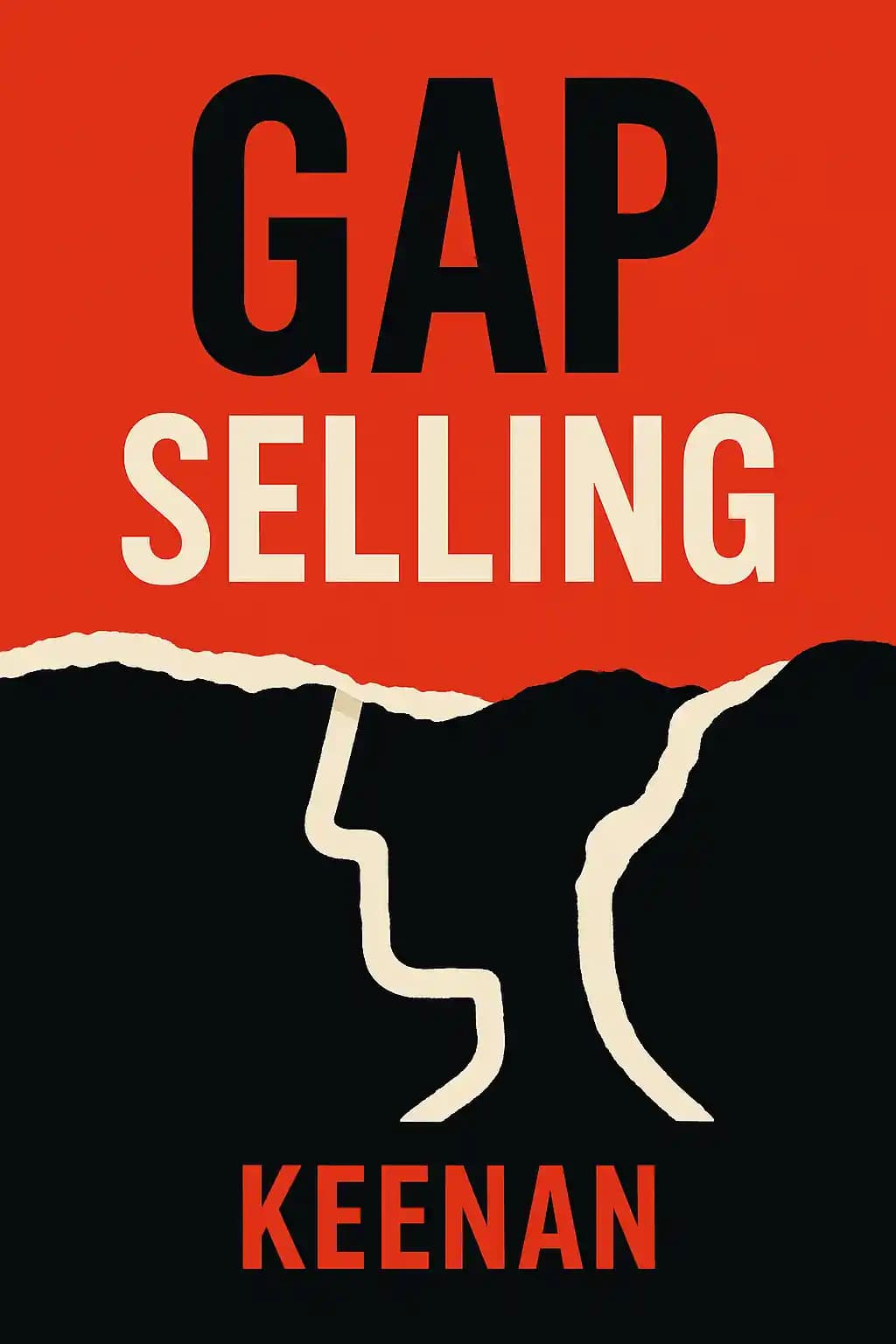
Forget everything you thought you knew about sales. "Gap Selling" by Keenan revolutionizes B2B strategy by diagnosing customer problems instead of pushing products. James Buckley calls it game-changing. What if the key to shortening your sales cycle isn't relationships, but the gap between problems and solutions?
Keenan, author of Gap Selling: Getting the Customer to Yes, is a sales strategist and influential thought leader in modern consultative selling. Known for his unapologetic, irreverent style, he dismantles outdated sales myths and equips professionals with frameworks to shorten cycles, boost revenue, and create buyer-centric value.
His work, rooted in identifying the "gap" between a prospect’s current state and desired outcomes, has redefined how sales teams influence decisions and drive measurable results.
Keenan’s methodologies are endorsed by industry leaders like Matt Dixon, co-author of The Challenge Sale, who praises his focus on aligning sales strategies with buyer psychology. A sought-after speaker, he engages directly with sales communities through talks and practical insights, as seen in his dynamic appearances on platforms like YouTube.
Gap Selling has become a cornerstone resource for sales organizations globally, cited for its actionable tactics to elevate win rates, reduce "no decisions," and foster trusting buyer relationships. The book’s impact is amplified by its adoption in training programs and its recognition as a Blinkist-recommended summary for time-strapped professionals.
Gap Selling by Keenan revolutionizes sales by shifting focus from product pitches to diagnosing customer problems. It teaches sellers to identify the gap between a client’s current challenges and desired outcomes, then position their solution as the bridge. The book’s four-part framework covers problem-centric selling, skills for closing deals, prospecting, and building teams aligned with this methodology.
Sales professionals, B2B representatives, and sales managers seeking a structured, problem-solving approach will benefit most. It’s ideal for those tired of price negotiations and lost deals, offering actionable strategies to shorten sales cycles. Keenan’s insights also help leaders coach teams to prioritize customer impact over relationship-building tropes.
Yes—readers praise its practical blueprint for modern sales. A Sales Director using Keenan’s methods reported a 37% quota increase, while others highlight its root-cause analysis framework that uncovers hidden client needs. The book challenges outdated tactics like “always be closing” with evidence-backed alternatives.
Unlike feature-focused approaches, Keenan’s method ignores rapport-building gimmicks. Instead, it uses diagnostic questioning to quantify problems’ business impact—a shift that 83% of trained teams say reduces price objections. It also replaces “closing” with mutual commitments tied to resolving root causes.
Discovery here involves probing three layers: symptoms (visible issues), business impact (costs of inaction), and root causes (underlying triggers). For example, a delayed software rollout (symptom) might cost $500k monthly (impact) due to poor vendor coordination (cause)—data that justifies your solution’s value.
By preempting them through gap analysis. If a client resists pricing, Keenan advises revisiting the quantified impact of their problem—e.g., “Given this gap costs $2M annually, how does our $200k solution compare?”. This contrasts with discount-driven haggling.
Yes—its focus on multi-stakeholder alignment suits enterprise deals. A case study shows a tech firm using gap analysis to unite IT, finance, and operations around a $1.2M AI platform purchase by linking delays to revenue risks.
Some note the initial chapters overemphasize “why change” before delivering practical tools. Others say it requires more prep time than transactional methods—though advocates argue this pays off in higher win rates.
Leads are graded by gap severity: Tier 1 (urgent, measurable pain), Tier 2 (acknowledged but unquantified issues), and Tier 3 (no perceived problem). Only Tier 1 prospects enter the active pipeline.
Sales managers should coach reps on gap diagnosis, not pipeline micromanagement. A 2023 study cited in the book found teams using this approach had 29% higher forecast accuracy.
Both emphasize teaching clients, but Gap Selling avoids prescriptive solutions. Instead, it collaboratively identifies problems—a style shown to reduce buyer skepticism by 41% in third-party tests.
Yes—customer success teams use gap analysis to reduce churn, while marketers frame campaigns around audience pain points. A SaaS company increased demo-to-close rates by 22% using Keenan’s framework for webinar content.
Siente el libro a través de la voz del autor
Convierte el conocimiento en ideas atractivas y llenas de ejemplos
Captura ideas clave en un instante para un aprendizaje rápido
Disfruta el libro de una manera divertida y atractiva
Sales aren't about pushing products; it's about solving problems.
You're selling transformation.
Every sale begins with a problem.
Without a problem, there is no sale-period.
Finally, no one gives a shit about you.
Desglosa las ideas clave de Gap Selling : Getting the Customer to Yes en puntos fáciles de entender para comprender cómo los equipos innovadores crean, colaboran y crecen.
Destila Gap Selling : Getting the Customer to Yes en pistas de memoria rápidas que resaltan los principios clave de franqueza, trabajo en equipo y resiliencia creativa.

Experimenta Gap Selling : Getting the Customer to Yes a través de narraciones vívidas que convierten las lecciones de innovación en momentos que recordarás y aplicarás.
Pregunta lo que quieras, elige la voz y co-crea ideas que realmente resuenen contigo.

Creado por exalumnos de la Universidad de Columbia en San Francisco
"Instead of endless scrolling, I just hit play on BeFreed. It saves me so much time."
"I never knew where to start with nonfiction—BeFreed’s book lists turned into podcasts gave me a clear path."
"Perfect balance between learning and entertainment. Finished ‘Thinking, Fast and Slow’ on my commute this week."
"Crazy how much I learned while walking the dog. BeFreed = small habits → big gains."
"Reading used to feel like a chore. Now it’s just part of my lifestyle."
"Feels effortless compared to reading. I’ve finished 6 books this month already."
"BeFreed turned my guilty doomscrolling into something that feels productive and inspiring."
"BeFreed turned my commute into learning time. 20-min podcasts are perfect for finishing books I never had time for."
"BeFreed replaced my podcast queue. Imagine Spotify for books — that’s it. 🙌"
"It is great for me to learn something from the book without reading it."
"The themed book list podcasts help me connect ideas across authors—like a guided audio journey."
"Makes me feel smarter every time before going to work"
Creado por exalumnos de la Universidad de Columbia en San Francisco

Obtén el resumen de Gap Selling : Getting the Customer to Yes como PDF o EPUB gratis. Imprímelo o léelo sin conexión en cualquier momento.
Picture a football field where half the players don't know the rules. They're talented, they're trying hard, but they keep getting penalized for violations they didn't know existed. This was Keenan's reality as a young player-and it's the reality for thousands of salespeople today. They're losing deals not because they lack skill or effort, but because they're playing the wrong game entirely. They think sales is about pitching products, building relationships, and closing hard. But what if everything you've been taught about selling is backwards? Here's the uncomfortable truth: most salespeople aren't good at their jobs. Not because they're lazy or unintelligent, but because they're operating with a fundamentally flawed understanding of what selling actually is. They blame bad leads, high prices, or unresponsive prospects when deals fall through. But these are symptoms, not causes. The real problem? They don't understand that customers don't buy products-they buy change. And change only happens when the pain of staying put exceeds the fear of moving forward.