Capítulo 1
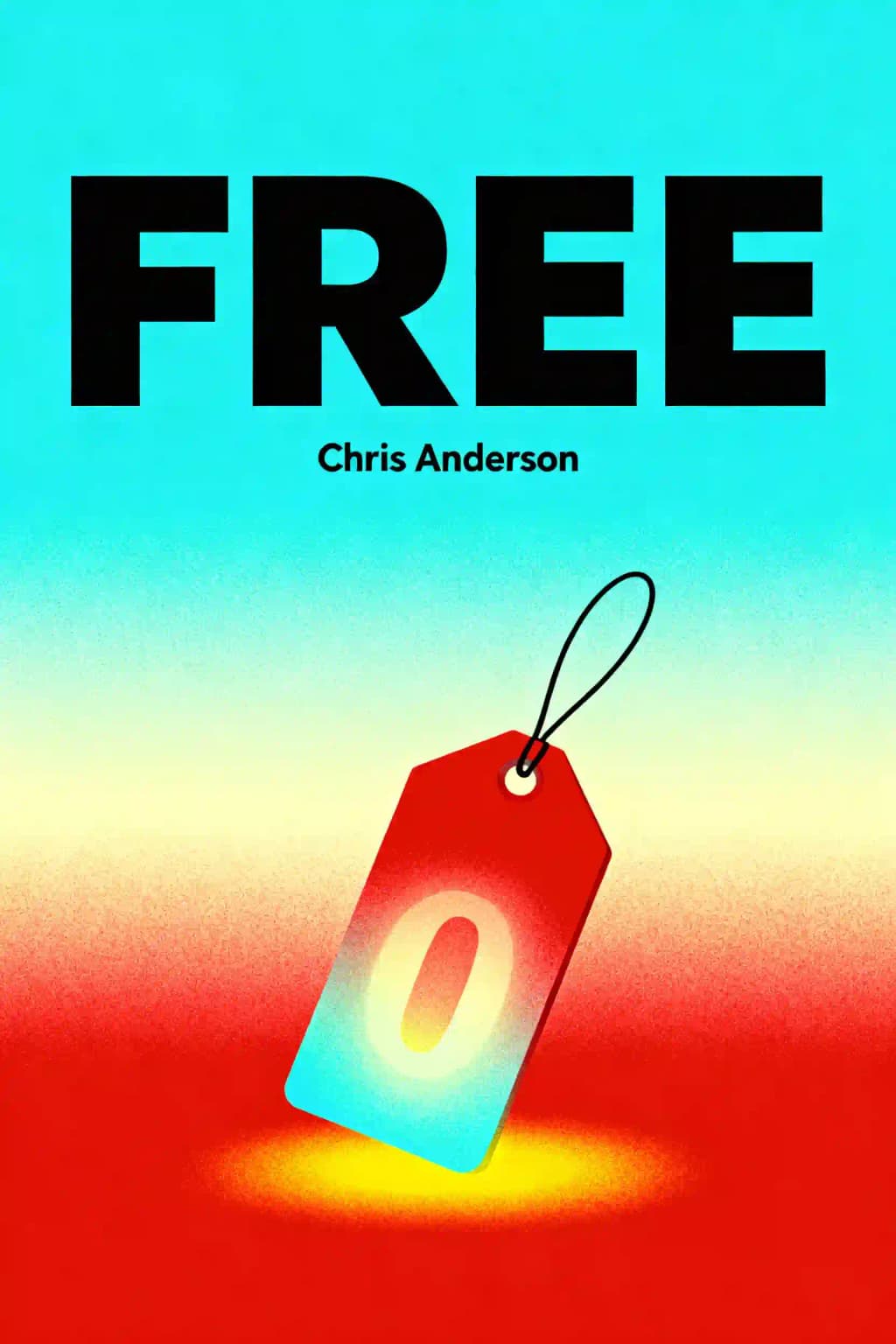
The Economics of Zero: How "Free" is Reshaping Our World
In November 2008, Monty Python embraced what many companies feared most-they gave away their content for free. Rather than fighting YouTube pirates, they created their own channel with high-quality videos and a humorous announcement: "We're letting you see absolutely everything for free. So there! But we want something in return. None of your driveling, mindless comments. Instead, we want you to click on the links, buy our movies and TV shows, and soften our pain and disgust at being ripped off all these years."
The results were astonishing. Within three months, DVD sales increased by 23,000 percent, reaching #2 on Amazon's bestseller list. This wasn't just a lucky break-it demonstrated the counterintuitive power of free as a business model. By giving away content that cost nothing to distribute, Monty Python generated massive exposure, introduced their comedy to new generations, and dramatically boosted sales of their paid products.
This paradox-people making money by charging nothing-has created an economy as large as a good-sized country around the price of $0.00. Today's digital "free" differs fundamentally from twentieth-century free-it's genuinely gratis rather than just a marketing gimmick. Free has become the default, and every company will eventually need to figure out how to use or compete with it. As we'll discover, there really can be a free lunch, and sometimes you get more than you pay for.
Capítulo 2
The Evolution of Free: From Jell-O to Digital Abundance
The modern concept of "free" as a business strategy began in the late 19th century with companies like Jell-O. In 1895, carpenter Pearle Wait created a flavored gelatin product that his wife named "Jell-O," but consumers showed little interest in this unfamiliar food. After selling the trademark for $450 to businessman Orator Frank Woodward, the product continued to struggle until 1902, when Woodward tried a revolutionary approach: printing thousands of free recipe pamphlets and distributing them door-to-door to homemakers.
This clever strategy educated consumers about the product while circumventing restrictions on door-to-door selling. Salesmen would blanket towns with these booklets, then visit local merchants to advise them to stock Jell-O for the coming demand. By 1904, this approach transformed Jell-O into a runaway success, reaching a million dollars in annual sales by 1906.
Around the same time, King Gillette revolutionized the razor industry with a similar approach. After inventing the disposable-blade safety razor, Gillette struggled with initial sales-just 51 razors and 168 blades in 1903. His breakthrough came when he began selling razors cheaply to partners who would give them away as promotions, creating demand for the high-margin disposable blades. This "razor and blades" model became the foundation for countless industries: inexpensive printers with expensive ink, cheap cell phones with costly plans, and free coffeemakers requiring proprietary coffee pods.
These early examples represent twentieth-century free-cross-subsidies where one product subsidizes another. But twenty-first-century free is fundamentally different, driven by the extraordinary ability to lower costs of digital goods and services close to zero. While the physical "atoms economy" is inflationary, with things getting more expensive over time, the digital "bits economy" is deflationary, with things getting cheaper. Free in the atoms economy must be paid for by something else, making it feel like bait and switch. But free in the bits economy can be truly free, with money often removed from the equation entirely.
Capítulo 3
The Taxonomy of Free: Four Models That Power the Free Economy
Free comes in many forms, each with different economics and psychological impacts. Understanding these models helps explain how companies can profit while giving products away.
The first model, Direct Cross-Subsidies, makes any product free that entices you to pay for something else. When Walmart offers buy-one-get-one-free DVDs, they're loss leaders drawing you into the store where you'll hopefully buy profitable items. Technology gives companies flexibility to define their markets broadly, allowing them to give away some products while profiting from others. Ryanair disrupted airlines by defining itself as a travel agency rather than just a seller of seats, offering nearly-free flights while making money on hotels, rental cars, and in-flight purchases.
The second model, Three-Party Markets, involves a third party paying to participate in an exchange between two others. This powers virtually all media-publishers provide content nearly free to consumers while advertisers pay to reach those audiences. The web extends this model beyond traditional media to credit cards (where merchants subsidize free cards for consumers) and operating systems (where free tools for developers attract more users to the platform).
The third model, Freemium, offers free basic versions alongside premium paid options. Unlike traditional free samples limited in quantity due to real costs, digital freemium flips the ratio-typically 95% of users access the free version while 5% pay for premium features. This works because the marginal cost of serving free users approaches zero. Examples include Flickr's free photo sharing with a $25/year Pro version for unlimited storage.
The fourth model, Nonmonetary Markets, encompasses anything people give away with no expectation of payment. This includes gift economies like Wikipedia's twelve million articles, where people contribute for reputation, attention, expression, or simply convenience. Labor exchange represents another form-users "pay" with their actions, like rating stories on Digg or improving Google's algorithms through searches.
Beyond these categories exists a special price point: less than nothing, where you get paid to use a product. Microsoft paying users to search or credit card companies offering cash-back rewards create this "negative price" experience. Clever "reversible business models" include LA music clubs charging bands to play, Chinese doctors paid only when patients stay healthy, and Danish gyms that are free if you attend weekly but charge full price if you miss a week.
Capítulo 4
The Psychology of Zero: Why Free Isn't Just Another Price
Traditional economics had little to say about free, but behavioral economists discovered that "zero is not just another price... Zero is an emotional hot button-a source of irrational excitement." When MIT professor Dan Ariely conducted experiments selling chocolates, he found something remarkable. When Lindt truffles cost 15 cents and Hershey's Kisses cost 1 cent, most people (73%) chose the truffle, rationally calculating the quality difference was worth the price difference. But when both prices were reduced by just 1 cent (making the Kiss free), 69% suddenly chose the Kiss instead, even though the price difference remained unchanged at 14 cents.
This psychological confusion happens because free products entice us by removing the possibility of loss. As Ariely explains, "The real allure of free! is tied to this fear of loss." The difference between free and even a single penny is profound. That penny forces consumers to think "is it worth it?"-raising a mental flag that creates a disincentive to continue. This "mental transaction cost"-the toll of thinking-often prevents purchases.
Economist Nick Szabo extended Ronald Coase's transaction cost theory to purchasing decisions, explaining why micropayments fail. Though economically minimal, they still impose cognitive costs that make them unappealing. As Clay Shirky concluded, free content becomes an "evolutionarily stable strategy"-advantageous when you're the only one using it, and still effective when everyone adopts it.
Free products often lead to wasteful consumption. At a Google conference offering free snacks, attendees took half-eaten bags everywhere. Had Google charged even a dime, people would likely have taken fewer snacks, finished what they took, and felt better about their choices. A charity providing free bus tickets found they were frequently lost. After instituting a $1 fee, people lost fewer tickets-the minimal investment made people value them more.
This is the trade-off of Free: it maximizes reach but can have counterproductive effects if that's not your ultimate goal. Free must be used carefully to avoid causing more harm than good.
Capítulo 5
Digital Abundance: When Costs Approach Zero
Three technologies are achieving an economic miracle that nuclear power never did-becoming "too cheap to meter": computer processing power, digital storage, and bandwidth. All three follow exponential improvement curves, with bandwidth doubling every nine months, storage capacity doubling yearly, and processing power doubling every 18 months.
The economic corollary is equally powerful-costs halve at the same rate capacity doubles. A transistor that cost $10 in 1961 costs approximately 0.000015 cents today. This "triple play" of faster, better, cheaper technologies creates unprecedented economic conditions where primary inputs continually fall in price, enabling previously impossible business models.
When costs fall this predictably, companies can employ pricing strategies that would otherwise seem insane-selling products at tomorrow's costs rather than today's. Fairchild Semiconductor demonstrated this in the 1960s by selling transistors to RCA at $1.05 each when they cost $100 to make, correctly anticipating that production scale would rapidly drive costs down.
Unlike physical products like cars (which briefly enjoyed similar cost declines during Ford's early manufacturing revolution), digital technologies face no physical constraints to their continued price decline. As Moore himself noted, "Moore's law is a violation of Murphy's law. Everything gets better and better."
The secret is semiconductors' high ratio of "brains to brawn"-they're mostly intellectual rather than material inputs. As George Gilder put it, "When matter plays so small a part in production, there is less material resistance to increased volume." Ideas propagate without limit or cost, creating abundance that drives prices toward zero.
Caltech professor Carver Mead, who actually coined "Moore's Law," recognized its economic implications and realized this created a moral imperative to stop conserving transistors and start "wasting" them. This was revolutionary in the 1970s when computer professionals were trained to dole out expensive computing resources sparingly. Alan Kay at Xerox PARC showed how to "waste" transistors by developing graphical interfaces that made computers accessible to regular people, including children.
This triple play of technologies-processing, storage, and bandwidth-has created the Web, where abundance has become the norm. The economics of digital abundance have transformed industries: YouTube revolutionized video distribution, Gmail offered infinite inboxes, and Apple's iPod made carrying thousands of songs standard. The Web has become "the land of the free" through economic necessity, not ideology.
Capítulo 6
Information Wants to Be Free: The Phrase That Defined the Digital Age
In 1984, at a conference bringing together three generations of hackers, Stewart Brand made a profound observation: "On the one hand information wants to be expensive, because it's so valuable. The right information in the right place just changes your life. On the other hand, information wants to be free, because the cost of getting it out is getting lower and lower all the time. So you have these two fighting against each other."
Brand's formulation differed significantly from earlier hacker ethics about free information in two ways: he shifted from "free" meaning unrestricted access to "free" meaning zero price, and he changed "should be" to "wants to be," creating a powerful metaphor that presented free information as a force of nature rather than an ideological stance.
When interviewed about his famous phrase, Brand explained that he changed "should be free" to "wants to be free" because it shifted perspective from human intention to the phenomenon itself-recognizing that regardless of one's philosophy about charging for information, the underlying economics naturally favor free. He was drawn to the paradox of information being pulled in both extremes-free and expensive-noting that paradoxes drive things we care about by maintaining tension between competing truths.
When Brand used "information," he specifically meant digitally encoded information. He recognized that bits were economically almost free, while their meaning could range from worthless to priceless depending on the receiver. Like telephone companies that don't sell conversation but access, or pubs that charge for beer not community, the key was "charging for something different than the information."
Capítulo 7
Competing with Free: Microsoft's Five Stages of Grief
Microsoft's history of competing with free began in 1975 when Bill Gates wrote an "Open Letter to Hobbyists" complaining about software piracy. Though Microsoft eventually established software as something to be paid for, piracy persisted, especially in developing markets like China. Gates pragmatically recognized this reality, famously stating in 1998 that if Chinese users were going to steal software, "we want them to steal ours" to build dependency until they could "somehow figure out how to collect sometime in the next decade."
In the 1990s, Microsoft faced different free challenges at home. When competitors offered rock-bottom bundled software with new PCs, Microsoft countered with $10 Microsoft Works. When Netscape released its free browser, Microsoft responded with free Internet Explorer bundled with Windows-a move that triggered a decade of antitrust litigation.
By 2002, Microsoft finally began taking open source software seriously, particularly Linux, which had captured 25% of the web server market. The company's response followed a pattern similar to the five stages of grief:
1. Denial: Microsoft initially hoped Linux would simply disappear or remain insignificant. They were confused by why customers would want free software with its inherent headaches.
2. Anger: Once Microsoft realized Linux was a genuine competitor, they turned hostile. Their strategy became attacking the economics, emphasizing "total cost of ownership" rather than price.
3. Bargaining: By 2002's Linux World conference, Microsoft adopted a new strategy, wearing "Let's Talk" T-shirts and commissioning an independent study showing Windows had lower total cost of ownership.
4. Depression: In late 2003, Microsoft hired Bill Hilf, who had run IBM's Linux strategy. When Hilf built an open source lab, it was treated like a biohazard facility, relegated to a former storeroom with recycled computers and strict isolation from other Microsoft projects.
5. Acceptance: Eventually, pragmatism prevailed. Today, Microsoft maintains the largest server market share with Linux at about 20%, while dominating desktop operating systems with 80%. The market supports multiple models: totally free software, free software with paid support, and traditional paid software.
Capítulo 8
The New Media Models: From Free Newspapers to Virtual Economies
Free media has existed since the early days of radio, when the industry struggled with how to fund programming. In 1925, as radio swept America, Radio Broadcast magazine ran a contest asking "Who is to pay for broadcasting and how?" While some suggested advertising, many worried it would "despoil" the medium. NBC tested advertising, describing radio as "the Fourth Dimension of Advertising" that allowed advertisers to become "guests in listeners' homes."
This approach now forms the core of the $300 billion advertising industry. When advertising moves beyond traditional media to support software, services, and user-generated content, the rules of trust reverse. While print magazines maintain strict separation between advertising and editorial content, Google does exactly the opposite-its AdSense program succeeds by matching ads with relevant content.
This contradiction exists because people bring different expectations online. Readers intuitively trust algorithm-placed ads more than human-placed ones. The fundamental difference is targeting: traditional broadcast advertising annoyed 90% of viewers to reach the 10% who might be interested, while Google shows ads only to those for whom they're relevant.
Video games have become a massive form of media that competes directly with television and film for attention, and no business is racing toward free faster. The industry has rapidly shifted online, eliminating manufacturing and distribution costs while creating unlimited shelf space for niche titles. This transition began in Asia around 2003, driven by software piracy, and has evolved into "the most vibrant experiment in free in the world."
Games monetize free through several models:
1. Virtual Item Sales: Games like Maple Story, with 60 million global users, let players purchase "teleportation stones" and other items that save time or enhance appearance.
2. Subscriptions: Club Penguin, which Disney purchased for $700 million, demonstrates the subscription model's power. While 90% of its 6-12 year old users play for free, 700,000 paid subscribers generated $40 million annually.
3. Advertising: In-game advertising has evolved from static billboards to dynamic, targeted placements that change with each gameplay session.
4. Real Estate: Second Life monetizes its free virtual world through land sales, with monthly lease fees ranging from $5 to $195 based on plot size.
5. Merchandise: Webkinz brilliantly combines physical and virtual economies by pairing stuffed animals with codes that unlock virtual versions online.
Capítulo 9
The Gift Economy: Where Money Doesn't Rule
In the information age, attention and reputation have become measurable currencies with real economic value. The gift economy, first explored by sociologist Lewis Hyde in 1983, functions on principles where stature comes through giving rather than accumulating. In traditional societies with abundant natural resources, gifts served as social cement, carrying obligations to reciprocate and keep gifts moving through the community.
Today's digital world has made the previously ephemeral gift economy explicit and measurable. Millions of bloggers write without compensation, and volunteers create everything from product reviews to comprehensive guides. Their motivations include community participation, personal growth, and mutual support-not primarily reputation or monetary gain.
This volunteer economy represents a massive reallocation of "cognitive surplus"-creative energy not tapped by traditional jobs. People contribute freely because it satisfies higher-level needs for respect, attention, expression and audience that many paid jobs fail to provide. The web simply provided the tools to fully realize this nonmonetary production economy that had been waiting to emerge.
The best way to exploit abundance is to relinquish control. We often mistakenly treat abundant resources as scarce while wasting truly scarce ones. When companies force customers to manage artificial scarcity (like limited voicemail storage), they waste the customer's time (truly scarce) to save on storage (now abundant).
Today's innovators are those who spot new abundances and figure out how to "squander" them productively. YouTube exemplifies embracing waste productively. Critics complain it's "full of crap," but this misunderstands that quality is subjective-one person's treasure is another's trash. YouTube is a vast experiment exploring the potential of video with virtually free distribution-every possible niche will eventually be explored.
Capítulo 10
Free World: Learning from China and Brazil
China and Brazil represent the frontiers of free business models, offering valuable lessons for the rest of the world. In China's piracy-dominated music market, companies like MicroMu have created entirely new business models. They sign indie artists, get brand sponsorships, and distribute music completely free while generating revenue through branded content, events, and merchandise. As one executive explains, "The moment you put a fee on accessing music in China is the moment you cut off 99 percent of your audience."
Beyond music, China's knockoff economy extends to luxury goods, creating a "piracy paradox" that actually helps original brands. Fake products serve as zero-cost brand distribution, creating awareness while the originals maintain prestige. Chinese consumers understand the difference-many aspire to own authentic items when they can afford them. As incomes rise, China has become the third-largest luxury goods market globally. The knockoffs didn't destroy the market-they primed it.
In Brazil, the "tecnobrega" music scene thrives through free distribution. Bands like Banda Calypso provide master recordings to local DJs who produce CDs sold by street vendors for about $0.75. These vendors become the band's advance team, creating awareness for concerts where the real money is made. With this model, Banda Calypso has "sold" over 10 million CDs and become wealthy enough to own their own plane.
Brazil's embrace of free extends beyond music-the government challenged pharmaceutical patents to provide affordable AIDS drugs, and has become a global leader in open source software, building the world's first Linux-based ATM network. As one Brazilian official explained, "Every license for Office plus Windows in Brazil-a country in which 22 million people are starving-means we have to export sixty sacks of soybeans."
Capítulo 11
The Ten Principles of Abundance Thinking
The principles of abundance thinking represent fundamental shifts in how businesses must operate in a digital economy, beginning with essential truths about Free:
1. Digital inevitability: If it's digital, sooner or later it's going to be free as marginal costs approach zero. This applies to software, content, and online services. Companies like Google have built empires by giving away services that once cost thousands, from email to mapping tools.
2. Physical goods are following digital trends, but require more innovative business models. Companies like Tesla give away their patents while making money on cars, and printer companies often sell hardware at cost while profiting from supplies.
3. Digital locks and legal barriers ultimately prove futile against free alternatives. The music industry learned this lesson when fighting file sharing - the solution wasn't lawsuits but streaming services like Spotify offering convenient legal alternatives.
4. Multiple paths exist to monetize free offerings: Premium features save time (Dropbox), reduce risk (insurance), offer status (LinkedIn Premium), or provide exclusive content (Substack). The "freemium" model has become standard in software, where basic versions hook users who later upgrade.
5. Market redefinition is crucial for survival. Ryanair prospered by seeing itself in the travel business rather than airline business, allowing it to profit from hotels, car rentals, and activities. Amazon similarly expanded from books to become "Earth's most customer-centric company."
6. Being first to free creates powerful market advantages. Google Maps eliminated the GPS device market by offering free navigation, capturing massive user data and advertising opportunities before competitors could react.
7. Free competition is inevitable in every industry. Netflix made streaming free with subscription, forcing traditional media to adapt. Companies must either match free offerings while selling complementary services or demonstrate premium value worth paying for.
8. Abundance thinking means stopping measurement of cheap resources. Google offers virtually unlimited email storage because the cost is trivial, while Amazon Web Services simplified pricing by eliminating many minor charges.
9. New scarcities emerge from every abundance. Free digital music created scarcity in live performances. Free content made curation and personalization valuable. Understanding these dynamics reveals new business opportunities.
10. Managing for abundance requires fundamental organizational changes. It means empowering employees to experiment, accepting higher failure rates, and focusing on scale over margins. Companies like Meta encourage rapid prototyping and "moving fast and breaking things."
In a world where free is becoming the default, successful companies will be those that embrace these principles rather than fight them. This isn't just about pricing strategy - it's a fundamental shift in value creation. Companies like Amazon, Google, and Meta demonstrate how free offerings can build massive platforms that generate value in new ways. The free economy demands business models built on abundance rather than artificial scarcity, turning traditional assumptions about value and pricing upside down. Organizations that master these principles will find opportunities in giving away what others try to charge for, while building sustainable revenue streams around the new scarcities their free offerings create.