Capítulo 1
The Emotional Connection: How Design Shapes Our Feelings
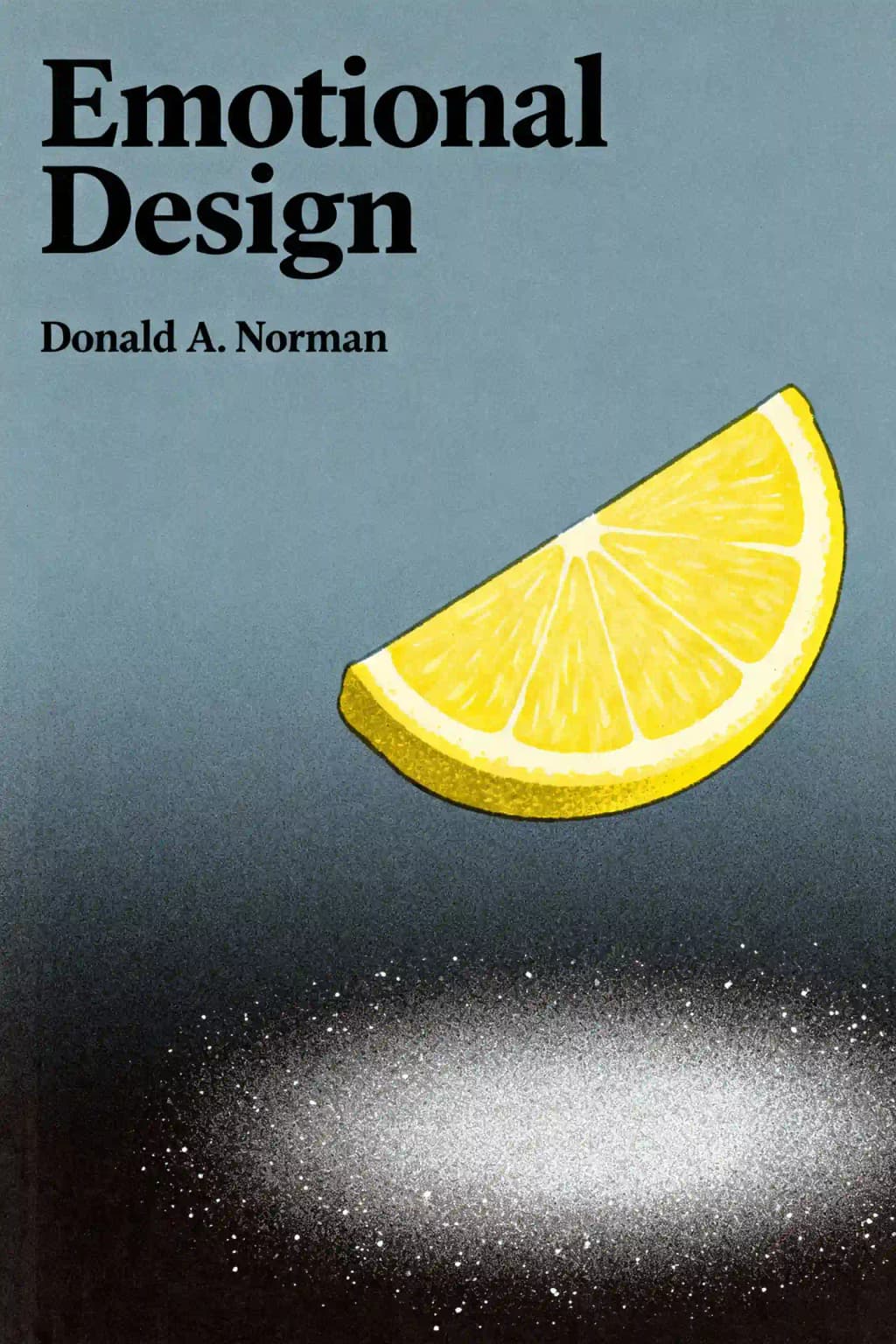
Imagine a world where your favorite objects aren't just tools but companions on your life journey. This is the reality Donald Norman explores in "Emotional Design," a groundbreaking work that transformed how we understand our relationships with everyday things. Norman's revelation came through his own teapot collection-one unusably designed with handle and spout on the same side, another beautifully crafted by Michael Graves, and a third ingeniously engineered to optimize brewing. Despite owning these masterpieces, he typically uses a simple brewing ball for efficiency, displaying the teapots as art that brightens his day.
This book has profoundly influenced modern product development, with companies like Apple and Google embracing its principles. When Jony Ive revolutionized Apple's design language, he specifically cited Norman's work as inspiration. The book remains required reading in design programs worldwide and has been translated into 16 languages. Beyond academia, its impact extends to how we evaluate everything from smartphones to kitchen utensils, teaching us that truly great design must engage us not just functionally but emotionally.
Capítulo 2
The Science Behind Emotional Design: Beauty and Function United
Why do attractive products seem easier to use? When Israeli scientist Noam Tractinsky investigated Japanese research suggesting aesthetically pleasing ATM layouts were perceived as more functional (despite identical operations), he discovered an even stronger connection than expected. This wasn't mysticism but neuroscience-positive emotions fundamentally change how our brains work.
Psychologist Alice Isen's groundbreaking research revealed that people in good moods think more creatively and solve problems more effectively. Even small mood enhancers-like receiving a modest gift or watching comedy-significantly improved people's ability to tackle difficult challenges. When we feel good, we explore more alternatives and become more tolerant of minor difficulties. Anxiety, conversely, narrows thinking and limits our ability to find solutions.
This explains why attractive products work better: they put us in positive emotional states that enhance our cognitive abilities. Our brains operate through three distinct processing levels that evolved over millions of years. The visceral level makes rapid judgments (good/bad, safe/dangerous) without conscious thought. The behavioral level controls everyday actions and skilled behaviors. The reflective level enables conscious thought, learning, and communication.
Each level serves different functions and creates different types of pleasure. Visceral reactions provide thrills (like roller coaster rides), behavioral interactions create the satisfaction of skilled use (like playing an instrument), while reflective enjoyment comes from contemplation (like appreciating art). Most interesting are the interactions between levels-like enjoying a roller coaster where visceral fear competes with reflective pride in conquering that fear.
These levels don't operate independently but influence each other through neurochemical processes. Negative affect narrows focus and tenses muscles to address problems, while positive affect broadens thinking and increases receptivity to new ideas. This has profound design implications: relaxed users are more creative and forgiving of minor problems, while stressful situations require designs with clear feedback and minimal complexity.
Capítulo 3
The Three Dimensions of Design: Visceral, Behavioral, Reflective
Our emotional responses to design operate across three dimensions that must work together for a product to truly succeed. The visceral level concerns immediate reactions to appearance and sensory qualities-the "wow" factor that makes us want something before we even know what it does. This could be the sleek lines of a sports car, the warm glow of copper cookware, or the satisfying weight of a premium fountain pen. The behavioral level focuses on function, usability, and performance-how effectively and pleasurably we can use an object. This includes aspects like intuitive controls, ergonomic comfort, and reliable performance. The reflective level encompasses meaning, personal satisfaction, and self-image-how products make us feel about ourselves and what they communicate to others, such as the status symbol of a luxury watch or the environmental consciousness of using sustainable products.
Consider my experience with mechanical drawing instruments: the visceral response to their beautiful stainless steel construction in a leather case was immediately positive. The precision-engineered tools gleamed with promise, their weight suggesting quality and durability. Yet reflection quickly revealed memories of frustration-slipping points and messy India ink ruining hours of work, smudged drawings that needed complete redoing, and the tedious process of cleaning the instruments. This illustrates how different emotional levels can conflict, with visceral attraction competing against reflective memory and practical experience.
The three levels differ in their relationship to time. Visceral and behavioral responses happen in the present moment-immediate reactions to seeing or using something. A child's instant attraction to a colorful toy or our immediate appreciation of a well-balanced knife exemplify visceral responses. The reflective level extends through time, connecting past memories with future contemplation, including how products relate to our identity and social standing. For instance, a hybrid car might represent environmental values, while vintage furniture could connect to personal history or aesthetic preferences. The reflective level also varies most across cultures, while visceral responses remain relatively universal - a smooth, symmetrical design generally appeals across cultural boundaries.
No single product can satisfy everyone-designers must know their audience. Individual differences in personality and culture mean products must target specific market segments. What's appropriate in one setting may be inappropriate in another, as with playful home computers versus serious business machines. A gaming laptop with RGB lighting might be perfect for a teenager's room but out of place in a corporate boardroom. The distinction between needs (what's necessary) and wants (what's desired) is crucial-wants, driven by culture and self-image, often prove more powerful than needs in determining a product's success. For example, a basic phone might meet all communication needs, but many consumers opt for premium smartphones that better align with their self-image and social expectations.
Capítulo 4
Beyond Function: How Objects Become Meaningful
True emotional connections develop through sustained interaction and personal associations-not just surface appearance or utility. Souvenirs aren't pretending to be art; they're memory aids that evoke emotional meaning despite being derided as "kitsch." In design, we often associate emotion with beauty, but people become attached to things based on personal experiences, making it just as reasonable to love something "ugly" as to dislike something conventionally attractive.
Researchers Csikszentmihalyi and Rochberg-Halton discovered in their book "The Meaning of Things" that special objects are those with meaningful associations. What matters isn't the object itself but the story it evokes-like the woman who cherished her chairs because they reminded her of "having babies and sitting in the chairs with babies." We become attached to things with significant personal associations that bring to mind pleasant moments.
Our self-image plays a crucial role in our relationship with products, even for those who claim indifference to others' opinions. How we dress and the objects we possess serve as public expressions of ourselves. Advertisers exploit this by showing products alongside happy people or celebrities, creating associations that enhance self-image. The products we choose reflect public opinion as much as personal preferences, becoming powerful statements of identity whether intended or not.
One effective way to build positive self-image is through personal accomplishment. The Heathkit Company's electronic kits gave builders immense pride not because they saved money, but because completing them represented achievement. Similarly, Betty Crocker discovered that cake mixes needed to require adding an egg to give users a sense of accomplishment and emotional connection to the product.
Products, like people, can have distinct personalities that should remain consistent across all interactions. A video game device might be fast-paced and exciting with booming sounds, while a cooking assistant would be informative and polite. Once established, all aspects of design must support this personality-a mature cooking tutor shouldn't suddenly use obscenities. Consistency is crucial; even an obnoxious personality is preferable to erratic, unpredictable behavior.
Capítulo 5
Visceral Design: The Power of First Impressions
Visceral design taps into our evolutionary preferences-humans evolved to interpret emotional signals from our environment automatically. This represents nature's approach to design, where co-adaptive processes developed over generations create innate attractions. Just as colorful plumage in male birds evolved to attract females, or bright fruits signal ripeness and nutrition, designers can create objects that appeal to our biological preferences. These instinctive responses occur within milliseconds, before conscious thought intervenes.
Our love of symmetry, bright colors, sweet tastes, and rounded forms stems from evolutionary advantages. Symmetry often indicates health and genetic fitness, while bright colors in nature frequently signal either danger or nutritional value. Rounded forms are typically perceived as safer than sharp edges, and smooth textures generally feel more pleasant than rough ones. While designers often dismiss "pretty" as lacking depth, visceral appeal has legitimate value in folk art, children's items, and everyday objects. The principles of visceral design are consistent across cultures, making viscerally attractive designs timeless, though adults often develop "acquired tastes" that override natural inclinations through cultural conditioning and personal experience.
Consider premium bottled water-despite often containing nothing special compared to tap water, it has become a thriving business because of its emotional appeal. Brands like Fiji Water and Voss have mastered the art of visceral design through crystalline bottles, exotic shapes, and pristine imagery. The bottles themselves-sensuous, colorful, distinctive-create immediate visceral reactions that make people want them, even keeping empty bottles as decorative objects. This demonstrates how powerful visceral design can be, creating an immediate "wow" factor through pure appearance. The success of these brands shows how packaging alone can transform a commodity into a luxury item.
Successful visceral design focuses on physical features-look, feel, and sound-to create immediate emotional impact that makes people say "I want it" before even asking what it does or costs. This explains why water bottles in a Chicago hotel lobby became objects of desire rather than mere containers, transforming ordinary products into coveted possessions through thoughtful design that speaks to our primal preferences. The same principles apply across industries, from automotive design where curved lines and gleaming surfaces trigger instinctive attraction, to consumer electronics where polished metals and seamless surfaces create immediate desire. Even architecture employs visceral design through proportion, light, and materials that resonate with our innate sense of beauty and shelter.
The power of visceral design extends beyond mere aesthetics to influence behavior and decision-making. Research shows that viscerally appealing products not only attract initial attention but also tend to be perceived as more valuable, more reliable, and easier to use. This "aesthetic-usability effect" demonstrates how our primitive responses to visual beauty can shape our entire experience with a product or environment.
Capítulo 6
Behavioral Design: The Joy of Effective Use
While visceral design concerns appearance and reflective design addresses meaning, behavioral design focuses entirely on use and performance. Four key components matter: function, understandability, usability, and physical feel. Function must come first-if a product doesn't perform its intended purpose, nothing else matters. Yet determining true user needs is surprisingly difficult, requiring extensive research, testing, and observation of users in their natural environments.
Many designers fail by never observing actual users, instead adding features without understanding usage patterns. This "feature creep" often results in overcomplicated products that frustrate users rather than serve them. For example, many modern television remote controls have dozens of rarely-used buttons that make simple tasks like changing channels more difficult. Product development involves either enhancement (improving existing products) or innovation (creating entirely new possibilities). Enhancements might include adding ergonomic grips to tools or improving button placement, while innovations create entirely new categories, like the first touchscreen smartphones. Innovations are particularly challenging to evaluate since potential customers cannot imagine what they've never experienced.
Good behavioral design comes from careful observation of users' struggles with existing products, recognizing problems people don't even identify as design issues. Consider how people naturally grip objects, their typical posture while using devices, or the way they navigate spaces. These observations lead to innovations like symmetrical USB connectors, strategically placed cup holders, or door handles that intuitively indicate push or pull. The real challenge is discovering "unmet and unarticulated needs" that even users themselves cannot yet express, such as the need for single-handed operation of phones or the desire for quiet-closing kitchen drawers.
The Casio G-Shock exemplifies pure behavioral design-practical, straightforward, and feature-rich without much visceral or reflective appeal. It succeeds through sheer functionality and reliability, with features like shock resistance, water resistance, and long battery life addressing real user needs. Similarly, OXO's vegetable peeler with its "nice comfy handles" revolutionized kitchen tools by considering arthritis sufferers, while the Screwpull wine opener that makes cork removal effortless demonstrates how behavioral design creates satisfaction through use rather than appearance. These products succeed not because they're beautiful, but because they work exceptionally well.
Behavioral design requires understanding the relationship between controls and their effects, providing appropriate feedback, and ensuring the product's conceptual model matches users' expectations. This means creating clear relationships between actions and results, like how a car's steering wheel rotation directly corresponds to wheel movement. Good feedback might include the click of a button, the visual response on a screen, or the tactile sensation of a mechanism engaging. When these elements align, using a product becomes intuitive and pleasurable-creating the satisfaction that comes from skilled interaction with well-designed tools, whether it's the perfect balance of a chef's knife or the responsive touch interface of a modern smartphone.
Capítulo 7
Reflective Design: Identity, Meaning, and Stories
Reflective design encompasses the meaning, culture, and message of a product. It's about personal remembrances something evokes and how products project self-image. Whether we admit it or not, we all worry about the image we present to others-even those claiming complete disinterest make statements through their choices.
The Time by Design "Pie" watch exemplifies reflective design through its clever, unconventional time display. Though harder to read than traditional watches, its conceptual model needs only one explanation to understand, and the reflective delight of showing it off outweighs its behavioral difficulties.
Swatch transformed watchmaking by positioning themselves not as a watch company but an "emotions company." They made watches fashion statements, arguing people should own multiple watches to match moods and occasions. Though the mechanism needed quality and reliability, Swatch focused on the watch face and strap as vehicles for "the wildest imaginative concepts" and "rousing messages."
Products can be more than the sum of their functions-their real value lies in fulfilling emotional needs, particularly establishing self-image. As designer Del Coates notes, it's impossible to design a watch that tells only time; its design inevitably suggests assumptions about the wearer's age, gender, and outlook.
Attractiveness operates at the visceral level-responding to surface appearance-while beauty comes from the reflective level, influenced by knowledge, learning, and culture. Advertising works at both levels: pretty products appeal viscerally, while prestige and exclusivity work reflectively.
The overall impact of a product comes through reflection, where minor difficulties might be overlooked or enhanced. Customer relationships play a crucial role at the reflective level-a good relationship can completely reverse negative product experiences, which is why companies that help disgruntled customers often turn them into loyal fans. Reflective design is about long-term customer experience, service, and personal interaction.
Capítulo 8
The Psychology of Trust: Why We Love and Hate Our Devices
Our tendency to anthropomorphize objects reveals a fundamental aspect of human psychology. When confronted with a chair that appears to be "sneaking out its foot" to retrieve a lost ball, we instinctively interpret this posture in emotional terms despite knowing the chair isn't alive. This reaction stems from our evolutionary heritage as social creatures.
Humans are biologically prepared to interpret emotional states through facial expressions and body language. Over millions of years, this ability has become instinctual, causing us to readily perceive emotional states not just in people but in anything vaguely lifelike. This anthropomorphism extends to animals, toys, computers, appliances, and even tools, which we praise when they perform well and blame when they don't.
Computer rage exemplifies this phenomenon. When technology fails despite our doing everything correctly, our reflective mind assigns blame to the computer. This judgment system is tightly coupled with our emotional system-each reinforcing the other until mild frustration transforms into rage. Our anger is appropriate-modern electronic devices violate our trust through mysterious operations and frequent failures without apology.
Trust develops through consistent reliability and performance that matches expectations. One user describes their emotional attachment to a chef's knife built on hundreds of positive experiences: "This object is my friend." The knife never slips, breaks, or fails regardless of pressure applied-it's completely trustworthy.
A good conceptual model combined with appropriate feedback establishes and maintains trust. Consider a car's fuel gauge: if it accurately warns you before running out of gas, you blame yourself when ignoring those warnings. If the warning light never appears, you blame the car. If the gauge fluctuates unpredictably, you can't interpret it and therefore can't trust it. Most drivers gradually test their fuel gauges to determine trustworthiness-trust must be earned through experience and consistent performance.
Capítulo 9
The Future of Emotional Machines
While today's machines don't need emotions, future advanced machines will require them for the same reasons humans do: survival, social interaction, and learning. As machines take on increasingly complex roles in unpredictable environments without human supervision, they'll need machine emotions-not human ones, but emotions tailored to their specific needs.
Without emotions like pride, machines cannot improve their performance. Intelligence alone isn't enough-emotions translate intelligence into action. Positive emotions drive learning and curiosity, while negative emotions protect from danger. When information is incomplete or decisions involve balancing risk against reward, emotions become crucial.
People often make seemingly illogical decisions, like risking lives to recover the dead, because emotions guide our complex social behaviors. Similarly, robots will need emotions to make decisions in uncertain situations. Without an emotional system, we could become paralyzed by endless analysis of potential dangers-as happens with emotionally impaired humans.
The affective systems robots need won't mirror human emotions exactly but will be tailored to their unique requirements. They'll need fear of heights, concern about energy levels, awareness of maintenance needs, and protection against environmental threats like dust and computer viruses. Many machines already have primitive "visceral" safety systems like fuses, temperature sensors, and obstacle detection-the beginnings of machine affect.
Future homes might feature interconnected robot systems-refrigerator, pantry, cooking, and dishwasher robots communicating and transferring items between them. Educational robots will tutor children, while others will handle household chores. As robot capabilities expand, our homes will evolve to accommodate them, just as we've adapted to automobiles and modern infrastructure.
Robots must also display their own emotional states naturally, not through fake programmed expressions. I strongly oppose the approach where robots decide to "look happy" and display an exaggerated parody of emotion. This fakery is immediately apparent and irritating. Instead, robots should have internal states directly connected to facial actuators that naturally produce expressions reflecting their processing state-showing confidence, confusion, understanding or effort.
Capítulo 10
We Are All Designers: Personalization and Emotional Connection
"A space can only be made into a place by its occupants. The best that the designer can do is put the tools into their hands." - Steve Harrison and Paul Dourish
We are all designers by nature. When we arrange objects on our desks, furniture in our rooms, or items in our cars, we're designing. Through these personal acts, we transform anonymous spaces into homes, spaces into places, and things into belongings.
How can mass-produced objects acquire personal meaning? This challenge lies in the fact that truly personal attributes can't be designed in advance. Manufacturers attempt customization through color choices or accessories, like changeable cell phone faceplates, but these superficial options rarely create emotional connections.
True personalization emerges through use and history. Objects change-pots get banged, furniture acquires dents, books show wear from reading. These marks create stories that transform generic products into personal possessions. As IDEO's Paul Bradley explained, the goal should be designing things that "age gracefully," where marks of use add character rather than detract from value-like the natural fading of jeans that reveals the rectangular outline of a wallet in the pocket.
There's an inherent tension between buying ready-made objects versus creating them ourselves. Mass-produced items rarely fit our precise needs, but we often lack the tools, expertise, and time to build our own. The most popular approach transforms standard products into personal ones through modification. Harley Davidson motorcycles are famous for extensive post-purchase customization, often costing more than the original motorcycle. Similarly, automobile sound systems and home renovations allow mass-produced starting points to become unique expressions.
Personal websites and blogs have become powerful tools for self-expression and community building. As one person told me about her website: "It represents me online in such a personal way that it is impossible to imagine life without it. It brings me friends and adventures, travel and praise, humor and surprises. It has become my interface to the world." These digital spaces have become essential extensions of self, generating strong emotions and personal connections.
When something gives pleasure, becomes part of our lives, and helps define our place in society, then we have love. Design is part of this equation, but personal interaction is the key. Love comes by being earned, when an object's special characteristics makes it a daily part of our lives, whether because of its beauty, behavior, or reflective component.
As William Morris wisely stated: "Have nothing in your houses that you do not know to be useful, or believe to be beautiful."