Capítulo 1
Enchantment in the Arctic: Where Academia Meets Magic
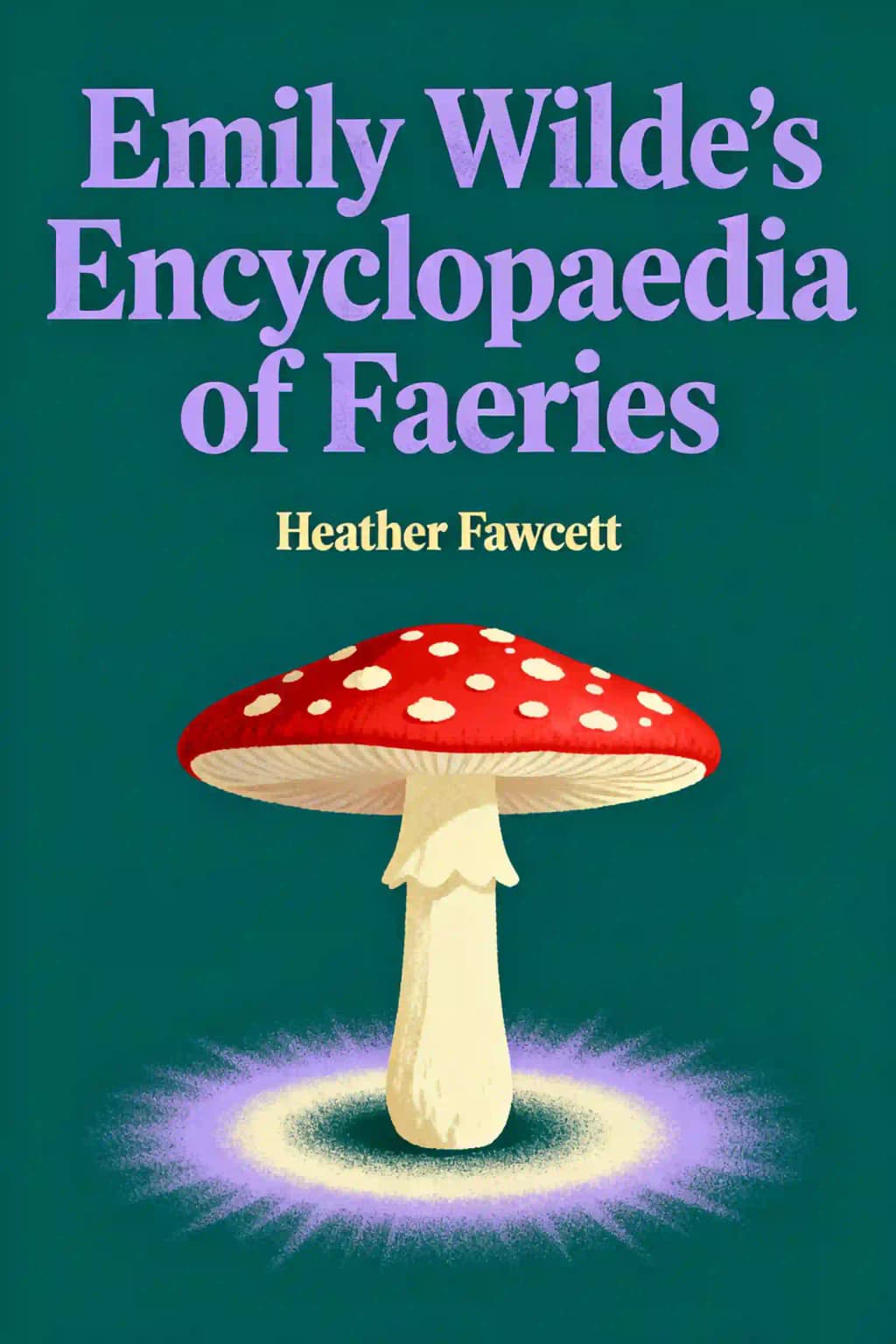
In the snow-laden wilderness of Ljosland, where reality blurs with myth, Emily Wilde's meticulous academic pursuit becomes an unexpected journey into the heart of faerie politics and personal transformation. Heather Fawcett's debut adult novel has captivated readers worldwide, earning praise from Neil Gaiman who called it "a charming, cozy, deeply satisfying story." This Victorian-era fantasy has quickly become a TikTok sensation, with readers drawn to its perfect blend of academic rigor and magical wonder. The book's unique approach to faerie lore-treating it as a scholarly field of study rather than mere fantasy-has resonated with audiences seeking intelligent escapism. As the first in a series that continues with "Emily Wilde's Map of the Otherlands," this enchanting tale invites us into a world where documentation and enchantment walk hand in hand through the snow-covered mountains of a remote Arctic island.
Capítulo 2
The Reluctant Scholar's Journey to Ljosland
Emily Wilde arrives in Ljosland, a remote northern island near the Arctic Circle, in October 1909 with her aging boarhound Shadow. A dedicated dryadologist from Cambridge, Emily has journeyed to this isolated location to study the enigmatic "Hidden Ones"-a species of faerie previously considered mythical by the outside world. Her rented cottage sits precariously on a mountainside beyond the small village of Hrafnsvik, a simple stone structure with a turf roof that she finds initially occupied by sheep.
The landscape presents a striking contrast of vivid green coastline, glaciers on peaks, and fields riddled with moss-covered volcanic rock. Unlike her previous fieldwork in more hospitable locations like Provence and Croatia, this isolated setting presents unique challenges-particularly the possibility of being trapped when sea ice closes in. The villagers' initial response to her arrival is less than welcoming, offering no assistance as she struggles with her trunk through their remote settlement.
Her landlord, Krystjan Egilson, arrives with a borderline hostile demeanor, informing her that the villagers have been mockingly discussing her plans to study the Folk. When Emily explains her purely academic intentions, Krystjan warns her to confine her investigations to the "wee ones" rather than provoking the courtly fae-a distinction that immediately piques her scholarly interest. His son Finn, however, proves more friendly and helpful, assisting Emily with practical matters like starting a fire and explaining the cottage's amenities.
Emily's professional determination is evident from the start, but her isolation is palpable. She maintains a deliberately detached demeanor, prioritizing her academic work above personal connections. This emotional distance serves as both protection and limitation-allowing her to focus on her encyclopaedia project while preventing deeper engagement with those around her. Her relationship with Shadow, her faithful boarhound, represents one of her few emotional attachments, highlighting her preference for animal companionship over human interaction.
As Emily settles into her temporary home, she receives a letter from Dr. Wendell Bambleby, a fellow dryadologist from Cambridge. The letter arrives with his typical flourish-complete with caricatures and academic gossip-but most alarmingly hints at his possible plans to join her in Ljosland. Emily dismisses this possibility, knowing Bambleby typically avoids fieldwork hardships. Most curiously, when she attempts to burn the letter, it remains unscathed in the flames, reinforcing her suspicion that Bambleby himself might not be entirely human.
Capítulo 3
The Art and Science of Faerie Fieldwork
Emily's approach to studying the Folk reveals the fascinating intersection of academic rigor and magical intuition that defines dryadology. On her first day of fieldwork, she methodically surveys the perimeter of the forest, noting mushroom rings, moss patterns, color-shifting flowers, and peculiarly dark trees-all potential indicators of faerie presence. Her discovery of a hot spring with wooden figurines and rock caramels arranged nearby confirms she's found a site of significance.
Emily's research techniques blend scientific observation with folklore-based practices. When she detects subtle sounds indicating faerie presence, she employs traditional methods of introduction-placing offerings (a porcelain box of Turkish delights with her grandmother's diamond atop it) and singing in Faie, the universal language of the Folk. This calculated approach demonstrates her understanding that studying the Folk requires respecting their customs and traditions.
Her academic framework for classifying faeries becomes apparent in conversations with Finn, where she explains scholarly categories: brownies and trooping fae as subcategories of common fae, and the separate category of courtly fae. The villagers' reluctance to name the "tall ones" due to superstition intrigues her, highlighting the gap between academic classification and lived experience.
Emily's first encounter with a faerie in Ljosland occurs at the sulphuric spring where she left offerings. A small skeletal creature wearing a poorly cleaned ravenskin cloak appears beside her, with sharp black stones for eyes and impossibly long fingernails. Using her knowledge of faerie customs, Emily establishes a bargain-her beaver hat skin for bread-and offers Turkish delights as an additional gesture. This successful interaction demonstrates her practical application of dryadological theory.
Throughout her fieldwork, Emily maintains meticulous documentation in her journal, recording observations about faerie behavior, physical characteristics, and interactions. Her commitment to creating a comprehensive encyclopaedia drives her to take risks that others might avoid, pushing boundaries in pursuit of knowledge. This dedication to her work becomes both her greatest strength and her greatest vulnerability as the narrative progresses.
Capítulo 4
The Village of Secrets and Superstitions
Hrafnsvik proves to be more than simply a backdrop for Emily's research-it's a community shaped by generations of coexistence with the Folk, where superstition and practicality blend seamlessly. The villagers' initial reticence toward Emily stems not from unfriendliness but from well-founded caution about outsiders disturbing the delicate balance with the faerie realm.
The village tavern serves as a microcosm of Hrafnsvik's social dynamics. When Emily reluctantly visits at Finn's arrangement, she finds the entire settlement packed into the cozy, firelit space beneath whale-bone decorations. The woodcutter Lilja mentions having an alfurrokk-a door to the faerie world-behind her house, though she seems hesitant about Emily's visiting. The village goi (a position of authority) Aud Hallasdottir embraces Emily warmly, though their interaction contains subtle tensions that will later affect Emily's standing in the community.
An ancient woman named Thora Gudridsdottir remains at Emily's table, her vivid green eyes watching as she knits without needles-a subtle indication of her possible connection to the Folk. Thora reveals that the villagers have placed bets on how long Emily will last, but seems to respect her, noting she's "seen them, and lived." This cryptic acknowledgment suggests Emily has already earned a measure of respect despite her outsider status.
The evening takes a disturbing turn when Auur, Aud's niece, arrives in a trance-like state, responding only to direct commands. Thora later explains that the young woman is "hollow" after an encounter with the Hidden Ones-a chilling warning about the dangers Emily might face in her research.
The village's relationship with the Folk is further illuminated through the story of Mord and Aslaug Samson, whose son Ari was taken five years ago and replaced with a changeling. Their house appears normal until Emily approaches the stairs, which transform into wolf-mouthed terrors-illusions that the couple has endured for years. This situation reveals the real-world consequences of faerie interactions that go beyond academic interest, challenging Emily's professional detachment.
As Emily gradually becomes more integrated into village life, she discovers that Hrafnsvik operates according to unwritten rules and hierarchies. Her inadvertent offense to Aud-refusing her hospitality and failing to seek permission before questioning villagers-results in practical consequences: burnt food and inflated prices at the local shop. These social dynamics illustrate how the community maintains order in a place where the boundaries between the mortal and faerie worlds are thin.
Capítulo 5
The Unexpected Arrival of Wendell Bambleby
Emily's carefully structured research plan is thoroughly disrupted when Wendell Bambleby arrives unexpectedly at her cottage with two graduate students in tow. His appearance-described as having "golden hair in disarray" and wearing "a regal black dressing gown"-immediately contrasts with Emily's practical, no-nonsense approach to fieldwork.
Bambleby's effect on the village is immediate and transformative. Where Emily struggled to gain acceptance, Bambleby charms everyone instantly-discovering Finn's secret desire to visit Ireland, impressing Aud with his manners, and generally becoming the center of attention wherever he goes. His ability to win over the villagers highlights the difference in their social approaches: Emily's careful, methodical relationship-building versus Bambleby's effortless charisma.
Their professional relationship is equally complex. Despite Emily's irritation at his intrusion, they establish a division of labor-she will investigate the "haunted house" while he introduces himself to the village headwoman. Bambleby surprises Emily by readily agreeing that her name should go first on their conference paper, showing "that disarming guilelessness that contrasts so sharply with his usual mischief."
Bambleby's true nature becomes increasingly apparent through small details: his discomfort around metal, his accent occasionally revealing traces of the Folk's universal tongue, and his general demeanor. When Emily's brownie contact anxiously confesses that Bambleby had visited and brought peppermints, he reveals that Bambleby is a faerie prince who had been asking about faerie doors. This confirmation of Emily's suspicions adds a new dimension to their relationship-she now possesses knowledge about Bambleby that he doesn't realize she has.
Their working relationship evolves through shared experiences, particularly after Emily's disastrous attempt at chopping firewood nearly severs Bambleby's arm. While Aud stitches his wound, Emily recalls a tale about healing a faerie prince and brews a restorative tea from willow leaves. During his recovery, Bambleby seems to fade in and out of substance-a telltale sign of his true nature that Aud witnesses but, rather than reacting with fear, seems amused that Emily knows his secret while he remains unaware of her knowledge.
This incident marks a turning point in their relationship, as Emily's academic knowledge of faerie lore becomes practical care for Bambleby, blurring the line between researcher and subject, colleague and friend.
Capítulo 6
Courtly Faeries and Their Dangerous Games
The distinction between common fae and courtly fae becomes increasingly significant as Emily's research progresses. While the "wee ones" like her brownie friend Poe pose little threat, the courtly fae-the "tall ones" or Hidden Ones-represent a different magnitude of danger.
This danger becomes evident in the story of the changeling in Mord and Aslaug's home. Unlike the typical ugly, spindly changeling of folklore, this creature appears as a beautiful boy with bluish translucent hair and frost-like skin. When Emily questions him, armed with salt and an iron nail for protection, he threatens the couple with horrors before dissolving into shadow and frost when wounded, revealing his true form.
The threat escalates dramatically when Emily and Bambleby venture into the forest to find the legendary white tree from local folktales. Despite Bambleby's cryptic warnings, Emily approaches to study it. When Shadow fails to obey Emily and instead drags her away at Bambleby's command, Emily attempts to shove Bambleby into the river in fury. Suddenly, white roots emerge from the ground, seizing Bambleby and dragging him toward the tree. Emily realizes the tree contains an ancient imprisoned king seeking revenge, who cannot reach them across water.
The power of the courtly fae is further demonstrated when Emily later finds herself enchanted by the king in the tree. A shadow ring appears on her third finger, visible only from the corner of her eye, and her hand feels unnaturally cold. Each time she tries to tell Bambleby about it, a fog clouds her thoughts, preventing her from seeking help. This enchantment eventually compels her to return to the tree against her will, demonstrating the insidious nature of faerie magic.
The most dramatic illustration of courtly faerie power comes when Emily and Bambleby encounter trooping faeries-bogles with frost-covered skeletal forms, moonlight cloaks, and needle-fingers. When one attempts to bite Emily's ear, she uses a Word of Power for temporary invisibility. As the effect begins to fade, Bambleby reveals his true nature by methodically slaughtering the faeries, conjuring a hideous tree with knife-sharp branches to skewer them before tearing them apart with "perfect, calm brutality." This display of power reveals the violent nature that lurks beneath courtly faerie beauty.
These encounters establish the courtly fae as beings of immense power and alien morality-beautiful and terrible, operating according to rules and motivations that humans can study but never fully comprehend.
Capítulo 7
The Rescue Mission and Revelation of Secrets
When the woodcutter Lilja and her beloved Margret are abducted while traveling, Emily's academic interest in the Folk collides with her growing connection to the villagers. Despite Bambleby's suggestion that they merely pretend to search while fabricating a convincing tale of failure, Emily insists on attempting a genuine rescue-a decision that marks her evolution from detached observer to active participant in village affairs.
The village rallies with remarkable generosity, providing them with a sleigh, horses, and provisions. Before departing, Emily and Bambleby visit the spring one last time where Bambleby unexpectedly heals Poe's scorched tree, demonstrating his power. Poe answers Emily's questions about the tall ones: they have taken the girls "to the place where the aurora bleeds white," and what they fear most is fire.
Their journey through the wilderness reveals more of Bambleby's true nature. After eating one of Poe's magical cakes, he walks alongside the sleigh touching trees that burst into bloom, creating "a riot of color through the snowy landscape." His homesickness becomes apparent as he sighs that he misses "hills round as apples and forests of such green you could bathe in it" rather than these "hyperborean baubles."
The rescue mission reaches its climax when Emily ventures alone into Faerie, leaving Bambleby sleeping in their tent. She discovers a frozen lake hosting a winter fair with ice-skating Folk who appear almost human when viewed directly but transform into wraiths of ice and ashes when seen peripherally. Despite the danger, she experiences scholarly awe-comparing herself to famous explorers who made groundbreaking discoveries.
Emily spots Lilja and Margret skating together, moving like puppets with blank smiles, though Lilja occasionally shows confusion, suggesting they might still be saved. Using her knowledge of faerie customs and with Shadow's protective presence, she manages to bring the women under Shadow's protective magic. When confronted by a prince-like faerie, she strikes a bargain-her enchanted cloak for a white fur one that pulls items from its pockets as needed.
Despite using the compass found in the cloak's pocket, they remain trapped in the faerie realm until Bambleby arrives to rescue them. In a dramatic confrontation with one of the Hidden Ones, Emily creates a sword from her frozen tears-following the ancient tale of Deirdre and her faerie husband-allowing Bambleby to defeat their attacker.
This rescue mission serves as a catalyst for multiple revelations: Emily's growing attachment to the village, Bambleby's true nature and powers, and the unexpected depth of their partnership. What began as an academic expedition has transformed into something far more personal and consequential.
Capítulo 8
The King in the Tree and Emily's Captivity
Emily's scholarly curiosity leads to her most dangerous encounter when she decides to free the king imprisoned in the white tree. After breaking free from his enchantment by severing her own finger, she chooses to visit the tree voluntarily-driven by the opportunity to witness "the ascension of a faerie king and the conclusion of a story told many times in many ways."
Using knowledge gained from Poe about how the king was imprisoned-wrapped in a cloak with winter removed from it-Emily speaks a Word of Power nine times, each utterance releasing a button from the tree. As the trunk splits open "like a cloak," the king emerges-beautiful with black hair adorned with opal beads, pale blue eyes, and clothing like "blackened blue ice," wearing a white crown and jeweled necklaces.
The king declares Emily his destined bride based on an old seer's prophecy and conjures an immense ice palace that causes devastating avalanches in nearby villages. His casual response to these deaths-merely offering a feast for survivors-reveals his alien morality. When Emily questions whether his subjects will remain loyal after his imprisonment, he dismisses any concern, claiming "winter knows me" and that he couldn't truly be overthrown.
Emily's captivity in the faerie palace becomes a psychological battle as she struggles to maintain her sense of self amid enchantment. The palace itself is disorienting-visible only from peripheral vision until inside, where it reveals "stark, minimalist beauty on an enormous scale." She makes systematic escape attempts, keeping her iron coin close and journaling to maintain clarity amid the magic muddling her thoughts.
The king's true nature becomes increasingly apparent through his actions: publicly exclaiming over the cruelty of melted heads presented as gifts while later displaying these heads as decorations; speaking of his desire to forgive his deposed queen while honoring the lady who gifted him the wolves that tore her apart. When Emily questions why he wants to marry her, he dismissively explains that mortal lives are so brief that her inadequacies hardly matter: "You mortals do not live very long-one hardly has to turn around to find that you have expired."
As her wedding date approaches, Emily grows increasingly desperate as her mind becomes more muddled with each passing day. The king's winter grows stronger, threatening to bury the mortal villages in snow. Emily's academic interest in faerie customs has led her into a situation where her very identity is at risk of dissolution in the alien magic of the courtly fae.
Capítulo 9
Rescue, Return, and Transformation
Emily's rescue comes from an unexpected source-the entire village of Hrafnsvik has been plotting to save her. Wendell arrives in disguise as a tailor, with Shadow as his companion, revealing that Aud, Thora, Lilja, Margret, and even taciturn Ulfar have been working for weeks on her behalf. Their methods included traditional approaches to the king: collecting brambleberries for ancient summoning rituals, preparing sacrifices, and weaving quilts from polar bear hair.
The rescue plan unfolds during a gift-giving ceremony at the palace, with the former queen-who had not been killed by wolves after all-attempting to assassinate the king. In the ensuing chaos, Wendell seizes the opportunity to rescue Emily, with Aud, Aslaug, and Finn following as they flee. After breaking free of the palace's enchantments through Wendell's magic and Aslaug turning Emily's cloak inside out, they find themselves on a narrow mountain ledge where Wendell's foresight provides them with appropriate footwear for their descent.
Emily's return to the mortal realm is gradual, with Wendell struggling to disentangle her from the king's magic that clung "like broken spiderwebs." She awakens by the cottage fire wrapped in furs, still shivering with a chill that would linger for days. Wendell announces they will leave the next morning for Loabr to seek passage on a merchant ship to London-safer to make themselves scarce after the palace incident.
The entire village comes to bid them farewell, bringing gifts and well-wishes. Aslaug gives Emily a basket of sheep cheese, Lilja presses upon her five impossibly heavy apple tarts, and Thora gives her two pieces of advice: "Only idiots make friends with the Folk," and an expectation that she return for Lilja and Margret's spring wedding. This outpouring of affection contrasts sharply with Emily's initial reception in the village, marking her transformation from outsider to community member.
Emily and Wendell return to academic life, presenting their findings at a scholarly conference. Their exhibits include the melted remnants of the faerie cloak, an unmelting ice chain necklace from the king, and a volcanic rock containing a tiny wooden door that vanishes in direct sunlight. Despite missing the plenary, Wendell charms his way onto multiple panels and secures Emily a place on one.
The narrative concludes with Emily and Wendell preparing to face the assembled scholars. When Wendell jokes that if she'd accepted his marriage proposal, they could have been introduced as "Mrs. Wendell Bambleby," Emily examines him thoughtfully before suggesting his chin is still crooked-it isn't, but she enjoys watching him prod at it anxiously while she gathers her courage to face their academic audience.
Capítulo 10
The Scholarly Heart Behind the Adventure
At its core, "Emily Wilde's Encyclopaedia of Faeries" is about the tension between academic objectivity and personal involvement. Emily begins her journey as a detached observer, determined to maintain scholarly distance from both the villagers and the Folk she studies. Her encyclopaedia project represents her commitment to transforming folklore into a legitimate field of study through meticulous documentation and classification.
Emily's approach to dryadology reflects the Victorian scientific mindset-categorizing, measuring, and documenting the Folk as if they were botanical specimens. She explains to Finn that stories form the foundation of dryadology, but stops short of explaining how for the Folk, stories aren't merely accounts but patterns shaping their behavior-"a form of order in their world." This understanding of narrative as a structuring principle rather than mere entertainment distinguishes her approach from mere folklore collection.
Throughout her adventures, Emily maintains her journal as both research document and personal anchor. Even during her captivity in the faerie palace, she continues writing to "maintain clarity amid the magic muddling my thoughts." This commitment to documentation persists regardless of circumstances, reflecting her identity as a scholar above all else.
The completed manuscript that Wendell presents upon their return-"Of Frost and Fire: An Empirical Study of the Folk of Ljosland"-represents the fusion of their approaches. Though Wendell claims to have done "most of the work," Emily discovers he has largely used her notes, weaving them together with his "lively speculation and clever phrasings to create something scholarly yet glamorous." This collaboration produces something neither could have created alone-combining Emily's meticulous observation with Wendell's intuitive understanding of the Folk.
Emily's encyclopaedia itself evolves through the narrative. When she discovers Wendell has read it "front to back, rearranging sections and adding comments," her initial irritation gives way to admission that "some of his ideas were quite good." This acceptance of another perspective marks significant growth for someone who began the journey determined to work alone.
The scholarly framework provides more than just professional motivation-it gives Emily a way to process and understand experiences that might otherwise overwhelm her. By cataloguing the extraordinary through familiar academic methods, she maintains her sense of self even when confronted with the alien logic and magic of the Folk. Her encyclopaedia becomes not just a contribution to knowledge but a testament to her journey from isolated academic to someone connected to both human and faerie communities while maintaining her scholarly identity.
Capítulo 11
From Isolation to Connection: Emily's Personal Journey
Perhaps the most profound transformation in the narrative is Emily's evolution from self-imposed isolation to meaningful connection. At the beginning, she deliberately maintains emotional distance, prioritizing her work above personal relationships. Her initial interactions with the villagers are purely transactional-she seeks information for her encyclopaedia rather than friendship or community.
Emily's relationship with Shadow, her faithful boarhound, initially represents her preference for animal companionship over human connection. Yet even this relationship reveals hidden depths when we learn Shadow is actually a Black Hound-a Grim-that Emily rescued from a boggart in Scotland through "research and trickery." This early act of intervention contradicts her later claims of pure academic interest, suggesting her capacity for compassion has always existed beneath her scholarly exterior.
Bambleby's arrival challenges Emily's isolation by inserting an unavoidable social presence into her carefully structured routine. His effortless charm and persistent attempts to engage her force Emily to confront her own social limitations. Their evolving relationship-from professional rivalry to reluctant collaboration to something deeper-serves as a catalyst for Emily's broader transformation.
The village's collective effort to rescue Emily from the faerie king represents a turning point in her understanding of connection. When she reads Wendell's journal and discovers how the entire village worked for weeks to save her, she finds herself crying at the realization that "I'd never before had someone looking out for me. Everything I'd ever needed, I'd done myself." This moment of vulnerability marks her recognition of the value of community.
Upon their return to Hrafnsvik, the cottage transforms into "a bustling hub of activity" as villagers help with packing and preparations. When Emily worries about how to properly thank them for saving her, Lilja seems confused by her need to say anything at all, while Aslaug simply hugs her and declares, "We are as good as family now." This casual acceptance into the community represents the fulfillment of a connection Emily didn't know she was seeking.
By the end of the narrative, Emily has not abandoned her scholarly identity but has integrated it into a more complete self that allows for both academic rigor and personal connection. Her final interaction with Wendell-where she admits she's been "considering" his marriage proposal and wishes to "continue thinking about it"-represents her newfound capacity to contemplate a future that includes both professional achievement and personal relationship.
The journey from Ljosland back to academic life doesn't represent a return to her former isolation but rather carries forward the connections she's formed. As she prepares to face the assembled scholars at the conference, she does so with a new understanding of both the Folk she studies and her own capacity for connection-a transformation as significant as any magical encounter in the faerie realm.