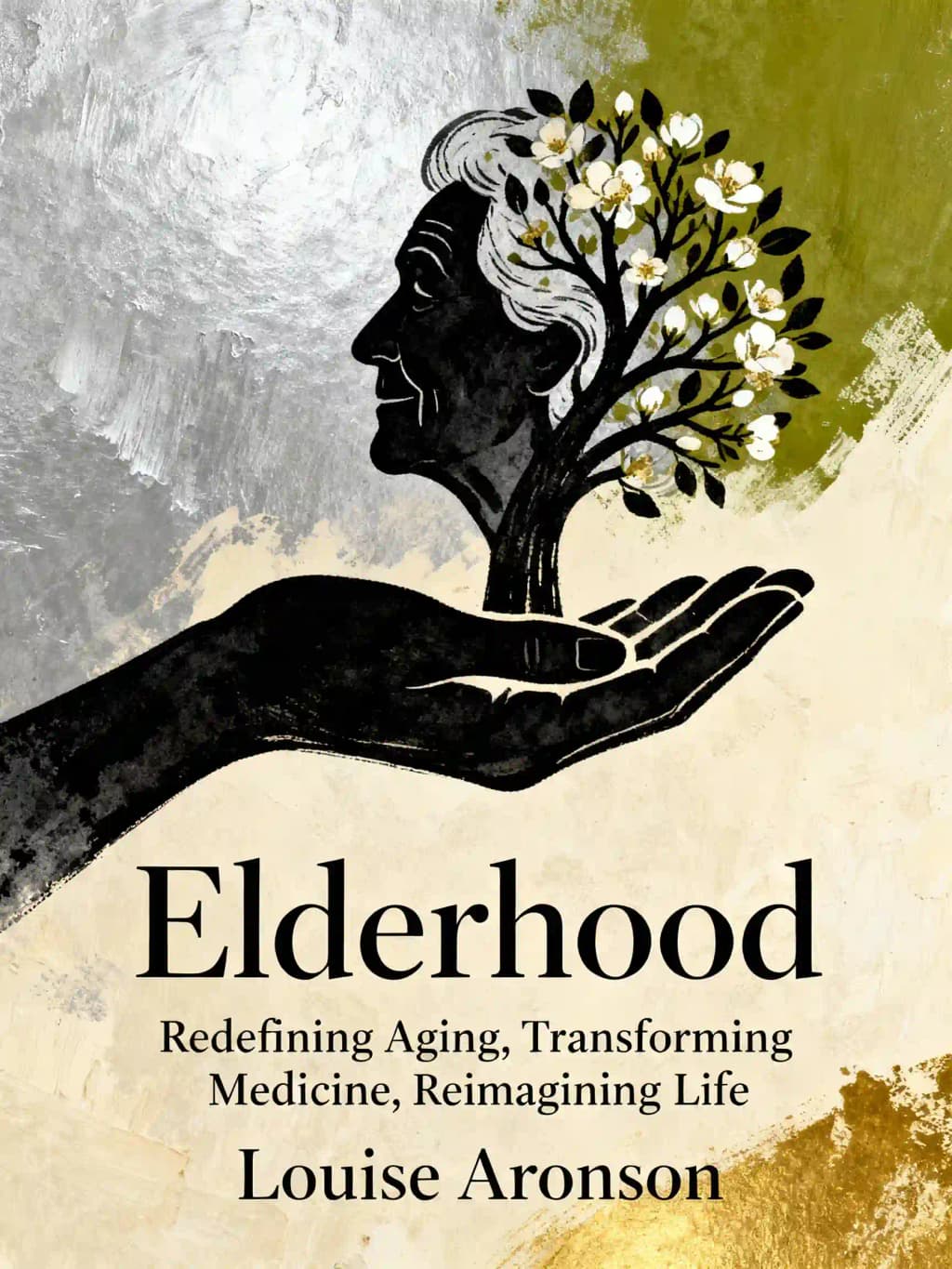
In "Elderhood," Pulitzer Prize finalist Louise Aronson confronts medicine's blind spot: aging. Through harrowing case studies and personal reflections, she exposes healthcare's systemic ageism. What if our fear of growing old is killing us faster than aging itself?
Louise Aronson, MD MFA, is a leading geriatrician, Pulitzer Prize-finalist author, and professor of medicine at the University of California, San Francisco. She is renowned for her groundbreaking work in Elderhood: Redefining Aging, Transforming Medicine, Reimagining Life.
A pioneer in geriatrics and narrative medicine, she combines her clinical expertise with literary skill to reframe societal views on aging. Aronson’s perspective draws from decades of patient care, her parents’ lived experiences, and her MFA training.
Her debut book, A History of the Present Illness, uses fiction to expose healthcare inequities, establishing her as a bold voice in medical storytelling. Aronson’s insights appear in the New York Times, New England Journal of Medicine, and major media outlets like CBS, while her acclaimed TED Talks and Washington Post commentaries amplify her advocacy.
A 2019 Influencer in Aging and Humanism in Aging Leadership Award winner, Elderhood reached Pulitzer recognition in 2020, cementing its status as a transformative exploration of late life.
Elderhood by Louise Aronson redefines aging as a dynamic life stage, challenging societal and medical biases against older adults. Blending patient stories, historical context, and personal reflection, Aronson critiques healthcare systems that often marginalize elders while advocating for a more compassionate, holistic approach to aging. The Pulitzer Prize finalist combines scientific rigor with narrative storytelling to reframe elderhood as a period of growth and possibility.
This book is essential for aging individuals, caregivers, healthcare professionals, and anyone interested in reimagining societal attitudes toward older adults. Aronson’s insights resonate with readers seeking to understand aging’s complexities, from medical inequities to cultural stereotypes. Its blend of memoir, science, and advocacy makes it valuable for policymakers and general audiences alike.
Yes—Elderhood offers a transformative perspective on aging, praised for its depth, empathy, and interdisciplinary approach. While some critics note repetitiveness, its Pulitzer finalist status, New York Times bestseller ranking, and endorsements from figures like Mary Pipher underscore its impact. It’s particularly recommended for those navigating elder care or seeking to challenge ageist norms.
Aronson argues that modern medicine often pathologizes aging, neglecting elders’ emotional and social needs. She highlights systemic failures in geriatric care, advocates for redefining elderhood as a distinct life stage, and emphasizes the importance of narrative medicine. The book urges societal shifts to value older adults’ contributions and ensure dignity in later life.
Both books critique healthcare’s handling of aging, but Elderhood focuses more broadly on cultural and systemic change, while Being Mortal emphasizes end-of-life care. Aronson integrates memoir and historical analysis, whereas Gawande uses patient stories to explore mortality. Both are essential for understanding aging but target different facets of the experience.
Notable quotes include:
Some readers find the book overly detailed or repetitive, with lengthy personal anecdotes overshadowing practical solutions. Critics note its dense structure but acknowledge its ambitious scope. Despite this, its Pulitzer recognition and acclaim from geriatric experts reinforce its significance.
As a geriatrician and writer, Aronson merges clinical expertise with storytelling. Her UCSF professorship and MFA in fiction enable a unique blend of scientific precision and narrative depth, drawing from 25+ years of patient care and personal experiences with her parents’ aging.
The book advocates for patient-centered care, urging caregivers to prioritize elders’ autonomy and emotional needs. Aronson stresses the importance of interdisciplinary healthcare teams and challenges families to confront ageist assumptions, offering strategies to navigate medical systems more effectively.
With global populations aging rapidly, Elderhood remains critical for addressing systemic gaps in elder care. Its themes align with ongoing debates about healthcare reform, AI in medicine, and intergenerational equity, making it a timely resource for policymakers and individuals navigating extended lifespans.
Aronson reframes aging as “elderhood”—a distinct, valuable life stage comparable to childhood or adulthood. She challenges stereotypes of decline, highlighting opportunities for growth, contribution, and resilience. This redefinition aims to combat societal marginalization and foster inclusive policies.
Narratives of patients, colleagues, and Aronson’s family humanize statistical data, illustrating systemic flaws and individual triumphs. Stories serve as tools for empathy, urging readers to see elders as multidimensional individuals rather than medical cases.
Siente el libro a través de la voz del autor
Convierte el conocimiento en ideas atractivas y llenas de ejemplos
Captura ideas clave en un instante para un aprendizaje rápido
Disfruta el libro de una manera divertida y atractiva
Our humanity is our burden and our life.
We've created a society that does everything to stay alive yet dreads being old.
This isn't a repeat of earlier acts but contains our story's climax and resolution.
Throughout history, societies have often considered their oldest citizens less than fully human.
Google and others echo the Egyptians with campaigns to "end aging forever."
Desglosa las ideas clave de Elderhood en puntos fáciles de entender para comprender cómo los equipos innovadores crean, colaboran y crecen.
Destila Elderhood en pistas de memoria rápidas que resaltan los principios clave de franqueza, trabajo en equipo y resiliencia creativa.

Experimenta Elderhood a través de narraciones vívidas que convierten las lecciones de innovación en momentos que recordarás y aplicarás.
Pregunta lo que quieras, elige la voz y co-crea ideas que realmente resuenen contigo.

Creado por exalumnos de la Universidad de Columbia en San Francisco
"Instead of endless scrolling, I just hit play on BeFreed. It saves me so much time."
"I never knew where to start with nonfiction—BeFreed’s book lists turned into podcasts gave me a clear path."
"Perfect balance between learning and entertainment. Finished ‘Thinking, Fast and Slow’ on my commute this week."
"Crazy how much I learned while walking the dog. BeFreed = small habits → big gains."
"Reading used to feel like a chore. Now it’s just part of my lifestyle."
"Feels effortless compared to reading. I’ve finished 6 books this month already."
"BeFreed turned my guilty doomscrolling into something that feels productive and inspiring."
"BeFreed turned my commute into learning time. 20-min podcasts are perfect for finishing books I never had time for."
"BeFreed replaced my podcast queue. Imagine Spotify for books — that’s it. 🙌"
"It is great for me to learn something from the book without reading it."
"The themed book list podcasts help me connect ideas across authors—like a guided audio journey."
"Makes me feel smarter every time before going to work"
Creado por exalumnos de la Universidad de Columbia en San Francisco

Obtén el resumen de Elderhood como PDF o EPUB gratis. Imprímelo o léelo sin conexión en cualquier momento.
A ninety-eight-year-old man arrives at the clinic. His nickname? Kid. The neurologist has prescribed him daily aspirin for stroke prevention-a medication that, at his age, poses more danger than benefit. Internal bleeding, hospitalization, even death: these are the risks we're willing to impose on someone who has outlived 99.99% of humanity. What exactly are we preventing? This isn't an isolated mistake. It's emblematic of a medical system that routinely excludes older adults from clinical trials, then prescribes them the very drugs proven only to harm them. When adverse effects emerge, we blame age rather than acknowledging our own failures. This is where we are: a culture so terrified of aging that we've built an entire healthcare apparatus designed to fight it-even when that fight causes more suffering than the condition itself.