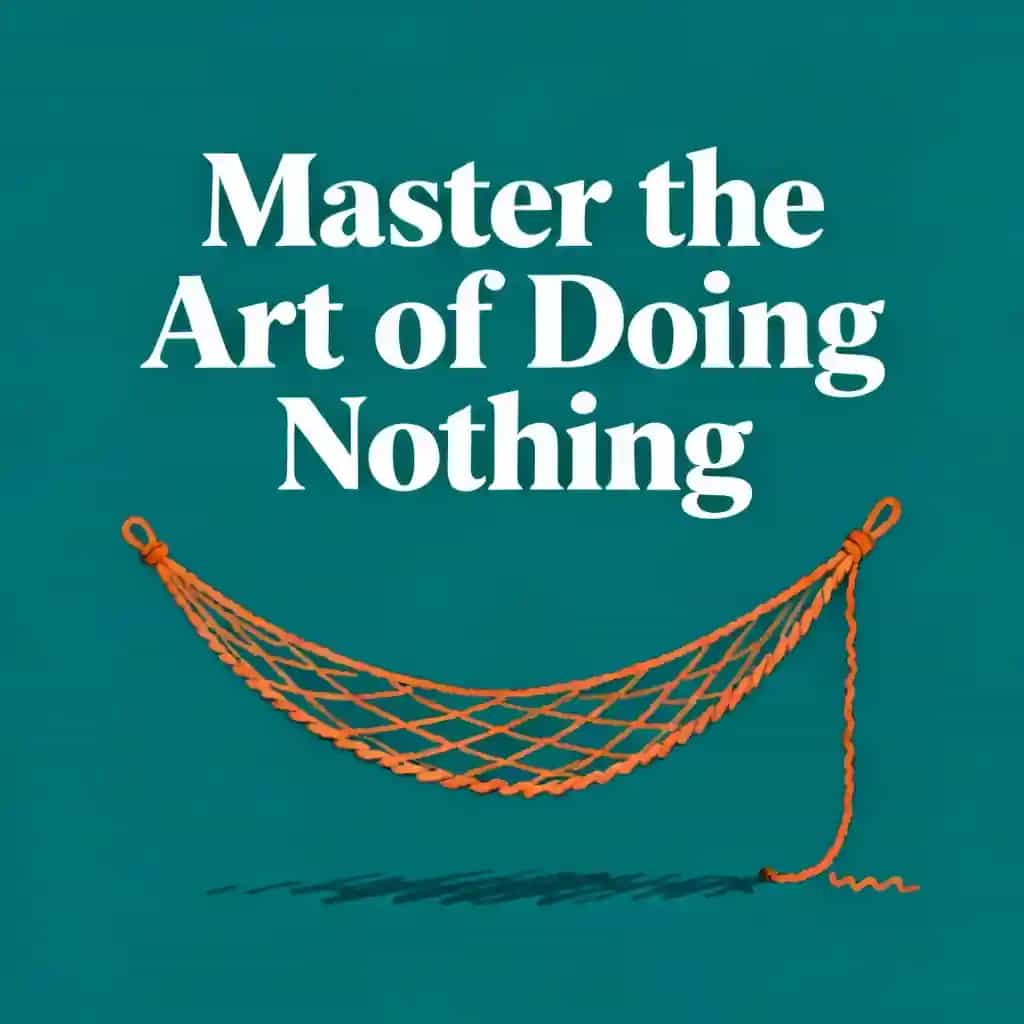
Do Pause
You Are Not a to Do List
Resumen de Do Pause
In "Do Pause," Oxford fellow Robert Poynton challenges our addiction to busyness. What if constant action is actually killing your creativity? Silicon Valley executives are embracing strategic pauses, finding that moments of deliberate stillness - not endless productivity - unlock their most innovative breakthroughs.

Temas clave en Do Pause
- intentional stillness
- time perception
- sustainable performance
- digital boundaries
- creative incubation
Citas de Do Pause
Do pause.
The pause is not empty; it is full of potential.
Pauses create space for new possibilities.
Overwork often serves as escape from ourselves-we fear what we might discover if we stop.
When you press pause on human beings, they start.
Personajes en Do Pause
- Robert PoyntonAuthor and Oxford University faculty member
- GoetheWriter who critiqued the world's focus on speed
Sobre el Autor
Sobre el autor de Do Pause
Robert Poynton, author of Do Pause: You Are Not a To Do List, is an internationally recognized expert in improvisation, leadership, and creative problem-solving. A self-help and personal development thought leader, Poynton draws on his role as an Associate Fellow at Oxford University’s Saïd Business School, where he designs executive programs blending improvisational theater techniques with strategic leadership. His work focuses on themes of time management, burnout prevention, and embracing uncertainty—concepts central to Do Pause, which challenges modern productivity culture.
Poynton’s portfolio includes the companion books Do Improvise and Do Conversation, offering actionable frameworks for navigating complexity. As co-founder of consultancy On Your Feet and learning platform Yellow, he has advised brands like Nike, Chanel, and the BBC.
His methodology is taught in Oxford’s Strategic Leadership Programme and featured at global forums like Skoll World Forum. Over 15,000 professionals across 30+ countries have participated in his workshops, with Do Pause becoming required reading in executive education curricula.
Descargar resumen de Do Pause
Obtén el resumen de Do Pause como PDF o EPUB gratis. Imprímelo o léelo sin conexión en cualquier momento.
Preguntas Frecuentes Sobre Este Libro
Do Pause challenges the modern obsession with constant productivity, arguing that intentional pauses—whether brief moments or extended breaks—fuel creativity, clarity, and well-being. Robert Poynton, an Oxford leadership educator, combines theory and practical advice to help readers escape the "to-do list" mentality, offering strategies to recharge through activities like walking, journaling, or mindful reflection.
This book is ideal for overworked professionals seeking balance, creatives facing blocks, and self-help enthusiasts interested in mindfulness. Poynton’s insights resonate with anyone feeling trapped by relentless productivity culture, offering tools to reframe rest as a strategic asset rather than a weakness.
Yes—Do Pause provides actionable frameworks to combat burnout and reignite creativity. Readers praise its refreshing perspective on slowing down, with one reviewer calling it a “brain massage” that helps reclaim mental space. However, those preferring rigid productivity systems may find its fluid approach less structured.
- Intentional pauses: Deliberate breaks to reset perspective.
- Micro-pauses: Brief moments (e.g., a deep breath) to interrupt autopilot.
- Play and curiosity: Using unstructured time to spark creativity.
- “You are not a to-do list”: Rejecting identity tied to productivity.
Poynton recommends simple rituals:
- Start meetings with a minute of silence.
- Take walking breaks instead of scrolling.
- Schedule “white space” in calendars for reflection.
These micro-pauses cumulatively reduce stress and enhance decision-making.
The manifesto advocates prioritizing rest as essential to creativity and leadership. Key principles include valuing idle time, embracing uncertainty, and viewing pauses as opportunities for growth rather than inefficiency.
It reframes balance as rhythmic alternation between activity and pause, rather than a fixed equilibrium. Poynton argues that regular pauses—whether daily walks or annual retreats—prevent burnout and sustain long-term productivity.
Some readers note the book prioritizes mindset shifts over step-by-step plans, which may frustrate those seeking rigid systems. Others find its emphasis on self-directed pauses challenging in highly structured workplaces.
Unlike tactical guides (e.g., Atomic Habits), Do Pause focuses on undoing harmful productivity myths. It complements mindfulness books like The Power of Now by linking pauses to practical outcomes like innovation.
Poynton is an Oxford Saïd Business School associate fellow specializing in leadership and improvisation. With 20+ years coaching executives, he blends theater-based methods with strategies for navigating complexity, detailed in his other works like Do Improvise.
As burnout and digital overload persist, Poynton’s emphasis on intentional slowing offers a counterbalance to AI-driven efficiency trends. The book’s principles align with growing interest in “slow living” and mental health-focused productivity.
For similar themes, consider:
- Do Improvise (Poynton’s guide to adaptability).
- Rest by Alex Soojung-Kim Pang (science of strategic rest).
- The Power of Now by Eckhart Tolle (mindfulness focus).