Capítulo 1
When AI Meets the Healing Arts: Medicine's Digital Revolution
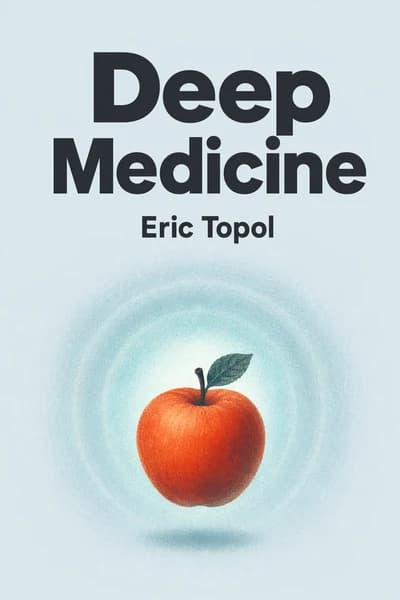
In a world where doctors spend more time typing than talking to patients, where burnout rates among physicians have reached epidemic proportions, and where medical errors remain a leading cause of death, something has clearly gone wrong with modern healthcare. Enter Eric Topol's "Deep Medicine" - a visionary exploration of how artificial intelligence might paradoxically restore humanity to medicine. As a cardiologist and digital medicine pioneer, Topol doesn't just theorize; he lives at the intersection of cutting-edge technology and patient care. The book has garnered praise from tech luminaries like Vinod Khosla and medical humanists like Abraham Verghese alike. What makes this work particularly timely is how it arrived just before the pandemic accelerated digital health adoption by a decade. Through personal medical nightmares and professional insights, Topol crafts a compelling vision for healthcare's future that doesn't sacrifice the human touch on the altar of technological progress, but rather uses AI to enhance and restore it.
Capítulo 2
Shallow Medicine: Our Current Healthcare Crisis
Modern medicine faces a profound contradiction: despite possessing unprecedented technological capabilities and scientific knowledge, the actual practice of healthcare has become increasingly superficial and mechanistic. The average doctor's visit in America now lasts just seven minutes, with physicians spending more than twice that time documenting the encounter. This "shallow medicine" produces both astronomical waste and preventable harm - the United States performs up to 60% unnecessary medical procedures while spending $3.5 trillion annually on healthcare, yet experiences declining life expectancy and some of the worst health disparities among developed nations.
The crisis stems from multiple interrelated sources. First, the evidence base itself is often shallow and methodologically flawed. Treatment guidelines frequently rely on surrogate endpoints (like blood pressure numbers) rather than meaningful patient outcomes (like heart attack prevention). The 2017 blood pressure guideline change that suddenly classified 30 million more Americans as hypertensive exemplifies this problem - a massive shift in medical practice without solid evidence of long-term benefit. Similar issues plague many common treatments, from statins to spine surgeries.
Second, physicians face overwhelming cognitive demands in an increasingly complex medical landscape. With over 12 million serious diagnostic errors annually in the US, doctors struggle to process the vast amount of medical knowledge while managing time pressures and administrative burdens. Most concerning are the deep cognitive biases that distort medical judgment but remain largely unaddressed in medical training. Confirmation bias leads doctors to stick with initial diagnoses despite contradictory evidence. Availability bias causes overemphasis on dramatic but rare conditions recently encountered. Even simple framing dramatically affects decisions - Stanford physicians were 28% less likely to choose a cancer operation when described as having a "10% chance of dying" versus a "90% chance of survival."
Third, the electronic health record (EHR) - originally intended to improve care coordination and reduce errors - has instead become an oppressive burden that actively interferes with patient care. Physicians now spend two hours on documentation for every hour with patients, with studies showing they make only intermittent eye contact while typing. This technological intrusion creates a world of insufficient data, time, context, and presence - the perfect storm for medical errors and physician burnout. Many doctors report spending evenings and weekends completing charts, contributing to depression rates that are twice that of the general population.
Perhaps most troubling is how these factors combine to erode the sacred doctor-patient relationship. When physicians can't look up from the keyboard long enough to notice a patient's tears or fear, something fundamental to healing is lost. The art of careful listening and observation - critical skills that often reveal crucial diagnostic clues - has been sacrificed to documentation requirements. As medicine has become America's largest employer with exploding costs, the human element has been systematically devalued in favor of efficiency metrics, billing requirements, and legal documentation. This erosion of medicine's human core may be the greatest cost of all.
Capítulo 3
The AI Revolution in Medicine: Promise and Potential
Artificial intelligence represents a transformative force in medicine comparable to the introduction of anesthesia or antibiotics. While consumer applications like self-driving cars and facial recognition have captured public attention, healthcare stands to benefit enormously from these technological advances - though not without significant challenges. The potential impact ranges from revolutionizing diagnostic accuracy to personalizing treatment plans and streamlining administrative tasks that currently consume up to 70% of healthcare providers' time.
The current AI momentum stems from deep neural networks enabled by four critical components: enormous training datasets, dedicated graphic processing units (GPUs) for parallel computing, economical cloud storage, and open-source development modules. These networks function like sideways club sandwiches - data moves through hidden computational layers that extract increasingly complex features from raw inputs, self-adjusting through techniques like backpropagation rather than human design. Modern neural networks can process millions of parameters simultaneously, learning patterns too subtle for human recognition, while reducing computational costs by over 90% compared to traditional methods.
AI's evolution through games reveals its exponential progress. Before 1997's Deep Blue chess victory, AI had conquered simpler games using rules-based algorithms. The paradigm shifted in 2015 when DeepMind's neural network mastered Atari's Breakout by discovering strategies unknown even to its creators, including optimal corner-bouncing techniques that surprised human experts. By 2016, AlphaGo defeated world champion Lee Sodol at Go - a game with more possible positions than atoms in the universe. AlphaGo Zero then surpassed this achievement in 2017, teaching itself without human examples in just three days and developing entirely novel strategies that have since revolutionized how human players approach the game.
In medicine, narrow applications already show remarkable promise. The Face2Gene app helps diagnose over 4,000 genetic conditions through facial recognition, identifying rare disorders like Coffin-Siris syndrome in seconds rather than years. The system can detect subtle facial features associated with genetic conditions with 91% accuracy, often before traditional genetic testing confirms the diagnosis. AI interpretation of medical images has achieved expert-level accuracy in detecting conditions from diabetic retinopathy to skin cancer, with some systems demonstrating 95% accuracy in melanoma detection - exceeding many dermatologists' performance. Natural language processing has transformed speech recognition, with machine accuracy reaching human parity in 2017, enabling voice assistants with extensive healthcare applications, from clinical documentation to patient communication systems.
AliveCor's journey illustrates critical principles for medical AI. Their small team, led by former Google executives, embarked on two ambitious AI projects using smartwatch ECGs: detecting atrial fibrillation and measuring blood potassium levels. The potassium project initially failed when they filtered data too aggressively, eliminating crucial signal variations. Their breakthrough came when they expanded to 2.8 million ECGs from hospitalized patients and analyzed the entire ECG pattern, discovering subtle markers of potassium levels previously unknown to cardiologists. Despite Apple's vastly greater resources, AliveCor beat the tech giant to FDA approval by nine months with their Kardia band for the Apple Watch, demonstrating that in AI medicine, small companies can outmaneuver industry giants through focused expertise and innovative approaches. Their success highlighted the importance of comprehensive data analysis and the potential for AI to uncover new biological insights beyond human observation.
Capítulo 4
Deep Liabilities: The Dark Side of Medical AI
Despite AI's remarkable achievements, significant concerns balance the buzz. Neural networks require optimal data quality and quantity, yet medical data is often unstructured, unlabeled, and "unclean." Even with structured data, problems persist - models can drift as data changes over time. Medical datasets typically contain thousands or occasionally millions of datapoints - far fewer than the billions available for consumer applications.
The "black box" problem presents a particularly thorny challenge. Neural networks and the human brain share opacity - we don't understand how either fully works. AlphaGo's mysterious "Move 37" against Lee Sodol, Stanford's skin cancer classification algorithm, and Mount Sinai's Deep Patient project for disease prediction all demonstrate this black box problem. As Joel Dudley put it: "We can build these models, but we don't know how they work." While we accept black boxes in medicine (like electroconvulsive therapy for depression), AI's opacity raises unique concerns because errors could harm thousands, not just individuals.
Algorithms encode human prejudice and bias into the systems managing our lives. Image collections show gender bias (cooking linked to women, sports to men), even labeling men cooking as "women." Google ads for high-paying jobs target men more than women. Text analysis of 840 billion web words revealed entrenched gender and racial biases. ProPublica exposed a commercial algorithm that wrongly predicted black defendants as higher risk for future crimes. Medical research already suffers from bias with minorities underrepresented in studies, particularly problematic for genomics where ancestry matters.
Privacy concerns loom large as facial recognition algorithms like Google's FaceNet and Facebook's DeepFace can identify one face from millions. Half of US adults have facial images in police-searchable databases. Genomic data, retinal images, and electrocardiograms offer additional identification vectors. The DeepMind-NHS collaboration illustrates healthcare privacy tensions - 1.6 million UK citizens' identifiable medical records were transferred without explicit consent to develop the Streams kidney injury app.
Despite contradictory predictions about AI's impact on employment, experts like MIT's Erik Brynjolfsson suggest a massive transformation: "Millions of jobs will be eliminated, millions of new jobs will be created and needed, and far more jobs will be transformed." An OECD report estimates over 40% of healthcare jobs could be automated globally. Meanwhile, AI specialists command extraordinary salaries - fresh PhDs earn $300,000 to $1 million annually.
Capítulo 5
Transforming Medical Specialties: The Pattern Recognition Revolution
AI will impact different medical specialties in varying ways, with pattern recognition fields like radiology, pathology, and dermatology facing the most immediate disruption. With two billion chest X-rays performed annually worldwide and interpretive challenges like pneumonia diagnosis, AI seems poised to revolutionize radiology. Geoffrey Hinton provocatively claimed radiologist training should stop, while Andrew Ng announced AI could diagnose pneumonia better than radiologists.
Radiologists read approximately 20,000 studies annually, with the U.S. generating 800 million scans (60 billion images) yearly. Despite radiologists' remarkable pattern recognition abilities, they suffer from "inattentional blindness" and error rates that include 2% false positives and over 25% false negatives. AI algorithms have demonstrated 95% accuracy in classifying chest X-rays as normal or abnormal, and can process vastly more images than humans while detecting patterns invisible to the human eye.
The emerging field of radiomics extracts hidden information from medical images that human eyes miss. Deep learning algorithms have shown remarkable capabilities: predicting genomic anomalies from brain MRIs, identifying tumor mutations from colon cancer MRIs, reducing unnecessary breast surgeries by 30%, diagnosing hip fractures with 99% accuracy from X-rays, detecting lung nodules, classifying liver masses, identifying brain hemorrhages, and determining bone age - all with accuracy comparable to expert radiologists.
Like radiologists, pathologists face a future where machines may supplement their diagnostic work. Current pathology suffers from striking diagnostic heterogeneity - in some forms of breast cancer, agreement among pathologists can be as low as 48%. Stanford researchers developed machine learning algorithms that predict lung cancer survival rates more accurately than current pathology practices. Google's algorithms detected metastasis with 92% accuracy versus 73% for pathologists, while reducing false negatives by 25%. The MIT CSAIL group demonstrated that combining pathologist expertise with machine learning produced the best results - almost eliminating errors.
Dermatology presents another significant opportunity for AI intervention. Skin conditions account for 15% of all doctor visits, with two-thirds diagnosed by non-dermatologists who frequently misdiagnose them - error rates reach 50%. Early detection of melanoma is particularly crucial, improving five-year survival rates from 14% to 99%. In 2017, a landmark Nature paper demonstrated a deep learning algorithm that outperformed dermatologists in classifying skin lesions as benign or malignant.
Capítulo 6
Beyond Patterns: AI for Every Clinician
Unlike information specialists who interpret clear visual patterns, most physicians and clinicians have practices that defy simple algorithmic processing. For these "clinicians without patterns," AI offers adjunctive opportunities rather than replacement, helping with specific functions that machines handle efficiently.
Voice-based AI could replace human scribes by capturing and transcribing the entire doctor-patient conversation. Natural language processing could synthesize this unstructured conversation into clinical notes that both doctor and patient could review and edit. This approach would preserve face-to-face communication while reducing errors that plague medical records - 80% of which contain cut-and-paste mistakes. Companies like Google, Microsoft, Amazon and startups such as Sopris Health and Suki are developing these digital scribes.
Ophthalmology may be the pacesetter for AI implementation in medicine. Deep learning algorithms have achieved impressive accuracy in diagnosing diabetic retinopathy - the leading global cause of vision loss affecting over 100 million people worldwide. Google developed an algorithm with 87-90% sensitivity and 98% specificity using over 128,000 retinal images. IDx, a University of Iowa spinoff, conducted the first prospective clinical trial of AI in medicine, achieving 87% sensitivity and 90% specificity for diabetic retinopathy using a specialized camera in primary care offices, earning FDA approval in 2018.
Cardiologists rely heavily on two fundamental technologies: electrocardiography (ECG) and echocardiography (echo). ECG interpretation was one of the first AI applications in medicine, dating back to the 1970s, but surprisingly still uses largely outdated rules-based algorithms with only 69% accuracy rather than modern deep learning. With over 300 million ECGs performed yearly, this represents a missed opportunity for improvement. Recent progress has been made with deep neural networks for heart attack diagnosis (93% sensitivity, 90% specificity) and single-lead rhythm detection.
Cancer medicine presents the ultimate data-rich challenge for AI, with multiple layers of information for each patient. Tempus Labs, founded by Groupon billionaire Eric Lefkofsky after his wife's breast cancer diagnosis, has taken a comprehensive approach to fixing cancer's data infrastructure problems. Despite having no science background, Lefkofsky assembled over 100 AI specialists in a Chicago facility equipped with advanced sequencing machines, organoid cultures, and machine learning capabilities. Unlike IBM Watson's approach, Tempus provides "digital twin" information with their reports, showing treatment outcomes from similar de-identified patients.
Capítulo 7
The Mental Health Revolution
The digitization of mental health presents a formidable challenge, yet offers profound opportunities. Research has revealed that people often prefer sharing intimate secrets with machines rather than humans. In a study led by Jonathan Gratch, participants interviewing with a human avatar named Ellie disclosed significantly more personal information when told they were interacting with a computer rather than a human controller.
Digital phenotyping offers an impressive array of metrics to assess mental state, from voice quality and keyboard interactions to physiological markers. USC researchers demonstrated that algorithms analyzing 74 acoustic features could predict marital discord better than therapists. Similarly, keyboard metrics can be broken down into 45 patterns that correlate with cognitive function and mood measurements. Companies like Cogito, co-founded by MIT's Alex Pentland, have developed apps that monitor mental health by analyzing speech patterns, with applications ranging from clinical practice to veterans' care.
Depression affects over 350 million people globally, accounting for more than 10% of the total global disease burden and costing the US over $200 billion annually. Yet 37% of the 16 million American adults with major depression receive no treatment. Traditional diagnosis relies on subjective DSM criteria, but AI approaches are making diagnosis more quantitative. Brain imaging combined with machine learning has identified four distinct depression biotypes, each with characteristic symptom complexes and treatment responses.
With suicide rates increasing to over 44,000 deaths annually in the US, AI offers new hope for prediction and prevention. Traditional risk factors have proven remarkably ineffective, performing only slightly better than random guessing across 50 years of research. In contrast, machine learning algorithms analyzing medical records have achieved nearly 80% accuracy in predicting suicide attempts. More sophisticated approaches incorporating real-world interactions like laughter and sighing have reached 93% accuracy in small studies.
Smartphone-based cognitive behavioral therapy (CBT) shows promising results for treating mild to moderate depression, with comparable efficacy to traditional face-to-face therapy. Woebot, a text-based conversational mood-tracking agent built by Stanford's Alison Darcy, demonstrated better engagement and more reduced depression compared to traditional CBT in a small trial with 70 college students. Described as having "a personality that's a cross between Kermit the Frog and Spock," Woebot and similar chatbots like X2AI could help address the global shortage of mental health professionals.
Capítulo 8
Personalized Nutrition: The End of One-Size-Fits-All Diets
The fundamental problem with traditional nutrition guidelines is the deeply flawed assumption that one universal diet works for everyone. This contradicts our inherent biological uniqueness - our individual metabolism, genetic makeup, microbiome composition, and environmental factors create remarkably heterogeneous responses to identical foods. The Weizmann Institute of Science pioneered this understanding through groundbreaking research published in Cell in 2015, fundamentally challenging decades of standardized dietary advice. Their comprehensive study monitored blood glucose responses in 800 non-diabetic individuals consuming over 52,000 meals, revealing striking variability in glycemic responses to identical foods, even among healthy individuals.
Using sophisticated machine learning algorithms to analyze 1.5 million glucose measurements alongside multidimensional data (including detailed diet habits, physical activity patterns, sleep quality, stress levels, and gut microbiome composition), researchers identified 137 distinct factors predicting individual glycemic responses. Remarkably, the gut microbiome emerged as the key determinant - specific bacterial species like Parabacteroides distasonis and Bacteroides dorei strongly influenced glucose responses. Common foods showed wildly different effects - while cookies sparked dangerous glucose spikes in some participants, others maintained stable levels. The algorithm developed from this data outperformed expert nutritionists in predicting individual responses and significantly improved glucose control in subsequent randomized trials.
Follow-up studies focusing on bread consumption further confirmed this individuality principle. In a particularly revealing experiment, participants consumed both white and whole-grain bread for weeks. Contrary to conventional wisdom, some people had lower glycemic responses to white bread while others showed the opposite pattern. The gut microbiome composition emerged as the sole reliable predictor of these responses, challenging long-held beliefs about "healthy" versus "unhealthy" foods. As lead researchers Segal and Elinav concluded: "Everything was personal... a generic, universal approach to nutrition simply cannot work."
The commercial application of this groundbreaking research emerged as DayTwo, a pioneering company offering personalized nutrition guidance based on comprehensive microbiome analysis. Their protocol involves continuous glucose monitoring over multiple weeks, detailed food logging through smartphone apps, activity tracking via wearables, and extensive microbiome sampling. The system generates personalized food recommendations and meal timing suggestions based on individual metabolic responses. While fascinating as one of artificial intelligence's first consumer health applications, this approach remains unproven for long-term clinical outcomes and faces challenges in integrating other crucial health factors like hormonal balance, stress levels, and sleep quality. The field continues to evolve, with newer companies exploring additional biomarkers and environmental factors to create increasingly sophisticated personalized nutrition algorithms.
Capítulo 9
Deep Medicine: Restoring Humanity to Healthcare
The final vision of deep medicine frames the central promise of AI in healthcare: the restoration of human connection. One of AI's most valuable potential contributions is giving clinicians back their time. With over half of doctors experiencing burnout, one in four young physicians suffering depression, and hundreds of physician suicides annually in the US, something must change. Research demonstrates that time directly impacts patient outcomes - for every extra minute a home health visit lasts, hospital readmission risk drops by 8% (and up to 16% for part-time providers).
As machines grow increasingly intelligent, humans must evolve differently by enhancing our uniquely human qualities. While AI will progressively outperform humans on narrow tasks, machines cannot truly replicate human empathy, love, laughter, grief, joy, trust, creativity, intuition, or soul. Empathy forms the backbone of patient relationships - studies examining 964 original research papers confirm that physician empathy directly improves clinical outcomes, patient satisfaction, treatment adherence, and reduces anxiety.
The physical examination represents the quintessential human touch in medicine that cannot be replaced by technology. Abraham Verghese describes it as a vital ritual that cements the doctor-patient relationship, saying "I will see you through this illness." Yet physicians increasingly shortchange this practice - using "WNL" (within normal limits) in charts when it really means "we never looked."
Medical schools select future doctors based on college grades and MCAT scores that test scientific knowledge but nothing about emotional intelligence or empathy - potentially weeding out the most caring individuals. With AI increasingly capable of handling medical information, what will differentiate doctors from machines is their humanity. Most medical schools still rely on traditional lecturing rather than innovative active learning that promotes listening and empathy.
Though AI in medicine remains in its earliest days - long on algorithmic validation but short on real-world clinical proof - narrow AI applications will inevitably take hold. These will improve clinical workflow through faster, more accurate readings of scans and slides, detection of things humans would miss, and elimination of keyboards to restore presence during visits. Individuals will gain the capacity to have their medical data seamlessly processed to guide their health decisions.
The author envisions a technological solution to healthcare's human disconnection: a triad of deep phenotyping (comprehensive medical data), deep learning, and deep empathy that can address healthcare's economic crisis while restoring real medicine - presence, empathy, trust, caring, and being human. When experiencing deep pain, nothing compares to the comfort of a trusted clinician who assures you they'll be with you no matter what. That's the human caring we seek when sick, and what AI can help restore.