Capítulo 1
A Muslim American's Journey Through Faith, Identity, and Belonging
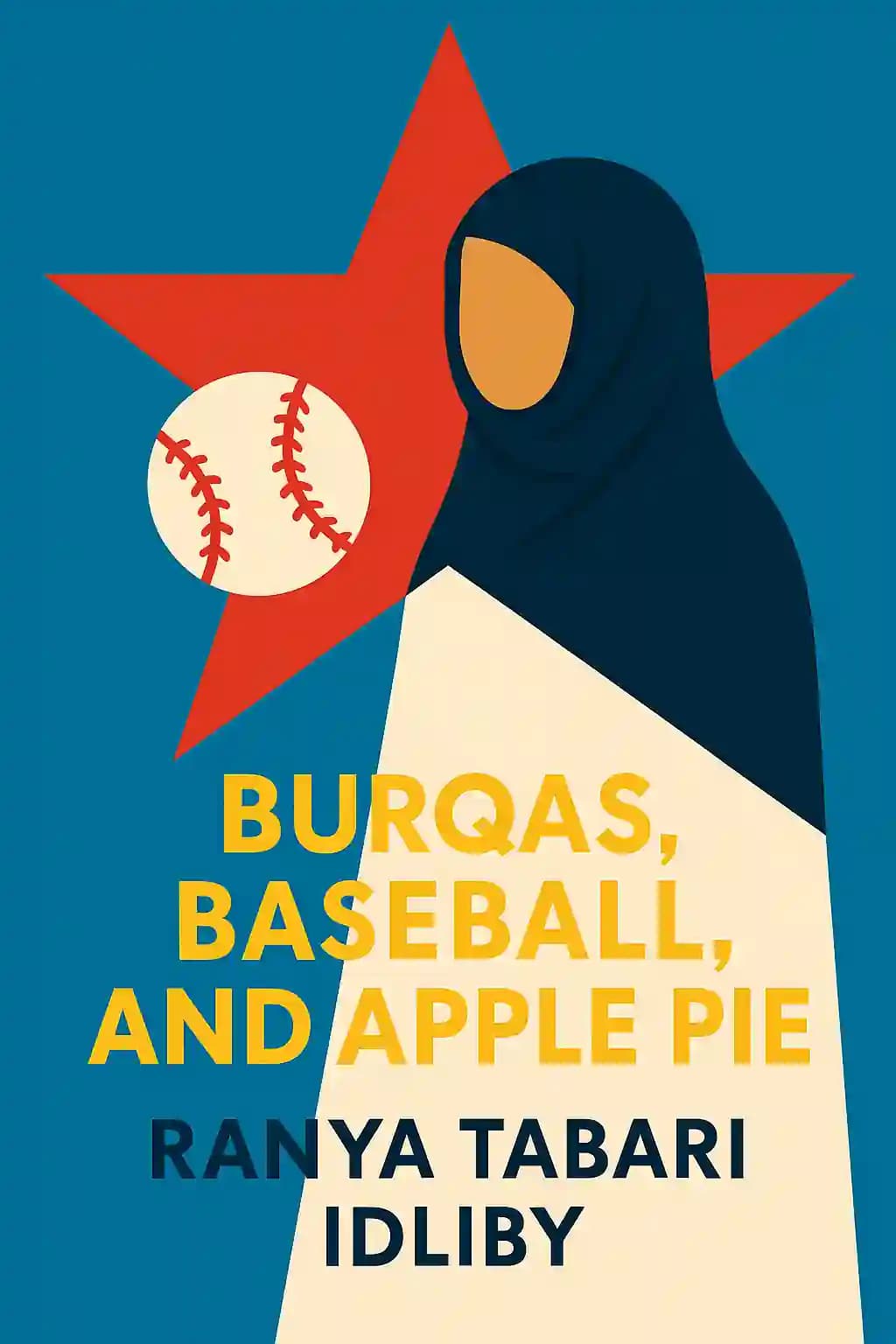
In the heart of America's cultural landscape stands a book that challenges our preconceptions about what it means to be both Muslim and American. "Burqas, Baseball, and Apple Pie" by Ranya Tabari Idliby has become a touchstone for interfaith dialogue since its publication, praised by religious leaders across traditions for its honest portrayal of Muslim American life. The memoir gained particular relevance following the 2016 election when anti-Muslim rhetoric reached new heights in American politics, with celebrities like Dave Chappelle and Kareem Abdul-Jabbar recommending it as essential reading for understanding the Muslim American experience. What makes this book particularly powerful is how it transforms the abstract political debate about Islam in America into a deeply personal family story that any parent can relate to-regardless of faith tradition.
Capítulo 2
The Accidental Muslim: Finding Faith in a Post-9/11 World
For Ranya Tabari Idliby, being Muslim wasn't always a conscious choice. Growing up in Kuwait as the daughter of a Palestinian refugee father who had built a successful life in America, Islam was simply the backdrop of her childhood-joyful celebrations of Eid, family gatherings, and cultural traditions. There was no hijab in her family; in fact, the absence of head coverings was a point of pride in their progressive female culture. Her mother's approach to religion was practical and flexible-using Islamic teachings to instill values while comfortably asking Christian friends to light candles for her at church.
This relaxed relationship with faith continued into adulthood. After becoming an American citizen at twenty-two-a moment of profound pride after years of statelessness as a Palestinian refugee-Islam receded into the background as career and family took priority. Checking "Muslim" on hospital forms after her daughter Leia's birth was merely entering a category of identity, not defining who they were completely. Motherhood consumed her entirely, taking precedence over world events and even her PhD studies.
Then came September 11, 2001. The attacks transformed her private, familial Islam into public property and public enemy. "Had we unwittingly become representatives of our faith?" she wondered as Jewish and Christian friends gathered at her home in the aftermath. Islam suddenly became the elephant in the room that couldn't be ignored. Muslim parents faced an impossible choice: teach children to reject their faith or engage with the stereotypes and challenges. Years later, her son would be asked if, as a Muslim, he celebrated 9/11-a question no child should have to answer.
Without a mosque, community, or imam to consult, she felt stranded. Even her usually calm husband worried about potential internment camps if another attack occurred. Their American identity, once a source of security, suddenly felt precarious. Meanwhile, her children needed spiritual guidance. Her daughter Leia was confused by holiday questions at school, while her son Taymor was preoccupied with death and heaven, asking if paradise would have "chocolates, candies, and lollipops."
Capítulo 3
The Faith Club: Finding Community Across Religious Boundaries
Desperate for answers in a post-9/11 world, Idliby undertook an intensive study of the Quran, reading it cover-to-cover for the first time in her life. What she discovered astonished her-rich interfaith messages of love, explicit respect for religious diversity, and detailed recognition of Moses and Jesus as revered messengers of God. The text contained numerous passages promoting peaceful coexistence and mutual understanding between faiths. This revelation led to an ambitious idea: creating a children's book about the three Abrahamic faiths to help her own children and others understand their religious identity in an increasingly interconnected world.
At her daughters' school bus stop in suburban New York, she met Suzanne Oliver, a devout Episcopal Christian mother, and shared her vision for the interfaith book project. Suzanne, intrigued by the concept, recruited Priscilla Warner, a Jewish mother and experienced writer. Though they began as strangers meeting over tea and homemade biscuits in their living rooms, their theological and cultural differences quickly surfaced, leading to intense debates and conflicts that repeatedly threatened to derail the project. Rather than abandoning their mission, they made a crucial commitment to weekly meetings, dubbing themselves "The Faith Club." Over four transformative years, they challenged each other with difficult questions about religious extremism, the Israeli-Palestinian conflict, and their own deeply held prejudices, pushing far beyond their comfort zones and abandoning diplomatic niceties for raw honesty.
This interfaith dialogue became Idliby's unexpected spiritual sanctuary-functioning as her temple, church, and mosque combined. Previously familiar cultural traditions took on deeper meaning; Christmas caroling, for instance, acquired new religious significance as she discovered that Muslims' reverence for Jesus as a prophet meant her children could fully participate in Christmas celebrations without compromising their Islamic faith. The Quran's nineteenth chapter, "Maryam," dedicated entirely to Mary, revealed surprising connections between the faiths.
The Faith Club rescued her from spiritual isolation in post-9/11 America. No longer feeling like an "accidental Muslim," she discovered her place within what she came to view as an interconnected Judeo-Christian-Muslim tradition. Finding support in a progressive Muslim community led by an imam who validated her inclusive interpretation of Islam, she felt better equipped to guide her children through their religious identity formation. When her daughter Leia drew a picture showing herself separate from her Christian and Jewish classmates, they worked together to prepare an educational presentation that successfully dispelled stereotypes about Muslims in her school.
The 2006 publication of "The Faith Club" resonated far beyond initial expectations, as Idliby embarked on a nationwide speaking tour, addressing diverse audiences in churches, temples, mosques and interfaith organizations. Despite encountering Americans who viewed Islam as fundamentally foreign to American values, she embraced every opportunity to engage in dialogue and clarify misconceptions. The vastness of America's religious landscape both inspired and challenged her, strengthening her determination to help her children forge their own authentic American Muslim identity while maintaining meaningful connections across faith boundaries.
Capítulo 4
A Crisis of Faith: Confronting Islam's Difficult Questions
The question Idliby most frequently heard during speaking engagements was "Where are the moderate Muslims?" Initially dismissive, she'd respond that 1.6 billion moderate Muslims were living average, unremarkable lives that never made headlines - working as doctors, teachers, engineers, and parents focused on raising their families. She suspected the question masked deeper fears that she was an exception rather than the norm among Muslims, a "safe" Muslim who had adapted to Western values while others remained threatening and alien.
Then came the news that shattered her complacency: a 13-year-old Somali girl named Aisha had been stoned to death for "adultery" after reporting her rape. Sitting alone at her kitchen table, Idliby wept. The brutality of the incident, particularly against a child, struck at her core as both a mother and a Muslim. Suddenly those questions about moderate Muslims resonated with new urgency. This wasn't just an aberration in a failed state-it demanded a clear, unequivocal response from Muslims worldwide.
She began suffering from what she called "Muslim fatigue" as news reports regularly delivered fresh atrocities committed in Islam's name: a British teacher criminalized for allowing students to name a teddy bear Muhammad, a Saudi senior threatened with lashes for being alone with a delivery man, potential lashings for drinking beer in Malaysia or wearing pants in Sudan. Each incident seemed more absurd yet more damaging than the last. These bizarre, tragic incidents threatened to widen the fault line between her children's American and Muslim identities, forcing them to constantly defend or explain their faith.
Idliby needed to find an Islam for the twenty-first century-one not invested in seventh-century ideals but relevant to modern life. She sought an interpretation that honored the faith's spiritual essence while embracing contemporary values and human rights. Her children needed protection from self-appointed clerics who confused cultural practices with theological mandates, who twisted religious texts to justify misogyny and violence. As American Muslims, they must speak up-patient but resolute with those who insist only extreme readings of Islam are authentic, while never accepting treatment as lesser Americans or apologizing for their dual identity.
The tension between orthodoxy and spirituality exists in all faiths, but for Muslims, especially American Muslims, there's a presumption that strict ritual observance defines authentic faith. Her children and she are constantly asked if they're "really Muslims" or told they "don't look Muslim" - as if there were a single Muslim appearance or way of being. While diversity within Christianity and Judaism is recognized, with various denominations and levels of observance accepted as valid expressions of faith, Islam is still painted with one brushstroke, reduced to its most conservative interpretations. This oversimplification ignores the rich diversity of Islamic thought and practice across cultures and centuries, from mystical Sufism to progressive modern interpretations.
Capítulo 5
Who Speaks for Islam? The Authority Vacuum in Modern Islam
The confusion over who represents Islam becomes most troublesome with the proliferation of fatwas (Islamic legal decrees). The internet and global media have dramatically worsened this problem with e-fatwas and dial-a-fatwa television shows, creating a marketplace where religious opinions compete for attention. These fatwas often contradict each other, enabling Muslims to "shop" for opinions that suit their preferences rather than seeking genuine spiritual guidance. The phenomenon has reached such extremes that some television programs in Muslim countries feature clerics discussing intimate sexual matters during prime-time viewing hours, leading Idliby and many others to question how such explicit content aligns with traditionally conservative Islamic values.
The misconception of a monolithic Islam is heavily reinforced by Saudi Arabia's aggressive campaign to establish Wahhabi orthodoxy as the sole legitimate interpretation of Islam, funded by vast petrodollar resources. Their specific cultural practices - such as women's driving bans (now lifted), male guardianship requirements, and strict travel restrictions - are deliberately marketed worldwide as universal Islamic requirements. This creates profound confusion among Muslims about distinguishing between religious obligations and local cultural traditions. Saudi Arabia leverages its geographical connection to Islam's holy sites, particularly Mecca and Medina, as an "authenticity badge" to legitimize their interpretation. However, this contradicts the historical reality that Islam has always transcended national boundaries, adapting and flourishing through diverse cultures from Morocco to Indonesia, Spain to China.
The absence of centralized religious authority in Sunni Islam, which represents approximately 90% of the global Muslim population, creates a significant leadership vacuum. Unlike Catholicism with its papal structure, Sunni Islam has no official clergy serving as intermediaries between individuals and God. This decentralized structure, while democratic in spirit, presents practical challenges when Western media and politicians demand that Muslims collectively "speak up" against extremism - there simply is no single authoritative voice to do so. This authority vacuum creates opportunities for self-proclaimed experts to speak in God's name, often without proper theological training or historical understanding.
The proliferation of self-appointed "ambassadors to God" preaching to religiously illiterate audiences directly contradicts Islam's first Quranic command: "Read." Many contemporary Muslims have replaced meaningful study with mechanical recitation, often memorizing the Quran in Classical Arabic without understanding its meaning or context. This practice of blind memorization without comprehension has contributed to the spread of simplified, literalist interpretations that lack historical depth.
Idliby firmly rejects the authority of Salafist and Wahhabi groups who have attempted to monopolize Islamic interpretation. Their ahistorical understanding deliberately ignores ten centuries of rich Muslim intellectual tradition and diverse civilizations that stretched from Cordoba to Samarkand. Instead, she champions an Islam that celebrates the "1001 Inventions" - the golden age that produced groundbreaking advances in astronomy, mathematics, medicine, architecture, and poetry. Her vision of Islam emphasizes its historical commitment to intellectual inquiry, artistic expression, and cultural diversity, viewing these elements as manifestations of divine mercy rather than deviations from true faith.
Capítulo 6
Navigating Dual Identity: The American Muslim Balancing Act
"Mommy, do I always have to support the US teams?" her teenage son asked before the Olympics. His question came after she'd noticed him doodling crescents and stars on exam papers and even writing "Bismillahs" beneath. When she asked why he wouldn't support American teams, he explained, "Because there are very few Muslim athletes who do well, and when they do, I would like to be able to root for them."
She was relieved this was merely Muslim empathy for an underrepresented religious identity rather than alienation from his American identity. Yet his innocent question exposed deeper tensions in his dual identity. While American Jews can express loyalty to Israel without suspicion-Israel being America's "kindred spirit" in the Middle East-American Muslims face a more complicated reality. With Islam spanning 57 Muslim-majority states and significant minorities globally, American Muslims are often held accountable for actions of Muslims anywhere from Afghanistan to the Philippines.
This reality was painfully illustrated when an NPR caller challenged Muslim author Eboo Patel's American-Muslim identity, telling him to "leave America alone." Patel's poignant response-"I am an American, and this is my home"-delivered in his flawless American accent, contrasted sharply with the caller's heavily accented English.
For Idliby's family, America is home-they have no other. There is no overarching Muslim state promising a "right of return." Yet today, an entire industry financed by think tanks, authors, and filmmakers exists solely to spread fear about Muslims. These attacks have gone from fringe to mainstream-appearing on buses, in subway stations, and viral YouTube clips. Politicians like Michele Bachmann have even suggested the State Department is compromised by Muslim Brotherhood influence.
The vilification of Muslims has only increased since 9/11, with organizations like Pamela Geller's "Stop Islamization of America" labeled as hate groups. These activists take the most extreme readings and violent examples and present them as representative of all Muslims. Their bizarre logic aims to "rescue" Muslims from Islam through insults and degradation-a misguided approach that only deepens divisions.
Capítulo 7
Standing Proud: Reclaiming Muslim American Identity
When her eleven-year-old son had searched "I hate Muslims" online and was questioned, he explained, "I just wanted to see what they say about us." His innocent yet profound response revealed the early age at which Muslim children become aware of prejudice against their faith. He'd posted a thoughtful response: "I am a Muslim and I am not a terrorist. Just because one person does something bad, it does not mean it represents a whole religion... Just like Osama Bin Laden does not represent Islam and the people who killed Jesus do not represent Judaism, and like Hitler does not represent Christianity... And all of you who believe this is true give me a thumbs up." The response garnered hundreds of supportive comments, showing how even young voices can challenge stereotypes.
Idliby grapples with which America will receive her children as adults: Sean Hannity's America where Allah is called "the Muslim monkey god," or the America of tolerance and liberty enshrined in the Constitution? She walks a delicate balance, trying to protect them from the most demoralizing comments while teaching them about America's complex history with prejudice. She explains that fear and hate aren't new phenomena-throughout history, Americans have targeted witches in Salem, Jews during World War II, epileptics in mental institutions, lepers in colonies, blacks during Jim Crow, and now Muslims in the post-9/11 era. Each generation seems to need its "other" to fear and blame.
For American Muslim mothers, such hate speech isn't merely philosophical-it directly impacts their children's identity development and sense of belonging. Idliby maintains constant vigilance about assimilation because she understands that radicalization among American-born Muslims typically stems not from religious teachings but from profound alienation. When troubled youth feel rejected by society, they become vulnerable to radical perspectives, often enabled by deliberately distorted readings of religious texts. Nothing proves more exploitable than the isolated and lonely-the fragile egos of young people desperately seeking acceptance and purpose, precisely what organizations like Al-Qaeda and ISIS target in their recruitment efforts.
The persistent narrative in certain media outlets and political circles claims Muslims cannot be loyal Americans because their loyalty to the Quran supposedly supersedes the Constitution, and they're secretly plotting to impose Sharia law. This conspiracy theory ignores centuries of Muslim American military service and civic engagement. When "No Muslim Parking" signs appear at Texas shopping malls near mosques, or when mosques face vandalism and arson, our collective sensibilities have been so dulled we don't immediately recognize such acts as clear manifestations of bigotry. Former Arkansas Governor Mike Huckabee exemplifies this normalized prejudice when he describes Muslims as "uncorked animals" after prayer services, carelessly stripping an entire religious group of their individuality and humanity. Such rhetoric from public figures further reinforces the challenges Muslim American families face in maintaining both their religious identity and their sense of belonging in American society.
Capítulo 8
Beyond Stereotypes: Challenging the "Muslim Equals Terrorist" Equation
When seven-year-old Taymor asked if all terrorists were Muslims, Idliby wasn't shocked. Seven years later, his peers still insist "Not every Muslim is a terrorist, but every terrorist is a Muslim." This stereotype persists despite 1.6 billion Muslims living peaceful lives. The perception gap between Muslims and their critics grows wider, with insiders claiming Islam is peaceful while outsiders see inherent violence.
Her son's fifth-grade history textbook falsely claimed Muslims are commanded to kill unbelievers, quoting supposed words of Muhammad that scholars cannot authenticate. Even mainstream media figures like Diane Sawyer assume Muslims are inherently violent compared to other persecuted groups like Jews.
The crucial difference isn't religion but political context. Unlike European Jews of earlier centuries, today's Muslims see themselves as victims of Western aggression, with groups like Al-Qaeda exploiting this narrative. When Jews faced similar circumstances with British resistance to Zionism, groups like Irgun emerged. It's not Judaism or Islam causing violence, but politicized narratives inflamed by territorial conflicts.
Muslims would be better served by acknowledging Islam's current vulnerabilities while maintaining that the overwhelming majority reject violence. All religions have capacity for both war and peace-Islam is as violent or peaceful as believers make it. Radicalization isn't exclusive to Muslims; we've seen Christian extremists killing abortion doctors, Jewish extremists gunning down politicians, and violence from Hindus, Sikhs and Buddhists in the name of religion.
For Taymor's Medieval Feast at school, he created his own knightly banner, proudly displaying a crescent and star alongside his classmates' crosses and Stars of David. As he matured, he found his voice through writing, sharing a powerful poem with his class titled "Building Character" where he confronted stereotypes: "I stare into the mirror / Dressed up in my school's blue. / No, I do not bring terror; / I am just like all of you... My box of dates are not grenades, / And 9/11, I do not celebrate." Through his words, Taymor showed he was carrying his identity with dignity and pride-all a parent could hope for.
Capítulo 9
America and Islam: A Love Story Despite the Challenges
American Muslims salute the flag and take the oath in faith of America's ideals. America's secularism is itself a fervent belief that the best way to protect God from man is separating church and state. Even Islamophobes claim to defend these ideals, failing to recognize there's no single Islam. American Muslims see synergy between Muslim values and American values that allow diverse faith traditions to thrive.
Idliby and her family have made Islam central to their children's identity despite the easier path of distancing themselves from it. Post-9/11 stereotypes have created a false binary: either you're guilty of being Muslim or you're not really Muslim-either a "bad" Muslim or a "good" secular non-Muslim. They refuse this choice. They choose to be Muslims because they refuse to be lesser Americans, insisting on equality with Christians, Jews, Buddhists, and Mormons. They are Muslims both for faith and for country, refusing to belong to a lesser America that has forgotten its promise.
America's ideals, enshrined in the Constitution, have proven more powerful than historical contradictions. They've triumphed over witch hunts, nativism, and Jim Crow laws. This is why a boy from Hawaii named Barack Hussein Obama could become president. With each victory, America becomes more robust in its convictions.
Though their home may appear secular with individualistic spiritual practices, not a day passes without prayer and gratitude: for her father's miraculous survival through eleven hours of surgery, for his doctor's skilled hands, for countless human mercies. In these moments, she whispers, "There is no god but God; and Muhammad is his Prophet."
Idliby remains Muslim for many reasons-to remind those who wear religion "literally on their heads" that theirs is just one of many paths to God. She stays Muslim to humble those who feel self-righteous in their piety, suggesting God might care more about how we live our lives through service and love than what we wear. She is Muslim to remind others that religiosity and piety aren't equivalent to morality. Rituals are cultural expressions of our desire to know God, not values in themselves. Justice and ethics require thinking and questioning, not blind emulation.
For the sake of us all, she concludes, let there be joy in faith-not the joyless, angry version that has metastasized as the recognized Islam. God is not punitive and concerned with what you cannot do, but forgiving and inspiring what you can do. In this vision of Islam and America together, there is hope for a future where her children can be both fully Muslim and fully American, without contradiction or compromise.