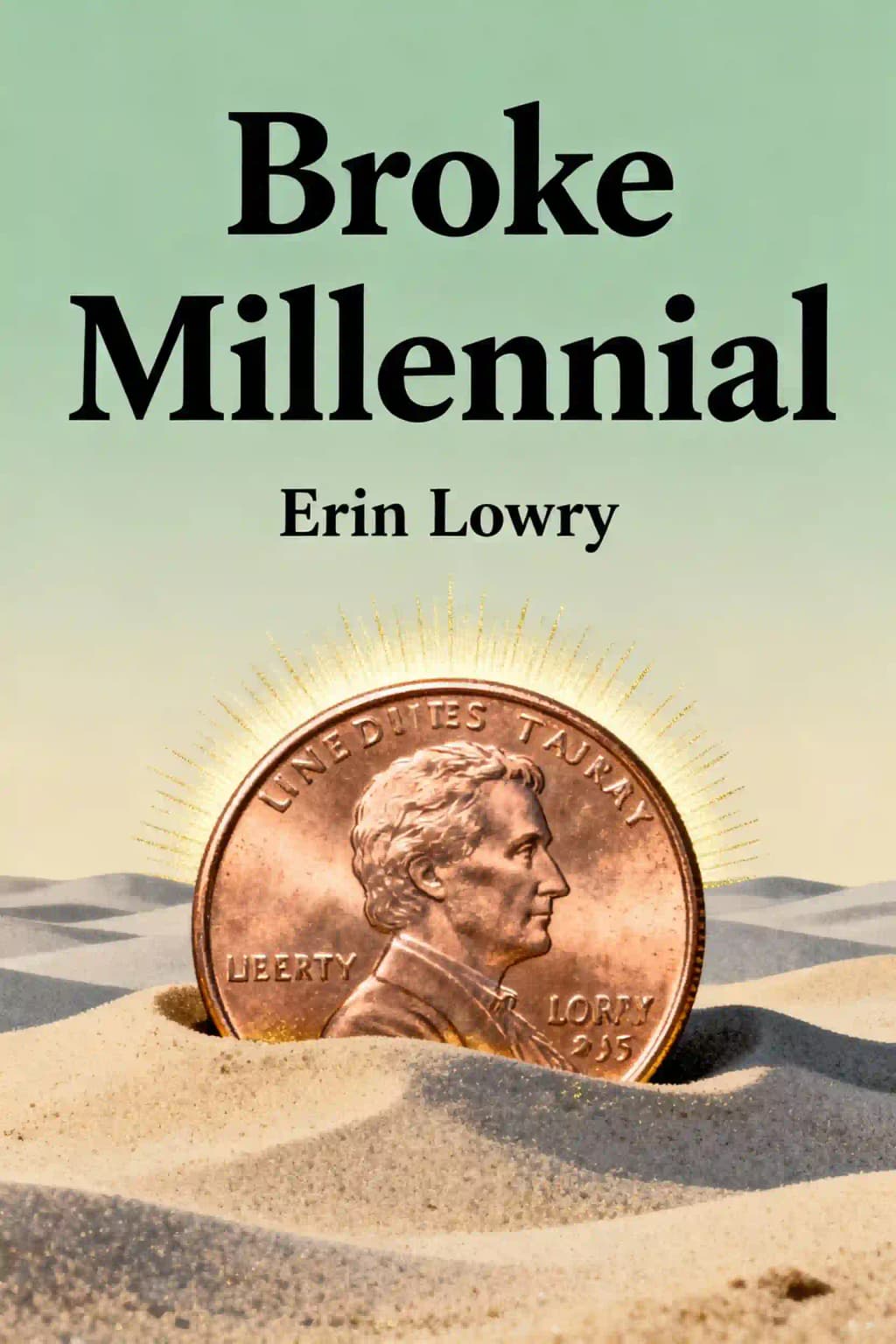
Capítulo 1
The Financial Wake-Up Call That Changed Everything
In the summer of 1996, a seven-year-old Erin Lowry learned her first hard lesson in economics through a simple donut stand. With dreams of purchasing a Super Soaker water gun, she convinced her father to front the capital for Krispy Kreme donuts at her mother's yard sale. When she proudly counted her thirty dollars in profit, her father delivered a reality check: after deducting costs and paying her sister, her actual profit was just sixteen dollars. This childhood lesson became the foundation of Lowry's financial education, eventually enabling her to move confidently to New York City after college while many peers struggled with money anxiety.
"Broke Millennial" has since become a cultural phenomenon, with Lowry emerging as the voice of financial reason for a generation often stereotyped as avocado toast-obsessed spendthrifts. Her practical, no-nonsense approach has landed her on CBS Sunday Morning and in publications like The Wall Street Journal and Forbes. Unlike traditional personal finance books that lecture from a position of superiority, Lowry's guide speaks directly to the real challenges facing young adults today, offering a roadmap from financial confusion to confidence without judgment or condescension.
Capítulo 2
Understanding Your Psychological Relationship with Money
Do you treat your paycheck like a casual Tinder hookup or as something worth building a lasting relationship with? Before diving into budgeting techniques or investment strategies, you need to understand your psychological relationship with money. Your financial behavior is shaped by how you think about the future, your family's money habits, and your deepest financial fears.
Most millennials fall into one of three categories regarding their relationship with money and the future. Team YOLOFOMO (You Only Live Once, Fear Of Missing Out) members prioritize immediate experiences, hashtagging their social media with #blessed while their finances are more accurately #brokemillennial. Without change, they're likely to be #WorkingUntilYouDie. Team Guarded Optimist believes everything will work out financially in the future ("I'll totally be earning six figures by thirty-five"), but this optimism can prevent necessary present-day financial planning. Team Dreaming About Retirement obsessively saves for the future, sometimes at the expense of enjoying life now.
Your family history significantly impacts your money mindset. Were financial matters discussed openly in your household or treated as taboo? Did your parents argue about money or maintain a united front? The author shares how her parents' frugal but travel-prioritizing lifestyle gave her the blueprint that "money isn't stressful as long as you don't spend too much," creating her own hang-ups about spending even on things that could save time and increase earning potential.
To identify your own money roadblocks, reflect on your earliest money memories, how you received and spent money growing up, your current financial concerns, and whether money was a taboo topic in your household. Your responses may reveal a mindset of fear, anxiety, naivete, helplessness, or extreme frugality. Once you understand your relationship with money, set three financial goals: a short-term action plan, a medium-term benchmark to hit within a year, and a long-term vision for the financial mentality you want to develop.
Remember, you have a choice: let money control your life or take command of it yourself. Basic principles for financial success include budgeting, living below your means, building credit without debt, managing loans effectively, choosing good financial products, harnessing compound interest, investing for retirement, and understanding your money anxieties.
Capítulo 3
Financial Benchmarks That Actually Matter
Understanding key financial ratios helps you track progress toward retirement and financial stability. By age 25, you should have saved 0.2 times your annual salary for retirement, increasing to 0.6-0.8 times by age 30, 1.6-1.8 times by 35, 3-4 times by 45, 8-10 times by 55, and 16-20 times by 65. For someone earning $55,000 at age 25, that means having $11,000 saved, while the same salary at 65 would require up to $1,100,000 in retirement savings.
Your emergency fund serves as personal insurance against disasters like job loss or unexpected expenses. The target is generally three to six months of basic living expenses saved in easily accessible accounts. Self-employed individuals should aim for six to nine months. Even if you're drowning in debt, having at least $1,000 set aside for emergencies is crucial.
Your debt-to-income (DTI) ratio calculates the percentage of debt payments relative to your gross monthly income. Lenders use this to determine loan eligibility, with most qualified mortgage lenders requiring a DTI below 43%. The goal is to keep your DTI as low as possible, ideally below 40%, to avoid flirting with bankruptcy.
Your net worth provides a snapshot of your overall financial health by subtracting total liabilities from total assets. Assets include bank accounts, investments, and valuable property, while liabilities encompass all debts. Even if your net worth is negative (common for twentysomethings), tracking it regularly shows if you're making progress toward financial goals.
Where do you stand financially? If you don't have a savings account, have a credit score below 650, are underemployed, carry credit card balances while making minimum payments, and probably received this book as a gift, you're at risk of "living in your parents' basement forever." If you've attempted budgeting, pay at least the minimum on credit cards, have a 650+ credit score, make minimum payments on other debts, think about debt-repayment plans but procrastinate, contribute enough to get your employer's 401(k) match (though you started late), you get a "participation trophy" but still have work to do.
Those earning a "financial gold star" have a solid budget, contribute 2% above the employer match for retirement, maintain a 700+ credit score with annual credit report checks, pay credit cards in full while keeping utilization under 30%, actively pay above minimums on all debts, and have either three months of emergency savings or $1,000 set aside while prioritizing debt repayment.
Capítulo 4
Mastering the Dreaded B-Word: Budgeting
Budgeting might seem intimidating, but it's essential for financial control. Your budgeting method should match both your financial situation and personality. Type-A people might prefer tracking every penny for detailed oversight, while more laid-back but money-conscious folks might prefer percentage-based budgeting. The key is finding a system that empowers rather than overwhelms you.
For beginners, the Cash Diet offers a powerful visual reminder of your financial limits. Despite what many millennials believe about spending more with cash, studies show we actually spend more when swiping plastic. After calculating your monthly income, subtracting fixed expenses and savings, divide the remainder by four for weekly spending money. When you're out of cash, you're out of spending power.
If you frequently wonder "What did I spend my money on?!" the Tracking Every Penny System is for you. You record every transaction down to the penny, using spreadsheets, apps, or credit card statements. Spend at least 20 minutes daily or an hour weekly organizing transactions by date, item, and cost. This meticulous tracking not only prevents overspending but reveals spending patterns you might want to change.
The Envelope System adds structure to the Cash Diet by allocating specific amounts to different spending categories. You create labeled envelopes for expenses like rent, utilities, food, and entertainment, then fund each envelope from your paycheck. Once an envelope is empty, you're done spending in that category for the month-no borrowing allowed. This can be done with physical cash envelopes or digitally through specialized apps or multiple bank accounts.
For more advanced budgeters, Percentage Budgeting divides your income into three main buckets: 50% for fixed costs (housing, transportation, debt), 20% for financial goals (savings), and 30% for flexible spending (wants). While these percentages are ideal, reality often differs-especially in expensive cities where rent alone might consume 50% of your income. Create your own reasonable percentages based on your situation, but avoid skimping on financial goals.
The black belt of budgeting tactics, Zero-Sum Budgeting uses last month's income to pay this month's expenses. Every dollar gets assigned a specific "job," breaking the paycheck-to-paycheck cycle. This method works particularly well for freelancers with irregular income. The process involves knowing your exact income, listing all expenses (fixed and variable), and then purposefully allocating any remaining dollars to debt repayment or savings goals until you reach zero.
While numerous budgeting apps exist to simplify financial tracking, they come with potential drawbacks. Two major concerns: cash transactions must be manually entered, and linking financial accounts creates security vulnerabilities. Many banks now state you're responsible for losses resulting from third-party app connections. Research thoroughly before choosing an app, set up transaction alerts, check accounts daily, and consider linking only one spending account to minimize potential losses.
Capítulo 5
Choosing Financial Products That Work For You
Millennials often default to using the same financial products as their parents rather than researching better options. This complacency costs money-for example, switching banks could turn $1 in annual interest into $100 on $10,000 savings. Unlike our parents who had limited options, we can comparison shop online for better financial products.
FDIC insurance is essential when choosing a bank. It protects your deposits if a bank fails and indicates a reputable institution. FDIC insurance covers money stored in bank accounts, not investments. Protected accounts include checking accounts, savings accounts, money market deposit accounts, certificates of deposit, NOW accounts, and official bank-issued items like cashier's checks and money orders. The FDIC doesn't insure investments like stocks, bonds, mutual funds, life insurance policies, annuities, municipal securities, U.S. Treasury bills, or safe-deposit boxes and their contents.
Banks rake in billions from fees that disproportionately hurt those who can least afford them-college students, young professionals, and paycheck-to-paycheck workers. These predatory charges include maintenance fees, minimum balance requirements, overdraft protection, and ATM fees. A proper checking account should have no annual fee, no monthly maintenance fee, no minimum balance requirements, no overdraft protection fees, and ATM fee reimbursements. Internet-only banks like Ally, Bank of Internet USA, USAA (requires military affiliation), and Charles Schwab offer truly fee-free checking.
Traditional banks offer pathetically low interest rates on savings accounts-often just 0.01% APY. At this rate, $2,000 saved for a year earns just 20 cents. Meanwhile, online banks commonly offer 1.00% or higher, which would earn $20 on the same deposit. Internet-only banks can offer higher interest rates because they don't have the overhead costs of physical branches-no land, buildings, extensive staff, or utility bills.
Credit cards can be powerful financial tools when used correctly. The key is earning rewards on purchases you'd make anyway, while never carrying a balance that incurs interest. Paying interest completely negates the value of any rewards earned. Credit card rewards typically come in three structures: rotating categories (offering 5% back in specific spending categories that change quarterly), flat-rate rewards (providing a consistent 1.5-2% on all purchases), and sign-on bonuses (offering large point bonuses after meeting initial spending requirements, often used by travel hackers).
The ideal rewards card is one that won't tempt overspending. Credit limits often exceed monthly budgets, making it easy to spend more than you can pay off. The best card matches your existing spending patterns rather than encouraging new spending behaviors.
Capítulo 6
Understanding Credit Reports and Scores
Credit reports and scores extend far beyond borrowing money-they're used to judge your responsibility level and success at adulting. Landlords check for red flags like missed payments or high debt-to-income ratios, while employers pull truncated reports to verify identity and assess financial responsibility.
Credit scores get the attention, while credit reports are the behind-the-scenes work that create them. The report contains all the information used to generate your score. As Rod Griffin of Experian explains, a credit score isn't like an odometer-it's a snapshot of your credit report at a specific moment in time, with a new score generated each time a report is pulled.
Before the 1960s, lending decisions were subjectively based on bankers' gut feelings, creating inequality for women and minorities. In 1956, Bill Fair and Earl Isaac developed a data-driven credit-scoring model to assess risk objectively. Their Fair Isaac Corporation (FICO) released modern credit scores in the 1980s, revolutionizing lending practices.
The base FICO credit score ranges from 300 to 850, with higher scores indicating lower lending risk. The spectrum runs from Exceptional (800+), Excellent (750-799), Good (700-749), Fair (640-699), Poor (580-639), to Bad (below 580). Your goal should be joining the "700+ Club," which signals to lenders that you make wise credit choices and pay on time.
Your credit score is determined by five weighted factors: Payment history (35%) is most critical-always pay on time, even if just the minimum during financial hardship. Amounts owed (30%) measures utilization-using less than 30% of your available credit shows restraint, with single-digit utilization being ideal. Length of credit history (15%) improves naturally over time-keep your oldest accounts open when possible. Credit mix (10%) considers diversity of credit types, but contrary to popular belief, you don't need multiple loan types to build excellent credit. New credit (10%) tracks applications, with each hard inquiry typically dropping your score by only about 10 points for a year.
Surprisingly, your income, net worth, and salary have zero impact on your credit score-you could be earning minimum wage with minimal savings and have an 800 score, or be extraordinarily wealthy with poor credit. Other excluded factors include race, age, religion, national origin, gender, marital status, employer, occupation, interest rates being charged, participation in credit counseling, and child/spousal support obligations.
There isn't just one credit score-there are scores of scores! Different FICO scores exist for each credit bureau report and for specific lending purposes (auto loans, mortgages, credit cards). Additionally, there are entirely different scoring models like VantageScore and proprietary bank models.
Want the lifehack to credit success? Here's a 3-step process to a mind-blowing credit score: 1) Make one or two small purchases on your credit card monthly to keep utilization low (ideally below 10%); 2) Pay all bills on time and in full; 3) Rinse and repeat. For installment debt like student loans, simply make monthly payments on time.
Capítulo 7
Managing Credit Cards Without Going Into Debt
Credit cards can be valuable financial tools when used properly-paying the full balance every month and never carrying debt that accrues interest. The golden rule is simple: never charge more than you can afford to pay off every single month. Credit card companies profit when you only pay the minimum due, as they earn interest on your remaining balance. This is why they prominently display the "minimum due" on your statement, hoping you'll pay just that amount instead of the full balance.
Credit card bills prominently display the "minimum due" amount, making it seem like that's what you're supposed to pay-but it's actually what the company wants you to pay to maximize their profits. The minimum payment (typically 1-3% of the balance) keeps you from being considered late while allowing interest to accumulate rapidly. Buying a $1,200 TV on a card with 21% APR and paying only the $33 minimum would take nearly five years and cost an additional $724 in interest.
To avoid credit card traps, you must understand the tactics companies use to maximize profits. These include promotional rates that expire, the difference between waived interest (which disappears) and deferred interest (which accumulates and hits all at once if you don't pay in full), various hidden fees, interest rate increases after late payments, increased credit limits that tempt overspending, and reward categories that require manual opt-in.
Setting up email or text alerts for credit card activity serves two important purposes: you'll get regular reminders of your balance (preventing surprise bills), and you'll immediately know if someone is fraudulently using your card. Most credit card companies offer this service for free, making it an easy way to monitor both spending habits and security.
The credit card world presents a frustrating paradox: you need credit history to get approved for a card, but you need a card to build credit history. For those facing rejection, secured cards offer a solution. These require a deposit ($50-$200) that typically becomes your credit limit and is refundable if you maintain good standing. To maximize results, make small monthly purchases (under 30% of your limit), pay in full each month, monitor your credit score using free tools, and apply for an unsecured card once your score exceeds 680.
Credit card rewards are designed to entice consumers, but they can be dangerous for inexperienced users. While some people strategically use rewards for free flights or cash back, many others fall into debt because they don't understand the system. It's best to master a basic, no-annual-fee card for at least a year before considering rewards cards. Only when you've proven you can consistently pay on time and in full should you explore reward options.
Capítulo 8
Tackling Existing Consumer Debt
Consumer debt carries more stigma than other types of debt, but you're not alone-the average American between 18 and 65 carries $4,717 of credit card debt. Understanding how credit cards work and managing your cash flow are preventative measures, but if you're already in debt, you'll need diligence, patience, and fortitude to escape the stranglehold of high interest rates.
Credit card debt often feels shameful because it's considered "bad debt" that doesn't provide long-term value, unlike student loans which can be justified as investments in education. However, knowing that millions of others are in the same situation can help remove some of the stigma. The key is understanding how you got here and taking concrete steps to prevent it from happening again through proper budgeting and credit management.
If you've fallen into a revolving debt cycle, there are three strategies to get yourself out of the hole. The Debt Avalanche method saves you the most money but might feel slower. First, list all debts from highest to lowest interest rate (not by balance). Second, determine how much you can put toward debt each month after essential expenses. Third, pay minimums on all debts but put any extra money toward the highest-interest debt. When that's paid off, roll that payment into the next highest-interest debt, continuing until all debts are eliminated.
The Debt Snowball method, popularized by Dave Ramsey, emphasizes psychological wins over mathematical efficiency. Like seeing movement on a scale when dieting, this approach keeps you motivated through small victories. First, list debts from smallest to largest balance, ignoring interest rates. Pay minimums on everything but put extra money toward the smallest debt first. Once that's paid off, roll that payment into the next smallest debt, creating a "snowball" effect. Though you'll pay more in interest than with the Avalanche method, the quick wins make you more likely to stick with it.
Balance transfers let you move credit card debt from one bank to another offering promotional rates-typically 0% APR for a limited period (like 18 months) with a small fee (around 3%). This strategy works because every penny of your payment goes toward principal rather than interest during the promotional period. For example, someone with $4,000 in credit card debt at 17% APR paying $170 monthly would take 2.5 years and pay $900 in interest to clear the debt. By transferring to a 0% card with a 3% fee ($120), they could save $720 even with the fee.
Personal loans offer simplicity for debt consolidation by combining multiple credit card payments into one fixed payment with a lower interest rate. Those with high credit scores, strong employment history, and debt-to-income ratios under 40% can qualify for single-digit interest rates. Unlike credit cards, personal loans have set terms (like 24 months), making it clear exactly when you'll be debt-free and how much goes to principal versus interest.
When seeking debt solutions, beware of predatory lenders with cute misspelled names offering fast cash or no credit checks. These businesses typically charge astronomical interest rates and unfavorable terms. Payday loans are particularly dangerous-these short-term loans designed to be repaid in two weeks often carry annualized interest rates in the hundreds of percent.
No debt repayment strategy will work unless you fundamentally change your spending patterns. As financial expert Michelle Singletary notes, many people want to eliminate debt without modifying their behaviors. To truly free yourself from debt, you must stop accumulating more-which means spending less.
Capítulo 9
Managing Student Loans Without Panic
For those still in school or planning their education, federal student loans offer numerous benefits unavailable with private loans: subsidized options that don't accrue interest during school, grace periods before repayment begins, deferment or forbearance options, income-driven repayment plans, and potential loan forgiveness. Private lenders are far less flexible, expecting full repayment regardless of your career choice or income level.
When private loans require parental co-signers, both your credit and your parents' credit are at risk if payments aren't made. To prevent tension, have an honest conversation with your parents about loan responsibility, career plans, income expectations, and creating an action plan for repayment. Consider a basic term life insurance policy if your parents co-signed substantial debt, as some private lenders may still hold co-signers responsible even after death.
You don't need to wait until graduation to start tackling student loans. Even occasional payments during school can significantly reduce post-graduation stress. For subsidized loans, payments directly reduce the principal since the government covers interest during school and grace periods. For unsubsidized loans, interest-only payments prevent interest from capitalizing onto your principal.
The grace period gives you about six months after graduation to find a job before payments begin. This period starts upon graduation but can be triggered earlier if you drop below part-time enrollment or leave school temporarily. You typically get only one grace period per loan, and it can be lost if you consolidate during this time.
The federal government offers struggling borrowers ways to temporarily stop making payments. Deferment is preferable to forbearance because interest may be subsidized by the government, while forbearance always accrues interest. Both options are time-limited (12-36 months) and require proof of financial hardship like job loss, illness, or military duty.
Income-driven repayment plans make federal student loans more affordable by capping payments at a percentage of your discretionary income. The four main types-Pay As You Earn (PAYE), Revised Pay As You Earn (REPAYE), Income-Based Repayment (IBR), and Income-Contingent Repayment (ICR)-offer different payment caps (10-20% of discretionary income) and forgiveness timelines (20-25 years).
Federal loan forgiveness programs exchange years of public service work for discharged loans. The Public Service Loan Forgiveness (PSLF) program forgives remaining debt after 10 years (120 payments) of working in eligible government or non-profit positions while on an income-driven repayment plan.
Refinancing offers an escape from high-interest loans by allowing you to take out a new loan with a lower interest rate to pay off your existing debt. Remember that refinancing federal loans means permanently losing access to income-driven repayment plans, loan forgiveness, deferment and forbearance options.
Several effective strategies can help you pay down student loan debt more efficiently and quickly. Paying even a small amount above your minimum payment can dramatically reduce your repayment timeline. Just $10 extra per month can save hundreds of dollars and shave a full year off your debt. When making extra payments, tell your servicer to apply them to principal rather than future interest. Making bi-weekly payments (half your monthly payment every two weeks) results in 26 half-payments annually-equivalent to 13 full monthly payments instead of 12.
Capítulo 10
Why Saving Matters Even When You Have Debt
Focusing exclusively on debt repayment can leave you vulnerable to financial emergencies. Emily Goetschius learned this lesson the hard way when her car was damaged and she had no savings buffer, forcing her to finance repairs with high-interest credit cards-undoing a year of debt repayment progress. The solution? Pay yourself first by saving while paying down debt, creating financial resilience against unexpected expenses.
"Pay yourself first" means prioritizing savings before paying other expenses-not waiting until the end of the month when nothing's left. It feels impossible when you're drowning in bills, but it's non-negotiable. Saving prevents you from sinking deeper into debt when emergencies strike. Start small with just $10 per paycheck to build the habit, then gradually increase. The secret? Once you adapt to living with slightly less, you can keep increasing your savings rate without feeling deprived.
Your emergency fund is the foundation of your financial security. While traditional advice recommends six months of expenses, millennial realities demand different guidelines: $1,000 minimum if you have debt (double that if you have dependents); six months of basic living expenses if you're debt-free; nine months if you're a freelancer facing variable income and higher costs. Keep this money in a high-yield savings account earning at least 1.00% APY, preferably at a different bank from your checking account to reduce temptation.
The "Fuck-Off Fund" concept popularized by Paulette Perhach describes emergency savings with emotional resonance-money that gives you the power to walk away from toxic situations. Whether it's an abusive relationship or a sexually harassing boss, having financial independence means you're never trapped by circumstances. While functionally the same as an emergency fund, this framing emphasizes how savings provides freedom and agency rather than just financial security.
Building savings takes time when money is tight. Understanding your money starts with tracking every dollar. Write down your net take-home pay, then list all monthly expenses-both fixed and variable. Include everything from rent and utilities to Netflix and beard oil. Don't forget annual expenses. Subtract your outflow from your income to get your basic cash flow picture. This clarity is essential for identifying opportunities to save.
The classic money-saving tactics really do work: cooking at home, cutting cable, making your own coffee, and brown-bagging lunch add up significantly over time. Cancel unused gym memberships and subscriptions. Consider transportation alternatives like walking, biking, or carpooling. Look into refinancing debt to lower interest rates for potentially thousands in savings. Even small changes like bringing lunch twice weekly can free up $15 monthly for savings-a modest start that builds momentum and encourages bigger changes.
If federal student loans are crushing your ability to save, consider an income-driven repayment plan to make payments more affordable relative to your income. While this approach increases the total interest paid over time, it can free up cash flow to build at least a $1,000 emergency fund.
Building substantial savings takes time-sometimes years, not weeks or months. The key is establishing the habit, even if you start by saving just the cost of a latte. Don't get demoralized by small beginnings. As you reduce debt and increase earnings, you can gradually contribute more.
Capítulo 11
Navigating Financial Relationships with Friends and Partners
Money tensions in friendships often surface during social activities, especially dining out. Whether it's splitting dinner bills, planning reunion trips with friends at different income levels, or surviving the financial onslaught of wedding season, these conflicts require direct communication.
While you needn't disclose your salary or debt details, you must be transparent about financial boundaries. You don't need to justify valuing your money differently than friends do, but you should communicate limits without complaining about the outcome. Express your spending limits politely but firmly before events. True friends typically accommodate your budget constraints, valuing your company over your spending power.
Different friendships develop different money scripts. With my friend Hannah who earns similarly, we always cover our exact portions despite being able to split evenly. With Sam, we take turns paying the bill. Identify these unspoken financial terms in each friendship and respect them, even if it requires honest conversations about money.
When financial lives don't sync with friends, it creates tension. With Stingy Stella, her constant penny-pinching becomes frustrating when you both make decent livings. She calculates tax and tip meticulously and even Venmos you for $6 of shared wine. Meanwhile, Spendy Stinson plans elaborate $100 outings and expensive lunches you can't afford. The key is expressing your values clearly-your money should work as a tool for what YOU want, not what friends want to spend it on.
Getting financially naked with your partner requires vulnerability, honesty and careful timing. Like physical intimacy, financial intimacy shouldn't be rushed but is essential before making serious commitments. For millennials, discussing debt burdens is particularly crucial, as 42% carry student loan debt.
Financial transparency doesn't require sharing everything at once-think of it as removing one piece of financial clothing at a time. Both partners need to disclose debt types, exact debt amounts, credit reports and scores, and debt management strategies. Hiding financial secrets creates a breeding ground for fights and fractures trust.
Financial nudity rarely happens in one conversation. Instead, couples typically progress through increasingly intimate money discussions over time. Begin with general money questions like views on emergency funds or credit card debt to gauge your partner's financial philosophy. Progress to more specific questions about student loans or credit scores, and finally reach direct questions about debt amounts and credit history.
Maintaining a poker face during financial discussions is crucial-judging your partner about money is like laughing when they first get physically naked. One wrong facial expression or snarky comment could permanently damage their willingness to discuss finances. Remember everyone makes financial missteps.
When building a financial plan together, first determine if you have a team mentality or individualistic approach to money. Even if you maintain separate accounts, handling debt should be a team effort to avoid breeding resentment. Any plan should consider three factors: Is it good for your mental health? Is it good for your wallets? Is it true to your values?
Capítulo 12
Building Wealth Through Investing and Retirement Planning
Compound interest multiplies your money by earning interest on interest. A $100 investment at 8% annual return becomes $108 after year one, then $116.64 after year two. Starting early is crucial: $3,000 invested at age 25 with 8% return grows to $44,356 by age 60, while waiting until age 35 yields only $20,545.
Unlike gambling where you own nothing, investing means owning part of a company, receiving dividends, and voting rights. Many millennials already invest through workplace 401(k)s without realizing it. You don't need a huge salary or expertise to start investing.
Prioritize retirement contributions of at least 3-5% toward a 401(k), unless it would prevent minimum debt payments. For low-interest debt (5% or less), consider investing while managing debt. With high-interest debt like credit cards, focus on paying it off first, as 18% interest outweighs potential 8-12% market returns.
Index funds are recommended by experts like Warren Buffett, who suggests "90 percent in a very low-cost S&P 500 index fund." Current trends indicate millennials may need to work until 72-75 instead of 65, with average 401(k) balances at $87,300 and IRA balances at $89,300.
Consider Marshall's example: Contributing $250 monthly to his 401(k) with a $125 employer match at age 25, assuming 8% return, yields $1.16 million by retirement. Waiting until 35 reduces this to $509,774. Even increasing to $700 monthly at age 40 (plus $200 match) only reaches $789,544.
Retirement accounts offer tax advantages: Traditional accounts use pre-tax dollars but tax withdrawals, while Roth accounts use post-tax dollars for tax-free withdrawals. When opening an account, understand eligibility, employer match, fees, vesting periods, and contribution levels.
With Social Security's average monthly payment of $1,341 (2016) and uncertain future, early retirement planning is essential. Don't let career beginnings and student loans delay your investment start.