Capítulo 1
From Broken to Brave: Finding Hope in the Midst of Pain
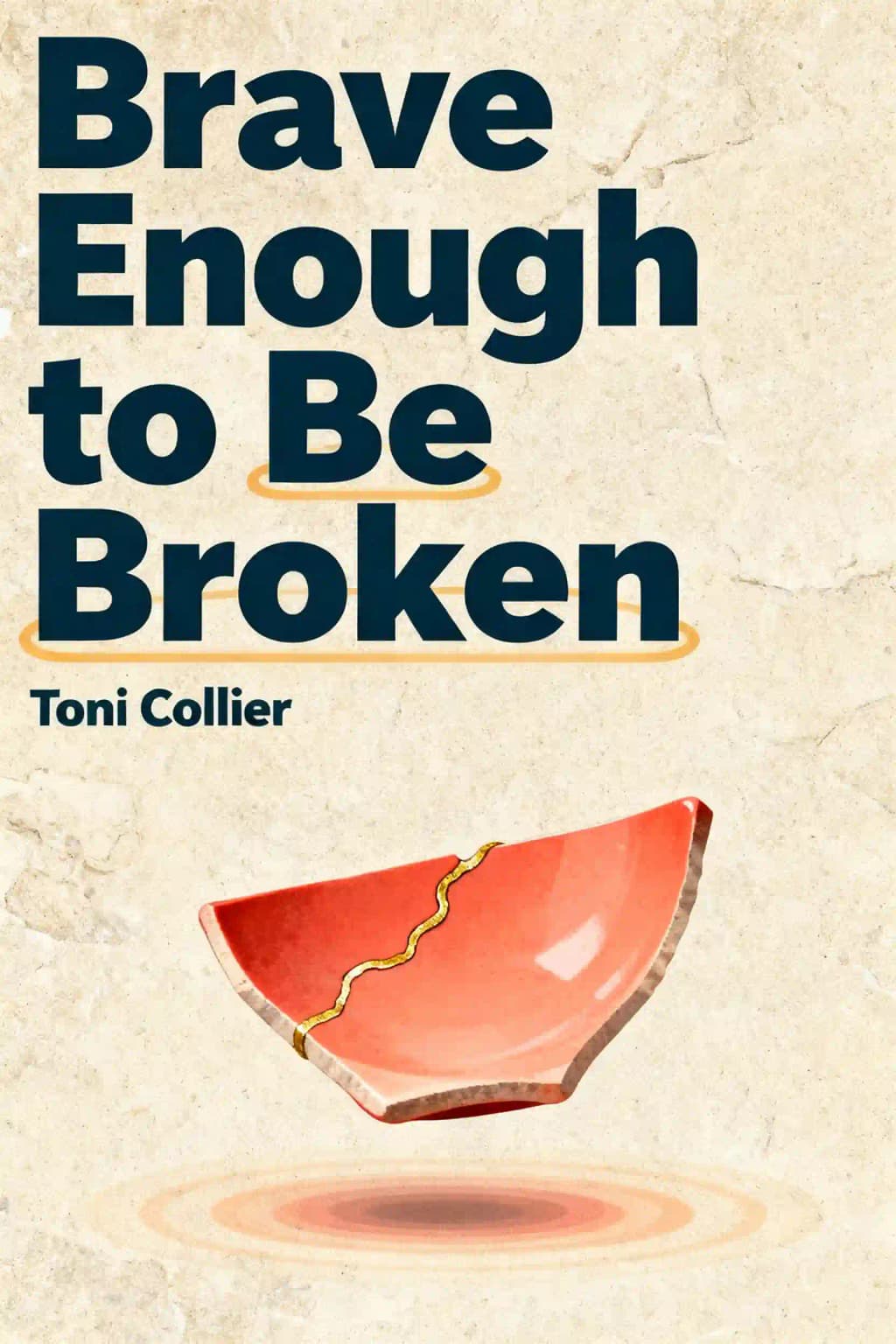
In a world that often celebrates perfection, Toni Collier's "Brave Enough to Be Broken" stands as a powerful counter-narrative. This raw, unflinching memoir has become a beacon for those navigating their own valleys of pain and trauma. Since its publication, the book has resonated deeply with readers seeking authentic paths to healing, including celebrities like Lecrae and Christine Caine who have praised its honesty. What makes this work particularly striking is how it challenges our cultural obsession with appearing whole while hiding our fractures. Collier invites us into her most vulnerable moments-from childhood trauma to divorce-and shows us that our brokenness isn't something to hide but rather the very pathway to genuine healing. As mental health awareness continues to grow, especially within faith communities, this book bridges the gap between spiritual practice and psychological healing in a way that feels revolutionary yet deeply accessible.
Capítulo 2
The Courage to Name Our Brokenness
What happens when we finally stop pretending we're fine? Toni Collier's journey begins at rock bottom-collapsed at the bottom of a staircase, crushed under the weight of accumulated trauma, divorce, and job loss. It's a moment many of us can relate to, when the facade of having it all together finally crumbles. Despite years of spiritual practices and service to God, she found herself drowning in pain that simply wouldn't subside.
This raw honesty about suffering challenges our instinct to minimize or hide our struggles. How often do we respond with "I'm fine" when we're actually falling apart? Collier shows us that acknowledging our pain isn't weakness-it's the first step toward authentic healing.
What makes her approach particularly powerful is how she reframes vulnerability. Rather than seeing brokenness as failure, she draws from Paul's words in 2 Corinthians about God's strength being made perfect in weakness. This perspective flip is revolutionary-our fractures become the very places where divine strength can flow through.
The turning point in her story wasn't finding some magical solution but surrendering to the reality of her situation. She stopped trying to fix everything herself and instead embraced counseling, community, and a genuine relationship with God. This surrender wasn't defeat but the beginning of transformation.
Her story reminds us that healing doesn't come from having all the answers or projecting an image of perfection. It comes from the courage to say, "I'm not okay, and I need help." In a culture obsessed with curated social media personas, this honesty feels like a breath of fresh air. Perhaps our greatest strength lies not in appearing unbreakable, but in being brave enough to acknowledge when we're broken.
Capítulo 3
Childhood Wounds That Shape Our Present
Have you ever wondered why you react so strongly to seemingly minor triggers? Collier takes us back to a pivotal childhood moment-stealing a donut and the emotional explosion that followed in the vice principal's office. What appeared to be simple childhood misbehavior was actually the manifestation of deep wounds: caring for an ill mother, yearning for her father's approval, and navigating profound family instability.
These early experiences don't just fade away with time. They become the invisible architects of our adult behaviors, shaping our reactions and decisions in ways we often don't recognize. Collier's story illuminates how childhood trauma doesn't stay confined to childhood-it leaks into every aspect of our adult lives unless we address it.
The pattern continued into her college years, where partying and seeking validation from men became her norm, eventually leading to a toxic marriage at just nineteen. This trajectory wasn't random but a direct result of unprocessed pain. How many of us are living out similar patterns without recognizing their roots?
What's remarkable about Collier's approach is her refusal to stay trapped in victimhood. She acknowledges the reality of her wounds while also taking responsibility for her healing. This delicate balance avoids both the pitfall of blaming everything on past trauma and the equally dangerous tendency to minimize genuine hurt.
The biblical parallel she draws to the woman with the issue of blood in the gospels is particularly striking. After years of suffering, this woman had to name her condition before she could be healed. Similarly, Collier suggests that naming our wounds-bringing them into the light-is essential for genuine transformation.
This process of naming isn't just about identifying past hurts; it's about understanding how they've shaped our present reality. Only then can we begin to disentangle ourselves from destructive patterns and move toward authentic healing. The question for all of us becomes: what unnamed wounds might be directing our lives from the shadows?
Capítulo 4
Broken Crayons Still Color: Finding Beauty in Imperfection
Imagine sitting with a child who's crying because their crayon broke in half. What would you say? Probably something like, "It's okay, sweetheart. The crayon still works-broken crayons still color." This simple metaphor becomes a powerful framework for understanding our own brokenness.
During one of her darkest periods-separated from her husband and struggling financially-Collier found unexpected solace in coloring with her daughter. This seemingly insignificant activity became a profound metaphor for her life. Despite being broken, she could still create beauty. Despite trauma, she could still fulfill her purpose.
This revelation challenges our perfectionist tendencies. How often do we believe we must be whole before we can be useful? How frequently do we postpone joy until we've "fixed" all our problems? The broken crayon metaphor offers a liberating alternative-our value doesn't depend on our wholeness.
A pivotal spiritual encounter in Georgia reinforced this truth for Collier. Through an unexpected prophetic revelation about Psalm 91, she began to see God not as a harsh judge but as a protective presence who had been with her even in her darkest moments. This shift in perspective allowed her to recognize that God could work through her brokenness rather than despite it.
The beauty of this approach is that it doesn't minimize suffering or suggest that brokenness is somehow desirable. Instead, it acknowledges the reality of pain while affirming that it doesn't have the final word. Our fractures become part of our story rather than the end of it.
This perspective extends beyond individual healing to how we view others. If broken crayons still color, then perhaps the broken people in our lives-including ourselves-still have immense value and potential. Maybe the parts of ourselves we're most ashamed of are precisely where our unique contributions to the world will emerge from.
What would change if we stopped waiting to be "fixed" before living fully? What might happen if we embraced our brokenness as part of our beauty rather than something to hide? Collier's journey suggests that our scars don't disqualify us-they might be exactly what makes our contribution to the world unique and powerful.
Capítulo 5
The Road Map: Surrender as the First Step
How do we begin the journey from brokenness to healing? Collier offers a counterintuitive first step: surrender. Not giving up, but giving over-releasing our white-knuckled grip on control and acknowledging we can't heal ourselves through sheer willpower.
This surrender isn't passive resignation but an active choice to stop fighting battles we were never meant to win alone. It's about recognizing that trying to be strong enough, good enough, or perfect enough has left us exhausted and still broken. The paradox is that in surrendering our self-sufficiency, we gain access to resources beyond ourselves.
Practically, Collier suggests creating intentional spaces for this surrender through prayer and worship. But she redefines these practices away from religious obligation. Prayer becomes an authentic conversation-not polished phrases but raw honesty with God. It's less about formulas and more about relationship, creating space for vulnerability rather than performance.
Similarly, worship transcends traditional notions of singing in church. It becomes any expression of gratitude and adoration, whether through art, music, or silent reflection. These practices aren't about earning divine favor but about connecting with a presence bigger than our pain.
What makes this approach particularly refreshing is its honesty about obstacles. Collier acknowledges that just as we begin to surrender, internal resistance often arises. Doubts creep in. Old patterns reassert themselves. She names this as spiritual opposition-the "Enemy" who thrives on keeping us isolated in our pain and convinced we must handle everything alone.
The journey requires patience and personalization. Healing isn't a race, and comparing our progress to others only derails us. Some may heal quickly in certain areas while others need more time. The focus isn't on speed but on arrival-however uniquely suited to our path.
Journaling becomes a powerful tool in this process, documenting thoughts and growth to showcase tangible progression. This practice helps capture how shifts in mindset gradually lead toward hope, creating a record of transformation that sustains us during inevitable setbacks.
What would it look like to stop trying to fix everything and instead surrender to a process of healing? What might change if we approached our brokenness not as a problem to solve but as an invitation to a deeper connection with ourselves, others, and God?
Capítulo 6
The Power of Community in Healing
"Hiding is the kryptonite to healing." With this powerful statement, Collier addresses one of the greatest obstacles to transformation-our tendency to isolate ourselves in our pain. When we conceal our struggles, we remain trapped in cycles of shame that prevent genuine healing.
Community becomes essential in breaking these cycles. Not just any community, but one where we can be authentically known and loved. This kind of connection provides a mirror reflecting God's intentions for us-acceptance, grace, and belonging that counters our internal narratives of unworthiness.
But Collier doesn't romanticize community. She acknowledges that not all groups are healthy. Some relationships drain rather than replenish, criticize rather than support. She makes a crucial distinction between having people around you and having genuine community. The former can sometimes be more isolating than being alone if those relationships lack safety and support.
This leads to her challenging assertion: "You can't heal and find hope in the place that broke you in the first place." Sometimes healing requires distance from toxic environments and relationships that perpetuate harm. Establishing boundaries becomes not just permissible but necessary for growth and recovery.
Drawing from Jesus's example of having different circles of friends-from the crowds to the twelve disciples to his innermost circle of three-Collier suggests we need similar discernment. Not everyone deserves the same level of access to our lives and vulnerabilities. Some belong at arm's length while others can be drawn close.
The beauty of this approach is that it balances protection with openness. Boundaries aren't walls but filters, keeping negativity at bay while remaining permeable to positive influences. They articulate personal values and create space for deep, enduring connections based on mutual respect rather than obligation or manipulation.
Community also serves as an antidote to shame, which whispers that if people truly knew us, they would reject us. When we risk vulnerability and find acceptance instead of abandonment, these lies begin to lose their power. We discover we're not alone in our struggles-others have walked similar paths and found their way through.
What relationships in your life provide genuine community? Where might you need to establish healthier boundaries? How could sharing your story with trusted others begin to dismantle the power of shame in your life?
Capítulo 7
Professional Help: Breaking the Stigma of Counseling
One of the most significant contributions of Collier's work is her destigmatization of professional counseling, particularly within faith communities. She confronts the persistent myth that seeking therapy somehow indicates a lack of faith-that if you just prayed more or had stronger belief, you wouldn't need psychological help.
Instead, she reframes counseling as a God-given resource for healing. Counselors aren't replacements for divine intervention but tools through which healing can occur. This perspective allows believers to embrace professional help without feeling they're somehow betraying their faith principles.
Collier shares her own journey with counseling with refreshing honesty, including her experience with specialized treatments like EMDR (Eye Movement Desensitization and Reprocessing) for trauma. By detailing her process, she demystifies therapy and makes it accessible to those who might be hesitant or fearful about taking that first step.
Another myth she dispels is that counseling follows a specific timeline-that after a certain number of sessions, you should be "fixed." Healing defies such neat parameters. Each person's journey is unique, reflecting their distinct experiences and readiness for change. Comparing one's progress to others can actually hinder growth rather than facilitate it.
Practical guidance for finding the right counselor makes this section particularly valuable. From utilizing insurance providers and college services to exploring online platforms and community networks, she offers concrete steps for connecting with professional help. She emphasizes that finding a counselor who resonates personally is crucial-someone who creates safety, maintains confidentiality, and builds trust.
Perhaps most importantly, Collier prepares readers for the reality that healing is often uncomfortable before it's comforting. Like physical exercise that causes muscle soreness before building strength, emotional work intensifies pain before leading to progress. These moments of discomfort aren't signs of failure but essential components of growth.
The invitation to "do the work" emphasizes that therapy is collaborative, not passive. Engaging with assignments, journaling, or other practices recommended by a counselor accelerates progress. Personal responsibility plays a significant role alongside professional guidance.
What fears or misconceptions might be holding you back from seeking professional help? How might reframing counseling as a resource rather than a last resort change your perspective? What would it look like to approach therapy not as a sign of weakness but as an investment in your wellbeing?
Capítulo 8
Gratitude: The Unexpected Path to Healing
In the midst of trauma and despair, gratitude might seem impossibly out of reach. How can we possibly give thanks when everything is falling apart? Yet Collier presents gratitude not as toxic positivity but as a powerful tool for countering despair and cultivating hope.
Drawing from biblical examples like Daniel, who continued giving thanks even when facing death, she illustrates gratitude not as denial of difficulty but as a resilient stance against adversity. It becomes a way of acknowledging pain while refusing to let it have the final word.
What makes this approach particularly compelling is the integration of spiritual wisdom with neurobiological insights. Gratitude doesn't just sound nice-it actually changes our brain chemistry, boosting beneficial neurotransmitters like dopamine and serotonin. This scientific backing adds weight to the spiritual practice, showing how ancient wisdom aligns with modern understanding of mental health.
Collier offers practical strategies for cultivating gratitude, beginning with the counterintuitive practice of self-complimenting. Finding a balance between confidence and humility creates space for healthy self-admiration without slipping into narcissism or self-deprecation. Daily affirmations grounded in one's identity in Christ allow for growth and healing without the influence of insecurity or pride.
Expressing gratitude to others strengthens relationships and builds community. Verbal appreciation for loved ones enhances bonds and reinvigorates relational health. This makes gratitude a reciprocal experience that benefits both the giver and receiver, creating positive feedback loops of appreciation.
Journaling emerges as a powerful practice for deepening gratitude. Weekly reflections help recognize divine guidance and unseen blessings, enriching life with a broader perspective. Meditation on these reflections deepens the conscious embrace of personal growth, fostering sustained hope even in difficult circumstances.
What's particularly striking is how gratitude shifts our focus from what's missing to what's present. Rather than dwelling on losses or lacks, it trains our attention on gifts and provisions that might otherwise go unnoticed. This doesn't eliminate problems but changes how we relate to them, providing resilience in the face of ongoing challenges.
How might incorporating gratitude practices change your perspective on current difficulties? What would a daily or weekly gratitude ritual look like in your life? What's one thing you could express appreciation for right now, even in the midst of struggle?
Capítulo 9
Recognizing and Countering the Enemy's Lies
As we journey toward healing, Collier identifies a significant obstacle: the persistent lies that undermine our progress. She frames these as tactics of "the Enemy"-whether understood literally or metaphorically-that keep us trapped in cycles of fear, unworthiness, comparison, and perfectionism.
Fear often returns at unexpected moments, even after significant healing. Like Collier's daughter Dylan who forgets past swimming victories when fear grips her anew, we too forget our previous triumphs over trials. These moments of doubt shake our foundation and question our resilience, making us wonder if we've made any progress at all.
The lie of unworthiness whispers that we don't deserve love or blessings. This deception distances us from supportive relationships and divine connection, leaving us isolated in our pain. Collier counters this by emphasizing our inherent value as creations of God, beautifully crafted with purpose and worth that transcends our mistakes or others' treatment of us.
Comparison emerges as another destructive pattern, leading to envy and dissatisfaction that skew our perception of God's gifts. When trapped in comparing ourselves to others, we lose sight of gratitude and contentment. The antidote is focusing on the unique plans and blessings designed specifically for us, recognizing that our path doesn't need to mirror anyone else's to be valuable.
Perhaps most insidious is the lie of independence and perfectionism-the belief that needing help signals weakness. Society often celebrates self-sufficiency, particularly for women, but Collier argues this mindset prevents us from accessing divine power and community support. True freedom comes not from isolated perfectionism but from acknowledging our limitations and embracing interdependence.
What makes this section particularly practical is the "Truth Against Lies" template she offers for identifying and replacing destructive thoughts. By journaling the lies we believe alongside corresponding truths from scripture or other reliable sources, we create a personalized resource for combating deception. This cognitive restructuring aligns with evidence-based therapeutic approaches while incorporating spiritual dimensions.
The process of capturing thoughts and realigning them with truth becomes a powerful weapon against persistent lies. It's not about positive thinking alone but about actively engaging with the narratives that shape our perception and choosing more life-giving interpretations of our reality.
What lies have you internalized about yourself, others, or God? How might identifying and challenging these deceptions change your healing journey? What truths could you begin to affirm as counterpoints to these destructive beliefs?
Capítulo 10
Living in Hope: From Healing to Helping Others
The final section of Collier's journey moves from personal healing to outward impact. Drawing inspiration from Harriet Tubman, who couldn't rest until others were liberated, she presents a vision of freedom as a shared journey rather than an individual achievement.
This perspective challenges the notion that we should wait until we're completely healed before helping others. Instead, Collier suggests that our healing equips us to stand "in the valleys until everyone is out." Our experiences of brokenness and restoration become resources for accompanying others through similar terrain.
However, she emphasizes an important sequence: "Heal first." Before effectively guiding others, we must journey through our own pain, casting aside bitterness to find peace. Only in embracing forgiveness and growing toward wholeness can we aptly represent hope to those still struggling. This isn't about achieving perfection before serving but about doing the necessary work to ensure we don't project our unresolved issues onto those we aim to help.
Discernment becomes crucial in this outward-focused phase. Not every person or situation requires our intervention. Collier advises following divine guidance to know when to step forward and when to step back, ensuring that energy and efforts are directed toward those we're uniquely positioned to support. This prevents burnout and maintains boundaries while still allowing for meaningful impact.
The letter she includes, born from personal trials, exemplifies this approach. It reaches out to those in their brokenness with compassion and truth, affirming that their identity isn't defined by past failures. This communication becomes a bridge between her experience and others' pain, offering hope as a powerful force for restoration.
What emerges is a beautiful cycle: our healing enables us to help others, and helping others deepens our own healing. Rather than waiting for perfect wholeness (which may never come in this life), we can offer what we've received-hope, tools for recovery, and the assurance that brokenness isn't the end of the story.
This vision of "standing in the valleys" presents a compelling alternative to both passive victimhood and toxic positivity. It acknowledges the reality of suffering while insisting that pain can be transformed into purpose. Our scars become credentials for accompanying others through their darkest moments, not because we have all the answers but because we know the path is walkable.
How might your own experiences of brokenness and healing qualify you to support others? What boundaries might you need to establish to ensure you're helping from a place of wholeness rather than unresolved need? Who in your life might benefit from hearing about your journey toward hope?
Capítulo 11
Embracing a Brave and Broken Life
What does it mean to be "brave enough to be broken"? Throughout her journey, Collier redefines both bravery and brokenness in ways that challenge conventional understanding. Bravery isn't the absence of fear but the willingness to acknowledge pain, seek help, and continue moving forward despite uncertainty. Brokenness isn't failure but the common human condition-and potentially the doorway to our greatest growth.
This perspective offers a profound alternative to our culture's obsession with appearing perfect. Instead of hiding our fractures, we can learn to see them as the very places where light enters our lives. Rather than exhausting ourselves maintaining facades of strength, we can embrace vulnerability as the pathway to genuine connection and healing.
The integration of faith with psychological insights throughout the book creates a holistic approach to healing. Prayer and worship stand alongside counseling and community. Divine intervention complements human effort. This both/and rather than either/or framework avoids false dichotomies that often plague discussions of mental health in religious contexts.
Practical tools abound-from gratitude practices and journaling templates to guidelines for finding therapists and building healthy community. These concrete steps make the journey accessible rather than abstract, providing readers with clear next actions regardless of where they find themselves on the path to healing.
Perhaps most powerfully, Collier's work destigmatizes both brokenness and the help-seeking that facilitates recovery. By sharing her own story with unflinching honesty, she creates space for others to acknowledge their struggles without shame. Her vulnerability becomes permission for readers to embrace their own messy, imperfect journeys toward wholeness.
The message that emerges isn't that we should seek brokenness or romanticize suffering. Rather, it's that our inevitable fractures don't disqualify us from purpose, connection, or joy. Like broken crayons that still color, we can create beauty even from our damaged places. Our healing may never be complete in this life, but that doesn't mean we can't live fully and help others along the way.
In a world that often makes us feel we must have everything together before we can make a difference, this is revolutionary: you don't have to wait until you're completely whole to start living and giving from your authentic self. Your brokenness might be precisely what someone else needs to find hope in their own journey. And in that sharing, in that brave vulnerability, both giver and receiver find themselves a little more healed, a little more whole, a little more brave.