Capítulo 1
When Branding Meets Brain Science: A Revolution in Marketing
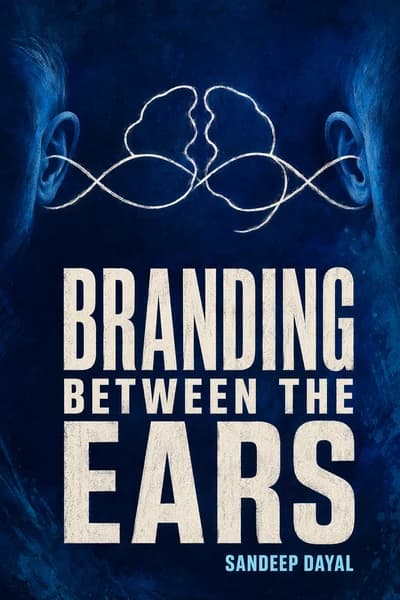
Have you ever wondered why certain brands stick in your mind while others fade away? Why some products feel irresistible while others leave you cold? The mystery of what makes iconic brands so powerful has been marketing's holy grail for decades. In "Branding Between the Ears," Sandeep Dayal reveals that the answer lies not in traditional marketing wisdom but in the revolutionary intersection of brain science and branding.
This isn't just another marketing book-it's a paradigm shift. While Nobel Prizes have been awarded to behavioral economists like Kahneman, Thaler, and Shiller for their groundbreaking work on human decision-making, most marketers remain surprisingly absent from this cognitive revolution. Dayal's work bridges this gap, showing how understanding the brain's inner workings can transform ordinary products into "cognitive brands" that forge powerful connections with consumers.
The book has gained significant attention in marketing circles, with industry leaders citing it as essential reading for anyone seeking to create memorable brands in today's complex marketplace. What makes Dayal's approach particularly compelling is his practical experience-having helped create blockbuster brands like PediaSure and Humira, he offers not just theory but proven strategies that have generated billions in revenue across diverse industries.
Capítulo 2
The Illusions of Traditional Branding
Half of what marketers have believed about branding is wrong-but until recently, we didn't know which half. John Wanamaker's famous complaint about wasting half his advertising budget is becoming obsolete as brain science finally reveals what truly works in branding.
Traditional branding approaches have been built on half-truths simply because we knew no better. The "think, feel, act" model that dominated marketing theory for decades suggests consumers progress linearly through awareness, consideration, and purchase. But brain science reveals this is fundamentally flawed. When you spot a billboard of juicy brisket while driving, your mouth waters and stomach rumbles simultaneously with recognition-thinking, feeling, and potential action happen in parallel, not sequentially.
Even more surprising is how emotional branding creates a dangerous trade-off. While emotional experiences are remembered better, we focus intensely on the central emotional drama while neglecting peripheral details. This explains why viewers of Amgen's touching Enbrel commercial recall the adorable boy worrying about his mother with rheumatoid arthritis but forget the actual brand name. Steve Jobs understood this risk, rejecting many hilarious "Get a Mac" commercials because he believed excessive humor would distract from the product itself.
Perhaps most revolutionary is the understanding that 95% of our decisions happen through System 1-the brain's fast, instinctive, associative process-rather than the deliberative System 2 that marketers often target. This explains why you return from the grocery store with items you didn't consciously choose. When marketers align their messages with consumers' existing beliefs and cognitive biases, they tap into this powerful subconscious decision-making system.
Traditional brand ladders attempt to connect rational benefits with emotional equities, but these connections often feel contrived. Using ice cream as an example, marketers might link "creaminess" (rational) with "happiness" (emotional) to create "Sheer creaminess! Sheer happiness!" While this approach occasionally succeeds spectacularly, thousands of forgettable brands suggest these hits might be more luck than science.
Capítulo 3
Inside Your Brain: How Brand Choices Really Work
Everything about branding happens not on store shelves or billboards but in your brain-right between your ears. All sensory stimuli are processed by the brain, creating our perception of reality. While computers excel at certain tasks, the human brain with its 80 billion neurons and hundred trillion connections outperforms them in countless everyday situations.
For brand marketers, the brain can be divided into four functional subunits: the Associator, the Deliberator, the Learner, and the Conator. The Associator evaluates brand stimuli using System 1 processes, making instinctive connections to past experiences. The Deliberator uses System 2 to critically analyze situations with complications or risks. The Learner stores experiences as cognitive bundles, continuously updating them based on outcomes. The Conator determines action by forecasting happiness and aligning choices with personal goals.
Through the example of Jane shopping for an Eileen Fisher sweater, we see how these components work together: the Associator recalls positive past experiences, the Deliberator weighs factors like price, the Learner records the entire experience, and the Conator ultimately drives action based on predicted happiness. Even identical twins can make different brand choices because their conative MOs-their innate tendencies for action-differ based on their personal goals and what makes them happy.
Cognitive brands work the way the brain does, aiming to unlock sensations of past experiences that make consumers happier. The framework recognizes our brain's vast capacity to store lifetime impressions that become "biochemical tattoos" governing how we perceive brands. The framework consists of three elements: Brand Vibes (establishing empathetic bonds with consumers), Brand Sense (making brand claims sensible through either System 1 Easers or System 2 Deliberators), and Brand Resolve (connecting brands to happiness goals). These "brand visers" (Vi-Se-R) work together to aim for perfect sensations "right between your ears."
Capítulo 4
Brand Vibes: The Emotional Connection
Brand vibes establish emotional connections with consumers by demonstrating empathy and shared values. When brands show they understand consumers' experiences, they create trust and positive feelings that transfer to the brand itself through psychological processes like "misattribution" or "evaluative conditioning." This emotional groundwork makes consumers more receptive to the brand's main value proposition.
The chapter opens with a rheumatoid arthritis patient named Lisa asking a profound question: "If you don't understand what I'm going through, how can you help me?" This reveals how consumers need brands to demonstrate genuine understanding before trusting their solutions. For invisible conditions like rheumatoid arthritis, where sufferers appear normal despite severe pain, this empathetic connection becomes crucial. The Humira campaign succeeded by showing a mother with slightly deformed hands tying her daughter's hair-a subtle detail that communicated deep understanding to RA patients while appearing ordinary to others.
Subaru's remarkable gamble targeting lesbians as a core segment in the politically charged 1990s demonstrated the power of brand empathy. Under Tim Mahoney's leadership, Subaru created brilliant campaigns with double entendres like "It's not a choice. It's the way we're built" that established a secret connection with lesbian consumers. This bold approach paid off-Subaru was the only car company not to lose market share during the recession. The brand forged such strong chemistry with lesbian customers that they remained fiercely loyal despite other arguably better cars being available.
When brands authentically adopt core values that consumers identify with, they build fanatically loyal followers who feel buying the brand means doing what's right. Ben & Jerry's exemplifies this approach-beyond making ice cream, they're unrelenting advocates for social justice issues from voting rights to criminal justice reform. As their Director of Social Mission explains, while they may lose some customers, those who share their values become 2.5 times more loyal than regular customers.
Victoria's Secret demonstrates how brand vibes can work against you when mismanaged. Initially, the brand forged solidarity with women by championing their right to be sexy, transforming bras from comfort purchases to statements of empowerment. However, Victoria's Secret betrayed that trust when it shifted from championing women's sexuality to becoming its arbiter. When its chief marketing officer dismissed body-positive women and transgender models as incompatible with their "fantasy show," the brand failed to evolve with modern women's changing definition of sexiness. Women felt judged by a once-trusted friend and simply walked away, causing sales to plummet.
Capítulo 5
Brand Sense: Making Choices Instinctively
Cognitive brands must make sense to consumers by aligning with how their brains naturally process information. Our brains operate on two systems: System 1 (automatic, instinctive) handles 95% of our daily choices, while System 2 (logical, deliberate) creates new knowledge episodically. Marketers can leverage System 1 processes by tapping into consumers' mental shortcuts and cognitive biases.
At the core of System 1 processes is a cognitive-ease engine that makes us accept choices that feel familiar, true, good, or easy. When experiencing this processing fluency, we tend to accept brands without much thought. Conversely, choices that feel foreign, false, harmful, or demanding create cognitive stress, triggering suspicion and requiring more convincing.
Consumers naturally gravitate toward the familiar-what they know and already have. Two cognitive biases relate to this tendency: anchoring bias and loss aversion bias. The brain struggles to evaluate likes or dislikes without comparing to something familiar-an anchor. ACT II popcorn found its theater experience anchor limiting it to family movie-watching occasions as viewing habits became individualized. ConAgra's international team repositioned the brand around new anchors-as a "smarter choice" compared to potato chips (being healthier and not fried), and as something that could "make any moment a special moment" rather than just movie occasions.
Kahneman and Tversky's famous loss aversion bias shows people feel losses more acutely than gains. A five-cent tax on plastic bags is more effective than a five-cent reward for not using them-people hate losing what they already have. This bias diminishes for distant events but remains powerful for immediate choices. For marketers, this creates opportunities: one pharmaceutical client successfully protected market share against superior competitors by reminding doctors not to "rock the boat" with patients already responding to their treatment.
Consumers naturally favor brands perceived as honest and authentic. The IKEA effect demonstrates that people prefer objects they've put effort into building, even when the results are objectively inferior. Online brands like MTailor leverage this by having customers take measurements using their phone camera for custom-fitted jeans-after that "short ballet routine," customers love their jeans like their own creation.
People instinctively trust what they can see with their own eyes, making transparent or authentic brands intuitively sensible. Online retailer Everlane has built its brand on "Radical Transparency," breaking down the true cost of every product they sell. Similarly, RxBar built a $600 million business with "Clean Label" protein bars listing just five ingredients prominently on packaging: "3 Egg Whites, 6 Almonds, 4 Cashews, 2 Dates, and No B.S."
System 2 Deliberators act as our brain's analytical safeguard, preventing foolish decisions when gut feelings might lead us astray. Unlike the automatic System 1, System 2 can analyze unfamiliar situations, make complex calculations, and evaluate options-perfect for complicated purchases like mortgages. Though mentally taxing, this deliberation proves essential for high-stakes decisions.
Capítulo 6
Brand Resolve: The Drive to Action
If System 1 and System 2 were all there was to brand choice, we could end our discussion here. But indecision remains a problem. Even when consumers trust a brand and find it sensible, they may hesitate to buy it, especially after discounts disappear and persuasive salespeople are gone. Brand resolve addresses this by tapping into the brain's conative energy.
It is in the DNA of all humans to pursue happiness-an idea so fundamental that America's founding fathers enshrined it in the Declaration of Independence. This isn't just philosophy; it's science. Our brains contain specific reward systems-hedonic hotspots and neuronal pleasure networks-that calibrate which stimuli we want more of. Four chemicals (dopamine, oxytocin, serotonin, and endorphins) create these sensations of happiness.
According to self-determination theory by psychologists Deci and Ryan, beyond our physical needs, we have three universal psychological needs or intrinsic motivations that we pursue for their own sake. The three universal needs are: need for autonomy (wanting freedom to make our own choices); need for competence (wanting to be better at things and feel good about ourselves); and need for relatedness (wanting to connect with others and be part of something bigger).
National Car Rental's "Go Like a Pro" campaign brilliantly tapped into business travelers' need for control. The ads featured Patrick Warburton as a "control enthusiast" who could skip the counter, avoid human interaction, and pick any car from the aisle-all representing the autonomy National offers. This campaign resonated with frequent travelers who often feel a lack of control at airports, increasing brand awareness by 4 percentage points and growing National's airport market share by 5 percent.
Mastercard's iconic "Priceless" campaign exemplifies how brands can achieve consumer resolve by enhancing relationships. The campaign showed everyday moments-like a father taking his son to a baseball game-where the experiences were "priceless" compared to the monetary costs. By positioning their card as the key to unlocking happiness through human connection, Mastercard created resolve to use their brand repeatedly.
Humans are hardwired to constantly pursue happiness without ever managing to stay perfectly happy. This truth about the inaccessibility of lasting happiness has troubled philosophers for generations-but for marketers, it's actually advantageous. Most healthy humans are wired for happiness levels 20-30% below perfect (a "7" on a scale of 10), creating a perpetual gap that drives wants. This happens because people anticipate happiness narrowly but experience it broadly-like enjoying Ben & Jerry's ice cream (anticipating a "9"), briefly hitting "10" while eating it, then returning to baseline when reality intrudes. This happiness decay cycle is precisely what keeps consumers coming back to brands.
Capítulo 7
From Theory to Practice: The PediaSure Success Story
The story of PediaSure demonstrates how cognitive branding principles can transform a product's market position. Despite being a successful product designed as complete nutrition for hospitalized children, it was growing slowly. Two marketing leaders, Mel Fisker and Walt Perman, envisioned expanding beyond the tiny hospital market to reach all children, despite significant challenges including high price points and mothers' preference for table food over medical supplements.
To understand PediaSure's surprising success in Indonesia, the team conducted focus groups with Jakarta mothers who were already using the product. They discovered a common cognitive schema: mealtimes were traumatic battles between mothers and children who wouldn't eat properly. This created distorted thinking patterns where mothers blamed themselves ("I'm a bad mom") or worried about their children's development.
The breakthrough came when they learned that pediatricians had started "prescribing" PediaSure for "picky eaters"-giving mothers both validation and a solution. This insight proved universal across Asian markets from Vietnam to Taiwan. By acknowledging "We know kids can be picky eaters," PediaSure established an emotional connection with mothers before presenting product benefits.
The team developed eight distinct concepts based on cognitive biases, testing them across Asian markets. After extensive research, they implemented two System 1 Easers: the "Occam's razor bias" positioning PediaSure as a choice simplifier (add a glass to any meal and nutrition is complete, eliminating the stress of balancing nutrients), and the "choice supportive bias" highlighting kid-friendly flavors that children could choose themselves, reducing mealtime battles.
To break mothers' entrenched beliefs about "real food or nothing," the team developed System 2 choice drivers to engage rational thinking. After testing eight options, they focused on PediaSure's clinically proven "balanced and complete nutrition" claim-something only PediaSure could make. Using the "examine the evidence" method, they highlighted "25 essential nutrients" and the "triple benefit" of increased immunity, accelerated growth, and improved appetite in their marketing materials.
To drive purchase action, the team connected PediaSure to mothers' intrinsic motivation for competence-wanting their children to grow up to be their best. This tied the brand to consumers' intrinsic goals, setting them on a path to greater happiness and spurring them to action. The final positioning became: "For moms whose kids are picky eaters, PediaSure provides balanced and complete nutrition in a taste that kids love, so they can grow up to be all they can be, physically and mentally."
The results were extraordinary-sales grew 1,000 percent over three years, turning PediaSure into a multi-billion-dollar global brand.
Capítulo 8
The Sensory Experience: Engaging All Five Senses
Our five senses are the gateway to our brain, consciously and unconsciously connecting past experiences with present brand encounters. The strongest brand experiences engage multiple senses, creating layered associations that are easier to recall and more preferred by consumers.
Despite warnings from magicians to philosophers that visual perception can be deceiving, humans inherently trust what they see. Smart marketers leverage this by asking, "What do people need to see to believe my brand is wonderful?" Visual selling taps into System 1 thinking, as System 2 often defers to visual impressions without deeper analysis.
Touch creates powerful psychological connections. Restaurant servers have long known that a light touch on a customer's arm can increase tips by 10-40%-with touches on the palm yielding higher tips (17%) than shoulder touches (14%). Dr. Jane Gruber of Yale explains that interpersonal touch triggers reward centers in the brain, making people more receptive and cooperative.
Hearing remains "always on" even during sleep-our evolutionary alert system. The brain's associative nature means sounds trigger recall of connected experiences and emotions-like the iconic two-note "thumph-thumph" from Jaws instantly evoking shark-related fear. Music particularly forms intimate brain connections, influencing our physical responses and emotional states.
Smell, like hearing, functions continuously even during sleep. Singapore Airlines has created its signature "Stefan Floridian Waters" fragrance-described as silky, feminine and exotic-used in flight attendants' perfume, airplane interiors, and hot towels. This olfactory branding isn't limited to luxury brands; Procter & Gamble's Tide has maintained market dominance for 70 years partly through its distinctive scent.
Smell and taste are interconnected through shared brain processing circuits-hold your nose and you'll struggle to distinguish chocolate from vanilla ice cream. Food incorporation into brand experiences builds relationships, a practice as ancient as breaking bread together. Champagne exemplifies multisensory engagement, from the "soft sigh and hiss" of opening to the visual spectacle of bubbles and its complex taste profile that creates "an intense celebration in the mouth."
Capítulo 9
The Ethics of Cognitive Branding
When marketers understand brain science, they gain unprecedented power that requires responsible use. The central question becomes: just because you can influence consumers in certain ways, should you? This ethical dimension has become increasingly critical as neuroscience reveals more about decision-making processes and cognitive vulnerabilities.
RxBar presents a compelling ethical dilemma despite its entrepreneurial success story. While founder Peter Rahal brilliantly identified an unmet need for clean-label energy bars with transparent ingredients, the brand name "Rx"-which Merriam-Webster defines as "a doctor's prescription"-creates a misleading association with medical endorsement. This subconscious brand cue suggests physician approval that doesn't exist, contradicting the product's "No B.S." positioning. Similar concerns arise with other brands using pseudo-medical terminology, like "Doctor's Choice" or "Clinically Proven," when such claims lack substantial medical backing.
Credit card minimum payments demonstrate how anchoring bias profoundly affects consumer behavior. Most balance-carrying customers pay slightly more than the minimum required, feeling financially responsible while actually remaining trapped in debt. Research from the Consumer Financial Protection Bureau shows people anchor to the suggested minimum rather than paying according to their capacity-raising the minimum increases payments, while lowering it decreases them. When one major credit card issuer increased their minimum payment suggestion from 2% to 5%, average monthly payments rose by 24%.
Our brains process information subconsciously 95% of the time, taking mental shortcuts that make us susceptible to manipulation. In today's digital age, where brand stimuli reach millions instantly through social media, targeted ads, and mobile notifications, marketers face complex ethical dilemmas about exploiting these cognitive vulnerabilities. A 2019 University of Chicago study found 11% of retail sites using "dark patterns"-deceptive interface designs that coerce users into unintended decisions. Examples include countdown timers creating false urgency, pre-checked subscription boxes, and hidden costs revealed only at checkout.
To determine ethical boundaries in cognitive branding, marketers should apply three self-regulatory tests: 1) The Canonical Imperative-"Would I be fine if someone did this to me?"; 2) The Categorical Imperative-"If everyone did this, would it benefit society?" (necessary because some might have low personal standards); and 3) The Sunshine Imperative-"Could I easily defend this if it made front-page news?" These tests help evaluate whether marketing tactics serve legitimate business interests while respecting consumer autonomy.
Companies like Patagonia demonstrate how ethical cognitive branding can succeed. Their transparent communication about environmental impact, including their "Don't Buy This Jacket" campaign, shows how brands can influence behavior while maintaining integrity. Similarly, Netflix's clear pricing and easy cancellation policy contrast sharply with competitors using psychological manipulation to retain subscribers.
Capítulo 10
The Future of Cognitive Branding
Brain sciences are advancing rapidly, offering brand marketers new knowledge and capabilities while simultaneously making their work more challenging. The difficulty lies not just in keeping pace with scientific developments but in evolving marketers' own mindsets to adapt to these changes.
Marketers have long known that customers don't always accurately report their intentions or behaviors, making traditional research methods like surveys and focus groups unreliable predictors of purchasing decisions. The emerging field of neuromarketing offers tools to peek directly into consumers' brains, though we remain far from truly "reading minds."
While our five traditional senses serve as gateways to our minds, we actually possess many more sensory capabilities than commonly recognized-perhaps twice as many or more. Beyond sight, hearing, taste, touch and smell, our bodies have specialized senses for tracking balance and velocity. Looking forward, technological breakthroughs may eventually create entirely new human senses, such as devices allowing us to detect electric fields like sharks or magnetic fields like bats.
The greatest challenge for marketers isn't keeping pace with technology but evolving their own mindsets. When encountering cognitive branding principles, marketers instinctively try reducing them to familiar concepts-"Isn't this just functional and emotional branding?" or "This is the same as left-brain-right-brain research, right?" This System 1 reaction attempts to associate new knowledge with something familiar, effectively preventing genuine learning.
Forward-thinking companies are establishing Cognitive Science Application Labs (CSALs) within marketing departments to adapt academic research into practical applications through rapid experimentation. The future belongs to marketers willing to dive deeper into psychology, behavioral science, and human emotion-fields experiencing explosive growth with profound implications for branding that will remain "Right Between Our Ears."