Capítulo 1
The Global Autocracy Club: How Dictators Work Together to Undermine Democracy
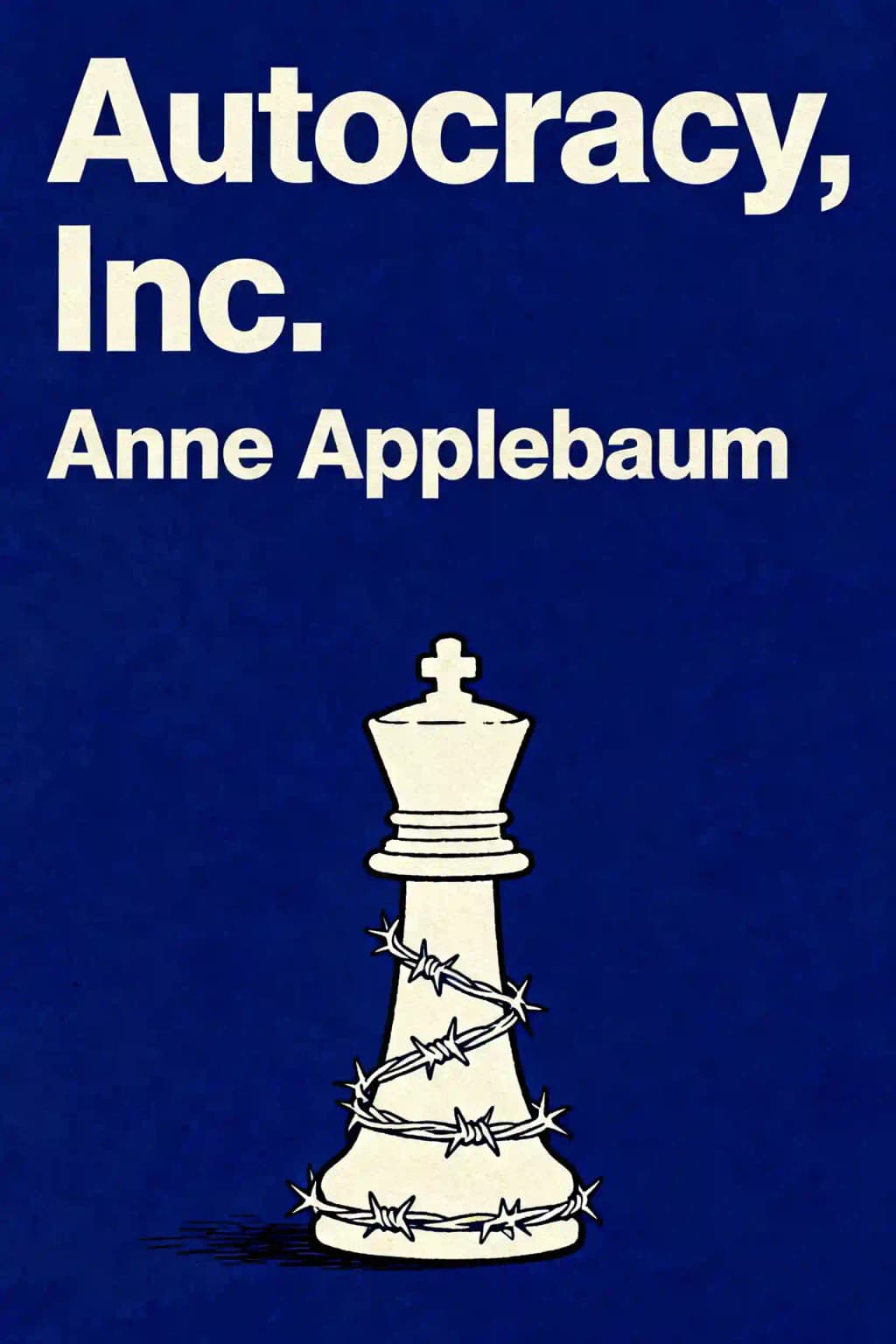
In the quiet corners of international politics, a powerful alliance has been forming-not with fanfare or formal treaties, but through shared tactics, mutual support, and a common enemy. Anne Applebaum's "Autocracy, Inc." reveals this shadowy network of modern dictatorships that collaborate despite their ideological differences. The book has become required reading in foreign policy circles, with Barack Obama listing it among his favorite books of 2023 and diplomats worldwide citing its insights. Unlike the stark Cold War divisions between democracy and communism, today's autocratic alliance operates through sophisticated financial networks, shared surveillance technologies, and coordinated propaganda campaigns. As Russia's invasion of Ukraine represents the first full-scale battle between this autocratic network and the democratic world, understanding how dictators work together has never been more urgent. This isn't just another foreign policy book-it's a wake-up call about an existential threat to democracy itself.
Capítulo 2
The Kleptocratic Foundation of Modern Autocracy
Modern autocracies aren't built primarily on ideology but on corruption. This transformation began decades ago, when Western leaders made a fateful miscalculation. In 1970, when West Germany and the Soviet Union finalized the first major gas pipeline deal connecting East and West, German Foreign Minister Willy Brandt believed economic interdependence would make future conflict "unthinkable." This evolved into a theory called Wandel durch Handel (change through trade), the comforting belief that commerce would naturally transform dictatorships into democracies.
The 1990s supercharged this optimism. After the Soviet collapse, Fukuyama's "End of History" thesis was simplified into a reassuring narrative that globalization would inevitably spread democracy worldwide. This belief conveniently removed moral qualms about investing in places like China or post-Soviet Russia. As Reagan claimed in 1984, China's "first injection of free market spirit" was leading to "a more just society," while Clinton in 2000 laughed that China's attempts to control the internet were like "trying to nail jello to the wall."
Few considered the opposite possibility-that instead of democracy spreading to autocratic states, corruption and illiberalism might flow back to democratic ones.
Vladimir Putin's Russia exemplifies this reversal. In the early 1990s, as St. Petersburg's deputy mayor, Putin advocated for entrepreneurship and Western investment. But his kleptocratic project had already begun, likely originating from his KGB station in Dresden. Russian "capitalism" was designed from the start to favor insiders who could extract wealth and hide it abroad. In St. Petersburg, Putin orchestrated schemes to steal money through export licenses for raw materials supposedly meant to purchase food. The goods were sold, but the proceeds vanished into accounts owned by his associates.
Crucially, these operations depended on Western enablers-companies that bought the exports, regulators who ignored suspicious contracts, and banks that accepted mysterious cash flows without question. Putin's St. Petersburg Real Estate Holding Company was even registered in Frankfurt and went public on the Frankfurt Stock Exchange in 1998. Though German intelligence later alleged it was laundering both Russian and drug money, investigations moved slowly, with some suggesting Chancellor Gerhard Schroder kept Putin informed about them in the name of maintaining economic ties.
By the mid-2000s, Russia had become "a full-blown autocratic kleptocracy, a mafia state built and managed entirely for the purpose of enriching its leaders." Yet Western financial institutions continued enabling this system, even as Putin eliminated genuine political competition and consolidated power.
Capítulo 3
The Global Spread of Kleptocratic Governance
Venezuela demonstrates how kleptocracy spreads beyond Russia. When Hugo Chavez came to power in 1998, he promised to transform the corrupt Republic of Venezuela into a more honest Bolivarian Republic. Yet when his loyal police chief presented evidence of corruption within the new government just a year later, Chavez fired him rather than addressing the problem. Like Putin, Chavez made a deliberate choice to embrace kleptocracy, calculating that corrupt officials would prove more malleable than clean ones.
During Chavez's fourteen years in power, Venezuela took in nearly $800 billion in oil revenues, with hundreds of billions disappearing into bank accounts worldwide. The regime created a byzantine system of multiple currency exchange rates that enabled massive fraud. While ordinary Venezuelans could game the system in small ways, the well-connected claimed tens or hundreds of millions of dollars for fake imports. The total stolen may have reached $300 billion by 2013 when Chavez died.
When the Venezuelan economy collapsed and protests threatened the regime after Chavez's death, something remarkable happened-the global autocratic network stepped in to save it. Russia's Rosneft, Gazprom, and Lukoil invested in Venezuelan oil and agriculture while supplying subsidized grain, gasoline, and military equipment worth $4 billion. China loaned some $30 billion without conditions. Cuba provided soldiers, police, and intelligence experts. Turkey developed ties based on personal connections between Erdogan and Maduro, exchanging Venezuelan gold for Turkish food. Most improbably, Iran formed deep ties with Venezuela based on shared anti-Americanism and sanctions evasion.
This pattern repeats worldwide. In Zimbabwe, evangelical pastor Uebert Angel, appointed as Zimbabwe's "ambassador at large," was caught on camera offering to sell his diplomatic immunity to facilitate money laundering schemes involving gold smuggling. The documentary "Gold Mafia" revealed a diverse international network of pastors, politicians, and businesspeople collaborating to evade sanctions and profit from Zimbabwe's corrupt system.
Since 2002, "bridging jurisdictions" have emerged-hybrid states that trade normally with democracies while willingly laundering sanctioned wealth. The UAE has made it easier for sanctioned individuals to become residents and buy property, with Russian purchases rising 100% after the Ukraine invasion. Turkey created similar loopholes for transferring money and importing gold.
This influx of kleptocratic cash empowers regimes to become more repressive. In Kyrgyzstan, sanctions evasion trade with Russia coincided with harsh crackdowns on journalists and independent media. As Bektour Iskender, founder of investigative website Kloop who was forced into exile, observed, the Kyrgyz regime was "emboldened by the huge influx of Russian money."
Capítulo 4
The Surveillance State Goes Global
While the West was celebrating the internet's democratizing potential in the early 2000s, China was methodically constructing the world's most sophisticated information control system. After violently suppressing the 1989 Tiananmen Square protests, Chinese leaders embarked on a comprehensive strategy to eliminate not just protesters but the democratic ideas that motivated them. They developed sophisticated information control technologies years before Western nations recognized their potential, establishing the "Great Firewall" and implementing deep packet inspection to monitor internet traffic.
American technology companies, drawn by China's massive market, initially became willing participants in this system. Microsoft modified its blogging software to automatically filter sensitive terms and block specific content. Yahoo not only signed a "public pledge on self-discipline" to block forbidden terms but also provided user data that led to the imprisonment of several dissidents. Cisco Systems played a particularly significant role, selling over $500 million in equipment designed to block banned websites and assist police departments across 31 provinces. The company even customized its PowerPoint presentations to highlight how its technology could help catch members of banned religious groups.
However, China's strategy evolved beyond mere partnership. After absorbing the necessary technological expertise, the government systematically pushed foreign companies out. Google withdrew in 2010 after refusing to censor search results, while Facebook and Instagram were banned outright. In their place, China developed its own surveillance ecosystem, including alternatives like Baidu, WeChat, and Weibo, which provide the government with unprecedented access to citizen data.
The surveillance state expanded far beyond cyberspace, creating a comprehensive system of control. In Xinjiang, authorities mandated that Uighurs install "nanny apps" like Jingwang, which scan phones for over 53,000 markers of "ideological viruses," including Koranic verses, specific images, and encrypted communications. The apps track locations in real-time, flagging suspicious behavior patterns like using VPNs, gathering in groups, or consuming unusual amounts of electricity. This is complemented by widespread DNA collection, voice recognition systems, and mandatory facial scans for activities as basic as buying fuel.
China's surveillance model has become an attractive export, marketed as "safe city technology" but clearly designed for political control. At least 18 countries have adopted Chinese surveillance systems, including Pakistan's "Safe Cities" project, Brazil's smart city initiatives, and Zimbabwe's facial recognition program. The technology has been particularly popular in countries along the Belt and Road Initiative. Even more concerning is the spread of surveillance technology to democracies. The Israeli-made Pegasus spyware, for instance, has been used to track journalists, opposition leaders, and human rights activists in numerous democratic countries, including Hungary's targeting of investigative journalists and India's surveillance of opposition politicians.
Yet the 2022 COVID lockdown protests revealed the limitations of even the most sophisticated surveillance systems. Young protesters in Beijing and Shanghai, many with no direct memory of Tiananmen, used innovative methods to circumvent censorship, including holding up blank papers and using coded language. In Xinjiang, despite the oppressive control system, citizens found ways to express dissent by repurposing patriotic symbols, such as publicly singing specific verses of the national anthem. These events demonstrated that even total surveillance cannot prevent the fundamental human desire for freedom, a realization that has deeply unsettled autocratic regimes worldwide.
Capítulo 5
Propaganda for the Digital Age
Unlike 20th-century communist propaganda that promoted utopian visions, today's autocracies foster cynicism and passivity. Rather than inspiring citizens with idealized futures, they teach that no better world exists: "Our state may be corrupt, but everyone else is corrupt too."
China promotes nationalist pride while portraying democracies as chaotic and weak. Russian media bombards citizens with stories about Western degeneracy and hypocrisy, featuring European and American news an average of eighteen times daily. Putin displays surprising familiarity with American culture wars, particularly transgender debates, to demonstrate democracy's alleged failings while positioning Russia as leader of "traditional values"-despite Russia's low church attendance, legal abortion, and multiethnic population.
Autocrats worldwide exploit culture wars to distract from corruption. Uganda's Yoweri Museveni passed harsh anti-gay legislation while accusing democracies of "social imperialism." Hungary's Viktor Orban shields his Russian and Chinese ties behind religious and gender controversies. Other tactics include dominating national conversation (like Hugo Chavez's marathon TV appearances) and deploying obvious lies. Unlike Soviet leaders who tried making falsehoods seem plausible, modern autocrats use a "fire hose of falsehoods" strategy-presenting multiple contradictory explanations for events like the 2014 downing of Malaysia Airlines Flight 17. This produces not outrage but nihilism: if nothing can be known with certainty, why bother with political engagement?
Autocratic propaganda has gone global, with Russia and China leading sophisticated international influence campaigns. China's "sharp power" operates through various channels including the United Front and Confucius Institutes. Initially welcomed by universities as benign cultural bodies offering free language classes, these institutes gradually aroused suspicion for policing Chinese students abroad, blocking discussions of Tibet or Taiwan, and altering Chinese history teaching.
China has invested $7-10 billion in international media through outlets like Xinhua, CGTN, and China Daily, producing subsidized content in multiple languages that portrays China positively. StarTimes, a Chinese-linked satellite company with 13 million subscribers across 30 African countries, prioritizes Chinese content while making Western media more expensive.
Autocracies coordinate their media operations across borders. Venezuela's Telesur runs content from Chinese state media alongside regional leftist messaging. Iran's HispanTV pushes antisemitism and conspiracy theories throughout Latin America despite European bans. Russia's RT, briefly dropped from satellites after invading Ukraine, reappeared on China's StarTimes network and is expanding across Africa.
Capítulo 6
Information Warfare and Disinformation Factories
Information laundering operations have evolved into highly sophisticated enterprises, employing multiple tactics to create credible-appearing disinformation networks. The Russian-backed Doppelganger operation exemplifies this evolution, creating hundreds of "typosquatting" domains that precisely mimic legitimate news sites across multiple regions. These include subtle variations like Reuters.cfd instead of Reuters.com, TheGuardian.co rather than TheGuardian.com, and LeMonde.fr.co instead of LeMonde.fr. The operation extends beyond simple domain spoofing, creating entire ecosystems of false content that cross-reference each other to build artificial credibility. Their tactics have included creating fake NATO press releases about troop movements, fabricating diplomatic communications, and even organizing physical actions like spray-painting Stars of David around Paris to amplify social divisions during the Gaza war.
China's disinformation capabilities demonstrated remarkable sophistication during the 2018 Kansai International Airport incident. Following a typhoon that stranded thousands of tourists, Chinese operatives launched a multi-platform campaign that included coordinated social media posts, fake eyewitness accounts, and doctored photos showing supposed Chinese rescue buses. The operation utilized over 2,000 fake social media accounts across multiple platforms, created fake news articles that were then cited by state media, and deployed armies of commenters to attack anyone questioning the narrative. The campaign was so effective that major Taiwanese media outlets ran headlines criticizing their government's supposed inaction, leading to widespread public outrage and ultimately contributing to the tragic suicide of Su Chii-cherng, a Taiwanese diplomat in Osaka.
Russian disinformation tactics have traditionally relied on volume and chaos, flooding information spaces with multiple, often contradictory narratives. However, Chinese approaches are increasingly incorporating more sophisticated disruption techniques. These include using AI to generate compelling conspiracy theories, such as claims about "weather weapons" causing the Maui wildfires, complete with fabricated scientific papers and expert testimonials. They've also begun deploying networks of pro-MAGA accounts that blend seamlessly with authentic American political discourse while spreading targeted disinformation about President Biden's mental health and family dealings.
The global expansion of autocratic information operations has created new challenges for democratic societies. In Mexico's 2018 presidential election, Venezuelan and Russian operators deployed over 4,000 automated accounts, reaching an estimated 15 million voters with content promoting violence and anti-American sentiment. In Spain, during Catalonia's 2017 independence referendum, Russian-backed networks achieved unprecedented reach, with their content receiving more engagement than Spanish state television broadcasts. Analysis showed these accounts strategically amplified existing tensions by promoting the most extreme voices on both sides and encouraging violent confrontations.
These operations have yielded significant returns on relatively modest investments. Following his election, Lopez Obrador has systematically weakened Mexican democratic institutions while becoming a prominent promoter of Russian and Chinese narratives in Latin America. In Catalonia, separatist leaders were later revealed to have sought Russian financing for pro-independence operations, demonstrating how digital influence operations can translate into real-world political alignment. These campaigns succeed not by creating divisions from scratch, but by identifying and exploiting existing social tensions, elevating extreme voices, and creating environments where violence seems inevitable or justified.
Capítulo 7
Rewriting the International Rulebook
The international rules-based order began with remarkable optimism in 1946 when Eleanor Roosevelt led a diverse committee that drafted the Universal Declaration of Human Rights, establishing principles like the right to life, liberty, security, and protection from arbitrary arrest and torture. Despite Soviet opposition, most nations endorsed these ideals, which became foundational to numerous treaties and institutions.
While these documents describe how the world ought to work rather than reality-failing to prevent atrocities in Rwanda, Vietnam, and elsewhere-they have meaningfully influenced behavior. Soviet dissidents used human rights language to challenge their government, American soldiers were court-martialed for violating Geneva Conventions in Iraq, and the International Criminal Court issued arrest warrants for President Putin over Ukrainian child deportations.
Unable to prevent such accountability entirely, autocracies now seek to fundamentally rewrite these rules. Xi Jinping explicitly declared intent to "lead the reform of the global governance system" by removing Western universal human rights concepts. China promotes "right to development" (defined only by governments) over human rights (monitored by independent organizations), while emphasizing "sovereignty"-the shield autocrats use against criticism.
China pushes bland terms like "win-win cooperation" and "mutual respect" in UN documents, deliberately unthreatening language that actually aims to eliminate any role for human rights advocates or international investigations in places like Tibet, Hong Kong, or Xinjiang.
While China works to change diplomatic language inside institutions, Russia focuses on reshaping global conversation through promoting "multipolarity." This seemingly neutral term describing a world with multiple centers of power has been weaponized with Marxist undertones, portraying Russia as leading former colonies against Western "decadence" and "perversions." Putin frames Russia's aggression as fighting for "freedom of not only Russia, but the whole world" against the "dictatorship of one hegemon."
Autocracies are building alternative institutions to counter democratic frameworks. The Shanghai Cooperation Organization and the expanded BRICS group represent more than photo opportunities-they promote "rule by law" rather than "rule of law," meaning law is whatever the current autocrat says it is. These institutions formalize mutual non-criticism and non-intervention in each other's internal affairs, creating a parallel system with real implications for international behavior.
Capítulo 8
Transnational Repression and Proxy Warfare
Autocracies increasingly reach beyond borders to silence critics, targeting diaspora communities through intimidation and violence. The Wei Jingsheng Foundation in Washington has experienced over a dozen break-ins, with computers stolen and offices vandalized. China operates illegal "police stations" in New York City and the Netherlands to monitor dissidents abroad.
Smaller autocracies follow this pattern: Venezuelan agents abducted and murdered exiled military officer Ronald Ojeda in Chile; Rwanda has attacked dissidents in multiple countries, including luring Hotel Rwanda hero Paul Rusesabagina onto a private plane to imprison him; and even India allegedly murdered a Sikh leader in Canada. These operations serve to eliminate critics, intimidate exiles, and gradually erode rule of law in democratic countries.
The Syrian civil war represents a critical turning point where autocracies collaborated to destroy international norms. When Assad faced a popular uprising in 2011, Iran and Russia intervened militarily to save his regime. In 2018, Russian and Syrian forces deliberately targeted hospitals in Idlib using UN-provided coordinates meant to protect them. Despite Doctors Without Borders condemning this "normalization of attacks," the world largely accepted these violations.
The Syrian conflict established a new model of military engagement through proxies and mercenaries. The Wagner Group, funded by the Russian state but operating as "private," allowed Russia to distance itself from military operations while securing business deals in conflict zones. Similarly, Iranian proxies like Hezbollah, Hamas, and the Houthis function as semi-autonomous forces with their own business interests and propaganda operations, all sharing contempt for international rules.
This military-financial model has expanded to Africa, where Wagner mercenaries entered Mali in 2021 following a coup, gaining access to gold mines while running anti-French propaganda campaigns. In the Central African Republic, Wagner guards the president, represses opposition, runs propaganda radio stations, and has secured mining rights for diamonds, gold, and timber.
This "regime survival package" offered to dictators includes personal protection, attacks on political enemies, propaganda campaigns promoting multipolarity and anti-colonialism, and kleptocratic networks-all designed to cut recipient countries off from democratic allies.
Capítulo 9
Fighting Back: The Global Democratic Response
While dictators meet in opulent palaces with gilded chandeliers, democracy activists gather in modest settings like a rambling hotel outside Vilnius. In autumn 2022, the first World Liberty Congress brought together fighters against autocracy from Russia, Zimbabwe, Iran, South Sudan, North Korea, Nicaragua, Rwanda, Cuba, China, Venezuela, Syria, Cambodia, Belarus, and Uganda.
Though many met for the first time, they quickly recognized their shared experiences facing similar regimes that launder money, promote "multipolarity," and use identical tactics against dissidents. Venezuelan opposition leader Lopez, chess champion Garry Kasparov, and Iranian activist Masih Alinejad recognized that while autocrats collaborate effectively, democracy activists needed to unite their efforts.
To fight back, we must dismantle the system that allows Russian, Angolan, or Chinese oligarchs to hide wealth through properties and shell companies across multiple countries. This requires mandating transparency in all real estate transactions, requiring companies to register actual owners, banning financial secrecy jurisdictions, closing loopholes in private equity, and creating effective cross-border enforcement teams.
The resistance will be enormous-money laundering is complex, governments hesitate to prosecute the powerful, and civil servants may fear targeting the wealthy. No single politician or country can reform this alone-we need an international coalition of treasury officials, community leaders from cities distorted by foreign wealth, and activists who understand kleptocracy firsthand.
Modern autocrats invest heavily in controlling information through disinformation campaigns and algorithms promoting divisive content. The fight back has begun with "pre-bunking"-exposing planned Russian campaigns before they happen. The U.S. Global Engagement Center, along with French and German governments, have revealed Russian disinformation operations targeting Africa, Latin America, and Europe.
But the problem runs deeper: social media platforms remain easy to game, and reform faces resistance from wealthy tech companies and politicians who benefit from the current system. Democratic governments must work together to promote transparency, give users control over their data and algorithms, and make reliable news sources the global standard rather than state-controlled outlets.
The European experiment in autocratic-democratic interdependence ended with the 2022 Nord Stream pipeline explosions. Democratic leaders mistakenly believed mutually beneficial investments would encourage Russia's integration with Europe, failing to understand Russian companies acted as agents of the Kremlin. The risks of overdependence on autocracies aren't just economic but existential.
Citizens of democracies across America, Europe, Asia, Africa, and Latin America must recognize they're linked to each other and to those who share their values inside autocracies. No democracy is safe in isolation. Isolationism is an understandable reaction to global interconnection-Brexit's "take back control" slogan succeeded because everyone wants more control when distant events affect local economies. But did leaving the EU give Britain more global influence or stop foreign money from shaping UK politics? It did not.
The liberal world order may be gone, but liberal societies still offer better lives than dictatorships. They're flawed and scarred, but worth defending-they've been rare throughout history and can be destroyed from outside or within. But they can also be saved if their citizens make the effort.