Capítulo 1
A Lunar Heist with Cosmic Stakes
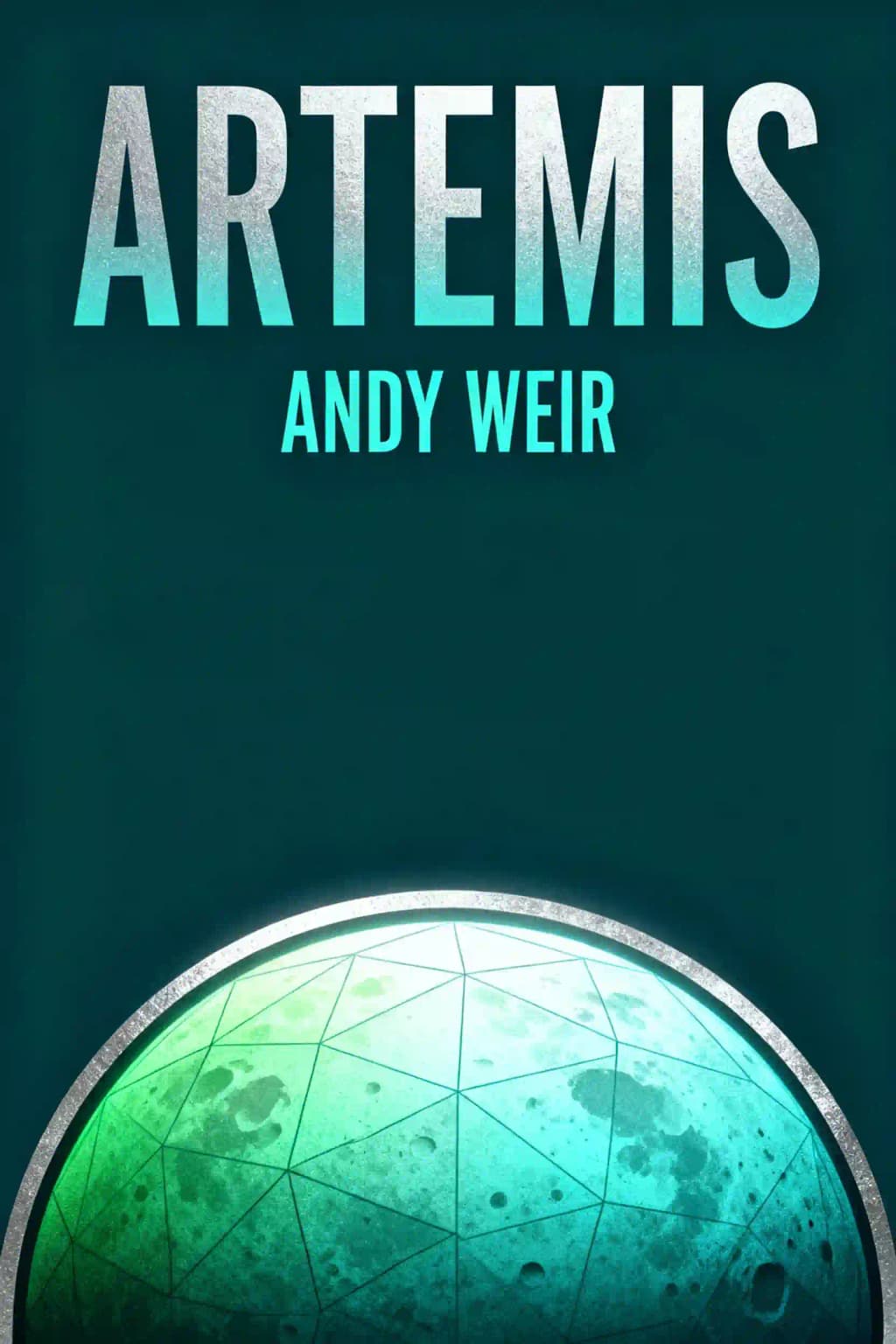
Imagine waking up in a cramped "coffin" apartment on the Moon, where oxygen costs money and a single spark could kill everyone in your city. This is the reality for Jasmine "Jazz" Bashara in Andy Weir's "Artemis," a science fiction thriller that brings the same meticulous attention to scientific detail that made "The Martian" a phenomenon, but with a grittier edge. Published in 2017, the novel quickly became a New York Times bestseller and caught Hollywood's attention, with Phil Lord and Christopher Miller (of "Spider-Man: Into the Spider-Verse" fame) attached to direct the film adaptation. Elon Musk famously praised the book's realistic portrayal of a lunar colony, calling it "the blueprint we should be following." Beyond its entertainment value, "Artemis" has sparked discussions about the economics and ethics of space colonization, presenting a future that feels startlingly plausible rather than fantastical.
Capítulo 2
Life on the Lunar Edge
Welcome to Artemis, the Moon's first and only city - a sophisticated network of five interconnected bubbles named after Apollo program astronauts, housing 2,000 permanent residents. Each bubble serves a distinct purpose: Armstrong hosts tourist facilities and luxury hotels, Aldrin contains manufacturing and industrial operations, while Bean, Conrad, and Shepard house residential areas and essential services. The city operates under a delicate balance of economics and survival, where oxygen is produced by Sanchez Aluminum as a byproduct of their smelting process - a clever example of industrial symbiosis that makes lunar living possible.
The lunar society has developed its own unique culture and economy, with "slugs" as currency (equivalent to the cost of transporting one gram from Earth to the Moon). This economic system reflects the harsh realities of space colonization, where everything imported comes at a premium. A stark social hierarchy exists between wealthy tourists paying thousands of slugs for lunar vacations and the working-class residents who maintain the city's essential functions - from maintenance technicians to service workers living paycheck to paycheck.
Jazz Bashara perfectly embodies this struggle. A Saudi-born Muslim who immigrated to the Moon as a child with her welder father, she works officially as a porter (moving cargo around Artemis) while running a sophisticated smuggling operation on the side. Her tiny "coffin" apartment in Conrad Down 15 barely fits a bed and a few personal belongings, with community bathrooms down the hall serving dozens of residents. Despite her exceptional intelligence and comprehensive EVA (extravehicular activity) training, she remains trapped in poverty - a failed EVA certification exam, which she can't afford to retake, has locked her into economic limbo.
The lunar environment shapes every aspect of daily life in ways both subtle and profound. In Artemis's low gravity and pure oxygen atmosphere at one-fifth Earth pressure, even simple activities require adaptation. Coffee can only reach 61C because of these atmospheric conditions, and cooking must be completely reimagined. Fire represents the ultimate existential threat - with nowhere to escape outside the bubbles, even simple activities like smoking require elaborate safety protocols and specialized equipment. The city's unique justice system reflects these constraints; with no formal prison system, punishment ranges from steep fines to permanent exile back to Earth, enforced by the city's founder and administrator, Fidelis Ngugi.
What makes Artemis feel so authentic is Weir's meticulous attention to the practical details of lunar living - from the challenges of welding in vacuum (requiring special techniques developed by Jazz's father) to the complex social dynamics that emerge in an isolated community where everyone depends on each other for survival. The city's inhabitants have developed their own slang, customs, and social norms adapted to lunar life. This isn't a utopian vision of space colonization, but a gritty, realistic portrayal of humanity's first extraterrestrial outpost, complete with economic struggles, cultural tensions, and the same human flaws that follow us wherever we go. The result is a community that feels both alien and deeply familiar - a place where the extraordinary challenges of space living intersect with the ordinary struggles of human society.
Capítulo 3
The Million-Slug Job
Jazz's life changes dramatically when Trond Landvik, a wealthy Norwegian businessman living in the upscale Shepard Bubble, offers her a million slugs for a dangerous sabotage mission. The target? Sanchez Aluminum's harvesters - massive machines that collect oxygen-rich anorthosite rocks from the lunar surface. These rocks are processed to create oxygen for Artemis, with aluminum as a byproduct.
The plan seems straightforward: disable the harvesters, causing Sanchez Aluminum to breach their oxygen contract with Artemis, allowing Trond to step in with his secretly stockpiled oxygen reserves and take over the operation. Jazz initially hesitates, concerned about workers losing their jobs, but the promise of financial freedom - enough to move out of her coffin apartment and start a legitimate business - proves irresistible.
What follows is a masterclass in heist planning. Jazz recruits Martin Svoboda, a brilliant but eccentric Ukrainian engineer, to build a custom electronic device for her sabotage. She borrows welding equipment from her estranged father under false pretenses, disguises herself as a conservative Muslim woman named "Nuha Nejem" to join a tourist EVA, and deploys a hull inspection bot (nicknamed "Hibby") to help her bypass airlock security.
The heist itself is thrilling and terrifying in equal measure. Jazz sneaks aboard a harvester as it recharges, rides it to the collection zone, and begins sabotaging it by cutting a hole in its wax reservoir and installing a pressure valve. She fills the reservoir with compressed oxygen and attaches a homemade device to short-circuit the battery at midnight, creating a massive explosion. But just as she prepares to move to the next harvester, she's spotted by Sanchez Aluminum security who take manual control of the machines to surround her.
In a desperate fight for survival, Jazz disables all four harvesters' communications by cutting off their antennas and permanently destroys them by shorting their batteries. With EVA masters racing toward her position, she takes a circuitous route back to Artemis, climbing over bubbles and connectors until reaching an airlock - only to be caught by her former friend Dale.
The heist sequence showcases Weir's talent for creating suspense through scientific problem-solving. Each obstacle Jazz faces requires a clever technical solution, making her victories feel earned rather than convenient. The lunar environment itself becomes both adversary and ally, with Jazz using her knowledge of lunar physics and chemistry to overcome seemingly impossible challenges.
Capítulo 4
Murder on the Moon
What begins as a high-stakes sabotage job quickly spirals into something far more dangerous when Jazz discovers Trond and his bodyguard Irina murdered in his estate - Artemis's first double homicide. Blood on the walls and signs of a struggle suggest a professional hit, and Jazz immediately recognizes the connection to her harvester sabotage. Someone powerful wants control of Sanchez Aluminum, and they're willing to kill for it.
Jazz goes into hiding, creating an emergency alias and sleeping in a freezing maintenance nook in Bean Down 27. As she mourns Trond and worries about his orphaned daughter Lene, she realizes she needs to understand why people are killing over what seems like an unprofitable aluminum business. Her investigation leads her to Jin Chu, a mysterious Hong Kong businessman who had met with Trond days before the murder.
Disguising herself as a prostitute to infiltrate Jin's five-star hotel, Jazz finds herself face-to-face with a knife-wielding assassin - a Latino man with an injured arm who immediately attacks her. After a violent struggle, she manages to escape and search Jin's room, finding a case labeled "ZAFO" containing only a fiber-optic cable with unusual caps instead of connectors.
The plot thickens when Rudy DuBois, Artemis's head of security, reveals that Sanchez Aluminum is owned by O Palacio, Brazil's powerful crime syndicate, who use the company for money laundering. When Jazz spots the assassin (nicknamed "Lefty") finding her planted Gizmo, she flees, thinking Rudy might be corrupt - only to discover he's actually chasing Lefty, not her.
The mystery deepens further when Jin Chu contacts Jazz, offering to meet. Suspecting a trap, she arranges the meeting at her father's welding shop, arriving three hours early and arming herself with a blowtorch. Jin confesses he sold information about ZAFO to both Trond and O Palacio for money and betrayed Jazz by telling the syndicate she was responsible for the harvester sabotage. Just as Jin begs for the ZAFO sample back, Lefty enters with a knife, confirming Jazz's suspicion of a trap.
In a brilliant defensive move, Jazz releases neon gas into the room and triggers the fire alarm with her blowtorch. As the doors automatically seal, she escapes to an air shelter while Jin and Lefty pass out from oxygen deprivation. This sequence showcases Jazz's quick thinking and scientific knowledge - the neon gas is undetectable but deadly as it displaces oxygen in the room.
Capítulo 5
The Trillion-Dollar Secret
The true nature of ZAFO and the stakes of the conflict are revealed when Jazz takes the mysterious fiber-optic cable to Svoboda for analysis. His discovery is astonishing: ZAFO (Zero-Attenuation Fiber Optic) is a revolutionary material that allows light to travel through it without any signal loss whatsoever. Unlike normal fiber-optic lines that need signal-boosting repeaters every fifteen kilometers to maintain data integrity, ZAFO could transmit data across unlimited distances without any degradation - a technological breakthrough previously thought impossible by the scientific community.
The implications extend far beyond simple telecommunications. This technology would revolutionize Earth's entire communication network, worth trillions of dollars annually. From internet infrastructure to financial markets, from military communications to global broadcasting - every aspect of modern connectivity would be transformed. As Svoboda colorfully puts it: "That's probably murderin' money." The phrase proves grimly prophetic, as the string of murders, industrial sabotage, and corporate espionage suddenly crystallizes into a coherent pattern. The aluminum smuggling operation was merely a smokescreen for something far more valuable: control over a technology that could reshape global communications.
The conspiracy takes an even darker turn when Administrator Ngugi reveals herself as a central player in this high-stakes game. When Jazz confronts her about her involvement in Bubble One, Ngugi draws a weapon and admits to deliberately allowing O Palacio to track Jazz through the city's surveillance systems. Her motive, however, isn't personal enrichment but rather Artemis's very survival. The city operates on what amounts to a sophisticated Ponzi scheme - dependent on new immigrants bringing their savings to fund current operations, with no sustainable export economy to maintain long-term stability.
ZAFO represents Artemis's potential salvation, but with a crucial twist: the material can only be manufactured in lunar gravity conditions, giving the Moon's only city a natural monopoly. The plot thickens when it's revealed that Jin Chu had betrayed Trond by selling ZAFO's secrets to O Palacio, who were now maneuvering to seize control of the entire industry. The Queensland Glass Factory fire - which Jazz helped combat at the story's opening - takes on new significance as the first strategic move in this corporate war, destroying a facility capable of producing the specialized glass required for ZAFO manufacturing.
This revelation fundamentally transforms the narrative from a simple heist gone wrong into an existential battle for Artemis itself. If O Palacio successfully gains control of ZAFO production, they'll effectively own the Moon's only settlement - controlling its economy, its governance, and its future. The stakes escalate beyond Jazz's personal survival to encompass the freedom and prosperity of every Artemisian citizen. The city's unique position as humanity's only permanent extraterrestrial settlement hangs in the balance, along with the dreams of its six thousand inhabitants who've made the Moon their home.
Capítulo 6
Assembling the Crew
With the full picture now clear, Jazz formulates a daring plan to save Artemis from syndicate control. She visits Trond's grieving daughter Lene, who sits disheveled in the now-somber Landvik Estate, clutching her father's custom Patek Philippe watch. Though initially doubtful of her abilities to follow through with her father's business plans, Lene is moved when Jazz adjusts Trond's watch to fit her wrist, showing her the inscription "The sky is not the limit." She agrees to help take down the people responsible for her father's death.
Jazz then assembles a crew of unlikely allies at Hartnell's Pub, which Billy closes for their private meeting. Her team includes Dale, her former friend who caught her during the harvester heist; Bob Lewis, an EVA master and ex-marine; Martin Svoboda, the eccentric engineer; and her estranged father, a master welder. Each brings unique skills essential to her plan.
In an impassioned speech, Jazz lays out the harsh reality: O Palacio has already burned a business and murdered two people. With trillions at stake, they won't stop. This is Artemis's only chance to prevent syndicate rule before their enforcers arrive to guard the facility. She appeals to each person personally - Bob's duty as a marine to protect his home, her father's desire to save his daughter's life, and Dale's obligation to make things right after betraying her years ago.
The plan is audacious: destroy the Sanchez smelter by overheating it to 1400C, which will melt the containment vessel and destroy the facility. This will break their oxygen contract, allowing Lene to step in with her reserves. The preparation scenes showcase each team member's expertise - Bob provides access and a diversion, Jazz's father meticulously modifies an air shelter with a welding job that should take forty-five minutes but takes him three and a half hours (his way of showing love), and Svoboda sets up surveillance systems to monitor the operation.
These scenes of preparation and teamwork provide emotional depth to what could otherwise be a purely technical operation. Jazz reconnects with her father through their shared welding work, begins to heal her friendship with Dale, and develops a tentative romantic connection with Svoboda. The mission becomes not just about saving Artemis, but about Jazz rebuilding the relationships she's damaged through years of isolation and single-minded focus on financial success.
Capítulo 7
The Smelter Sabotage
The mission begins with Jazz and Dale departing in Bob's rover - the best on the moon with a pressurized interior and EVA suit racks. They approach the silver dome of the Sanchez smelter bubble, park near the wall, and suit up for EVA, performing all necessary safety checks before stepping outside.
Using the modified air shelter her father prepared, Jazz creates an airtight weld connecting their shelter to the smelter bubble wall. After pressurizing the chamber to exactly match the pressure between the hulls (avoiding alarms), she cuts through the outer hull, inner hull, and digs through the regolith fill material between them. The technical precision of this sequence is remarkable - from the static electricity created by the bone-dry regolith to Jazz's clever isolation of the pressure sensor in a sealed can to prevent alarms.
Meanwhile, Bob delays the shift-change train by claiming a freight-airlock leak inspection requires the port to be locked down, buying Jazz precious time. After finally gaining access to the smelter facility, Jazz observes the ten-meter-tall smelter surrounded by pipes, power lines, and monitoring systems. She carefully positions herself where she can't be seen from the control room, where Loretta Sanchez - the designer and owner of Sanchez Aluminum - manages her staff.
Jazz executes her plan by releasing chlorine gas from a stolen tank, triggering the facility's alarm system. As the employees evacuate to the waiting train, she crawls under the smelter and welds a steel plate over the copper safety plug, ensuring it can't drain if it overheats. Finally, she replaces the thermal control board with Svoboda's hacked version that will report falsely low temperatures, causing the heaters to run at full power.
Just as she's about to escape, Jazz spots Loretta Sanchez still in the facility. Despite Dale's protests that they should leave her behind, Jazz can't abandon her to die in the imminent meltdown. After a physical confrontation where the surprisingly formidable Sanchez (who grew up "mugging men twice my size" in Manaus) fights back, Jazz finally convinces her to evacuate when the smelter begins glowing dark red.
This moral choice - risking the mission and her own life to save someone who would happily see her imprisoned - reveals Jazz's fundamental decency beneath her cynical exterior. Throughout the novel, she makes similar choices that prioritize human life over her own safety or profit, showing her growth from a self-interested smuggler to someone willing to sacrifice for others.
Capítulo 8
Saving Artemis
The sabotage succeeds beyond expectations - the smelter explodes spectacularly as Jazz, Dale, and Sanchez escape in the rover. But their victory quickly turns to horror when they discover unconscious people in the train at the Port of Entry. Sanchez realizes the smelter explosion has created deadly chloroform gas that is now flowing through Artemis's air system. With only an hour before everyone will die, they race to release emergency air reserves to flush out the poison.
When they arrive at the ISRO airlock, the damaged rover airlock begins to fail. Jazz makes a snap decision to open the valve fully and rush through four doors to reach Artemis, leaving Dale and Sanchez in the rover. After a harrowing journey through the airlocks, she finds everyone unconscious from the chloroform.
With forty minutes left to save the city, Jazz runs to Rudy's office to get his master Gizmo that can open any door in Artemis, including Life Support. There she's ambushed by Alvarez, the assassin who has escaped his confinement and rigged up an oxygen supply. In a brutal fight where he nearly strangles her with a pipe, Jazz manages to defeat him by pulling him away from his air supply, breaking his arm, and handcuffing him to the air-shelter handle.
Finally reaching Life Support, Jazz activates the emergency air flush system, causing relief valves throughout Artemis to vent the contaminated air. But after a brief moment of hope, they discover they've run out of air - the flush system doesn't have enough to cleanse the entire city.
Their only hope is Trond's stockpiled oxygen tanks located outside between Armstrong, Shepard, and Bean. Jazz races to Conrad Airlock, grabs a tourist hamster ball (a simple EVA suit), and makes it to the surface. With fifteen minutes left before mass casualties, Dale helps her reach Trond's tanks, but the final critical valve won't budge despite his best efforts.
In the novel's most powerful moment, Jazz realizes what she must do. Taking a pipe from her fight with Alvarez, she punctures her hamster ball to create leverage for turning the valve, knowing it means certain death for her. As her ball begins to tear from the vacuum exposure, she wedges the pipe into the valve handle's spokes and tells Dale to tell her father she loves him. With a final push, she turns the handle just as her hamster ball rips to shreds.
The vacuum hits her instantly - her lungs empty, sunlight burns her exposed skin, and her mouth and eyes bubble as fluids boil off. It's a horrifying, scientifically accurate portrayal of vacuum exposure that drives home the constant danger of lunar living. Against all odds, Jazz survives three minutes in vacuum - Dale throws her across the connector to Sanchez, who gets her into a pressurized rover just in time.
Capítulo 9
A New Beginning for Artemis
Jazz awakens in Doc Roussel's sick bay, bandaged and confused, with her father holding her hand. She's survived with second-degree burns on her hands and neck from contact with the lunar surface and severe sunburn on her face. Miraculously, no one died during the city blackout, though three elderly people suffered cardiac arrest from chloroform poisoning.
In the aftermath, Jazz faces her final challenge: reconciliation. She rents a workshop in Conrad Down 2 and recreates her father's old workshop exactly, down to the specific rods he once had. The cost: 416,922 slugs from her newfound wealth - precisely the amount she'd been saving to pay him back for years. This gesture leads to a powerful moment of forgiveness between father and daughter, as he explains his own struggles as a parent with no blueprint, trying to prepare her for a hard world.
Meanwhile, Lene Landvik confirms she's transferred the million slugs to Jazz's account and has purchased Sanchez Aluminum from O Palacio. This victory ensures that ZAFO production will benefit Artemis rather than falling under syndicate control, securing the city's economic future.
The novel ends with Jazz facing Administrator Ngugi, having earned a place at the table in determining Artemis's future. Her journey from smuggler to savior complete, Jazz has found something more valuable than the wealth she's always pursued - a sense of belonging and purpose in the community she risked everything to save.
"Artemis" ultimately delivers a compelling vision of humanity's future beyond Earth - not as a utopian escape from our problems, but as a new frontier where we bring our flaws, ambitions, and capacity for both destruction and heroism with us. The lunar city becomes a microcosm of human society, with all its economic inequalities, cultural tensions, and moral complexities. Yet through Jazz's journey, Weir suggests that even in the harshest environment imaginable, our capacity for cooperation, sacrifice, and growth might just allow us to build something worth saving.