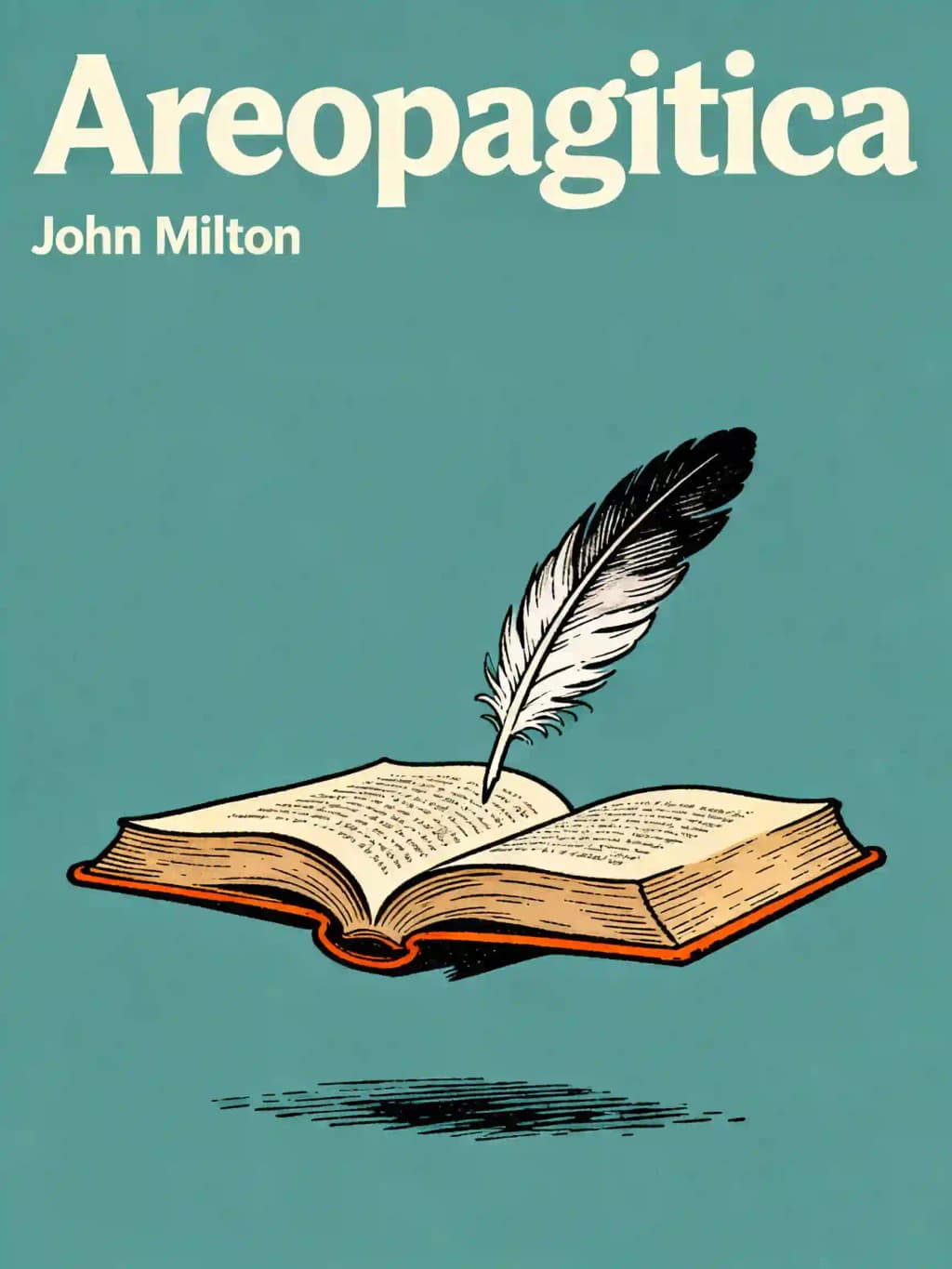
Resumen de Areopagítica
Antes de que la censura fuera un tema de candente actualidad, la obra "Areopagitica" (1644) de Milton desafió audazmente las restricciones de publicación del Parlamento. Este panfleto revolucionario —citado junto a "Sobre la libertad" de Mill— estableció la base intelectual de la libertad de expresión que más tarde inspiraría a Blake, Wordsworth y los principios democráticos modernos.
Temas clave en Areopagítica
- freedom of press
- intellectual liberty
- opposition to censorship
- marketplace of ideas
- licensing of books
Citas de Areopagítica
For books are not absolutely dead things, but do contain a potency of life in them to be as active as that soul was whose progeny they are; nay, they do preserve as in a vial the purest efficacy and extraction of that living intellect that bred them.
Where there is much desire to learn, there of necessity will be much arguing, much writing, many opinions; for opinion in good men is but knowledge in the making.
Let her and Falsehood grapple; who ever knew Truth put to the worse, in a free and open encounter?
I deny not, but that it is of greatest concernment in the church and commonwealth, to have a vigilant eye how books demean themselves as well as men; and thereafter to confine, imprison, and do sharpest justice on them as malefactors.
Personajes en Areopagítica
- John MiltonAuthor, poet, and defender of free speech
- GalileoAging, blind astronomer met by Milton in Italy
- Mary PowellMilton's first wife whose departure sparked crisis
- Hugo GrotiusScholar and luminary met during Milton's tour
Descargar resumen de Areopagítica
Obtén el resumen de Areopagítica como PDF o EPUB gratis. Imprímelo o léelo sin conexión en cualquier momento.