Resumen de Rebelión en la granja
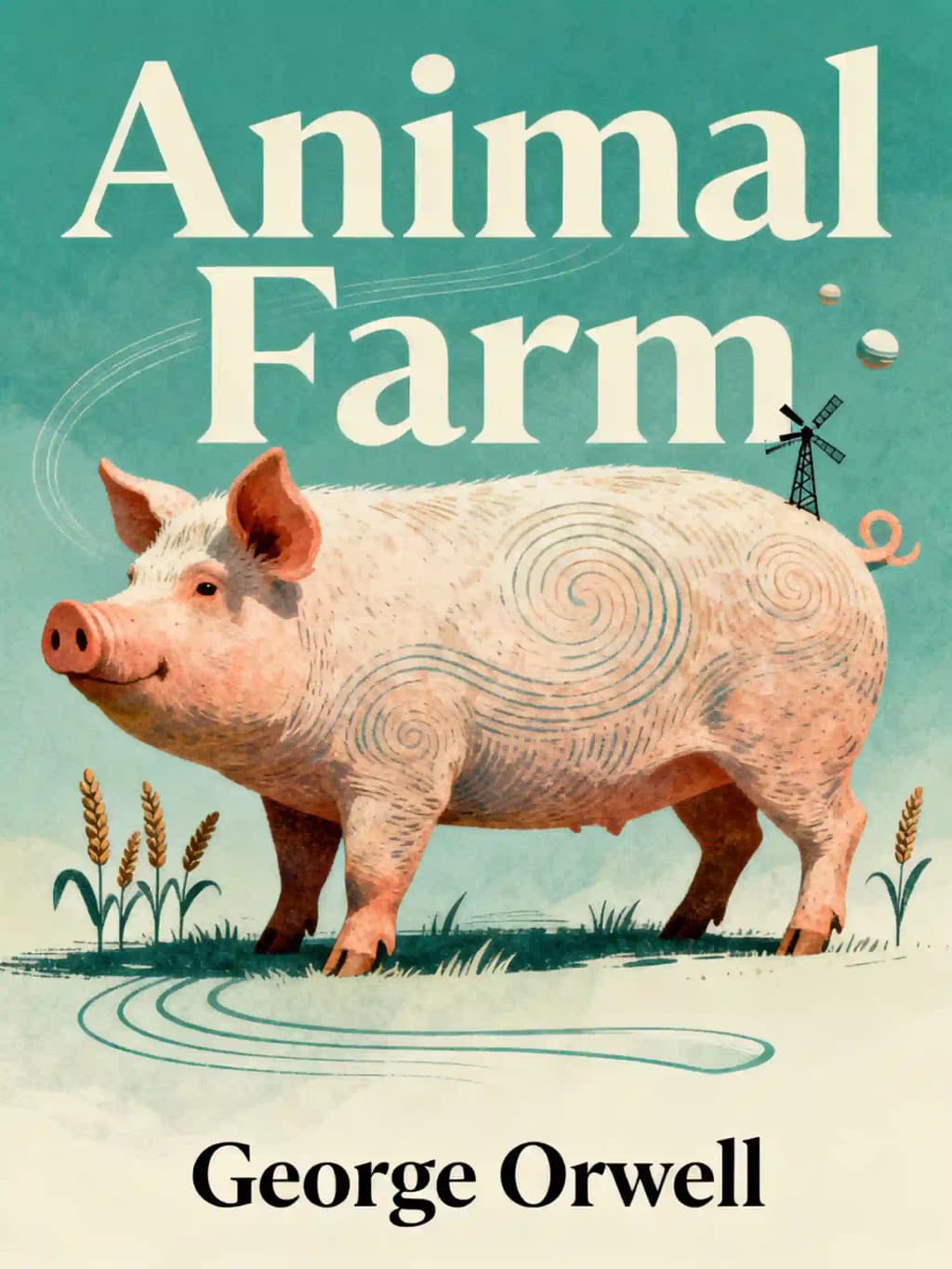
La obra maestra alegórica de Orwell expone el totalitarismo a través de animales de granja rebeldes. Prohibida en la URSS de Stalin, su escalofriante advertencia "algunos animales son más iguales que otros" resuena a través de las generaciones. ¿Qué hace que esta sátira política, escrita durante la Segunda Guerra Mundial, siga siendo aterradoramente relevante en las dinámicas de poder actuales?
Temas clave en Rebelión en la granja
- revolutionary corruption
- totalitarian propaganda
- class stratification
- language manipulation
- power dynamics
Citas de Rebelión en la granja
Four legs good, two legs bad.
Man is the only creature that consumes without producing.
Beasts of England, beasts of Ireland, / Beasts of every land and clime, / Hearken to my joyful tidings / Of the golden future time.
The creatures outside looked from pig to man, and from man to pig, and from pig to man again; but already it was impossible to say which was which.
Personajes en Rebelión en la granja
- SnowballA vivacious and inventive pig and leader
- Old MajorA prize-winning boar who inspires the rebellion
- BoxerA loyal and hardworking cart-horse
- SquealerA brilliant talker and persuasive pig
Descargar resumen de Rebelión en la granja
Obtén el resumen de Rebelión en la granja como PDF o EPUB gratis. Imprímelo o léelo sin conexión en cualquier momento.