Capítulo 1
The Power of Transformation: From Darkness to Light
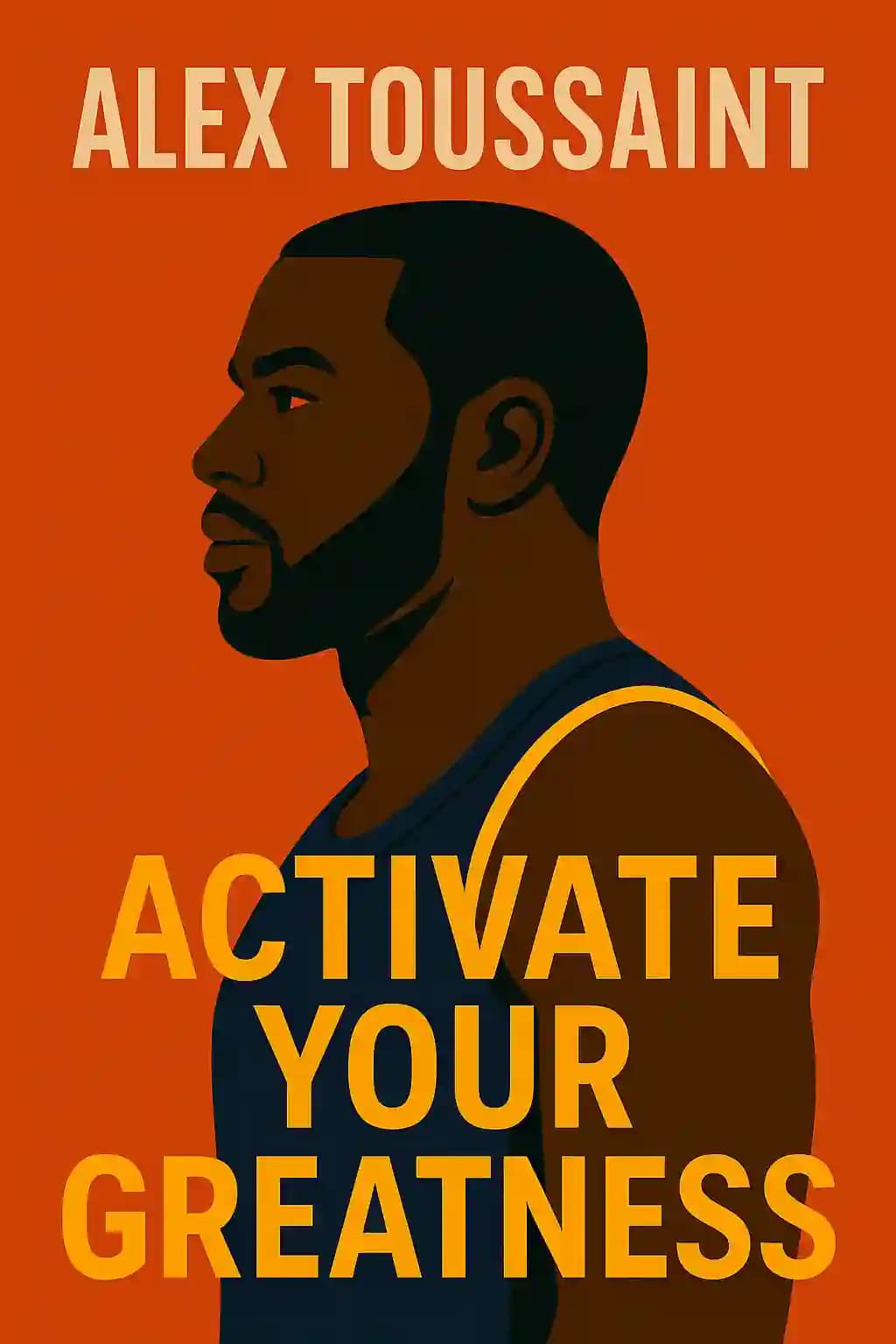
Have you ever wondered how someone transforms from their lowest point to become a beacon of inspiration? Alex Toussaint's journey from military school outcast to beloved Peloton instructor isn't just another success story-it's a masterclass in personal transformation. His book "Activate Your Greatness" has become a favorite among celebrities like LeBron James and Jay-Z, who recognize the authentic wisdom in his three-step approach to personal growth. What makes this book particularly powerful is how it resonates across demographic lines-whether you're a CEO or struggling student, Toussaint's framework for activating greatness speaks to universal human experiences of struggle and triumph. As mental wellness continues to dominate cultural conversations, Toussaint's approach offers something refreshingly different: a practical roadmap that begins with self-compassion before extending outward to help others.
Capítulo 2
The Journey Begins: From Military School to Finding Purpose
At twelve years old, Alex Toussaint found himself dropped off at military school by his father-an experience that bred deep resentment and set the stage for years of internal struggle. His father's mantra-"If you fail to prepare, prepare to fail"-initially felt like punishment, but would later become foundational to his philosophy. The family dynamics had shifted dramatically after his father's colon cancer diagnosis in 1998, which left his dad physically recovered but emotionally transformed. As his father lost his sense of purpose, young Alex became the target of his frustration, creating a vicious cycle of trouble at home and school.
Military school was brutal but transformative. "This ain't day care" was the first lesson hammered into him-a harsh truth that life is challenging by design. While most children were enjoying normal teenage experiences, Alex was learning to stand at attention for hours without flinching, even as drill sergeants deliberately tried to break his concentration. These painful experiences built mental fortitude that would serve him later, though he couldn't see it at the time.
After being expelled from military school through deliberate defiance, Alex returned home to a silent standoff with his father that lasted eight months. During this period, he developed coping mechanisms to avoid confrontation-entering through different doors, taking longer routes home, or escaping to a hidden path near Three Mile Harbor where he would sit for hours, sometimes having dark thoughts about walking into the water.
Throughout these difficult years, certain people became lifelines: his kindergarten teacher who gave him extra hugs, a guidance counselor who steered him away from troublemaking older kids, Captain Ragsdale at military school who secretly provided occasional normal social experiences, and Coach Hartwell who became a father figure. Most significant was his friend Jerome, whose home provided refuge and whose family treated him like a son when his own father never attended his basketball games.
These experiences taught Alex to transform pain into power. Rather than letting darkness consume him, he learned to harness it as motivation. He developed practices for managing emotions: being present through daily rituals like breath work ("inhale your confidence and exhale your doubt"), the 48-hour rule for addressing bigger problems by disconnecting and processing emotions, and cultivating gratitude as a foundation for removing negativity and fear.
The turning point came when his friend Jayvee offered him a position as a janitor at Flywheel, a popular spin studio. Rather than viewing this as just a job, Alex approached his janitorial work with extraordinary purpose-mopping floors like he was the CEO, greeting customers with genuine smiles, and memorizing regulars' preferences. While cleaning the studio after hours, he began counting beats to the music and visualizing himself as an instructor. When he finally approached Ruth, Flywheel's cofounder, she looked him in the eye and said, "Give me two weeks of your time to train you, and I can change your life."
Capítulo 3
Outworking: The Path from Janitor to Instructor
"We're not here to work, we're here to outwork" became Alex's defining mantra. This philosophy-that working is just existing while outworking is truly living-transformed his approach to everything. He learned it from his mother, who never just worked but outworked everything-teaching herself a new language, becoming both a teacher and administrator.
After Ruth invited him to train as a Flywheel instructor, Alex gave those two weeks his undivided attention, commuting 2.5 hours each way from East Hampton to Manhattan's Flatiron District. He slept on his friend Grace's couch and poured everything into the training, partly because he knew this was his chance and partly because he was an outsider-the other trainees had fitness backgrounds while he came from mopping floors.
For his audition, he meticulously planned a seven-minute ride to Jay-Z tracks that resonated with his life story. Despite his nervousness, he nailed it. Ruth, Kate, and Alison briefly pretended to deliberate before revealing their excitement. "It's your time," Ruth told him.
As the youngest instructor and one of the few Black instructors at Flywheel, Alex brought something unique. Ruth saw this potential in him-his immigrant family background, military school experience, and understanding of different demographics gave him a "different sauce." He had finally found something meaningful at age twenty, entering the booming spin industry at the perfect moment.
Even after becoming an instructor, Alex continued working as a janitor, keeping himself grounded and feeding the chip on his shoulder. Eventually, he was teaching the maximum fifteen classes weekly at Flywheel, then asked Ruth for more. This meant commuting between East Hampton and NYC, teaching 25 classes weekly with "No days off" as his motto.
To stay motivated through this grueling schedule, he developed a mindset: "Don't chase Friday on Monday." While most people dread the beginning of the workweek, Alex reframed Monday as the day where everything starts-not a day to survive, but to thrive. This perspective helped him maintain momentum and purpose through the most demanding periods of his career.
Capítulo 4
The Journey and the Destination: Finding Balance in Progress
Feeling good forms the foundation for activating greatness, but looking good-not in terms of appearance but in how we project our internal light-is the next step up the mountain. When we feel good internally, we project that energy outward as a glow that attracts others with similar vibes while helping them find their own light.
This transformation isn't linear or immediate. Even as Alex began instructor training at Flywheel, he still battled doubts and negative thoughts. The demon of his past failures lurked behind him, waiting for him to slip. But his actions held firm because he'd taken steps toward feeling good about himself, using past pain as motivation rather than letting it overwhelm him.
Progress often comes in drops, not buckets-so slow that many mistake it for stagnation. Frederick Douglass said, "If there is no struggle, there is no progress." We must train ourselves for life's resistance by manufacturing challenges in our daily lives. In his classes, Alex tells riders: "If it's too light, turn that shit to the right." This manufactured resistance prepares us for real-life setbacks.
Rather than thinking "life is about the journey, not the destination," which is difficult to embrace while struggling, Alex developed a remix to make this concept more practical. The key is to keep pushing forward, preparing, and learning from failures, knowing that progress will eventually come-even if slower than we'd like.
We naturally want to fast-forward to the good parts-win the lottery, lose weight quickly, take a pill for instant happiness. But we must embrace both the journey AND the destination. The destination gives our journey shape and purpose-it's not just some final endpoint but a launching point for our next journey. Feeling good and looking good are part of the journey; doing better is the destination. This virtuous cycle gives our lives movement and meaning as we travel terrain that's constantly changing.
Capítulo 5
Discipline Over Distractions: The Military School Legacy
When we first start feeling good and looking good, we paradoxically enter a precarious zone. After breaking away from negativity and taking those first steps up the mountain, we can get reckless. This "relief syndrome" can make us take our eyes off the ball. This is where we must rely on our foundation and maintain discipline over distractions.
Despite being too young for military school to be a positive experience while there, Alex developed tremendous respect for the military. His father served, as did his Uncle Ronald, who was a master sergeant in the Air Force and the first Haitian-descent person to serve on Air Force One during Clinton's presidency. The painful lessons from military school began bearing fruit in his life.
Military school taught him discipline-standing at attention while drill sergeants tried to make him falter with distractions. They'd drop things, yell in his face, and if he moved even slightly, he'd get punished. This training prepared him to execute flawlessly in chaotic environments, conditioning behavior into muscle memory.
For most of us, discipline is conditioned through everyday behaviors. Being present and prepared allows us to embrace each step of our journey. When we have that foundation, nothing can knock us off track or break our perspective.
Distractions are everywhere-people telling us we can't reach goals, negativity, self-doubt, wasting time, stress and anxiety. At this point in Alex's life, distractions included voices telling him to stay out late or not give his all in class. Discipline is what allows us to overcome these distractions because our discipline carries us when motivation won't.
Some mornings, even now, Alex wakes up unmotivated. Maybe he's sick or had a disagreement with a friend. It's impossible to wake up motivated all 365 days a year. But when motivation fails, discipline becomes his backup generator. It helps us not chase Fridays and keeps us mentally and physically fit.
Making his bed perfectly each morning is another discipline practice he learned from military school. As Admiral William H. McRaven said in his famous speech, "If you want to change the world, start off by making your bed." That one simple task completed well leads to every other task being completed well. How we do anything is how we do everything.
Capítulo 6
Free Throws and Opportunities: Recognizing Life's Gifts
When we're merely existing rather than living, we miss opportunities right in front of us. These "free throws" are accessible but we might be too caught in worry or negativity to receive them. Like basketball's free throws that often determine game outcomes, life's free throws may seem small but are crucial.
Just as NBA champion Steph Curry practices free throws relentlessly, preparing for crucial moments when games hang in the balance, we must be ready for life's opportunities. Despite being famous for spectacular three-pointers, Curry's greatness comes from mastering the unheralded free throw through disciplined practice and routine.
Our life's free throws take many forms-family, health, privilege, or simple kindness from others. For years, Alex missed his-the family that sacrificed for him, friends like Jerome who gave unconditional love. He wasn't prepared to receive what they offered.
When he started feeling good about himself, he learned to love and trust others, making him ready for the free throws presented to him. Jayvee's offer to work as a janitor at Flywheel, Jerome's family, Ruth's faith in him as an instructor-all were free throws he finally learned to make.
Everyone has free throws-a child asking for a story, the ability to call our parents, the chance to greet coworkers warmly, those five minutes we give ourselves each morning. Small things with big meaning.
Two years into his Flywheel career, his boss Ruth called him in to tell him Peloton was going to try to hire him. She explained that Peloton was a well-funded startup that could be a "life changer." Despite his loyalty to her, she didn't want to hold him back from growth opportunities. After meetings with executives and considering the opportunity to reach thousands instead of just fifty riders per class, Alex struggled with the decision. He turned it down multiple times, comfortable in his current position. But after seeing a Peloton ad featuring Robin Arzon while watching basketball, he felt it was a sign. He took the job the next day, with Ruth's blessing and support.
Capítulo 7
The Validation Breakthrough: Finding Self-Worth
True greatness cannot be activated by others-only by ourselves. We often let others define us, seeking validation through social media likes or others' approval, but this outsourcing of our greatness holds us back. For much of his life, Alex allowed others to define him, carrying the heavy burden of self-doubt.
During his three-month non-compete period before starting at Peloton, Alex couldn't sit still despite being told to rest. Instead of taking a vacation, he secretly trained himself in the Peloton method, studying their instructors' techniques, analyzing class structures, and preparing to contribute immediately. At 23, as Peloton's youngest and only Black instructor, he felt a responsibility beyond himself-he needed to prove they'd made the right choice and represent something larger than just himself.
His first Peloton class on February 3, 2016, began with Jay-Z's "A Dream" as he aimed to bring something entirely new. While every Peloton instructor was excellent, he brought something authentic and different-not better, just uniquely him. As Jay-Z rapped, "Nobody built like you, you designed yourself," he embraced that feeling and ran with it.
Teaching for Peloton's camera required a different approach than studio classes. Without the immediate energy of a room full of riders, he had to visualize someone working out alone at home, needing his motivation. The camera created a unique intimacy-he had to emote more with facial expressions and voice modulation rather than big physical gestures. This forced him to embody emotions more deeply, which improved his self-examination and mental health.
Initially, he treated every class like an audition, teaching physically demanding sessions focused on the body rather than the mind. While this approach helped Peloton grow rapidly, he was sprinting constantly, neglecting things within himself that needed addressing-until one transformative phone call changed everything.
His relationship with his father had evolved from close companionship in his early years to almost complete disconnection after military school, with interactions fueled by rage and hatred. Though he seemed less angry after Alex found steady work, tension always simmered beneath the surface during their rare encounters.
On April 4, 2016, two months after starting at Peloton, his father unexpectedly called. After some small talk, he mentioned seeing an article about Alex and said, "Lex, I just want to let you know that I'm proud of you. You're doing it." Alex was stunned-these were words he'd yearned to hear for years.
But in that moment of validation, he realized something profound: he had never needed his father's approval to begin with. He'd been merely existing rather than living, doing everything just to prove his father wrong. This realization opened up empathy for his father, helping him understand his pain wasn't really about Alex but about himself. He finally understood what his friends meant when they said you only get one dad-he loved him because he was his father, but also because the discipline and drive he instilled in him, however painfully, had shaped him.
With this validation, he no longer needed to doubt his self-worth or prove his father wrong. The restriction lifted, he realized his purpose wasn't just self-improvement but helping others. He'd been desperately seeking validation his entire life, but when the metaphorical theater lights came on, he saw that support had been there all along-he just couldn't see it through his own darkness.
Capítulo 8
The Vibe Check: Curiosity, Awareness, and Rebelliousness
Three critical characteristics help us ascend the mountain toward feeling good, looking good, and doing better: curiosity, awareness, and rebelliousness.
Curiosity is a mindset that advances our knowledge about ourselves and the world. It pushes us beyond comfort zones, testing our limits and opening new opportunities. Being curious isn't about blindly chasing novelty-it requires thought, purpose and intention.
When Alex created the Do Better Foundation, they initially did a Thanksgiving turkey drive in Spanish Harlem. While they provided turkeys for seventy-five families, something nagged at him. Applying curiosity, he realized they needed to address why people couldn't afford turkeys in the first place. They shifted focus toward education and employment while continuing the turkey drive-because wounds need Band-Aids, but prevention matters more.
Awareness begins with self-awareness-being present with ourselves mentally and physically, moving with purpose and validating our progress in real time. As Brene Brown notes, without self-awareness, we "often unknowingly lead from hurt, not heart," creating "distrust and disengagement" for ourselves and others.
Awareness extends to our surroundings-are we like drivers obliviously slowing traffic in the passing lane? We must check our mirrors and blind spots, both on the road and in life.
While politically charged terms like "woke" have become divisive, at its essence, awareness simply means being empathetic to others' circumstances. Be aware of movements like Black Lives Matter and why they exist. Be aware of different communities and their struggles. Be aware of those who think differently than you do.
Rebelliousness doesn't mean getting kicked out of school, but calculated rebellion against limiting mindsets. In class, when our bodies and minds scream to quit during a climb, we rebel against those thoughts, pushing through pain to improve. Similarly, off the bike, we rebel against negativity, doubt, fear, and complacency.
Rebelliousness means challenging external constraints-like those who say our goals are unreachable. Ruth rebelled against the notion women couldn't be disruptors. Steph Curry rebelled against critics who claimed he was too small for the NBA, silencing doubters with four championships.
It also means confronting self-imposed limitations-viewing ourselves as who we want to be, not who we were. When curiosity, awareness, and rebellion align, they conquer negativity and activate greatness. They carry us to the mountain's summit and then inspire us to extend our hands to help others climb.
Capítulo 9
Seeing the Light in Others: The Final Step
We don't climb the mountain for visibility or accolades, but so we can see others and help them. Having experienced the journey ourselves, we're uniquely equipped to assist those at various stages of their climb. This is where our greatness becomes fully activated-when we choose empathy over ignorance, courage over fear, and love over hate. Like a peloton in cycling where riders move together conserving energy and pushing each other forward, we progress collectively through feeling good, looking good, and ultimately doing better by lifting others.
After his grandmother Pome died in 2018, Alex was shocked back to reality, realizing he'd been existing rather than living despite his outward success. Visiting Haiti for her funeral reconnected him with his roots and helped him understand the generational sacrifices that enabled his opportunities. Pome taught him that "the key to life is giving" and that unselfishness-giving guidance, inspiration, confidence and love-leads to fulfillment.
Her death pushed him to embrace vulnerability, breaking cultural taboos particularly strong among Black men. By sharing his pain openly, even crying during class, he connected more deeply with riders and received messages from men who felt permission to be vulnerable themselves. This vulnerability allows us to see the light in others they don't see themselves.
Being vulnerable opens us up to seeing the light in others that they can't see themselves. We become the believers, confidence-givers, and lovers for those who need it most. Everyone has light within them-our job is to help them see it as hope, not an oncoming train. Angels are those who see our light when we're blind to it, appearing in our darkest moments. Ruth was Alex's first angel, but there were many-his kindergarten teacher, Coach Hartwell, his counselor, Captain Ragsdale, Jerome, Jayvee-all selflessly helping him without expecting anything in return.
Capítulo 10
Can't Quarantine the Hustle: Thriving Through Challenges
Life throws chaos at us constantly-job loss, illness, missed flights-but our response determines our outcome. We must distinguish between what we can and cannot control, focusing on our thoughts, habits and maintaining a positive mindset. The SMART criteria (Specific, Measurable, Achievable, Realistic, Timely) provides a framework for goal-setting during chaotic times. Change becomes an opportunity to leverage our strengths, experiment with new activities, and grow comfortable with discomfort.
In April 2020, during the pandemic's early days, Alex sat in his Manhattan apartment preparing to teach Peloton's first "Live from Home" class. With the studios closed and New York eerily quiet except for ambulance sirens, he transformed his living room into a makeshift studio with just a bike, camera, tripod and limited technical support from his friend Dave. Five minutes into the class with 22,000 riders, his headphones failed-no music came through. Rather than panic, he remembered his father's preparation mantra and channeled Kobe Bryant's embrace of challenges. Despite having no audio, he continued instructing, relying on his memorized playlist and knowledge of every beat drop and transition. "We're not perfect, but we're still working," he told the class.
During the pandemic lockdown, he refused to retreat into a shell and encouraged his riders to do the same. We had a choice: BS our way through this crisis or get proactive and emerge better than before. The phrase "Can't quarantine the hustle" became his mantra-a reminder that no obstacle should confine our vision or stop our growth. True hustle is about how we operate in life: finding motivation, maintaining discipline, seeking adjustments rather than excuses.
This concept extends beyond COVID to all life challenges. Hustling is ultimately about love-growing it, nurturing it, and sharing it. When we finish a class or reach a goal, we want to share that feeling with others, creating a butterfly effect of positivity. That's the community spread of love-the innovation, creativity, and flexibility that lies at the heart of doing better.
Capítulo 11
It's Not About Me, It's About We: Building Community
We should think of ourselves as planters, daily sowing seeds of kindness that will grow and spread throughout our communities.
Robin Arzon was the first "planter" Alex met at Peloton-a goddess, mentor and sister who changed him from the moment he saw her in that NBA playoff ad. As the daughter of immigrants and one of few people of color in leadership when he joined, she showed him how to truly be himself as an instructor. With Robin, Tunde, Cody and other instructors, he learned that Peloton's motto "Together we go far" isn't just for show-individual success means nothing if the team doesn't succeed together. Though they're all different with varied strengths and demographics, they lift each other up rather than competing.
One key to doing better is surrounding yourself with authentic people who believe in your vision-people who assist rather than dismiss. These people become your peloton, helping you move forward as you do the same for them. When we start doing better, we create a self-reinforcing community where everyone holds each other accountable and serves as each other's safety net. As Jay-Z says, "Nobody will fall 'cause everyone will be each other's crutches."
Malcolm X said, "When 'I' is replaced with 'we,' even 'illness' becomes 'wellness.'" This community-centered mindset was instilled in Alex during military school, reinforced at Flywheel with Ruth's mantra that classes were about riders not instructors, and strengthened at Peloton. Our differences become our strength when appreciated as bridges rather than moats. We create change by starting locally-with ourselves. We practice gratitude, become trustworthy and loving, and spread those vibes to create a community around us.
To do better for our communities, we must always pour from a full cup. When our cup drains, we lose the ability to love, be kind, and do better. We must disconnect to reconnect. Like old-school Christmas lights on one shared circuit, if one bulb dims, it affects every other bulb. Ideally, disconnecting happens on a real vacation where we truly leave everything behind. But even when that's not possible, we can still disconnect enough to recharge-whether it's brief social media breaks on weekends or finding just ten minutes daily to step away from our devices.
Capítulo 12
Speaking Truth to Power: Finding Your Voice
By early 2020, Alex's life seemed perfect-he had his own apartment in Hudson Yards and his Peloton classes were drawing hundreds of thousands of riders weekly. When the pandemic hit, "Live from Home" became a lifeline for him and his riders, including professional athletes like Roger Federer, Patrick Mahomes, and PGA golfers who formed their own riding groups. In May 2020, ESPN asked him to do a Peloton ride with a "Last Dance" theme celebrating Michael Jordan's documentary. Twenty-seven thousand riders joined him in his living room for that championship moment. He felt on top of the world.
Just nine days after his triumphant Michael Jordan-themed ride, his world came crashing down. On June 2, 2020, eight days after George Floyd died under a police officer's knee, he canceled a class for the first time ever. He was angry, scared, and exhausted-choking on jumbled emotions. "I can't breathe, either," he realized. Though he'd been inviting people into his home for "Live from Home" classes, he hadn't fully let them in. His guard was always up.
Looking back on his life, he saw how much had been driven by fear-the kind that comes with the devaluation of a life. His father sent him to military school partly to keep him alive. His parents' insistence on being well-dressed was about not being seen as "other." Even today, he texts his mom when he gets home safely, and he's been pulled over countless times while driving-once at gunpoint, another time because he "looked like a drug dealer." This fear had confined them to a box created by society.
After calling Robin and getting her support-"AT, you were hired here to be yourself"-he decided not to cancel his class. But first he needed to confront his own failings. As the first Black instructor at Peloton, he'd worked hard to "make it" flawlessly, but he hadn't shared the collective pain of people who looked like him. He'd been accepted as the "nice guy" who said "yes ma'am" and wore nice clothes, but he hadn't used his platform to help others gain that same acceptance.
The day after deciding to keep his ride scheduled, he rejected the hollow gesture of posting a black square for Blackout Tuesday. "Less caption, more action" became his mantra-speaking up wasn't enough without follow-through. He recorded a raw, unfiltered video in his apartment wearing a black du-rag and "PHENOMENALLY BLACK" hoodie, deliberately not smiling. "I need y'all to wake the hell up," he said directly to camera. "My people are dying... My life is not a trend. Our lives are not trends. My life is more than a fucking hashtag."
The next day-June 5, 2020-he led a class unlike any he'd done before. His energy was different-raw, emotional, angry. He chose songs with pointed messages: T.I.'s "New National Anthem" with its haunting "Free just to murder me" chorus, and Lil Wayne's "Please don't shoot me down 'cause I'm flyin'." He pushed his riders hard physically while connecting it to mental struggle, pleading "Try to find the capacity in your heart to change."
Though most feedback was positive, some riders complained to Peloton's CEO John that they hadn't "signed up for this activism." But John amplified the message instead, launching racial justice initiatives and committing $100 million to fight racial injustice. When the New York Times asked if his actions violated Peloton's rules against political activism, the company responded that this wasn't political-it was a human rights issue.
This period transformed him, making him more cognizant of the world, more empathetic, and helping him understand that "do better" isn't static-it evolves with each summit we reach.