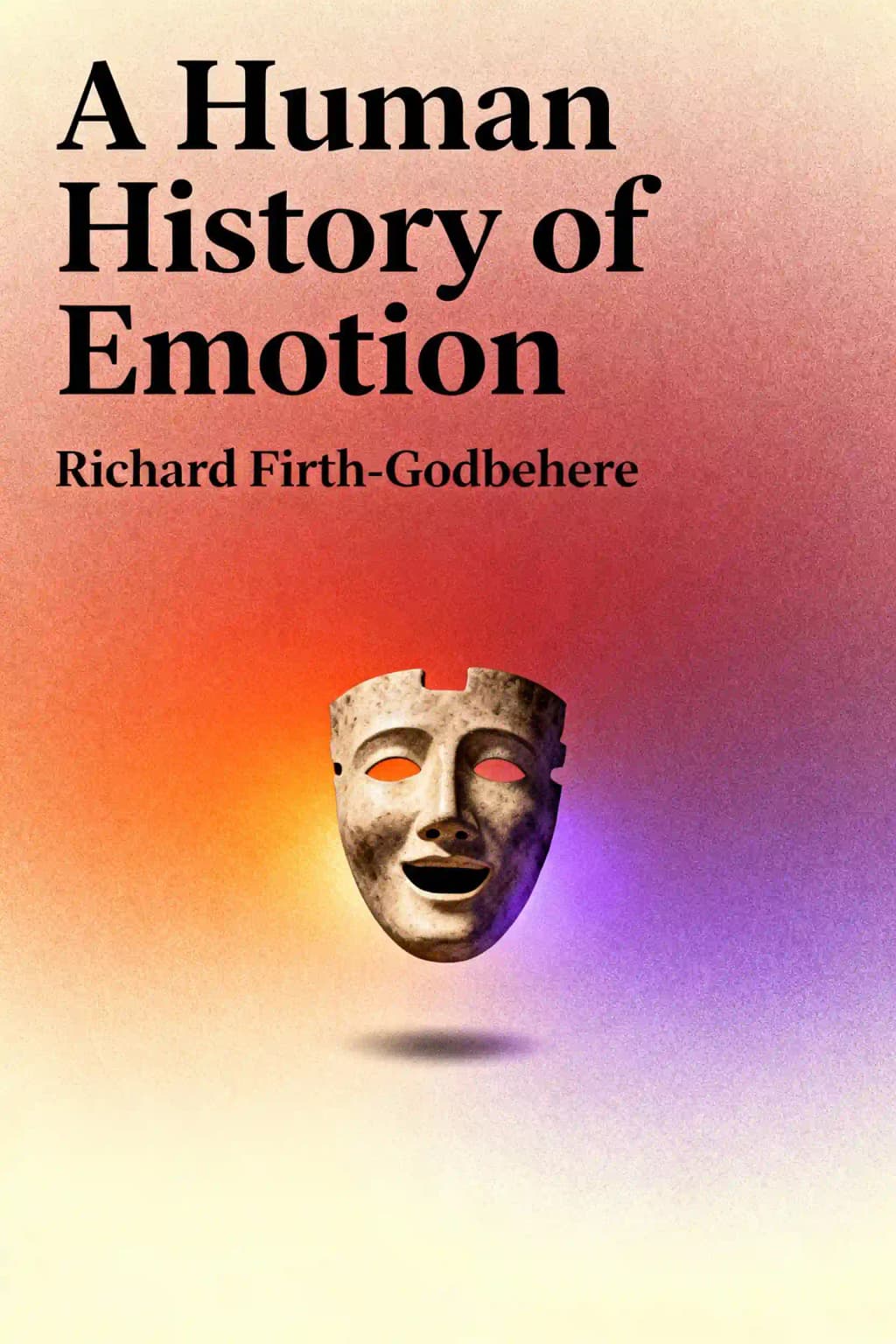
Journey through history's emotional landscape with Firth-Godbehere's groundbreaking exploration of how feelings shaped civilization. Discover why Harvard psychologists cite this work when explaining how ancient Greek "melancholy" evolved into modern depression - revealing the hidden architecture of human experience.
Richard Firth-Godbehere, PhD, is the author of A Human History of Emotion and a leading interdisciplinary expert on the cultural and psychological evolution of human feelings.
His critically acclaimed book blends history, neuroscience, and anthropology to explore how emotions like love, disgust, and anger have shaped civilizations from ancient philosophy to modern politics.
A Wellcome Trust scholar and honorary research fellow at Queen Mary University of London, Firth-Godbehere holds awards for academic excellence. He pioneered groundbreaking research on disgust’s historical role in medicine and morality. His work has been featured at the Edinburgh Fringe Festival and on podcasts discussing the impact of emotional legacies on contemporary society.
Praised by Kirkus for "lucid, captivating prose" and compared to Yuval Noah Harari, his debut has been translated into over a dozen languages, including Japanese and Portuguese, with editions available in print, ebook, and audiobook formats.
A Human History of Emotion explores how emotions shaped human civilization, arguing they’re cultural constructs rather than universal truths. Richard Firth-Godbehere traces their impact on philosophy, religion, wars, and social movements, using examples from Ancient Greece to modern emojis. The book challenges the notion of emotions as innate, revealing how societies have defined and weaponized feelings across eras.
This book suits readers interested in psychology, history, or cultural studies. It’s ideal for those curious about emotional evolution, societal norms, or how feelings like shame or anger influenced events like the Crusades. Academics and general audiences alike gain insights into empathy’s role in human progress.
Yes—critics praise its lucid prose and global scope, comparing it to works by Yuval Noah Harari. It blends neuroscience, philosophy, and history to reframe emotions as drivers of human behavior. Kirkus calls it “insightful” and “educative,” though some may find its interdisciplinary depth demanding.
Emotional regimes are societal rules dictating how feelings should be expressed. For example, medieval Europe prized piety over anger, while Japanese shame culture influenced feudalism. These norms often forced emotional labor, suppressing “improper” feelings to maintain order.
Firth-Godbehere rejects innate definitions, framing emotions as culturally shaped concepts. He notes that “emotion” itself is a modern term—predecessors like passions or sentiments carried different meanings. For instance, ancient Greeks linked anger to divine forces, while Enlightenment thinkers tied it to rationality.
The book ties emotions to the fall of Rome (xenophobic fear), the Scientific Revolution (curiosity), and WWII propaganda (hatred). It also examines how religious movements, like Christianity, harnessed love and guilt to unify followers.
While both explore humanity’s cultural evolution, Firth-Godbehere focuses specifically on feelings’ role in shaping societies. Unlike Harari’s broad strokes, this book delves into niche cases, like Ottoman grief rituals or Gambian community bonds, to show emotional diversity.
Some reviewers note its dense interdisciplinary approach may overwhelm casual readers. While praised for global examples, it leans heavily on Western frameworks early on. Critics still applaud its ambition, calling it a “rollercoaster of historical emotions”.
Firth-Godbehere critiques modern “emotional universalism,” arguing terms like happiness or anger oversimplify nuanced experiences. He highlights emojis as flawed attempts to standardize feelings across cultures, contrasting them with pre-industrial metaphors like “humors”.
Religions emerge as emotional architects: Christianity framed guilt as redemptive, Buddhism linked desire to suffering, and Islam’s hilm (calmness) guided medieval laws. These systems institutionalized feelings to build moral codes and political control.
The book contrasts European guilt with Japanese shame-driven honor cultures and examines Gambian “fadenya” (competitive individualism) versus “badenya” (communal harmony). These examples challenge Western-centric views of emotional universality.
By showing emotions as culturally fluid, it encourages empathy in cross-cultural interactions. For example, understanding historical anger management (like Stoic philosophy) can inform modern conflict resolution. It also warns against assuming universal emotional responses in global politics.
Siente el libro a través de la voz del autor
Convierte el conocimiento en ideas atractivas y llenas de ejemplos
Captura ideas clave en un instante para un aprendizaje rápido
Disfruta el libro de una manera divertida y atractiva
Emotions aren't just personal experiences-they're powerful cultural forces.
One should 'die in good omened silence.'
Desire differs fundamentally from other emotions.
Suffering exists, desire causes suffering, nirvana ends suffering.
His influence likely contributed to Buddhism's spread throughout Asia.
Desglosa las ideas clave de Human History of Emotion en puntos fáciles de entender para comprender cómo los equipos innovadores crean, colaboran y crecen.
Destila Human History of Emotion en pistas de memoria rápidas que resaltan los principios clave de franqueza, trabajo en equipo y resiliencia creativa.

Experimenta Human History of Emotion a través de narraciones vívidas que convierten las lecciones de innovación en momentos que recordarás y aplicarás.
Pregunta lo que quieras, elige la voz y co-crea ideas que realmente resuenen contigo.

Creado por exalumnos de la Universidad de Columbia en San Francisco
"Instead of endless scrolling, I just hit play on BeFreed. It saves me so much time."
"I never knew where to start with nonfiction—BeFreed’s book lists turned into podcasts gave me a clear path."
"Perfect balance between learning and entertainment. Finished ‘Thinking, Fast and Slow’ on my commute this week."
"Crazy how much I learned while walking the dog. BeFreed = small habits → big gains."
"Reading used to feel like a chore. Now it’s just part of my lifestyle."
"Feels effortless compared to reading. I’ve finished 6 books this month already."
"BeFreed turned my guilty doomscrolling into something that feels productive and inspiring."
"BeFreed turned my commute into learning time. 20-min podcasts are perfect for finishing books I never had time for."
"BeFreed replaced my podcast queue. Imagine Spotify for books — that’s it. 🙌"
"It is great for me to learn something from the book without reading it."
"The themed book list podcasts help me connect ideas across authors—like a guided audio journey."
"Makes me feel smarter every time before going to work"
Creado por exalumnos de la Universidad de Columbia en San Francisco

Obtén el resumen de Human History of Emotion como PDF o EPUB gratis. Imprímelo o léelo sin conexión en cualquier momento.
Have you ever wondered why you feel what you feel? Why some cultures embrace emotional displays while others prize stoicism? Our emotions aren't just personal experiences-they're powerful cultural forces that have toppled empires, launched revolutions, and continue to shape our modern world in ways we rarely recognize. Throughout history, emotions have been understood differently across cultures and time periods, creating rich tapestries of feeling that define what it means to be human. The story of emotions is, in many ways, the story of humanity itself-a complex narrative of how we've tried to make sense of our inner lives while navigating the outer world.