Capítulo 1
Unlocking the Genetic Story of Humanity
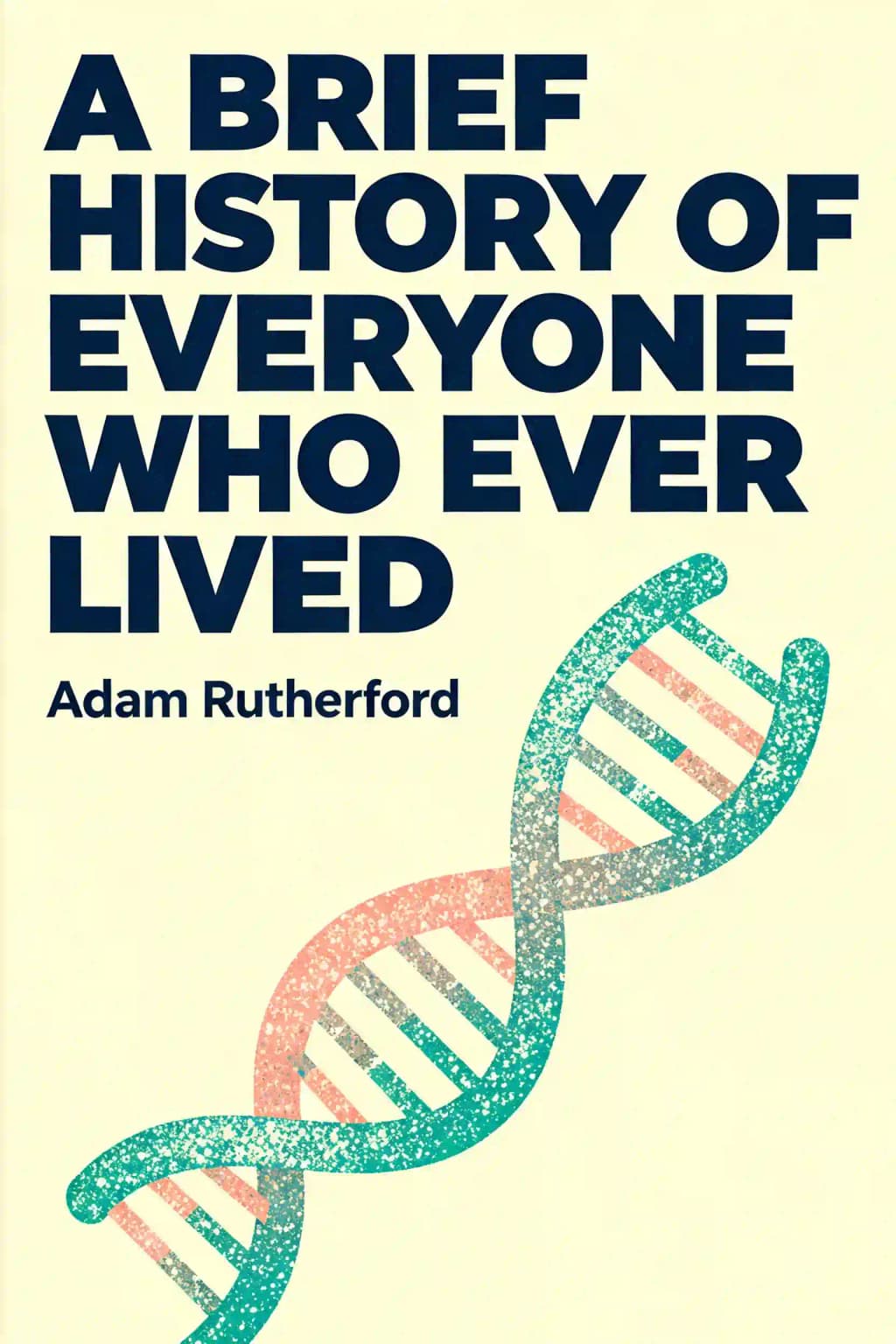
Adam Rutherford's "A Brief History of Everyone Who Ever Lived" arrived at a pivotal moment in human history-when DNA sequencing had become affordable enough to transform our understanding of the past. This New York Times bestseller bridges the gap between academic genetics and popular science, making complex genomic concepts accessible without sacrificing scientific integrity. The book has garnered praise from publications like Nature and The Guardian for its ability to overturn common misconceptions about genetics while maintaining a conversational tone. Even celebrities like Neil Gaiman have praised Rutherford's ability to make genetics both entertaining and enlightening. Since its publication, the book has influenced discussions about ancestry testing, race, and human evolution, challenging many popular but scientifically unsound beliefs about genetic determinism. As genetic testing becomes increasingly mainstream, Rutherford's work stands as an essential guide to understanding what our DNA can-and cannot-tell us about ourselves.
Capítulo 2
Our Messy Evolutionary Journey
Life has no true beginning point-we exist in the middle of an unbroken chain stretching back billions of years. Our ancestors gradually transform as we trace back through time, from apes to mammals to sea creatures and eventually single cells. This isn't the linear progression often depicted in those iconic images showing apes evolving into humans. The truth is far messier and more profound.
We aren't more or less evolved than any other species on Earth. Each organism is uniquely adapted to its circumstances, with no hierarchy of "higher" or "lower" forms. Evolution has no arrow of progress, no predetermined direction. Our evolutionary tree isn't a neat branching diagram but more like "upside-down dribbly blobs" or a "murky evolutionary shrub" with dotted lines showing hypothetical connections between species.
Modern DNA sequencing technology has revolutionized our understanding of human evolution. The Human Genome Project's technological advances made DNA sequencing cheap and accessible. While once expensive and time-consuming, sequencing has become remarkably fast and affordable, with portable sequencers that can plug directly into laptops for fieldwork.
This technology has allowed scientists to extract DNA from ancient bones, including those of Neanderthals. Despite their negative reputation as brutish cavemen, Neanderthals were sophisticated beings who hunted, cooked, sewed, made clothes and jewelry, and possibly created cave art and performed ritual burials. In 2010, Svante Paabo's team assembled a complete Neanderthal genome from fossil fragments, revealing that Neanderthals diverged from our lineage around 500,000-690,000 years ago, with clear evidence of later interbreeding with Homo sapiens.
Even more surprising was the 2008 discovery in Denisova Cave of a tooth and child's fingertip belonging to neither humans nor Neanderthals, but a previously unknown hominin species. These "Denisovans" were more closely related to Neanderthals than to modern humans but still distinct. Remarkably, Denisovan DNA lives on in contemporary Melanesians (5% of their genome) and Tibetans, who inherited the EPAS1 gene that helps them adapt to high altitudes.
These discoveries demolish the old concept of species as reproductively isolated. Whenever different human groups met-sapiens, Neanderthal, Denisovan-they interbred successfully. Our evolutionary history isn't a neat branching tree but what could be described as "one big, million-year clusterfuck." These ancient peoples never truly went extinct-they merged with us, and we carry them within our cells.
Capítulo 3
The Peopling of Europe and Beyond
Before all recorded history-before the Nazis, Holy Roman Empire, medieval plagues, Vikings, Christianity, Romans, and Greeks-Homo sapiens had already established themselves across Europe. Modern humans have been the sole human occupants of Europe for over 30,000 years, but the genetic story of how they got there and evolved is remarkably complex.
Earlier human species inhabited Europe for up to 2 million years, from Homo erectus to Neanderthals who were the first true Europeans. Modern humans arrived only 60,000 years ago, overlapping with Neanderthals for about 5,000 years before the latter disappeared. Recent genetic research has transformed our understanding of European origins, revealing that between the Neanderthals' extinction and recorded history, Europe's settlers underwent significant physical and cultural changes.
One fascinating example of genetic adaptation is our ability to digest milk. It's strange that adult humans drink milk at all, as most mammals stop after infancy. While Europeans and some African and Middle Eastern pastoralists consume milk into adulthood, most humans throughout history couldn't digest it. A mutation that emerged 5,000-10,000 BCE, coinciding with dairy farming development, allows persistent lactase activity in Europeans. This demonstrates both our continued evolution and how our cultural practices shape our genes.
Human skin color varies across a continuous spectrum, determined by at least eleven genes affecting melanin production. DNA evidence reveals that Africans who populated southern Europe 50,000 years ago had dark skin, as did European hunter-gatherers 8,000 years ago. However, Swedish remains from 7,700 years ago show genetic variants for pale skin, blond hair, and blue eyes-adaptations likely related to vitamin D absorption in northern latitudes.
Red hair occurs in only 4-5% of the global population, caused by mutations in the melanocortin 1 receptor (MC1R) gene. About 40% of Scots carry at least one copy of a red hair allele, with one in ten being redheads. Despite sensationalist headlines claiming climate change might lead to redhead "extinction," this is scientifically unfounded.
The genetic history of the British Isles reveals striking regional patterns that reflect ancient settlement patterns. The Welsh are as genetically distinct from each other (north versus south) as southern Englanders are from Scots. Interestingly, the Danish Vikings, despite ruling for 200 years starting in the 800s, left virtually no genetic trace in British genomes, suggesting they ruled from above without integrating with the local population.
Iceland's genetic history tells a fascinating story: two-thirds of mitochondrial DNA (maternal lineage) comes from Scotland and Ireland, while Y chromosomes (paternal lineage) are predominantly Scandinavian. This suggests Norwegian Viking men acquired wives from the British Isles during their westward expansion. Iceland's genetic isolation has created a uniquely homogeneous population, leading to valuable insights into genetic diseases and human biology.
Capítulo 4
Plagues That Shaped Our Genes
Yersinia pestis, the bacterium responsible for the Black Death, has played an outsized role in human genetic history. This unremarkable rod-shaped bacterium, when transmitted through fleas, invades human cells, disables immune defenses, and triggers massive inflammation. The infection manifests as bubonic plague with swollen lymph nodes (buboes), pneumonic plague in the lungs, or septicemic plague in the bloodstream-all typically fatal without modern antibiotics.
The first major Yersinia pestis pandemic struck the Byzantine Empire in 541 CE, killing an estimated 5,000 people daily in Constantinople during its peak. Over the following centuries, approximately 50 million people died across Europe, North Africa, and the Middle East. Recent genetic analysis of teeth from sixth-century plague pits near Munich confirmed the presence of Yersinia pestis and traced its origins to the East, likely arriving via the Silk Road from China.
The East Smithfield Black Death cemetery in London reveals the horror of the 1348-1350 plague that killed a third of Britain's population. Johannes Krause's DNA analysis traced this second major pandemic from China through Russia, Constantinople, Mediterranean ports, and finally to London, killing 5 million people in five years.
Studies of Romanian Europeans and Roma populations show evolutionary selection in Toll-like receptor genes that recognize Yersinia pestis-evidence of plague's genetic impact on survivors. Simon Rasmussen's 2015 research found Yersinia DNA in Bronze Age teeth across Europe, dating its origin to 5,783 years ago, though earlier strains lacked the protein needed for flea transmission. Without this protein, acquired through lateral gene transfer around 3000 BCE, early plague was likely pneumonic rather than bubonic, possibly contributing to population busts in Europe's early farming history.
Though genetically unchanged, plague's impact has lessened through our genetic, social and cultural evolution. Ironically, Yersinia doesn't target humans specifically-we're collateral damage in its lifecycle among small mammals and fleas, brought into our orbit through farming, grain storage, and the rats that followed.
Capítulo 5
The Genetic Tapestry of the Americas
The first European contact with the Americas came when Vikings briefly explored what they called Vinland around 1000 CE. Europeans wouldn't return for five centuries until Columbus arrived in 1492, meeting the Taino people. Before Columbus, these lands had been occupied for at least 20,000 years.
The Americas represent a unique genetic story of both ancient and recent populations. While modern America's genetic makeup is defined by immigration and slavery, the first human inhabitants arrived during the Last Glacial Maximum (30,000-11,000 BCE) when sea levels were much lower than today. These founding peoples spread over 12,000 years to every corner of both continents, forming diverse tribal groups that remained largely isolated until 1492.
The emerging "Beringian Standstill" theory suggests that founders split from Siberian populations around 40,000 years ago, crossed Beringia, and remained isolated for thousands of years before spreading southward around 16,000 years ago. This explains why modern Native Americans show lower genetic diversity derived from just fifteen founding mitochondrial types.
Genetic evidence from rare ancient remains like Anzick-1 (a ceremonially buried toddler) and Kennewick Man (the "Ancient One") confirms that North and South America were populated by the same founding people, with complex regional variations developing over millennia.
The relationship between scientists and Native American communities has been troubled. The Havasupai tribe provided blood samples to Arizona State University scientists in 1990, believing their DNA would be used specifically to investigate diabetes. However, researchers later used these samples to study schizophrenia, inbreeding patterns, and migration history-uses not clearly communicated to the tribe. The Havasupai sued and won $700,000 in compensation in 2010, highlighting the complex issues of informed consent, tribal sovereignty, and the troubled relationship between scientists and indigenous communities.
A comprehensive genetic study by AncestryDNA analyzing over 770,000 American genomes revealed expected patterns of immigrant ancestry, with distinct European clusters visible throughout the country. For African Americans, genealogical tracing is complicated by slavery's legacy. Genetic data shows European-African admixture beginning around six generations ago, coinciding with the Emancipation Proclamation, with patterns suggesting male Europeans having sexual relations with female slaves.
Capítulo 6
The Mathematics of Royal Ancestry
If you're of European descent, Charlemagne is your ancestor. Born around 742 CE, this first Holy Roman Emperor expanded the Frankish kingdom and left a prolific lineage. While aristocratic ancestry carries cachet in amateur genealogy, mathematics reveals why this connection is inevitable. Yale statistician Joseph Chang demonstrated that all Europeans share a common ancestor from merely 600 years ago.
Going back 1,000 years, the math becomes more striking: 20% of people from that era have no living descendants today, while the remaining 80% are ancestors to everyone alive in Europe. This mathematical certainty means that if Charlemagne left any descendants who survived to present day (which we know he did), then everyone of European descent today can claim direct ancestry from him.
Our family trees aren't trees at all, but entangled meshes. Peter Ralph and Graham Coop's 2013 genetic study of 2,257 Europeans confirmed Joseph Chang's mathematical models-we share ancestors far more recently than intuition suggests. By analyzing identical-by-descent DNA segments, they could measure relatedness between individuals across the continent.
Chang calculated that the most recent common ancestor of everyone alive today lived merely 3,400 years ago, likely in Asia. Even with conservative migration estimates, this date only shifts to 3,600 years ago. This counterintuitive finding reflects our poor grasp of generational time-families appear discrete in our lifetimes but become fluid across centuries.
The allure of famous ancestors remains strong, though commercial DNA testing services often make overreaching claims. While I might have DNA segments common in Scandinavia, this doesn't uniquely connect me to Vikings, as all Europeans have Viking ancestry. Results require careful interpretation-they show with whom you share common ancestry today rather than precise geographical origins.
The case of Richard III demonstrates how DNA evidence can solve historical mysteries when properly applied. After his death at the Battle of Bosworth Field in 1485, Richard's burial site was lost for centuries until archaeologists discovered his remains under a Leicester parking lot in 2012. DNA analysis comparing the skeleton to living descendants confirmed the identity, allowing for a proper reburial in 2015.
In stark contrast, the misidentification of Jack the Ripper shows how DNA evidence can be misused. Russell Edwards claimed to have solved the case using DNA from a shawl allegedly found at Catherine Eddowes' murder scene. However, the investigation was fundamentally flawed-the shawl had no documented connection to the crime scene, basic forensic protocols were ignored, and the genetic analysis itself contained fatal errors.
Capítulo 7
The Genetic Consequences of Inbreeding
When Charles II of Spain died in 1700, just before his 39th birthday, he left no heir despite two marriages. The last of the Spanish Hapsburgs, Charles suffered profound disabilities throughout his short life: he couldn't walk until age four or speak until eight, and was epileptic and mentally incompetent. His autopsy revealed numerous deformities. His tragic condition stemmed directly from generations of inbreeding-the Hapsburg dynasty's practice of marrying within the family to preserve power and wealth.
The Hapsburg dynasty's catastrophic inbreeding culminated in Charles II, whose inbreeding coefficient of 0.254 exceeded even that of siblings' offspring (0.25). This represented a tenfold increase from Philip I's coefficient just 200 years earlier. The family's pathological pattern of uncle-niece and cousin marriages created a genetic disaster spanning generations.
Charles's profound genetic problems meant over 25% of his DNA was identical in both copies, exposing dozens of recessive disorders rather than masking them. Spanish geneticists suggest he may have suffered from combined pituitary hormone deficiency and distal renal tubular acidosis. The dynasty's obsession with preserving power through inbreeding ironically guaranteed their downfall.
Inbreeding, while catastrophic for the Hapsburgs, has been essential to scientific genetics. From Mendel's pea crosses to modern laboratory mice, controlled inbreeding helps isolate traits while avoiding disease. Darwin himself worried about marrying his first cousin Emma, fretting over his "detestable constitution" potentially affecting their children.
First-cousin marriages remain controversial, particularly regarding British Pakistani communities where rates may reach 60% among those from the Mirpur region. While such marriages nearly double the risk of recessive disorders (from 2-3% to about 5%), this equals the risk of a woman having children after age 41. Politicians' clumsy pronouncements about genetic risks have been perceived as attacks on Muslim communities, though genetic counseling could address concerns without stigmatization.
Capítulo 8
The End of Race
The concept of race defies scientific precision. While people might distinguish between ethnicities with varying degrees of accuracy, these distinctions don't align with meaningful genetic categories. "Black" as a racial descriptor has limited scientific value-Africans are more likely to be genetically different from each other than from non-Africans.
Francis Galton, Darwin's half-cousin, was a true polymath who contributed to weather mapping, fingerprint analysis, statistics, and psychology. After reading Origin of Species, Galton began pondering whether humankind could be improved through selective breeding. Unlike Darwin, whose travels helped shape his abolitionist views, Galton's extensive explorations reinforced his belief in racial hierarchies. Through measurements and studies of eminent families, Galton coined the term "eugenics" in 1883, launching a movement that would have horrifying consequences.
Galton's eugenics ideas spread across the political spectrum. While Britain never formally adopted eugenics policies, the United States embraced forced sterilization enthusiastically. From Indiana's first mandate in 1907 until 1963, thirty-one states legally sterilized over 60,000 people-mostly women-deemed to have "undesirable traits." These horrors culminated in the Nazi Holocaust, where not just Jews but also homosexual men, Roma, Poles, and people with mental illness were slaughtered in the millions.
Biology's shift from measuring physical features to molecular analysis revealed something profound: genetically, two Black people are more likely to be more different from each other than a Black person and a white person. Lewontin's landmark 1972 study of blood group genetics showed that 85% of human genetic variation exists within racial groups, not between them. Only 8% of genetic difference accounts for variation between racial groups.
The Human Genome Project revolutionized our understanding of human genetic variation. Noah Rosenberg's landmark 2002 study analyzed 377 genetic markers across 1,056 people from 52 regions. When sorted into five groups, the results initially seemed to confirm traditional racial categories. Yet pushing to six groups produced the unexpected result of the Kalasha-a small Pakistani tribe-emerging as a distinct "race," revealing the arbitrary nature of such classifications.
Human variation proves continuous rather than discrete, reinforcing Lewontin's earlier findings that genetic differences within so-called races exceed differences between them. The question "how many races exist?" is ultimately meaningless-like trying to precisely categorize books or art styles into discrete units when they exist on a continuum.
Capítulo 9
The Human Genome Project and Beyond
The Human Genome Project represented the most ambitious biological undertaking in history, second only to CERN's particle accelerator in scientific scale. In May 2000, the world's leading geneticists gathered at Cold Spring Harbor to prepare for the final push of this monumental effort-mapping all 23 chromosomes containing 3 billion letters of genetic code.
In the Cold Spring Harbor bar in 2000, British geneticist Ewan Birney opened a betting book asking geneticists to predict how many genes humans have. By 2003, 460 geneticists had placed bets ranging from 25,000 to 291,059 genes. The actual number? Around 20,000-fewer genes than a roundworm or a banana. This revelation showed how little we truly understood human genetics.
The Human Genome Project's second great revelation was that less than 2% of our DNA actually encodes proteins. The rest serves other functions: genome architecture, gene regulation, and what was unfortunately labeled "junk DNA." Much of our genome is dedicated to the complex choreography of DNA unwinding, replication, and chromosome formation.
The debate over non-coding DNA's function continues to rage. When Ewan Birney led a massive international consortium studying non-coding DNA, their 2012 publications suggested 80% of the genome had biochemical function-a claim that provoked vitriolic backlash. Critics pointed out that biochemical activity doesn't necessarily equal biological function, and that upwards of 85% of our genome shows no evidence of selective pressure.
The Human Genome Project wasn't just expensive and time-consuming-it was fiendishly complex. If a gene were a sentence, it wouldn't have spaces between words. Worse, it would be interrupted by random introns that bear no relation to meaning. These introns can be thousands of letters long, with only small signals marking where coding regions begin and end.
On June 26, 2000, President Bill Clinton announced the first map of the human genome as "the most wondrous map ever produced by humankind... the language in which God created life." This grandiose pronouncement masked reality-the genome wasn't actually complete. It remained comically incomplete in February 2001 when Nature published the formal paper, and even in May 2004 when quality control confirmed just 92% coverage.
Fifteen years after the Human Genome Project's completion, gene sequencing has become exponentially cheaper and more common. We've identified nearly all genes and millions of subtle variations between individuals. While medicine has been revolutionized with genetic diagnoses for cancers and rare diseases, no diseases have been eradicated or cured through gene therapy.
Capítulo 10
Genes, Environment, and Our Future
In 2006, Davis Bradley Waldroup attacked his estranged wife Penny and murdered her friend Leslie Bradshaw in Tennessee. Though he faced execution for first-degree murder, in 2009 the jury convicted him only of voluntary manslaughter and attempted second-degree murder. His defense hinged on genetics-specifically the MAOA gene, nicknamed the "warrior gene."
MAOA encodes an enzyme that breaks down neurotransmitters like serotonin and dopamine. When MAOA functions improperly, it's been linked to various conditions including autism, Alzheimer's, bipolar disorder, ADHD, and depression. Studies suggested men with fewer repeats in the MAOA promoter region scored higher on aggression tests, especially those who had experienced childhood abuse.
Despite these findings, the science is deeply flawed. Many studies are statistically weak or have absurdly small sample sizes. One third of white men carry the same MAOA variant as Waldroup, yet statistically none will murder. The juror who claimed "a bad gene is a bad gene" fundamentally misunderstood genetics. We simply don't know enough about how genes interact with life experiences and external factors to use them as legal excuses.
Our quest to find biological explanations for extraordinary human behavior extends beyond genetics to brain imaging. After serial killer John Wayne Gacy's execution, scientists studied his brain searching for physical markers of evil. Modern brain scans, particularly fMRI, are often presented as definitive proof of complex behaviors, when they merely show oxygen consumption as a proxy for neural activity.
The Hongerwinter famine in the Netherlands during World War II created a terrible experiment that revealed the profound consequences of starvation. Children who were in utero during the famine faced lifelong health problems-they were smaller, underweight, and more likely to develop obesity, diabetes, schizophrenia, cardiovascular diseases, and breast cancer.
This occurred through epigenetics-mechanisms that modify DNA without changing the gene sequence itself. Like annotations on an orchestral score that don't change the notes but affect how they're played, epigenetic markers can silence genes by preventing their transcription into proteins.
Most surprisingly, some of these epigenetic effects appear to persist across generations. The children of Hongerwinter babies showed increased neonatal adiposity, correlating with higher diabetes risk. However, these results remain complex and perplexing. While creationists cite epigenetics to claim Darwin was wrong, these changes aren't permanent evolutionary shifts-they fade after a few generations and don't alter DNA sequences themselves.
Yes, we are still evolving. Our genomes change over time with each generation, though most changes are subtle. DNA replication is deliberately imperfect-each person acquires roughly 100 unique mutations. This imperfection is essential for evolution. Studies comparing 6,500 human genomes found 1.15 million SNPs (single nucleotide polymorphisms), with three-quarters arising in just the last 5,000 years.
The question isn't whether we're still evolving-we undoubtedly are-but whether natural selection still significantly shapes that evolution. Two key factors determine whether selection is operating: infant mortality and reproductive variance. In 18th century Sweden, one in three children died; today it's three in thousand. Modern medicine, public health, and contraception have dramatically reduced selection's grip on humanity.
Writing this book has changed how I view people. Every person is utterly unique-in face, physiology, metabolism, experience, family, DNA and history-yet drawn from millions of past lives. It pleases me to think that people might descend from Richard III, or share ancestors who built pyramids, first milked cows, hunted mammoths, or even mated with Neanderthals. In trying to understand who we are, we reconstruct the past. We're infinitely more than DNA, but within our genomes lies a history book-one we will never cease exploring.