Capítulo 1
The Psychology of What Makes Us Human: Exploring the Mind's Deepest Secrets
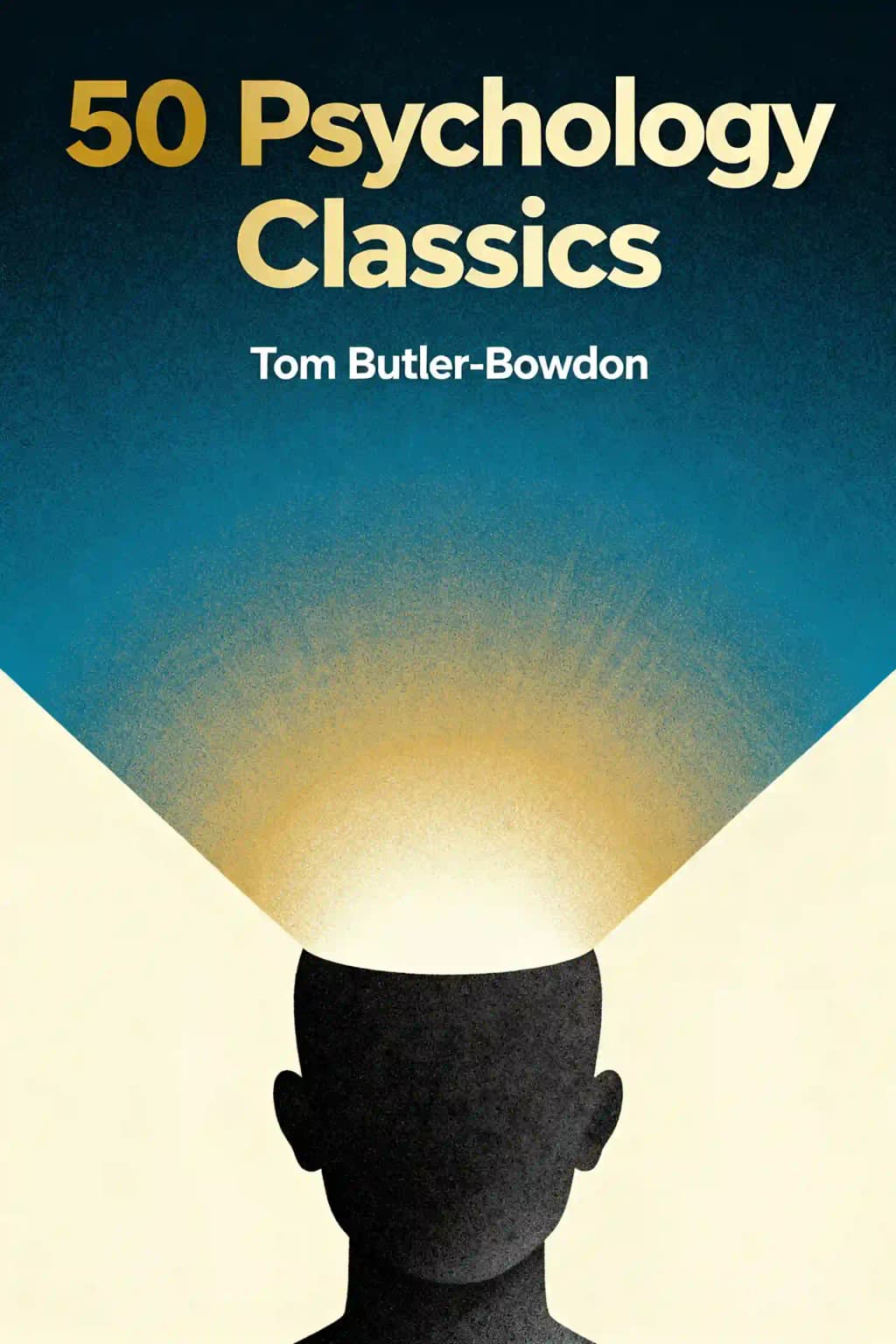
Have you ever wondered why you can't resist checking your phone one more time? Or why that argument with your partner followed the same frustrating pattern as always? The answers lie in the fascinating world of psychology-a discipline that has evolved from philosophical musings to scientific study over the past century. Tom Butler-Bowdon's masterful compilation "50 Psychology Classics" offers a journey through the most influential ideas that have shaped our understanding of human behavior, from Freud's revolutionary theories of the unconscious to modern discoveries in neuroscience. This book has become required reading in psychology programs worldwide, with luminaries like Malcolm Gladwell citing it as a major influence. Even celebrities like Emma Watson have praised its accessible approach to complex psychological concepts. Whether you're struggling with relationships, seeking personal growth, or simply curious about what makes humans tick, these psychological insights reveal the hidden patterns governing our thoughts, feelings, and actions.
Capítulo 2
The Birth of a Science: How Psychology Emerged from Philosophy
Psychology as we know it today emerged from the intersection of philosophy and physiology in the late 19th century. Wilhelm Wundt established the first experimental psychology laboratory in the 1870s, marking the transition from philosophical speculation to scientific investigation of the mind. William James, often called the father of American psychology, helped define the field by proposing that mental processes were biological phenomena contained within the brain-a revolutionary concept at the time.
The field truly captured public imagination through Sigmund Freud's work. His concepts of the ego and unconscious mind transformed how we think about human behavior, suggesting that our actions are driven by hidden forces beyond our awareness. Though many of his specific theories have been challenged, the idea that unconscious processes influence our behavior remains fundamental to psychology.
As a reaction against Freudian emphasis on inner drives, behaviorism emerged in the early 20th century. Pioneers like Ivan Pavlov and B.F. Skinner argued that environment shapes behavior more than internal motives. Their focus on observable actions rather than unseen mental processes represented psychology's attempt to become more scientifically rigorous.
The pendulum swung again with cognitive psychology, which examined the mental processes occurring between stimulus and response. This approach recognized both internal and external factors in human behavior, leading to cognitive therapy and later positive psychology-focusing on mental health rather than just mental illness.
Recent decades have seen remarkable advances in brain science, with neuroimaging techniques revealing the physical basis of psychological processes. These developments are revolutionizing the field, potentially validating some of Freud's theories while answering age-old philosophical questions about consciousness and free will. The journey from philosophical inquiry to brain science represents psychology's evolution toward understanding the biological foundations of our thoughts, feelings, and behaviors.
Capítulo 3
The Unconscious Mind: Wisdom Beyond Our Awareness
Psychology extends far beyond rational thought, with the unconscious mind containing valuable wisdom we rarely access directly. Freud famously compared the conscious mind to the tip of an iceberg, with the vast majority of mental processes occurring below the surface. His groundbreaking work revealed dreams as windows into suppressed wishes and desires, allowing glimpses into this hidden realm.
Carl Jung expanded this concept with his theory of the collective unconscious-a shared psychological heritage containing universal symbols and archetypes that generate cultural expressions through mythology and art. Both Freud and Jung believed that accessing "what lies beneath" could prevent life's pitfalls and reconnect us to our deeper selves.
Milton Erickson's revolutionary hypnotherapy demonstrated the unconscious mind's problem-solving power. Rather than viewing the unconscious as merely a repository of repressed material, Erickson saw it as a source of wisdom and solutions. His approach involved telling personalized "teaching tales" that bypassed conscious resistance, allowing patients to discover answers within themselves. One famous case involved sending an alcoholic to contemplate desert cacti that "could go for three years without water," creating a powerful metaphor that succeeded where direct advice had failed.
Intuition serves as a bridge between conscious and unconscious knowledge. Gavin de Becker's work on fear shows how intuitive warnings about dangerous situations often arise from unconscious pattern recognition. Similarly, Malcolm Gladwell's exploration of "thinking without thinking" reveals how experts make lightning-quick judgments based on unconscious processing of minimal information or "thin slices" of experience.
The wisest individuals trust all levels of their mind, including feelings and hunches with seemingly mysterious origins. Rather than dismissing these as irrational, they recognize them as valuable signals from the unconscious-a different kind of wisdom that complements logical analysis. This integration of conscious and unconscious processes represents a more complete form of intelligence than relying on rational thought alone.
Capítulo 4
The Science of Happiness: Thinking Better, Feeling Better
Psychology's interest in happiness has evolved dramatically in recent decades, particularly through Martin Seligman's "positive psychology" movement. This approach focuses not just on treating mental illness but on understanding what makes life fulfilling and meaningful. Research has yielded surprising insights, such as Barry Schwartz's finding that restricting choices actually increases satisfaction, challenging our cultural assumption that more options always lead to greater happiness.
Daniel Gilbert's work reveals how poorly we predict our future emotional states. We consistently overestimate both the duration and intensity of our reactions to both positive and negative events. This "impact bias" explains why lottery winners return to baseline happiness levels within months, while people facing serious adversity often adapt better than expected.
The physiological basis of moods, explored by Robert Thayer, helps explain why our emotional states fluctuate throughout the day. His research identifies four basic mood states based on energy and tension levels, with predictable daily patterns that peak and valley at specific times. Understanding these rhythms allows us to manage our moods more effectively, recognizing vulnerable periods and implementing strategies like brief walks that can transform our emotional state for hours.
Perhaps the most revolutionary insight comes from cognitive psychology pioneers like David Burns and Albert Ellis, who demonstrated that thoughts create feelings-not the other way around. Their cognitive therapy approach shows that by identifying and challenging distorted thinking patterns, we can literally choose happiness. This represents a profound shift from the belief that emotions happen to us, recognizing instead that our interpretations of events determine our emotional responses.
Nathaniel Branden's work on self-esteem reveals that genuine self-worth comes not from external validation but from living according to our personal principles. Rather than a "feel-good phenomenon," self-esteem requires the courage to make difficult choices aligned with our values. William Styron's powerful memoir of depression, meanwhile, reminds us that severe mental illness often resists simple solutions, requiring patience, professional help, and sometimes hospitalization to overcome its mysterious darkness.
Capítulo 5
The Architecture of Personality: Why We Are Who We Are
How do we become who we are? Personality psychology offers fascinating frameworks for understanding the patterns that make each of us unique. Hans Eysenck pioneered the scientific study of personality by identifying fundamental "supertraits" like extraversion/introversion and neuroticism that appear to have biological foundations in brain and nervous system functioning. His work challenged the notion that personality is merely a product of environment, showing how genetic factors shape our basic temperaments.
Modern personality assessment has expanded to include the widely-accepted "Big Five" traits and specialized tools like the Myers-Briggs Type Indicator, which categorizes people into sixteen distinct types based on their preferences for perceiving and judging information. Isabel Briggs Myers observed that recognizing and developing one's true type may be more important for life success than raw intelligence.
Our identity evolves throughout life, with Erik Erikson coining the term "identity crisis" to describe these pivotal transitions. His psychobiography of Martin Luther explored how such crises, while painful, can forge stronger selves. Gail Sheehy's influential "Passages" similarly mapped predictable adult life transitions, showing how each decade brings specific challenges that foster growth when embraced rather than resisted.
The defensive structures we build to protect ourselves profoundly shape our personalities. Anna Freud explored how the ego creates psychological defenses to avoid pain, from simple denial to complex rationalizations. These mechanisms help us function but can become problematic when overused. Karen Horney identified how childhood experiences lead to distinct personality tendencies that "move toward," "move against," or "move away from" people-strategies that can harden into neuroses if we don't develop our "wholehearted" authentic self.
Melanie Klein's groundbreaking work examined how infant-mother relations establish templates for all future relationships. Her observations of children's play revealed how early experiences of love and hate create fundamental patterns of relating to others. R.D. Laing demonstrated how extreme family dynamics can lead to schizophrenia, where individuals replace an absent sense of self with elaborate false selves to survive psychologically threatening environments.
Understanding these frameworks helps us recognize that personality isn't simply "who we are" but a complex interplay of genetic predispositions, childhood experiences, defensive adaptations, and ongoing development throughout life.
Capítulo 6
The Drivers of Human Behavior: What Motivates Our Actions
Why do humans do what they do? Theories of human motivation vary dramatically across psychological traditions. Alfred Adler focused on how feelings of inferiority drive us to compensate for real or perceived shortcomings. Rather than Freudian sexual drives, he saw humans as social beings creating their "life style" in response to environmental factors and personal limitations. His famous "birth order" theory suggests that our position in the family influences how we develop strategies to gain recognition and overcome feelings of inadequacy.
Viktor Frankl's logotherapy positioned meaning-seeking as humanity's defining characteristic. Drawing from his experiences in Nazi concentration camps, he argued that even in the most horrific circumstances, those who found purpose in their suffering could survive psychologically. His approach remains profoundly optimistic, asserting that life always has meaning, even when not immediately apparent. Frankl distinguished between being "pushed" by drives and "pulled" by meaning, suggesting the latter represents a uniquely human motivation.
Eric Hoffer's analysis of mass movements reveals how people surrender individual identity to become part of something seemingly greater. His work explains why individuals willingly die for causes, showing how movements offer refuge from personal responsibility through collective purpose and the promise of total transformation. The desire to escape an "unwanted self" drives many to embrace extreme ideologies that provide ready-made answers and belonging.
Stanley Milgram's disturbing obedience experiments demonstrated humans' tendency to follow authority even when ordered to inflict apparent harm on others. His research revealed how easily ordinary people can commit inhumane acts when directed by authority figures, suggesting that awareness of this tendency might help us resist orders that violate our conscience. The key difference between those who obeyed and refused wasn't personality but the ability to assert individual moral judgment against situational pressures.
Abraham Maslow identified "self-actualized" individuals who transcend conformity to fulfill their potential. His hierarchy of needs suggests that once basic requirements for survival and security are met, humans naturally seek higher fulfillment through creativity, meaning, and self-expression. Maslow observed that fear of our own greatness-what he called the "Jonah complex"-often prevents us from reaching our full potential.
Meanwhile, behaviorists like B.F. Skinner and Ivan Pavlov rejected the concept of inner motives entirely, defining the self as merely "a repertoire of behavior" conditioned by environment. Skinner argued that addressing humanity's greatest challenges requires not merely technological solutions but a "technology of behavior" based on scientific understanding of how environments shape our actions.
Together, these perspectives illuminate both the noble and troubling aspects of human motivation, revealing the complex interplay of meaning-seeking, social belonging, authority, self-actualization, and environmental conditioning that drives our actions.
Capítulo 7
The Dance of Relationships: Understanding Human Connection
Psychology has increasingly mapped the terrain of human relationships, illuminating patterns previously explored only by artists and philosophers. Harry Harlow's groundbreaking experiments with infant monkeys demonstrated that physical contact and comfort are as essential as food for healthy development. His work showed that babies bond with mothers primarily for emotional security rather than merely for sustenance, challenging behaviorist views of attachment as simple conditioning.
John Gottman revolutionized our understanding of marriage through meticulous observation of couples' interactions. His research revealed that successful relationships aren't built on superior communication techniques but on deep friendship-mutual respect and enjoyment of each other's company. Contrary to popular belief, even happy couples fight; what matters is how they handle conflict. Warning signs of troubled relationships include harsh startups, criticism, contempt, defensiveness, and failed repair attempts. Most surprising was his finding that 69% of conflicts involve perpetual, unresolvable problems about values and worldviews-successful couples accept these differences rather than trying to change each other.
Susan Forward's work on emotional blackmail exposed how fear, obligation, and guilt are used to manipulate others in relationships. She identified patterns where people use threats, character attacks, and conditional affection to control partners. The closer the relationship, the more vulnerable we are to such manipulation, which corrodes trust and intimacy until only a shell remains.
Eric Berne and Thomas Harris analyzed relationships as "transactions" between Adult, Parent, and Child ego states-potentially game-playing but transcendable through awareness. Their transactional analysis approach revealed how people engage in ritualized interactions or "games" as substitutes for genuine intimacy. Games like "If it weren't for you" (blaming partners for our limitations while unconsciously choosing them to impose those limits) and "Why don't you-yes, but" (rejecting solutions to gain sympathy) create predictable patterns that provide psychological comfort while avoiding confrontation with unresolved issues.
Carl Rogers contributed humanistic psychology's emphasis on listening, non-judgment, and empathy as foundations for flourishing relationships. His revolutionary client-centered therapy approach demonstrated that creating an environment of trust and acceptance allows people to heal and grow naturally. Rogers found that by simply being himself and allowing others to be themselves, he created space for authentic connection that transformed relationships from performances into genuine encounters.
These diverse perspectives reveal that healthy relationships require both emotional intelligence and practical skills-the ability to balance autonomy with connection, to communicate effectively without manipulation, and to accept differences while building on shared values.
Capítulo 8
Beyond IQ: The Multiple Dimensions of Intelligence
Intelligence extends far beyond what traditional IQ tests measure. Howard Gardner's groundbreaking theory of multiple intelligences challenged the conventional wisdom that intelligence is a single, general ability. Rather than asking "How smart are you?", Gardner proposed asking "How are you smart?" He identified seven distinct intelligences: linguistic, logical-mathematical, musical, bodily-kinesthetic, visual-spatial, interpersonal, and intrapersonal. Each person possesses a unique blend of these capacities, explaining why someone might excel in mathematics while struggling with social situations, or demonstrate remarkable physical coordination despite average academic performance.
Daniel Goleman's work on emotional intelligence revealed that success requires more than intellectual excellence or technical prowess-it demands skills like resilience, initiative, optimism, and adaptability. These qualities matter twice as much as technical and analytical skills for star performance, especially in leadership positions. Unlike IQ, which remains relatively fixed throughout life, emotional intelligence can be developed through practice and awareness. This explains why many intellectually brilliant people fail professionally while those with moderate IQ but superior emotional skills thrive.
Communication skills-unlike raw intelligence-can be readily improved, with Robert Bolton's work showing how removing common roadblocks transforms relationships. His research identified that judging (through criticism and labeling) and sending solutions (offering unsolicited advice) prevent genuine understanding. By replacing these with attentive listening, paraphrasing, and reflective responses, we create connections that resolve conflicts and build trust. These skills aren't innate talents but learnable techniques that dramatically enhance both personal and professional effectiveness.
Robert Cialdini's landmark research on influence and persuasion revealed the psychological principles that govern why people say "yes." His six "weapons of influence"-reciprocation, commitment and consistency, social proof, liking, authority, and scarcity-explain how we're often unconsciously manipulated into decisions. Understanding these mechanisms helps us make more conscious choices rather than automatic responses to psychological triggers.
Creativity, once considered a mysterious gift, has been systematically studied by Mihaly Csikszentmihalyi, who found that creative breakthroughs aren't spontaneous but result from years of dedicated work in a receptive cultural context. Edward de Bono's concept of "lateral thinking" provided practical techniques for generating innovative solutions by deliberately breaking established thought patterns. His methods showed that creativity isn't magical but a learnable skill involving specific mental strategies.
Together, these perspectives reveal intelligence as multifaceted and developable-not a fixed trait but a diverse set of capacities that can be cultivated throughout life. The most successful individuals recognize and leverage their particular strengths while developing complementary abilities that enhance their effectiveness in an increasingly complex world.
Capítulo 9
The Biological Revolution: How Brain Science is Transforming Psychology
Modern neuroscience is dramatically reshaping our understanding of human psychology, revealing the biological foundations of behavior, emotion, and cognition. Louann Brizendine's research on the female brain demonstrates how hormones create distinctly different brain states across women's life stages. While men's brain chemistry remains relatively stable, women experience significant neurological changes from girlhood through adolescence, motherhood, and menopause. Despite being 9 percent smaller than male brains, women's brains contain the same number of neurons, just more densely packed, with larger areas dedicated to language, hearing, and emotional processing.
Oliver Sacks' compassionate neurological case studies show how brain injuries and disorders reveal the mind's remarkable adaptability. His work with patients like Jimmie G, who lived in a perpetual present due to memory loss, demonstrated that even when normal faculties desert us, the human spirit finds ways to maintain identity and meaning. Sacks challenged the computer model of the brain, suggesting that our minds weave patterns of meaning rather than simply processing information-what he called the "enchanted loom."
V.S. Ramachandran's exploration of neurological oddities illuminates how the brain creates our sense of reality. His work with phantom limbs, denial of paralysis, and bizarre delusions shows that seemingly "crazy" behaviors often stem from brain circuitry malfunctions rather than insanity. These cases reveal how fragile our perception of reality is-minor wiring problems can dramatically alter our fundamental understanding of ourselves and the world.
Steven Pinker challenges the "blank slate" view that humans are entirely shaped by environment, arguing that genetic science and evolutionary psychology reveal innate aspects of human nature. His work shows how predetermined our brains are at birth, with research on identical twins separated at birth sharing remarkable similarities in personality and behavior. However, Pinker emphasizes that genes create probabilities, not certainties-they influence but don't determine our destiny.
Anne Moir and David Jessel's research on sex differences in the brain suggests that male and female brains process information differently, resulting in distinct perceptions, priorities, and behaviors. They argue that by six or seven weeks in the womb, hormones configure the developing brain into either male or female patterns, creating differences in how we perceive and interact with the world.
Jean Piaget's pioneering work on child development revealed that children think fundamentally differently than adults-not just with less information but with entirely different cognitive structures. His research showed how children progress through distinct developmental stages, each with its own logic and way of understanding the world.
This biological revolution doesn't reduce humans to mere machines but enriches our understanding of the complex interplay between nature and nurture. By recognizing both our biological foundations and our capacity for growth and change, we gain a more complete picture of what makes us human.
Capítulo 10
The Future of Psychology: Where Science Meets Self-Understanding
Psychology stands at a fascinating crossroads-a discipline that began as philosophical inquiry has evolved into a science while maintaining its focus on the most personal aspects of human experience. As William James noted, psychology is "the science of mental life," uniquely positioned to illuminate human nature in all its complexity.
The field continues to expand in multiple directions simultaneously. Neuroscience reveals the physical basis of psychological processes with unprecedented detail, while positive psychology focuses on human flourishing rather than merely treating dysfunction. Cognitive approaches provide practical techniques for changing thought patterns, while psychodynamic insights continue to deepen our understanding of unconscious motivations and relationship patterns.
What unites these diverse approaches is their potential to enhance self-knowledge-that essential wisdom that helps us navigate our relationships, work, and inner lives more effectively. While life experience provides one route to self-understanding, psychology's literature offers a faster path to recognizing the patterns that shape our thoughts, feelings, and behaviors.
Perhaps the most valuable insight from psychology's rich history is the recognition that humans are neither purely biological machines nor infinitely malleable blank slates. We are complex beings shaped by genetics, early experiences, cultural contexts, and our own choices. This nuanced view allows us to accept our limitations while still embracing our capacity for growth and change.
As we face unprecedented global challenges, from climate change to technological disruption, psychological insights become increasingly crucial. Understanding how humans make decisions, form beliefs, respond to threats, and create meaning will be essential for addressing collective problems that require behavioral and social solutions, not just technological ones.
The ultimate value of psychology may lie in its ability to bridge the gap between scientific understanding and lived experience-to help us see ourselves more clearly while maintaining wonder at the mystery of consciousness itself. In this sense, psychology serves not just as a science but as a form of modern wisdom literature, offering insights that can transform how we understand ourselves and others.
As we continue exploring the terrain of the human mind, we discover not just facts about brain function or behavior patterns, but deeper truths about what it means to be human-our capacity for both destruction and creation, suffering and joy, isolation and connection. Psychology at its best helps us embrace this full spectrum of human experience with greater awareness, compassion, and wisdom.