Thinking Fast and Slow: Understanding System 1 and System 2
Explore the mechanics of System 1 and System 2. Learn how cognitive biases and mental shortcuts influence your decision-making, career, and daily choices.
Bestes Zitat aus Thinking Fast and Slow: Understanding System 1 and System 2
Your initial reaction to a choice is rarely the full story; it is merely a draft that needs to be edited by your more analytical faculties.
Generated by Vivi






Häufig gestellte Fragen
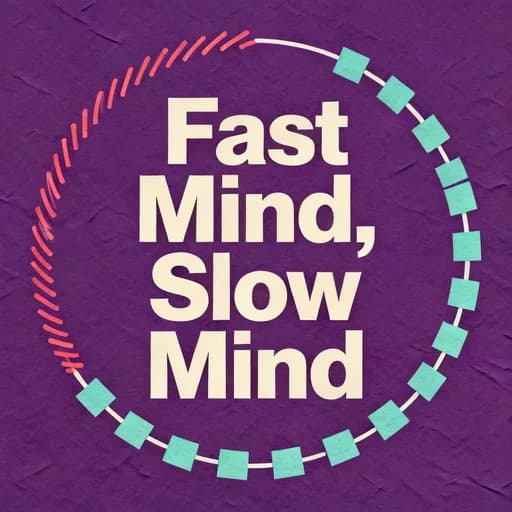
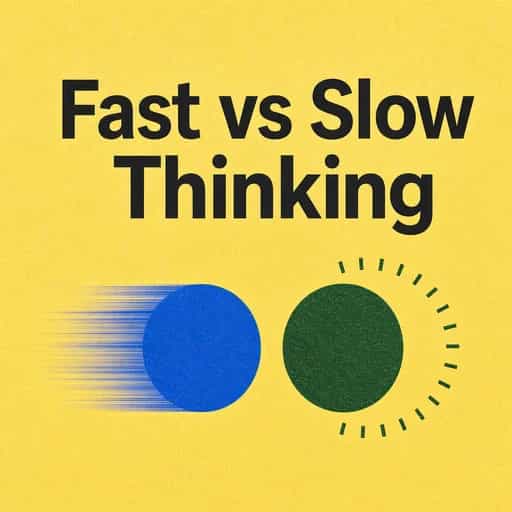
According to Thinking Fast and Slow, your cognition is split into two distinct processes. System 1 is fast, instinctive, and automatic, often relying on mental shortcuts to make quick judgments. In contrast, System 2 is slow, analytical, and effortful. While System 2 is responsible for complex reasoning, it is often described as lazy, frequently allowing the more impulsive System 1 to drive your daily decisions and actions without you realizing it.
Research into behavioral economics shows that more options do not always lead to better outcomes. For example, while a display with twenty-four varieties of jam attracts more onlookers, people are ten times more likely to actually make a purchase when presented with only six options. This phenomenon demonstrates how an explosion of choices can overwhelm our internal machinery, leading to indecision rather than the sharper, more deliberate choices we intend to make.
Yes, System 1 can be triggered by subtle environmental cues that bypass our conscious awareness. For instance, exposure to words associated with the elderly can actually cause a person to walk slower without them realizing the change in their behavior. This illustrates how our automatic brain systems react to the world around us, often leading to mental errors or physical responses that occur before our analytical System 2 has a chance to audit the situation.
Understanding the split between System 1 and System 2 is the first step toward navigating your career and life with more precision. By recognizing that your brain relies on shortcuts that can lead to obvious mental errors, you can begin to audit your gut feelings. Learning to engage your analytical System 2 more effectively helps you overcome the 'lazy' tendencies of your brain, allowing for more deliberate decision-making in high-stakes situations.
Von Columbia University Alumni in San Francisco entwickelt
"Instead of endless scrolling, I just hit play on BeFreed. It saves me so much time."


"I never knew where to start with nonfiction—BeFreed’s book lists turned into podcasts gave me a clear path."


"Perfect balance between learning and entertainment. Finished ‘Thinking, Fast and Slow’ on my commute this week."
"Crazy how much I learned while walking the dog. BeFreed = small habits → big gains."
"Reading used to feel like a chore. Now it’s just part of my lifestyle."

"Feels effortless compared to reading. I’ve finished 6 books this month already."
"BeFreed turned my guilty doomscrolling into something that feels productive and inspiring."

"BeFreed turned my commute into learning time. 20-min podcasts are perfect for finishing books I never had time for."
"BeFreed replaced my podcast queue. Imagine Spotify for books — that’s it. 🙌"

"It is great for me to learn something from the book without reading it."
"The themed book list podcasts help me connect ideas across authors—like a guided audio journey."
"Makes me feel smarter every time before going to work"
 Ask ChatGPT
 Ask Claude
Von Columbia University Alumni in San Francisco entwickelt
"Instead of endless scrolling, I just hit play on BeFreed. It saves me so much time."
"I never knew where to start with nonfiction—BeFreed’s book lists turned into podcasts gave me a clear path."
"Perfect balance between learning and entertainment. Finished ‘Thinking, Fast and Slow’ on my commute this week."
"Crazy how much I learned while walking the dog. BeFreed = small habits → big gains."
"Reading used to feel like a chore. Now it’s just part of my lifestyle."
"Feels effortless compared to reading. I’ve finished 6 books this month already."
"BeFreed turned my guilty doomscrolling into something that feels productive and inspiring."
"BeFreed turned my commute into learning time. 20-min podcasts are perfect for finishing books I never had time for."
"BeFreed replaced my podcast queue. Imagine Spotify for books — that’s it. 🙌"
"It is great for me to learn something from the book without reading it."
"The themed book list podcasts help me connect ideas across authors—like a guided audio journey."
"Makes me feel smarter every time before going to work"
"Instead of endless scrolling, I just hit play on BeFreed. It saves me so much time."
"I never knew where to start with nonfiction—BeFreed’s book lists turned into podcasts gave me a clear path."
"Perfect balance between learning and entertainment. Finished ‘Thinking, Fast and Slow’ on my commute this week."
"Crazy how much I learned while walking the dog. BeFreed = small habits → big gains."
"Reading used to feel like a chore. Now it’s just part of my lifestyle."
"Feels effortless compared to reading. I’ve finished 6 books this month already."
"BeFreed turned my guilty doomscrolling into something that feels productive and inspiring."
"BeFreed turned my commute into learning time. 20-min podcasts are perfect for finishing books I never had time for."
"BeFreed replaced my podcast queue. Imagine Spotify for books — that’s it. 🙌"
"It is great for me to learn something from the book without reading it."
"The themed book list podcasts help me connect ideas across authors—like a guided audio journey."
"Makes me feel smarter every time before going to work"
"Instead of endless scrolling, I just hit play on BeFreed. It saves me so much time."
"I never knew where to start with nonfiction—BeFreed’s book lists turned into podcasts gave me a clear path."
"Perfect balance between learning and entertainment. Finished ‘Thinking, Fast and Slow’ on my commute this week."
"Crazy how much I learned while walking the dog. BeFreed = small habits → big gains."
"Reading used to feel like a chore. Now it’s just part of my lifestyle."
"Feels effortless compared to reading. I’ve finished 6 books this month already."
"BeFreed turned my guilty doomscrolling into something that feels productive and inspiring."
"BeFreed turned my commute into learning time. 20-min podcasts are perfect for finishing books I never had time for."
"BeFreed replaced my podcast queue. Imagine Spotify for books — that’s it. 🙌"
"It is great for me to learn something from the book without reading it."
"The themed book list podcasts help me connect ideas across authors—like a guided audio journey."
"Makes me feel smarter every time before going to work"

![[4abec1b0-b17d-42f8-b495-b83a4a55c1cc:c0000] Thinking, Fast and Slow (Daniel Kahneman) (z-library.sk, 1lib.sk, z-lib.sk).epub p1-1](/_next/image?url=https%3A%2F%2Fd1y2du6z1jfm9e.cloudfront.net%2Fassets%2Fpodcast%2Fpurple.png&w=1024&q=50)
![[4abec1b0-b17d-42f8-b495-b83a4a55c1cc:c0001] Thinking, Fast and Slow (Daniel Kahneman) (z-library.sk, 1lib.sk, z-lib.sk).epub p1-1](/_next/image?url=https%3A%2F%2Fd1y2du6z1jfm9e.cloudfront.net%2Fassets%2Fpodcast%2Fblue.png&w=1024&q=50)