Kapitel 1
When the Dead Walk Among Us
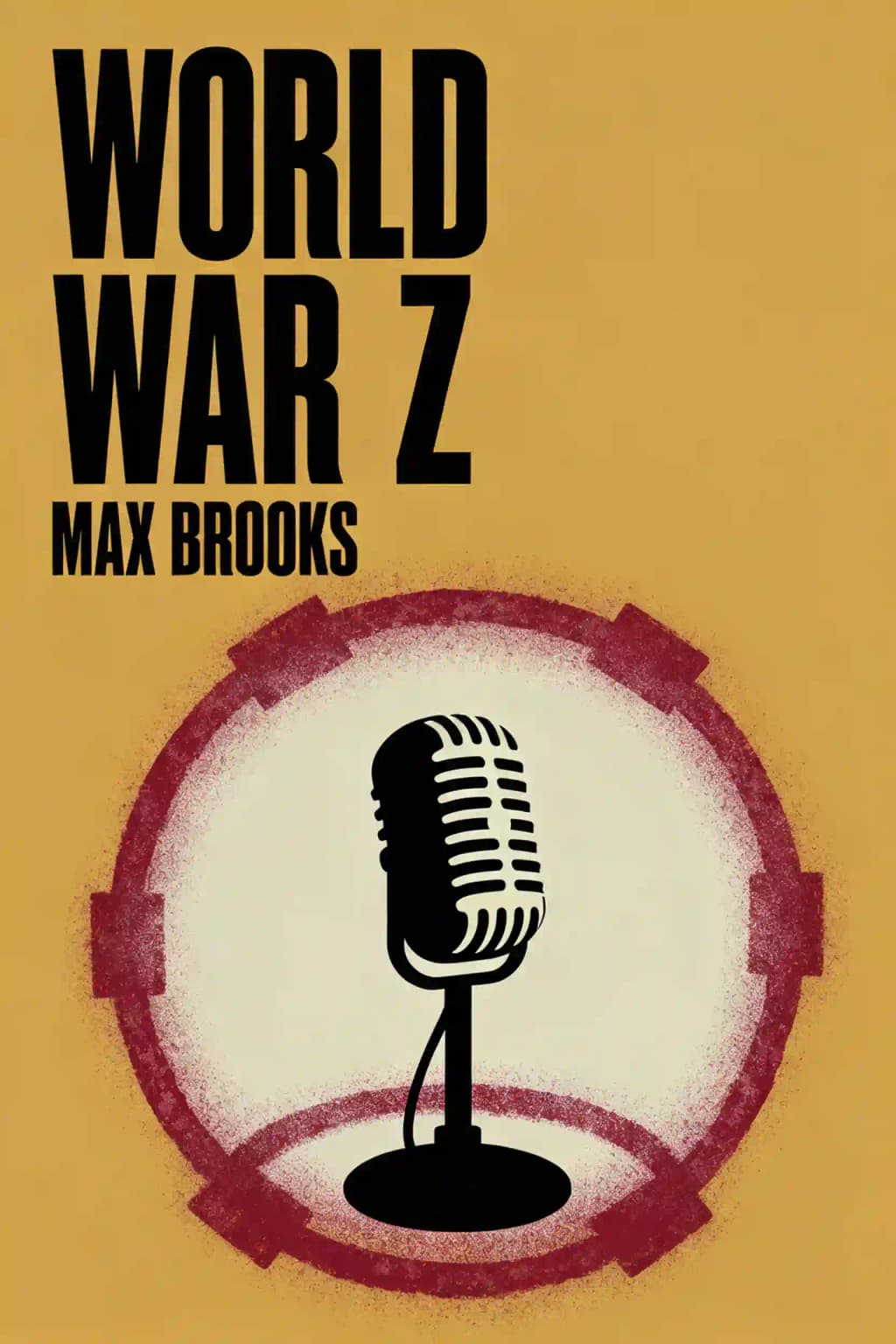
World War Z isn't just another zombie apocalypse story-it's a global oral history that redefined the genre. Max Brooks' 2006 masterpiece quickly became a cultural phenomenon, praised by everyone from horror aficionados to military strategists for its realistic portrayal of how modern society might respond to an undead pandemic. The novel's unique interview format allows readers to experience the zombie war through dozens of distinct voices across continents and social strata. Unlike the Brad Pitt-led film adaptation that disappointed fans with its departure from the source material, the book's methodical exploration of societal collapse and human resilience has earned it a permanent place on both bestseller lists and military reading recommendations. What makes World War Z truly remarkable is how it uses zombies not as mere monsters but as a lens to examine human institutions, cultural differences, and our capacity for both self-destruction and extraordinary courage when facing extinction.
Kapitel 2
The First Outbreak: Patient Zero and Early Warnings
The zombie pandemic began quietly in a remote Chinese village called New Dachang. Dr. Kwang Jingshu encountered a twelve-year-old boy with terrifying symptoms-gray skin, no pulse, and predatory behavior. When attempting to take a blood sample, Kwang extracted only brown viscous matter. The child's violent movements caused his arm to snap completely free, yet he continued dragging himself across the floor with his remaining limb. The boy had been bitten while "moon fishing" in the submerged ruins of Old Dachang, likely encountering the first zombie.
As the infection spread, different vectors accelerated transmission worldwide. Fernando Oliveira, a Brazilian transplant surgeon, unknowingly received infected organs from China for wealthy clients. "I believe organs were a major vector for global transmission," he explains. "The infection might take days or weeks to manifest depending on which organ was transplanted." China's lucrative trade in organs from executed prisoners continued despite the outbreak, with infected tissues entering the global market.
Human trafficking networks adapted to exploit desperate Chinese citizens seeking escape. Nury Televaldi, a former smuggler from Kashi, describes how the zombie outbreak transformed his business: "While air smugglers in eastern provinces raced against time, I specialized in overland routes into Central Asia." Infected refugees were often bound and hidden by family members hoping for cures abroad. Sea smugglers faced greater dangers, sometimes disposing of infected by abandoning them on deserted coasts or throwing them overboard-possibly explaining early cases of zombies emerging from the surf worldwide.
Military encounters with zombies were initially misunderstood or covered up. Stanley MacDonald, a Canadian soldier on a drug interdiction mission in Kyrgyzstan, discovered a massacre scene with blood trails but no bodies. In a cave, he encountered a severed torso that continued moving and attempting to bite him. His superiors later dismissed his experience as exposure to unknown chemicals or PTSD, subjecting him to "evaluation" rather than believing his account.
These early warning signs were systematically ignored by governments worldwide. Intelligence analyst Jurgen Warmbrunn explains how he methodically investigated the threat by sifting through seemingly unrelated incidents-WHO reports, psychological evaluations of Canadian troops, and blog posts from medical professionals. These disparate incidents formed a "cohesive mosaic" revealing that the subjects were dead, hostile, and spreading. Though Warmbrunn's government heeded his warnings, most nations remained blind to the gathering storm.
Kapitel 3
The Great Denial: How Governments Failed Their People
When faced with the zombie threat, most governments chose denial over decisive action. Bob Archer, CIA Director, explains that his agency was never the omniscient global power that conspiracy theories suggested. "With finite resources, we couldn't monitor every potential threat worldwide but had to focus on clear and present dangers." When the zombie outbreak began in China, the Chinese government executed a masterful deception operation-hiding their zombie containment measures behind what appeared to be a Taiwan Strait crisis and dissident crackdown.
The American government's response was particularly negligent. Former White House Chief of Staff Grover Carlson admits they received the Warmbrunn-Knight report three months before Israel went public but dismissed it as just another alarmist warning. Even more cynically, they knew the Phalanx vaccine was merely a placebo but welcomed it for calming the public. Carlson justifies their minimal response as "measured" and "appropriate," arguing that telling the truth during an election year would have been "political suicide."
This political calculation extended to military planning. Supreme Allied Commander Travis D'Ambrosia explains that while Special Forces "Alpha teams" successfully contained initial outbreaks, Phase Two-requiring massive national mobilization-never materialized due to war weariness among the American public. "Democracies, unlike totalitarian regimes, have finite reserves of public support for military action," he explains. "Americans, exhausted from a previous lengthy conflict, had no appetite for another major commitment."
The public's willful ignorance compounded the problem. Mary Jo Miller describes her pre-outbreak life of mundane suburban worries, deliberately avoiding news about the zombie crisis: "I watched only five minutes of local headlines daily and used the internet primarily for shopping." When a coworker quit to move to Alaska because of "everything that's happening," Miller dismissed it as stupid. Her family's only preparations were Phalanx pills ("Piece of Phalanx, Peace of Mind") and her husband's unused gun-a decision they would soon regret when zombies broke through their sliding glass door.
Some exploited this denial for profit. Breckinridge Scott, creator of the fraudulent Phalanx vaccine, explains his cynical calculation: "Fear is the most valuable commodity in the universe." He rapidly developed a "vaccine" that was merely effective against regular rabies, not the zombie virus, and with business-friendly government connections, railroaded approval through an underfunded FDA in just two months. Scott feels no responsibility, blaming consumers for not researching before purchasing and boasting that Phalanx actually helped end the recession by stimulating consumer confidence.
Kapitel 4
The Great Panic: When Society Collapsed
When denial could no longer hold back reality, panic erupted worldwide. Gavin Blaire witnessed the horrific exodus from above as a pilot: "The highway stretched to the horizon with vehicles of every type-cars, trucks, buses, even a cement mixer and a flatbed carrying a strip club billboard." People fought desperately to escape, but many were heading directly toward zombie-infested areas. "What haunted me most was the aimlessness of the exodus," Blaire recalls. "They were traveling between two heavily infested areas with no apparent destination."
The chaos at transportation hubs was equally devastating. Ajay Shah describes the scene at Alang, India's massive ship-breaking yard, where desperate people tried swimming to anchored ships while others paid boat owners for transport: "Some captains demanded money or valuables, while others selected only young women or light-skinned refugees-one even refused 'untouchables' in a shocking revival of the caste system." Underwater zombies-reanimated drowned refugees-posed a constant threat, pulling swimmers and boats under.
Religious institutions offered little protection. Sharon, a traumatized young woman, recounts being in church when zombies attacked: "The church was chaotic-people frantically trying cell phones, Pastor Dan failing to maintain order, adults arguing, and children coloring on walls." As zombies broke through windows and the power failed, some turned to desperate measures-Mrs. Cormode, the pastor's wife, began killing children rather than letting zombies take them.
Military forces were often ordered to abandon civilians. Philip Adler, a German officer commanding in Hamburg, recalls the moment he received retreat orders: "With refugees trapped throughout the city and zombies swarming, my superiors ordered me to withdraw without evacuating civilians." As they departed, desperate refugees shouted "Fucking liar!" and "You're letting my baby die!" Some tried clinging to their vehicles while others threw objects at the retreating soldiers.
In some cases, governments turned against their own people. Bohdan Taras Kondratiuk describes the chaotic evacuation of Kiev, where his exhausted tank unit was ordered to oversee refugee processing at Patona Bridge. Instead of bombing approaching zombies, aircraft released RVX nerve gas on the bridge. "The horrifying purpose became clear: the gas killed the uninfected while revealing the infected, who reanimated despite the chemical attack."
The collapse of civil society led to desperate survival measures. Jesika Hendricks recounts her family's journey north during the Great Panic, joining the first wave of refugees. Their lakeside camp started as a communal paradise but deteriorated as resources dwindled and winter approached: "People burned everything available, fought over supplies, and violence became common. By December, starvation drove people to cannibalism-including my family, who survived on meat my father obtained from neighbors."
Kapitel 5
The Redeker Plan: Sacrificing Some to Save Many
As traditional containment strategies failed, nations faced an impossible choice: try to save everyone and risk total extinction, or sacrifice some to ensure humanity's survival. Paul Redeker's controversial Plan Orange of 1984 became the template for this brutal calculus. Originally designed for apartheid South Africa, the plan calculated which citizens would be saved based on "desirable qualities" including income, IQ, and fertility, arguing that "the first casualty of the conflict must be our own sentimentality."
During the zombie outbreak, Redeker's strategy became infamous: consolidate armed forces in defensible "safe zones," evacuate only a fraction of civilians, and use the remaining population as "human bait" to distract zombies from the safe zones. The South African government was horrified until Nelson Mandela himself endorsed it, embracing Redeker and declaring "This man will save our people."
Israel was the first nation to implement a version of the Redeker Plan, establishing a "voluntary quarantine" that many Arabs initially dismissed as "a Zionist lie." Saladin Kader, then a teenager in Kuwait, recalls his family's evacuation to Israel: "When we reached the Israeli border at Taba, we encountered an unusual screening process involving dogs that could detect infected individuals. Those identified-regardless of nationality-were taken away in black vans."
The plan's implementation often required brutal choices. Sardar Khan recounts his experience as a young BRO (Border Roads Organisation) soldier in India, tasked with destroying a mountain pass still filled with refugees. When the detonator failed, the legendary General Raj-Singh heroically ran into the crowd toward the charges, sacrificing himself to manually detonate them and save the safe zone as military radio confirmed all mountain passes secure.
Russia's implementation was particularly harsh. Maria Zhuganova describes how her unit's rebellion against abandoning civilians led to the Decimation-a punishment where soldiers were divided into groups of ten and forced to vote on which among them would be executed. The condemned were then stoned to death by their own comrades. "By making us all accomplices, they held us together not just by fear, but by guilt," Maria explains. This psychological manipulation restored military discipline through shared culpability.
The moral weight of these decisions haunted those who made them. Philip Adler had planned to assassinate his superior, General Lang, upon returning from abandoning civilians in Hamburg, but discovered the general had already committed suicide after signing final orders. Adler despises Lang even more now, calling him a coward: "You have to make your own choices and live every agonizing day with the consequences."
Kapitel 6
The Turning Point: Learning to Fight Back
After the initial catastrophic losses, humanity began adapting to the zombie threat. The Battle of Yonkers represented the old way of thinking-using high-tech weapons designed for human enemies against an entirely different threat. Todd Wainio explains why standard military weapons proved ineffective: "High explosives that would devastate human enemies through 'balloon effect' or Sudden Nerve Trauma failed against zombies, whose gel-like fluids and lack of survival instinct made them immune."
The military's fundamental strategy of "shock and awe" could not work against an enemy incapable of fear. Despite overwhelming firepower-tanks, Bradleys, Humvees with mortars and grenade launchers, Apache helicopters with rockets-the zombies kept coming. As ammunition dwindled and zombies continued advancing by the thousands, panic spread through the troops' communications network. The high-tech Land Warrior system, meant to enhance battlefield awareness, instead transmitted fear as soldiers watched their comrades being overwhelmed.
The turning point came with a return to basics. At Hope, New Mexico, soldiers formed straight lines, two ranks (one active, one reserve) with constant rotation to maintain continuous fire. Following strict doctrine of one shot per second ("Out G the G"), they systematically dropped zombies at marked ranges. As bodies piled up creating a natural barrier, they formed a Reinforced Square ("Raj-Singh") with vehicles in the center. Combat psychologists rotated exhausted soldiers for five-minute breaks.
New weapons were developed specifically for zombie combat. The standard infantry rifle (SIR) featured a conversion kit allowing transformation between sniper rifle, midrange weapon, and close-combat carbine, plus an eight-inch flip-out spike for emergencies. Their staple ammunition was NATO 5.56 "Cherry PIE" (pyrotechnically initiated explosive) that shattered on entry into zombies' skulls, frying their brains without spreading infected matter.
Innovation extended beyond conventional forces. Darnell Hackworth explains how the army's K-9 Corps selected puppies who could face zombies without losing control-those who would lock eyes with "Zack" and growl rather than whimper or howl. These dogs performed various missions: "Lures" to draw zombies into firing lines, "Decoys" to distract zombies, and scouting missions where they could detect zombies miles away and communicate threat levels through their barks and body language.
Underwater combat required specialized equipment. Master Chief Petty Officer Michael Choi describes the advantages of Atmospheric Diving Suits (ADS) for underwater zombie combat: "Unlike mesh suits which leave divers vulnerable to attacks, ADS models provide complete protection-essentially functioning as underwater armor." With 48-hour emergency life support, ADS divers could wait safely for rescue if trapped.
In urban environments, specialized tactics emerged. Andre Renard explains that Paris's underground campaign was horrific-fighting in darkness with few night vision goggles, toxic air, and hardwired radio sets. Close-quarters combat required specialized weapons like Renard's double-spiked hand weapon, as firearms risked igniting flammable gases. The tunnels were often flooded, requiring specialized "Cousteaus"-scuba divers with only two hours of air and minimal protection.
Kapitel 7
Rebuilding Society: The New World Order
The zombie war fundamentally transformed global society, creating new power structures and values. Arthur Sinclair Jr. explains how America's workforce was restructured: "The transition was particularly difficult for former entertainment industry professionals, who had once been part of America's most valued export." Many eventually found greater satisfaction in their new practical roles-like the former advertising executive who proudly became a chimney sweep, directly helping his neighbors stay warm.
Resource allocation became the central organizing principle. America faced a resource crisis similar to the Axis powers in World War II, controlling only the western states while zombies held most global landmass. California's agricultural base required restructuring, with stubborn cattle ranchers eventually surrendering their land for farming. The military establishment proved Sinclair's most tenacious adversaries, fighting to preserve expensive weapons systems ill-suited for zombie warfare. The Resource-to-Kill Ratio (RKR) eventually took hold as a cultural value.
Political systems evolved to meet the crisis. The American vice president explains that despite the chaos, they insisted on maintaining democratic institutions: "We aren't just fighting for our physical survival, but for the survival of our civilization... All we have are the dreams and promises that bind us together." The president understood that America wanted a Caesar, but becoming one would mean America's end.
The administration implemented controversial but logical policies like public punishment-stocks and whippings in town squares rather than imprisonment-which proved effective through public humiliation rather than just physical pain. Seeing powerful figures like senators punished for war profiteering reinforced that no one was above the law.
Some nations underwent more radical transformations. Seryosha Garcia Alvarez boldly declares that "Cuba won the Zombie War"-a statement he justifies by comparing pre-war Cuba's isolation to its current prosperity. Cuba ultimately accepted refugees under strict terms, placing them in "Quarantine Resettlement Centers" with harsh living conditions where refugees worked 12-14 hour days as field hands regardless of their previous status.
The integration of refugees sparked gradual change-economic reforms, privately owned newspapers, and bolder thinking. When world governments launched their offensive against the zombies, Cuba became "the Arsenal of Victory"-a breadbasket, manufacturing center, training ground, and transportation hub. The resulting economic boom created a middle class that needed skills from American refugees. Fidel Castro, recognizing the inevitable tide of change, surprisingly embraced democracy and even presided over Cuba's first free elections, voting himself out of power.
Russia transformed into a religious state. Father Sergei Ryzhkov explains that after witnessing infected soldiers preparing for group suicide, he began the practice of "Final Purification"-where only priests would "release trapped souls" from infected bodies. This evolved into a nationwide religious revival surpassing even Iran's revolution, with Russia eventually reabsorbing former Soviet republics into a "Holy Russian Empire."
Kapitel 8
The Long Road Back: Reclaiming Our World
Ten years after Victory in China Day, humanity continues the slow process of reclaiming the planet. At the "Honolulu Conference" aboard the USS Saratoga, the American president argued that while defensive strategies had saved humanity physically, they'd damaged the human spirit. He argued they needed to reclaim the planet to prove they could, leaving that proof as the war's greatest monument.
The offensive against the zombies faced daunting challenges. General D'Ambrosia explains: "Unlike human armies that must be bred, fed, and led, zombies had none of these restrictions-they swelled their ranks by thinning human forces, required no supplies, and operated without leadership or communication. They were waging true 'total war' with no limits of endurance, no possibility of negotiation or surrender."
The road to reclamation was grueling. Todd Wainio describes the challenges faced during the campaign to New York: "F-lions were dangerous predators, twice the size of prewar cats with teeth and claws that would ambush soldiers from trees or rooftops." The military faced multiple threats beyond zombies, leading to the "Threat Pyramid" ranking dangers by probability: zombies, F-critters, ferals, quislings, and LaMOEs (Last Man on Earth-territorial survivors).
Winter brought its own challenges-bitter cold, frostbite, and the knowledge that frozen zombies would reanimate in spring. Liberating isolated zones was always difficult, with some survivors expressing anger ("What took you so long?") while others rejected help entirely. Casualties came from many sources beyond zombies: diseases thought long extinct, mines and booby traps from the westward retreat, building collapses, and psychological breakdowns.
The psychological toll continues even after victory. Todd Wainio admits he sometimes "loses it for minutes or hours," triggered by smells, familiar voices, or songs. His most vivid memory has become the national icon of victory-standing on the Jersey riverbank watching dawn break over New York on VA Day. There was no cheering or celebration; peace didn't seem real after so long fighting, killing, and waiting to die. "I thought it was a dream," he admits. "Sometimes it still feels like one, remembering that day, that sunrise over the Hero City."
Kapitel 9
Lessons from the Undead: What We Lost and Gained
The zombie war forced humanity to confront fundamental questions about our values, institutions, and resilience. Arthur Sinclair Jr. observes that confidence fuels the capitalist machine: "Our economy runs only if people believe in it. As FDR said, 'The only thing we have to fear is fear itself.'" The slow return of economic activity-more registered accounts with American banks, more private businesses opening, more points on the Dow-suggests a gradual healing.
The environmental cost was devastating. Michael Choi declares whales the true losers of World War Z: "With millions of hungry boat people and the world's navies converted to fishing fleets, the whales never stood a chance." The majestic California grays that had made a comeback before the war are now gone, along with blues, finbacks, humpbacks, and rights. "The next time someone tries to tell you about how the true losses of this war are 'our innocence' or 'part of our humanity'..." He spits into the water. "Whatever, bro. Tell it to the whales."
Yet amid the devastation, new cultural connections emerged. Joe Muhammad reflects: "I'm not saying the war was a good thing-I'm not that sick-but it did bring people together. My Pakistani parents always missed the sense of community from home. Now, anywhere in the world, we all share this powerful experience." He wonders if this shared trauma will fade as children grow up in a peaceful world, but hopes something will remain: "As an African proverb says, 'One cannot cross a river without getting wet.'"
Some found purpose in the aftermath. Kondo Tatsumi explains that Japan now seeks a middle path where it takes responsibility for its own protection without inspiring anxiety among other nations. The Shield Society has been accepted as an independent branch of the Japanese Self-Defense Forces, teaching civilians to protect themselves from the living dead while learning techniques from non-Japanese organizations and fostering those techniques worldwide.
Others struggle with guilt and anger. Jesika Hendricks tries not to be bitter at the unfairness of it all: "An ex-Iranian pilot once told me Americans are the only people who can't accept that bad things can happen to good people. Last week I heard a radio personality doing fart jokes and insults, and I thought, 'This man survived and my parents didn't.'"
Mary Jo Miller takes a broader view of responsibility: "You can blame politicians, businessmen, generals, or 'the machine,' but really, blame me. I'm the American system, I'm the machine. That's democracy's price-we all take the rap." She wonders what future generations will say: "My grandparents suffered through Depression and World War II, then built the greatest middle class in history. My parents' generation-the baby boomers-fucked it all up. Then there's us. We stopped the zombie menace, but we let it become one in the first place. At least we're cleaning up our own mess."
Perhaps the most hopeful perspective comes from Dr. Kwang Jingshu, who witnessed the first outbreak: "It's comforting to see children again-those born after the war who know nothing but a world with the living dead. They know not to play near water or go out alone after dark in spring or summer. They don't know to be afraid, and that's the greatest gift we can leave them." Despite everything he's seen, Kwang concludes with cautious optimism: "I don't believe in an afterlife, but if there is one, I can imagine my old comrade Gu laughing when I say, with all honesty, that everything's going to be all right."