Kapitel 1
When the World Fell Silent: A Journey Through Hell on Earth
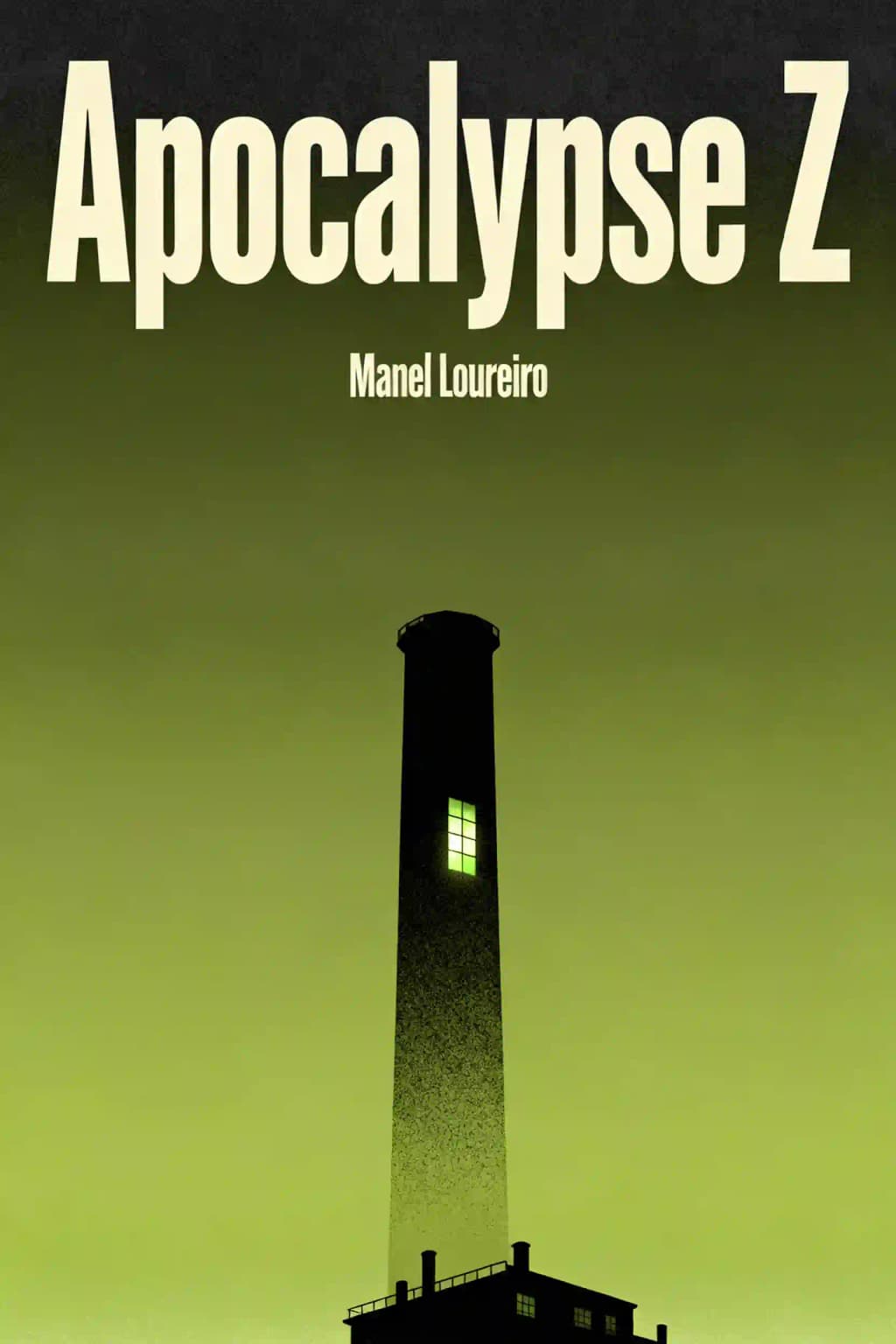
The Apocalypse Z trilogy by Manel Loureiro has become something of a cultural phenomenon in the zombie fiction landscape. Originally published as a blog before becoming an international bestseller translated into multiple languages, this Spanish author's fresh take on the zombie apocalypse has earned him the nickname "the Spanish Stephen King" from La Voz de Galicia. What sets this series apart is its intimate first-person perspective and unflinching examination of humanity when civilization crumbles. The first installment became a surprise hit among horror enthusiasts, with Stephen King himself reportedly recommending it to fans of the genre. Let's dive into this harrowing tale of survival against impossible odds.
Kapitel 2
The Beginning of the End: When Civilization Falls
The story begins with an ominous description of a brewing supercell in the Atlantic Ocean that transforms into a Category 5 hurricane heading toward Africa. With meteorological systems defunct and no humans monitoring the weather, no one warns the small sailboat Corinth II in its path. Aboard are three survivors of the apocalypse: our narrator (a former lawyer from Spain), Viktor "Prit" Pritchenko (a Ukrainian sailor), and Lucia (a young woman they rescued). Along with the narrator's cat Lucullus, they represent some of the last remaining humans after the devastating TSJ virus outbreak.
The pandemic began when Chechen extremists accidentally released the virus from a Soviet-era laboratory in Dagestan. This highly contagious pathogen killed its victims who then reanimated as the "Undead," attacking all living beings. Within weeks, civilization collapsed with only thousands surviving amid billions of Undead. Our protagonists had been sailing toward the Cape Verde Islands with hopes of finding an isolated haven when the hurricane strikes.
As massive waves crash against their vessel, they battle the elements desperately. The mast cracks and breaks away, and water begins flooding the cabin. Just when all seems lost, they spot a green light on the horizon - their salvation in the form of a massive tanker called the Ithaca. Through sheer determination and luck, they manage to fire a speargun with an attached line onto the tanker's deck. The crew lowers a boarding net, allowing them to climb aboard as their beloved Corinth II sinks beneath the waves.
This dramatic opening establishes the precarious nature of survival in this new world. Even natural disasters become exponentially more dangerous without modern warning systems and infrastructure. The hurricane serves as a powerful metaphor for how quickly circumstances can change, washing away whatever temporary security survivors might establish. It's a world where hope is as fragile as a small sailboat in a massive storm.
Kapitel 3
False Sanctuary: The Army of Christ
After eighteen hours of exhausted sleep aboard the Ithaca, our narrator awakens to surprising civility - clean hallways, electricity, and organized crew members. First Mate Gunnar Strangard introduces him to Captain Birley, who reveals they belong to the "Army of Christ" from the Christian Republic of Gulfport, Mississippi. Before allowing conversation, Birley requires the narrator to spit on a test strip - an unexplained precaution that foreshadows darker truths.
The crew explains they were "chosen" by God while sinners became Undead. They follow Reverend Greene, who governs their 10,000-person refuge. When asked about religion, the narrator hastily claims he and Lucia are Catholic while Prit is Russian Orthodox, sensing the importance of appearing devout. Rather than heading directly to Gulfport, the Ithaca is on a "divine mission" to Luba, Equatorial Guinea.
This mission proves mundane but revealing - filling the tanker with crude oil. Through binoculars, the narrator observes something disturbing: a strange metal barrier topped with barbed wire across the ship's deck and heavily armed soldiers in U.S. Army fatigues. More troublingly, not one soldier is white; they're all Black, Latino, Native American, or Asian. When the soldiers land at the dock, they encounter dozens of Undead. The situation deteriorates when one soldier falls into water, drawing hundreds of Undead.
The officers on the Ithaca turn this massacre into entertainment, distributing sniper rifles for "target practice" while their own men die below. Captain Birley dismissively calls these soldiers "helots" - sinners atoning through sacrifice. Most shocking of all, the narrator spots a giant Black soldier who had been bitten twice during the mission - still alive and healthy, not transformed into an Undead as he should have been.
This sequence reveals the twisted social hierarchy that has emerged in Gulfport - a white supremacist theocracy that exploits minorities as expendable labor. The term "helot" deliberately evokes ancient Sparta's enslaved population. The apparent immunity of certain individuals to the zombie virus hints at deeper scientific mysteries and potential hope for humanity's survival - if this knowledge weren't being weaponized for control and oppression.
Kapitel 4
The Walled City: Gulfport's Dark Secrets
Upon arriving in Gulfport, our protagonists discover a pristine community where white residents live seemingly normal lives behind a massive concrete wall. The wall was built in just 72 hours using the Naval Construction Battalion's "Wallshitter" machines - massive vehicles that could extrude concrete modules. This engineering feat saved the town while the rest of civilization collapsed.
The community is patrolled by the "Green Guard" - white supremacists with Nazi tattoos who serve as "the reverend's private army." Their leader, Malachi Grapes, threatens the newcomers to follow Reverend Greene's rules. These guards are revealed to be ex-cons from Parchman Farm prison who arrived due to a clerical error, locked in buses at the port when the apocalypse began. The Aryan Nations gang, being well-organized, were "the only ones left standing" when the doors finally opened.
The newcomers learn that Gulfport operates on a strict racial hierarchy. The 23,000 white citizens live in the main city while 7,000 "helots" (minorities) are crammed into 300 houses in Bluefont - a ghetto inside the Wall but separated from Gulfport by a fence and channeled river. The helots conduct dangerous supply expeditions in exchange for Cladoxpan, a mysterious drug that prevents infection.
Through his new position as an intermediary with the helots, the narrator discovers Greene's horrifying system: minorities are systematically eliminated within two years while only the "pure" white "Angels of God" are preserved. The helots are controlled through Nazi-style "cleansings" and a diabolical system of constantly changing residency certificates, creating distrust and division.
This section explores how quickly human societies can revert to their darkest impulses when civilization's constraints disappear. Gulfport represents a microcosm of historical atrocities - from Nazi Germany to American slavery to South African apartheid - showing how easily prejudice can become institutionalized when fear and scarcity dominate. The concrete wall physically manifests the psychological barriers between "us" and "them" that enable dehumanization.
Kapitel 5
The Prophet's Delusion: Reverend Greene's Dark Vision
Reverend Greene, the spiritual and political leader of Gulfport, built his power on a peculiar and disturbing "gift" - his knee pain predicted violent deaths. Following a compound fracture during a church renovation in 1974, his knee developed the uncanny ability to throb intensely before tragedies occurred, and the pain would mysteriously subside only after witnessing death. For thirty-five years, he secretly cultivated this ability, methodically tracking accidents, murders, and violent crimes across three states. He kept detailed journals documenting each prediction, convincing himself that these macabre visions marked him as God's chosen prophet of the coming Apocalypse.
When the pandemic first emerged, Greene experienced an unprecedented level of knee pain that persisted relentlessly for fifteen days until he reached Gulfport, Mississippi. The pain, which he described as "holy fire coursing through bone," abruptly vanished when he crossed the city limits. Taking this as an unmistakable divine sign, he established his ministry in an abandoned Walmart, transforming it into a makeshift temple where he preached that Gulfport was divinely selected as a sanctuary from the plague. His partnership with Stanley Morgan, Gulfport's stubborn mayor of twenty-two years, proved particularly effective. Morgan, who had already defied military evacuation orders, found in Greene a powerful ally. Together, they orchestrated a campaign of religious fervor and civic pride that convinced thousands of terrified residents to remain in Gulfport rather than seek refuge in the Biloxi Safe Zone.
The narrator's investigation reveals Greene's darkest secret through a network of former associates and stolen medical records - the reverend himself carries the TSJ infection. Greene maintains control over his condition through carefully measured doses of Cladoxpan, which unveiled the drug's most remarkable side effect: beyond merely slowing TSJ progression, it dramatically decelerates all cellular degeneration. While not offering true immortality, the drug potentially extends human lifespan to match biblical patriarchs, possibly hundreds of years. Greene had purposefully exposed himself to TSJ, believing this "divine infection" marked him as God's chosen vessel to shepherd humanity through what he termed the "Second Renaissance" across centuries.
Greene's character emerges as a complex study in the dangerous convergence of religious fanaticism, clinical narcissism, and authoritarian power. His "prophecy" serves as an elaborate self-deception that justifies his increasing dominance over his followers and his casual cruelty toward outsiders. The profound irony of his own infection - the very condition he publicly condemns as divine punishment - underscores his staggering hypocrisy. His obsession with biblical patriarchs like Methuselah reveals not spiritual devotion but rather a megalomaniacal desire for godlike longevity and absolute power. Through careful manipulation of religious imagery and apocalyptic fear, Greene transforms his personal delusions into a terrifying new theology that serves only his ambition for eternal dominion.
Kapitel 6
The Miracle Drug: Cladoxpan's Origins and Power
The narrator's pivotal encounter with Dr. Ballarini, an Italian researcher, reveals the remarkable origin story of Cladoxpan. Originally stationed at the CDC in Atlanta as part of an international exchange program studying Asian flu mutations, Ballarini found himself suddenly redirected to the TSJ crisis when the pandemic exploded across continents. His team worked tirelessly through countless failed experiments, testing various compounds against the aggressive pathogen. The breakthrough came unexpectedly on day twenty-seven, when a contaminated petri dish containing Cladosporium mold revealed something extraordinary - the fungus, interacting with strain 7n of the virus, dramatically decelerated TSJ's infection rate.
Ballarini's production facility represents an ingenious merger of old-world infrastructure and cutting-edge biotechnology. He repurposed abandoned bourbon distillery vats, filling them with carefully pH-balanced water to cultivate his genetically modified fungus. The organisms themselves are otherworldly - white, bulbous masses floating in the liquid medium, continuously secreting the milky substance that would become humanity's lifeline. Each vat's yield is remarkably efficient, producing enough Cladoxpan to treat fifty individuals for several decades. The fungal strain's self-replicating nature makes it particularly valuable, ensuring a theoretically endless supply.
This scientific breakthrough emerges as the novel's central beacon of hope. While Cladoxpan doesn't eliminate the infection entirely, it transforms TSJ from a death sentence into a manageable condition. The parallel to real-world medical developments is striking - much like how antiretroviral therapy revolutionized HIV treatment or how insulin management changed the prognosis for diabetes patients. The accidental nature of its discovery places Cladoxpan in the company of numerous revolutionary medical discoveries: penicillin sprouting from Fleming's contaminated plates, saccharin's accidental tasting by Constantin Fahlberg, and sildenafil's unexpected side effect leading to Viagra.
However, the social implications of Cladoxpan's distribution reveal humanity's darker tendencies. Greene's regime transforms this miracle drug into an instrument of systematic oppression. Access to Cladoxpan becomes a powerful leverage tool, with Greene establishing a brutal quid pro quo system - helots receive their doses only as long as they remain productive and compliant within his racial hierarchy. The drug's controlled distribution creates a new form of bondage, where survival depends on submission to Greene's authority. This perversion of medical advancement serves as a haunting commentary on how scientific progress, despite its potential for universal benefit, can be corrupted by power structures and prejudice. The Cladoxpan scenario illustrates that while science can provide solutions, the ethical application of these discoveries remains fundamentally a human responsibility.
Kapitel 7
Exile and Survival: Journey Through the Wasteland
When the narrator discovers Greene's horrifying truth about the "EXPELLED" files, he's framed for murder and sentenced to exile. In a final act of cruelty, Greene spits infected mucus into the narrator's forehead wound, deliberately infecting him with TSJ. He's loaded onto a deportation train with 150 other infected exiles in conditions reminiscent of Holocaust trains.
The boxcar journey becomes increasingly unbearable - a toxic soup of body odor, vomit, and feces. Panic erupts when people begin transforming into Undead, creating deadly stampedes. The narrator survives thanks to a smuggled thermos of Cladoxpan from Lucia, along with a compass, combat knife, and loaded Beretta. On his expulsion papers is a map of the train route and a message: "We're both fine. Survive and come back to us. I love you. L."
After being abandoned in the Texas wasteland, the narrator begins an epic journey back to Gulfport, racing against his dwindling Cladoxpan supply. He scavenges supplies, finds a motorcycle, and navigates through dangerous territory while caring for his injured cat Lucullus. Along the way, he notices something remarkable - the Undead are being consumed by fungus, particularly in humid environments. Many can barely move, their bodies weighed down by the parasitic life forms.
This section represents the classic hero's journey through the underworld. The narrator's exile forces him to confront death directly, both the deaths around him and his own impending transformation. His journey back becomes both physical and spiritual - a determination to reclaim not just his loved ones but his humanity in a world that has lost its moral compass. The decaying Undead symbolize how even the most terrifying threats eventually succumb to nature's processes - a reminder that nothing, not even the apocalypse, is permanent.
Kapitel 8
Revolution and Redemption: The Wrath of the Just
While the narrator struggles through the wasteland, resistance brews in Gulfport. Lucia escapes to Bluefont to speak with Carlos Mendoza, a helot leader who survived being bitten by an Undead. She discovers an underground movement called "the Just" - both helots and sympathetic whites who oppose Greene's regime. They've secretly stockpiled nearly four thousand liters of Cladoxpan and plan an uprising.
Meanwhile, a North Korean military expedition led by Colonel Hong approaches Gulfport. Having learned that the Undead are dying from fungal infections worldwide, North Korea plans to dominate the estimated six million global survivors. Hong's mission is to secure Gulfport's oil reserves and the precious Cladoxpan, which could allow his country to deploy armies immune to infection.
When Greene's forces launch a surprise attack on Bluefont, the resistance fights back. The situation becomes chaotic as multiple factions clash - Greene's militia, the helots, "the Just," and the North Koreans. A catastrophic explosion at the oil refinery creates a massive fireball that engulfs the docks and spreads inland, causing devastating casualties and breaching the protective wall.
In the chaos, the narrator (who has been rescued and treated with Cladoxpan) and Pritchenko make their way to city hall to confront Greene. After a series of violent confrontations, Pritchenko is fatally shot by Greene. The narrator, consumed by rage and grief, finds Greene destroying the Cladoxpan vats. After a brutal struggle, he drowns Greene in a vat of Cladoxpan and decapitates him to ensure he stays dead.
This climactic battle represents the inevitable collision of competing visions for humanity's future - Greene's racist theocracy, the helots' fight for equality, and North Korea's imperial ambitions. The refinery explosion symbolizes how the old world's resources and conflicts continue to destroy even as humanity teeters on extinction. The narrator's personal vendetta against Greene becomes a proxy for justice in a world where legal systems have collapsed.
Kapitel 9
A New Beginning: Life After the Apocalypse
Six years after Gulfport's destruction, the narrator drives through his old hometown in Spain with his pregnant wife Lucia and their son Viktor. The once-familiar streets are now overgrown, nature reclaiming the urban landscape with persistent vegetation breaking through concrete and asphalt. The world has entered what scholars and survivors call the Second Middle Ages - a period marked by decentralized communities, limited technology, and a return to agricultural subsistence. While no Undead have been seen for four years, the landscape remains dotted with fortified settlements and armed patrols, as hostile human groups vie for resources and territory in this precarious new social order.
Young Viktor, born with natural immunity to the TSJ virus despite both parents being infected, represents more than just personal hope - he embodies humanity's biological resilience. His cautious awareness reflects the new generation born into this changed world - children who never knew smartphones or social media but can identify edible plants and track animal movements. These children possess an instinctive understanding of survival that their parents had to learn through devastating losses and harsh experience. Viktor's generation views ruins of the old world with curiosity rather than nostalgia, seeing possibilities where their parents see ghosts.
When Lucia asks where they're going next, the narrator realizes the question itself belongs to the old world of destinations and schedules. They survived humanity's greatest test - not just of physical endurance, but of moral character and adaptability. The world stretching before them is theirs to rebuild - not as a replica of what was lost, but as something new that honors both hard-learned lessons and ancient wisdom.
This conclusion carries a bittersweet optimism tinged with hard-earned pragmatism. While the civilization of shopping malls and digital networks has collapsed, humanity's core strengths endure. The fungal consumption of the Undead suggests nature's self-correcting mechanisms eventually overcome even engineered threats, demonstrating the planet's resilience. Viktor's immunity hints at evolutionary adaptation occurring in real-time - humanity changing to meet new challenges just as it adapted to ice ages and natural disasters throughout history.
The final message resonates beyond mere survival. While modern institutions, technologies, and comforts may be lost, the essential human capacities for love, sacrifice, and rebuilding remain undiminished. In the darkest circumstances, people still form families, protect their communities, and imagine better futures. Small settlements are growing into towns, trade routes are being established, and new forms of governance are emerging organically. This fundamental resilience - the ability to adapt, cooperate, and rebuild - more than walls or weapons, represents our species' true survival mechanism and the seed of whatever civilization will emerge from the ashes of the old.
Kapitel 10
The Apocalypse Within: Human Nature Revealed
At its core, Apocalypse Z isn't really about zombies - it's about the complex tapestry of human nature laid bare when societal structures crumble. The true horror isn't the Undead but what living humans do when social constraints dissolve. Greene's racist theocracy in Gulfport demonstrates how quickly religious extremism can fill a power vacuum, while Grapes' sadistic violence reveals how some individuals embrace chaos as permission to indulge their darkest impulses. Even the narrator's own transformation from a peaceful lawyer to a hardened survivor willing to execute threats without hesitation illustrates how survival can erode our moral foundations.
The novel masterfully portrays how different communities respond to catastrophe. Some, like the military compound in Mobile, maintain a semblance of pre-apocalyptic order through strict hierarchy and shared purpose. Others, like the cannibalistic group in the warehouse district, devolve into primitive savagery. The contrast between these emerging societies serves as a mirror reflecting various facets of human potential - both noble and monstrous.
Yet amid this darkness, the story powerfully showcases humanity's capacity for courage, sacrifice, and unconditional love. Lucia's decision to deliberately infect herself rather than abandon her infected lover represents the triumph of love over survival instinct. Pritchenko's last stand, fighting waves of undead to protect his friends despite knowing he was doomed, exemplifies selfless heroism. Throughout the narrative, countless small acts of kindness - sharing limited supplies, risking safety to help strangers, maintaining humor in darkness - demonstrate our species' remarkable resilience and capacity for compassion.
Perhaps the most profound insight is how quickly new social orders emerge from chaos. Humans instinctively create hierarchies, rules, and myths to explain their circumstances - whether it's the quasi-military structure of survivor camps or the elaborate belief systems justifying new power structures. The speed with which people adapt to new realities while carrying forward old prejudices and power dynamics suggests that social organization is fundamental to human nature.
The novel forces us to consider how different groups justify their actions through various moral frameworks. Greene's followers genuinely believe their brutal regime serves a divine purpose. The military maintains order through strict discipline and sacrifice for the greater good. Even the cannibals rationalize their behavior through a twisted survival logic. These competing value systems highlight how moral relativism emerges in extreme circumstances.
As we close this apocalyptic journey, we're left with questions that transcend fiction: If our world collapsed tomorrow, which aspects of humanity would we preserve, and which would we leave behind? How thin is the veneer of civilization? Can we build better societies from ruins, or are we doomed to repeat old patterns of oppression and violence? The answers reveal more about human nature than any imagined zombie horde ever could, suggesting that our greatest threats - and our greatest hopes - lie not in external dangers but in the choices we make when tested.