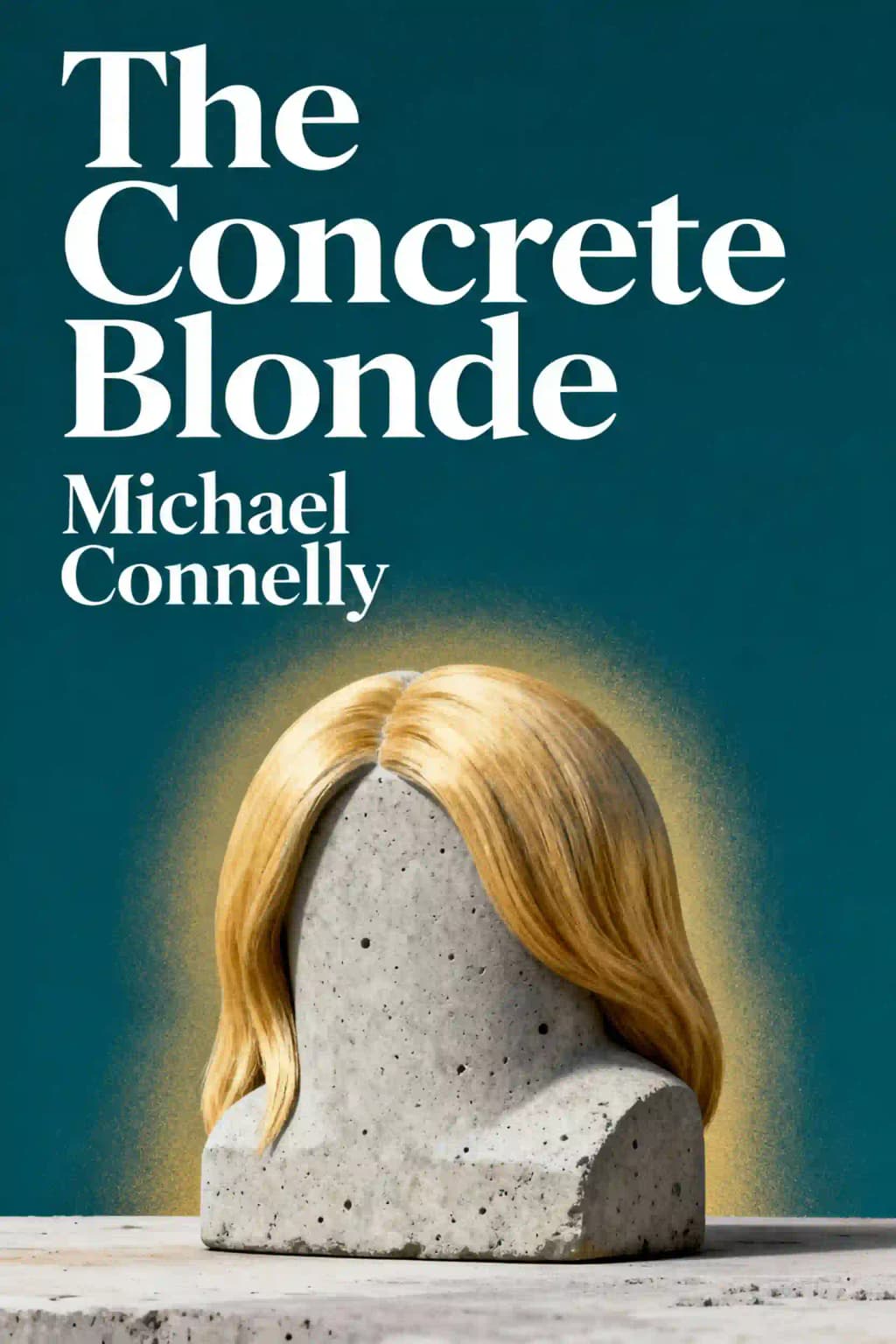
In "The Concrete Blonde," Harry Bosch faces courtroom drama and a serial killer investigation simultaneously. Ranked #2 among Connelly's 30+ novels by Goodreads readers, this thriller showcases his evolution from procedural master to philosophical storyteller. What justice-system secrets made this novel "almost poetic"?
Michael Joseph Connelly is the bestselling author of The Concrete Blonde and a master of crime fiction and police procedural novels. Born in Philadelphia in 1956, Connelly draws on his experience as a crime reporter for the Los Angeles Times, where he covered the criminal underworld that would define his fictional landscape. The Concrete Blonde, published in 1994, is the third Harry Bosch novel, expertly weaving courtroom drama with a hunt for a serial killer known as the Dollmaker.
Connelly's debut, The Black Echo, won the Edgar Award for Best First Novel in 1992, launching a career spanning over 40 novels featuring iconic characters like LAPD Detective Harry Bosch and defense attorney Mickey Haller.
His books have been adapted into acclaimed series including Bosch, Bosch: Legacy, and The Lincoln Lawyer. With over 89 million copies sold worldwide and translated into 45 languages, Connelly was honored as a Grand Master by the Mystery Writers of America in 2023.
The Concrete Blonde is a crime thriller by Michael Connelly that follows LAPD Detective Harry Bosch as he faces a wrongful death lawsuit for killing a suspected serial killer called the Dollmaker. When a new victim surfaces with the Dollmaker's signature four years after the shooting, Bosch must prove he killed the right man while hunting a killer who may still be alive. The novel masterfully combines courtroom drama with a tense police investigation.
The Concrete Blonde is ideal for crime fiction enthusiasts who enjoy police procedurals blended with legal drama. Fans of serial killer thrillers, courtroom battles, and morally complex detective stories will find this Harry Bosch novel compelling. Readers interested in themes of justice, police accountability, and psychological suspense will appreciate Michael Connelly's fast-paced storytelling and intricate plot structure that keeps you engaged from start to finish.
The Concrete Blonde is widely considered one of the best Harry Bosch novels and represents Michael Connelly hitting a new level in his writing career. Readers praise its excellent pacing, dual storylines, and satisfying ending that expertly weaves together courtroom drama and serial killer investigation. While the writing style remains straightforward, the gripping plot and unexpected twists make The Concrete Blonde a must-read for crime thriller fans.
The Dollmaker was a serial killer who stalked Los Angeles, murdering women and leaving a macabre calling card by applying grotesque makeup to his victims' faces. Four years before the novel begins, Detective Harry Bosch shot and killed Norman Church, a man suspected of being the Dollmaker, during a tense confrontation in a Silverlake apartment. Makeup belonging to the victims was found in Church's possession, seemingly confirming his guilt.
The Concrete Blonde concludes with reporter Joel Bremmer being revealed as "the Follower," the copycat killer who continued the Dollmaker's work. Harry Bosch uses psychological manipulation and a hidden recording device to extract Bremmer's confession, including the murder of attorney Honey Chandler. Bremmer accepts a plea deal of life without parole in exchange for leading police to buried victims, while Bosch finds personal hope through reconciliation with Sylvia Moore.
The Concrete Blonde stands out by combining two compelling narratives: a civil trial where Bosch defends his actions and an active serial killer investigation. This dual structure creates exceptional tension as courtroom battles unfold alongside the hunt for a murderer. The novel also delves deeper into themes of police violence and accountability, addressing issues that remain relevant today despite being published in 1994. Michael Connelly's courtroom scenes demonstrate the skill he later perfected in The Lincoln Lawyer series.
The real killer is Joel Bremmer, a crime reporter who covered the Dollmaker case and became "the Follower," a copycat who continued murdering women after Norman Church's death. Bremmer's intimate knowledge of the investigation, gained through his media access, allowed him to mimic the Dollmaker's methods convincingly. His capture reveals that while Bosch did kill a guilty man, another predator operated simultaneously, making the truth more complex than initially believed.
The Concrete Blonde explores justice's imperfect nature, examining whether killing a guilty man through questionable means constitutes true justice. Michael Connelly addresses police violence, accountability, and the psychological toll of hunting serial killers. The novel questions how society confronts evil while maintaining moral integrity, symbolized by Bosch's internal struggle between doing what's right and following proper procedure. Themes of redemption and hope emerge through Bosch's personal relationships amid professional turmoil.
The Concrete Blonde features extensive courtroom scenes that form a central pillar of the narrative. The civil trial, where attorney Honey Chandler represents the Dollmaker's widow against Harry Bosch and the LAPD, showcases Michael Connelly's ability to craft compelling legal drama. These courtroom sequences zip along with excellent pacing, demonstrating the writing skills Connelly later applied to his Lincoln Lawyer series. The trial creates mounting pressure as evidence emerges that complicates Bosch's defense.
Many readers consider The Concrete Blonde the best Harry Bosch novel in the early series, representing significant growth in Michael Connelly's storytelling ability. Compared to his earlier works, this third Bosch novel features tighter editing, crisper pacing, and more sophisticated dual plotting. Some reviewers rank it alongside The Fifth Witness and The Lincoln Lawyer for quality. The Concrete Blonde demonstrates Connelly's mastery of blending police procedural with courtroom thriller, establishing techniques he refined throughout his career.
Harry Bosch emerges as a morally complex detective with genuine regard for victims and unwavering dedication to justice in The Concrete Blonde. Michael Connelly allows readers deeper access to Bosch's thoughts, revealing a fundamentally good person haunted by difficult choices. Despite his crusty exterior, Bosch shows authentic appreciation for women and refuses easy answers to complex social issues. His character development includes vulnerability through romantic relationships and psychological depth as he confronts the possibility of having killed an innocent man.
The Concrete Blonde remains relevant because it addresses police violence and accountability issues that persist in contemporary society. Published in 1994, the novel's exploration of wrongful death lawsuits, police use of force, and systemic justice questions resonates strongly with current debates about law enforcement reform. Michael Connelly's nuanced treatment of these themes demonstrates how social tensions endure across decades. The book's psychological depth and ethical complexity provide valuable perspective on timeless questions about justice, authority, and moral responsibility.
Erlebe das Buch durch die Stimme des Autors
Verwandle Wissen in fesselnde, beispielreiche Erkenntnisse
Erfasse Schlüsselideen blitzschnell für effektives Lernen
Genieße das Buch auf unterhaltsame und ansprechende Weise
Justice is just a concrete blonde.
Sometimes split-second decisions have irreversible consequences.
Did you stop the killings? All of them?
The courtroom becomes a theater of psychological warfare.
Zerlegen Sie die Kernideen von The concrete blonde in leicht verständliche Punkte, um zu verstehen, wie innovative Teams kreieren, zusammenarbeiten und wachsen.
Destillieren Sie The concrete blonde in schnelle Gedächtnisstützen, die die Schlüsselprinzipien von Offenheit, Teamarbeit und kreativer Resilienz hervorheben.

Erleben Sie The concrete blonde durch lebhafte Erzählungen, die Innovationslektionen in unvergessliche und anwendbare Momente verwandeln.
Fragen Sie alles, wählen Sie die Stimme und erschaffen Sie gemeinsam Erkenntnisse, die wirklich bei Ihnen ankommen.

Von Columbia University Alumni in San Francisco entwickelt
"Instead of endless scrolling, I just hit play on BeFreed. It saves me so much time."
"I never knew where to start with nonfiction—BeFreed’s book lists turned into podcasts gave me a clear path."
"Perfect balance between learning and entertainment. Finished ‘Thinking, Fast and Slow’ on my commute this week."
"Crazy how much I learned while walking the dog. BeFreed = small habits → big gains."
"Reading used to feel like a chore. Now it’s just part of my lifestyle."
"Feels effortless compared to reading. I’ve finished 6 books this month already."
"BeFreed turned my guilty doomscrolling into something that feels productive and inspiring."
"BeFreed turned my commute into learning time. 20-min podcasts are perfect for finishing books I never had time for."
"BeFreed replaced my podcast queue. Imagine Spotify for books — that’s it. 🙌"
"It is great for me to learn something from the book without reading it."
"The themed book list podcasts help me connect ideas across authors—like a guided audio journey."
"Makes me feel smarter every time before going to work"
Von Columbia University Alumni in San Francisco entwickelt

Erhalten Sie die The concrete blonde-Zusammenfassung als kostenloses PDF oder EPUB. Drucken Sie es aus oder lesen Sie es jederzeit offline.
Four years ago, LAPD Detective Harry Bosch killed Norman Church, believing he'd ended the reign of terror of the "Dollmaker" serial killer who had murdered nine women. The evidence seemed conclusive-theatrical makeup, leather straps, and incriminating photographs found in Church's apartment. Now, Bosch sits in federal court, defending himself against a $10 million wrongful death lawsuit filed by Church's widow. Just as the trial begins wearing him down, a note arrives at the police department claiming to be from the real Dollmaker, directing officers to a body buried beneath a concrete floor. When excavated, the corpse displays all the killer's signature elements-including details never released to the public. The timing couldn't be worse. This new victim was killed long after Church's death, shattering Bosch's certainty about that fateful night in Echo Park. Did he kill an innocent man? Was Church working with an accomplice? Or has a copycat emerged, using the Dollmaker's methods to torment Bosch personally? As he navigates these questions while defending himself in court, Bosch must confront his own motivations and the possibility that his judgment that night was clouded by his own mother's murder when he was young.
