Kapitel 1
The Invisible Hooks of Free Markets: How We're Phished for Phools
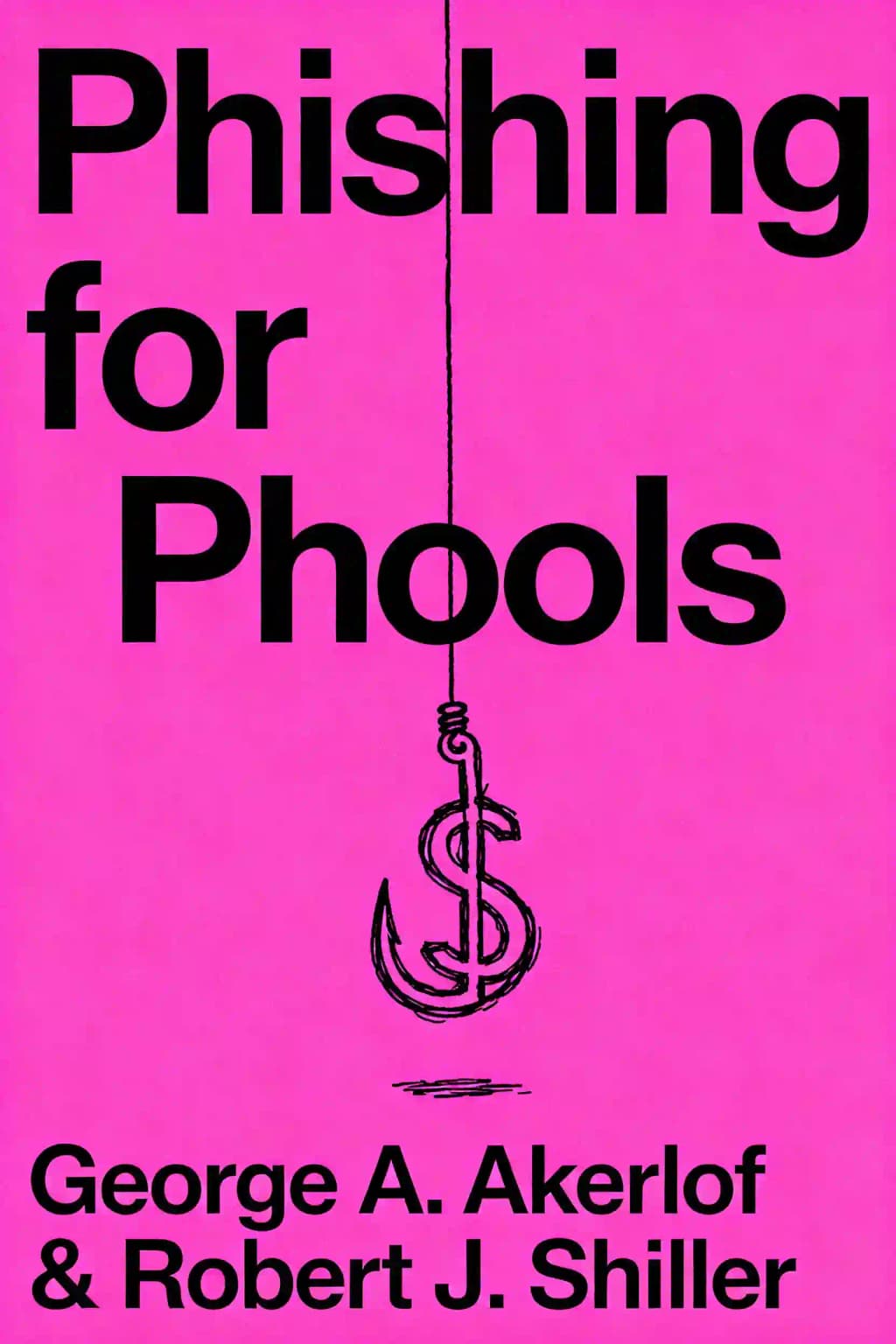
When Warren Buffett names a book one of his top reads, people take notice. "Phishing for Phools" by Nobel Prize-winning economists George Akerlof and Robert Shiller isn't just another economic treatise-it's a revelatory exploration of how free markets systematically exploit our psychological vulnerabilities. Since its 2015 publication, the book has influenced thinking at the Federal Reserve, been translated into 15 languages, and become required reading in economics departments worldwide. What makes it so compelling is its counterintuitive premise: the same free markets we celebrate for creating prosperity also inevitably generate deception and manipulation. As Bill Gates noted in his review, "This book will change how you see the world."
Kapitel 2
When Markets Bait Their Hooks
Free markets have delivered remarkable innovations that would have seemed magical a century ago-from air conditioning to smartphones to instant global communication. Yet these same markets inevitably spawn manipulation and deception. Not because people are inherently evil, but because competitive pressures drive businesses to exploit our weaknesses. This dynamic creates what economists call a "race to the bottom" in ethical practices, where companies must either exploit psychological vulnerabilities or risk losing market share to competitors who will.
Consider Cinnabon, strategically placing outlets in airports and malls to catch people with time on their hands. The irresistible aroma of cinnamon functions as bait, while each roll's 880 calories remains conveniently downplayed behind their cheerful "Life Needs Frosting" motto. They deliberately pump artificial scent through ventilation systems and position stores near high-traffic areas where hungry travelers are most vulnerable. Their success-over 750 bakeries in 30+ countries-demonstrates how free markets automatically exploit human vulnerabilities. If the Komens hadn't founded Cinnabon, someone else inevitably would have. This same pattern appears in countless food court vendors who strategically time their cooking to release enticing aromas during peak foot traffic.
Health clubs offer another perfect example of market-driven exploitation. Economists DellaVigna and Malmendier found most members choose monthly contracts costing $600 more annually than pay-per-visit options would have. Clubs create deliberate obstacles to cancellation-while all accepted in-person cancellations, only 7 of 83 clubs allowed phone cancellations, and many required notarized letters. Some gyms even design their cancellation offices with limited hours and inconvenient locations. This arrangement of "paying not to go to the gym" exists because it's profitable, capitalizing on our optimism about future exercise habits. In a competitive market, if one club didn't offer such contracts, others would capture those profits through similar psychological manipulation.
These aren't isolated cases but examples of what the authors call "phishing equilibrium"-wherever we have exploitable weaknesses, free markets will naturally produce actors who take advantage of them. The term "phish" extends beyond internet fraud to mean getting people to do things in the phisher's interest but not their own-like anglers dropping artificial lures to catch unwary fish. This phenomenon appears across industries: credit card companies burying fees in fine print, software companies making it easy to subscribe but difficult to unsubscribe, and mobile games designed to trigger addictive behavior patterns. Even well-intentioned business leaders often find themselves forced to adopt such practices to remain competitive, creating a self-perpetuating cycle of manipulation in the marketplace.
The implications reach beyond individual transactions to shape entire market structures. Companies invest heavily in research to identify and exploit psychological vulnerabilities, from color psychology in marketing to strategic pricing that plays on our cognitive biases. This creates an arms race of sophisticated manipulation techniques, where businesses must either participate or risk extinction in the competitive marketplace.
Kapitel 3
The Monkey on Our Shoulder
To understand why we're vulnerable to phishing, imagine humans shopping with "monkeys on our shoulders"-psychological weaknesses that lead us to make choices differing from what we truly want. Just as capuchin monkeys given money would likely buy marshmallow-filled treats regardless of nutritional value, humans have two types of tastes: what's truly good for us versus what we actually choose. This dual nature of our preferences creates a constant tension between our rational understanding and our emotional impulses.
Social psychologist Robert Cialdini identified six key psychological vulnerabilities that marketers routinely exploit: our desires to reciprocate favors (reciprocity), please people we like (liking), obey authority (authority), follow others' behavior (social proof), maintain internal consistency (commitment), and avoid losses (scarcity). Each of these principles operates largely beneath our conscious awareness. For instance, when stores offer free samples, they trigger reciprocity - creating a subtle obligation to purchase. When celebrities endorse products, they activate our liking principle. His brother Richard's car-selling technique masterfully exemplifies these principles-by scheduling buyers with overlapping appointments, he triggered loss aversion, making each buyer fear losing "their" car to another customer. This created artificial scarcity and urgency, compelling buyers to make faster decisions than they might otherwise prefer.
This psychological manipulation challenges economics' traditional celebration of Adam Smith's "invisible hand"-the foundational idea that free markets naturally promote the general good through individual self-interest. While Smith envisioned markets as mechanisms for matching genuine consumer preferences with products, modern marketing often exploits our psychological vulnerabilities rather than serving our true interests. The authors argue that free markets offer not just freedom to choose but freedom to phish - the liberty to manipulate and exploit these cognitive biases for profit. The resulting market equilibrium optimizes for our "monkey-on-the-shoulder tastes" rather than what we truly want, leading to outcomes that may satisfy our immediate impulses but not our longer-term wellbeing.
Consider how this plays out in everyday scenarios: credit card companies offering "free" rewards that encourage overspending, social media platforms designed to trigger dopamine responses that keep us scrolling, or food manufacturers engineering products to hit the "bliss point" of maximum craving rather than optimal nutrition. These examples demonstrate how markets can systematically exploit our psychological vulnerabilities rather than serve our authentic preferences.
Kapitel 4
Financial Fragility and Temptation's Path
While mainstream economists often dismiss financial advisor Suze Orman for her seemingly simplistic advice, everyday people consistently embrace her practical wisdom because it addresses a fundamental disconnect between economic theory and lived reality. Traditional economics portrays consumers as rational actors making calculated decisions within clearly defined budgets, but Orman's decades of experience reveals people have deep emotional hang-ups about money, consistently underestimating their expenditures, overestimating their income, and failing to save adequately for the future or emergencies.
Recent statistics paint a stark picture of American financial fragility - nearly 50% of Americans couldn't come up with $2,000 in an emergency without resorting to selling possessions or high-interest borrowing. The median family holds less than one month's income in liquid assets, while roughly 40% of households face regular cash-flow shortages that lead to late payments, overdraft fees, or reliance on payday loans. Even middle-class families with steady incomes often live paycheck to paycheck, with 25% reporting they've missed rent or mortgage payments in the past year. This reality stands in sharp contrast to economist John Maynard Keynes's 1930 prediction that increased societal wealth would lead to fifteen-hour workweeks and abundant leisure time. Instead, we find exhausted households working longer hours while struggling to maintain financial stability.
The root cause extends beyond individual choices to how free markets operate. Modern capitalism doesn't just satisfy genuine needs but actively creates and exploits what behavioral economists call "monkey-on-the-shoulder tastes," surrounding consumers with constant temptation designed to trigger impulse purchases. From strategically placed candy at checkout counters to end-cap displays in supermarkets, from one-click shopping to buy-now-pay-later schemes, the retail environment is carefully engineered to override rational decision-making and encourage spending rather than saving.
Credit cards represent perhaps the most powerful tool in this arsenal, functioning as a "magic pill" that retailers enthusiastically embrace because they dramatically increase consumer spending across all categories. Psychologist Richard Feinberg's groundbreaking research found that credit card users left 13% larger restaurant tips than cash users, while subsequent studies showed 15-25% increases in department store purchases among cardholders. The effect extends beyond actual card usage - even subconscious exposure to credit imagery influences behavior.
In controlled laboratory experiments, merely placing credit card logos in subjects' peripheral vision significantly increased their willingness to spend across diverse product categories - from 11% more for camping equipment to 50% more for clothing items. In a particularly striking experiment, subjects shown subtle credit card imagery were willing to pay triple for common household items like toasters ($165 versus $53) compared to control groups. These dramatic spending increases explain why merchants accept credit cards despite significant "interchange fees" of 2-3% charged by card companies - the increased sales volume more than compensates for the additional cost. The psychology of credit cards reveals how modern financial instruments can systematically alter consumer behavior in ways that traditional economic models fail to capture.
Kapitel 5
Reputation Mining and Financial Crisis
The 2008-9 financial crisis can be distilled to a simple concept: Reputation Mining. Just as a seller with a reputation for perfect avocados can profit by selling mediocre ones at premium prices, financial institutions mined their reputations by selling subpar securities with inflated ratings.
This process began when ratings agencies, whose century-old reputations were built rating simple bonds, extended their services to complex derivatives. Buyers trusted these ratings based on past performance with simpler securities, not understanding that security producers had little incentive to create quality products when mediocre ones could receive the same AAA ratings.
Investment banking transformed dramatically between 1970 and 2005. Goldman Sachs exemplifies this shift-growing from $50 million in partnership capital to over $28 billion (with $700+ billion in assets). In the earlier era, investment banks functioned as trusted advisors to corporate clients. By 2005, they had become "shadow banks," taking overnight "deposits" from large investors through repurchase agreements backed by collateral.
The relationship between investment banks and ratings agencies fundamentally changed. The shift began in the 1970s when Moody's started charging investment banks for ratings-a seemingly minor change with profound consequences. In the era of "Banker as Friend," reputation was paramount and banks wanted scrupulous ratings. But as investment banks shifted to a "Door 1 or Door 2" approach (choosing whichever option maximized profits), they pressured ratings agencies, who understood the implicit threat: give low ratings and lose business.
The true magic of complex financial structures enabled profitable reputation mining. Modern finance discovered ways to slice returns beyond the traditional bondholder/stockholder division, creating complex derivatives. While this could legitimately distribute risk, it also enabled deception-packaging rotten assets so intricately that ratings agencies would mistakenly rate them highly. Moody's alone gave 45,000 mortgage-related securities triple-A ratings between 2000-2007, compared to only six US companies with similar ratings in 2010.
Kapitel 6
The Art of Manipulation: Advertising and Marketing
Advertising represents phishing in its purest form, tapping into our natural tendency to think in narratives. The human mind processes information through conversational patterns that evolve and change, making our thoughts inconsistent and manipulable. Advertisers exploit this by grafting their own stories onto our mental narratives, diverting our thinking in ways that benefit them but not us.
Through the lives of three advertising giants-Albert Lasker, Claude Hopkins, and David Ogilvy-we see how advertising evolved from simple product claims to sophisticated storytelling that taps into our psychological vulnerabilities. Albert Lasker transformed the failing Wilson Ear Drum Company with "reason-why" advertising that mimicked news stories-despite the product being medically worthless. Claude Hopkins expanded advertising into modern marketing, creating artificial differentiation for identical products like Schlitz beer by highlighting standard industry practices as unique selling points.
David Ogilvy perfected atmospheric advertising with his iconic Rolls-Royce and Hathaway shirt campaigns, the latter featuring a mysterious man with an eye patch that captivated consumers' imaginations for decades. Rather than using scary "hidden persuaders," advertisers rely on something more direct: systematic trial and error combined with statistical testing to discover what triggers purchasing behavior. Like real fishing, advertisers drop hooks in different spots until they get bites.
This evolution continued into politics. The 2012 Obama campaign represents modern marketing's pinnacle, assigning unique identification numbers to over 100 million potential voters, appending up to 1,000 data points from voter registrations, credit information, magazine subscriptions, and club memberships. This allowed precise targeting of individual voters likely to support Obama, even in Republican-dominated areas, making marketing exponentially more effective at phishing for votes.
Kapitel 7
Phishing in Politics: Money, Influence, and Deception
Politics offers a perfect arena for phishing, as demonstrated by George Akerlof's experience helping Art Small Jr.'s Senate campaign against incumbent Charles Grassley in Iowa. Despite Small's integrity and honesty, he faced Grassley's $7.6 million war chest that funded homey TV ads showing Grassley mowing his lawn. These ads created a narrative of Grassley as a relatable neighbor rather than addressing policy positions. The election results were predictably lopsided: Grassley 70.2%, Small 27.9%.
House representatives must raise roughly $1,800 per day in office just to remain competitive. While economic theory suggests competitive elections should generate good outcomes with candidates converging toward the median voter's preferences, this only works with fully informed voters. In reality, voters are both information phools (lacking complete information) and psychological phools (responding to emotional appeals like lawn-mowing ads).
Even the most dedicated voters cannot be fully informed on all issues, particularly complex legislation. The Emergency Economic Stabilization Act of 2008 illustrates this problem perfectly. Its language was so opaque that even the bill's authors needed help identifying which sections authorized bank bailouts and auto company rescues, deliberately camouflaged beyond the understanding of the public, press, or even many legislators themselves.
The relationship between Congress and lobbyists reveals surprising statistics: there are about 12,000 lobbyists-more than twenty for each member of Congress. Rather than simple "protection for sale," lobbyists serve two critical functions: they help politicians identify potential donors (acting as beacons to "pots of gold"), and they help politicians craft narratives that simultaneously appeal to voters while satisfying donors. This explains why lobbyists are typically former congressional staffers or representatives themselves-50% of senators and 42% of representatives who retired in 2010 became lobbyists, compared to just 3% in 1974.
Kapitel 8
Phood, Pharma, and Phishing: When Health Becomes Bait
Despite expecting to tell a "just so" story about how regulation has made modern food and drugs safe, the authors discovered that phishing persists in more sophisticated forms. Today's "phood" industry manipulates consumers through carefully engineered products laden with precisely calibrated amounts of sugar, salt, and fat, leading not to immediate food poisoning but to long-term chronic conditions like coronary diseases, diabetes, and obesity. Food companies employ teams of scientists to determine the "bliss point" - the optimal combination of these ingredients that maximizes consumer appeal while creating subtle addictive patterns.
Similarly, pharmaceutical companies have evolved sophisticated strategies to circumvent FDA protections through multi-layered marketing campaigns, selective presentation of research data, and strategic influence over medical professionals. They exploit regulatory loopholes while maintaining a veneer of scientific legitimacy, often prioritizing profitable chronic conditions over true medical breakthroughs.
Merck's painkiller Vioxx stands as a stark example of pharmaceutical phishing at its most dangerous. Despite internal research predicting serious cardiovascular side effects, Merck orchestrated an aggressive marketing campaign, recruiting Olympic skater Dorothy Hamill as a spokesperson and deploying an army of 3,000 drug representatives armed with carefully crafted, misleading data cards. The representatives targeted high-prescribing doctors with selective information, downplaying risks while emphasizing benefits. By 2004, annual sales reached $2.5 billion before Merck finally withdrew the drug after confirming its dangers. The devastating toll: an estimated 88,000-139,000 heart attacks and over 26,000 deaths, making it one of the deadliest drug disasters in modern history.
Pharmaceutical companies systematically exploit the limitations of randomized trials to secure drug approvals. The FDA approval process inherently favors drugs showing immediate, measurable benefits while potentially missing serious long-term side effects that emerge only after extended use. Drug companies manipulate this system through five key freedoms: selectively choosing which trials to present to regulators while burying unfavorable results, determining optimal trial lengths that showcase benefits before side effects emerge, strategically selecting target populations most likely to respond positively, choosing favorable placebo controls that make their drugs appear more effective, and conducting critical trials in countries with less stringent regulatory oversight.
Beyond initial FDA approval, pharmaceutical companies employ a sophisticated multi-channel strategy to influence medical practice. Medical journals serve as the first line of attack, publishing company-funded studies with carefully framed results. This is followed by armies of drug representatives who visit doctor's offices bearing free samples and selective reprints of favorable journal articles. The third prong involves sponsoring continuing medical education programs, where companies can select speakers known to favor their products and frame the educational narrative. The ultimate success comes when medical associations incorporate these drugs into official treatment guidelines, effectively mandating their use in standard medical practice. This comprehensive approach creates a self-reinforcing cycle of influence that shapes medical practice while generating billions in pharmaceutical profits.
Kapitel 9
Heroes of Resistance: Standards, Ethics, and Regulation
While phishing equilibrium is pervasive, it isn't comprehensive thanks to individuals who prioritize principles over profit. These heroes make free markets work effectively by counterbalancing the sophisticated manipulations and deceptions that markets naturally produce. Modern achievements like 80+ year lifespans, safer cars, and flawless airline safety records aren't purely market-driven; they result from heroes who've reduced information phishing by establishing standards and measurements. From food safety to product reliability, these individuals have fundamentally transformed how markets operate and protect consumers.
The heroes who measure and enforce quality standards have transformed markets since the early 20th century. Harvey Washington Wiley's groundbreaking chemistry work in the Pure Food Laboratory led to the FDA's comprehensive ability to test food and drug contents. His famous "Poison Squad" experiments, where volunteers consumed foods with various chemical preservatives, dramatically illustrated the need for consumer protection. The National Bureau of Standards, established in 1901, saved the government millions through standardized testing of everything from lightbulbs to building materials. Their work established crucial benchmarks that made mass production and quality control possible across industries.
Stuart Chase and Frederick Schlink's 1927 bestseller "Your Money's Worth" championed standardization across industries, exposing widespread fraud and mislabeling in consumer goods. Their work led to the creation of Consumers Union and Consumer Reports, which now serves millions through rigorous, independent product testing and ratings. These organizations have become trusted watchdogs, forcing manufacturers to maintain higher standards through objective evaluation and public accountability.
Conscientious businesspeople with good products have both moral and economic incentives to expose phishermen. Organizations like "The Guardians" (established 1776 in London) evolved into today's Better Business Bureaus, using consumer complaints to credibly identify unethical businesses. These organizations maintain detailed rating systems and mediation services that help consumers navigate marketplace complexity. Business communities enforce norms through reputation networks - corporate directors are "the most reputationally sensitive people in the world" according to shareholder activist Nell Minow, as their future opportunities depend heavily on their track record of ethical behavior.
Legal standards have evolved significantly to protect consumers from phishing. In the landmark MacPherson v. Buick case of 1916, Justice Benjamin Cardozo ruled that Buick was negligent when a car with defective wheels injured stonecutter Donald MacPherson, establishing manufacturer liability even when purchases occur through dealers. This decision revolutionized product liability law by establishing that manufacturers owe a duty of care directly to consumers. The Uniform Commercial Code further strengthened consumer protection by imposing "good faith" obligations on merchants and creating distinct standards for consumer and commercial transactions. These legal frameworks have created powerful incentives for businesses to maintain quality standards and honest practices.
The ongoing work of regulatory agencies, consumer advocates, and ethical business leaders continues to evolve as markets become more complex. Their efforts demonstrate that while market forces alone may tend toward deception, dedicated individuals and institutions can successfully push back against phishing and maintain higher standards of conduct.
Kapitel 10
Rewriting the Story: Markets, Government, and Freedom
The book challenges a widely accepted narrative about free markets-the unsophisticated interpretation of standard economics that claims free markets yield the best possible outcomes when people are "free to choose." While acknowledging the cornucopia that markets deliver, the authors argue that markets produce both good-for-me/good-for-you outcomes and good-for-me/bad-for-you outcomes, so long as profit can be made.
America experienced an "Age of Reform" from approximately 1890 to 1940, encompassing three distinct movements: agrarian Populism led by William Jennings Bryan in the 1890s, good-government Progressivism led by Theodore Roosevelt from 1900-1920, and New Deal experimentalism under Franklin Roosevelt. Though different in their approaches, these movements collectively expanded government's role at all levels, particularly federally.
Ronald Reagan's inaugural declaration that "government is the problem" gave legitimacy to a new national story that fundamentally contradicted decades of American experience. This "New Story" wrongly assumes markets work perfectly when people are free to choose, ignoring externalities, income inequality, and phishing for phools that necessitate government intervention.
Social Security provides a "back door" solution to retirement savings by taxing income and guaranteeing retirement funds. This program dramatically reduced elderly poverty from 35.2% in 1959 to 15.3% by 1975. For most Americans, Social Security represents the dominant source of unearned retirement income-without it, elderly poverty would jump from 9% to 44%. Despite this success, the Bush Administration proposed "privatizing" Social Security in 2004, allowing workers to invest part of their contributions in mutual funds while "repaying" the diverted funds through reduced benefits.
The Citizens United case exemplifies how "New Story" thinking fails to account for phishing in politics. Justice Kennedy's majority opinion treated corporations' speech rights as equivalent to individuals', viewing speech purely as information conveyance rather than recognizing its persuasive power to phish for votes. The 5-4 decision ignored the reality that unlimited corporate spending creates an uneven playing field where well-funded interests can drown out others.
Free markets are humanity's most powerful tool, but like all powerful tools, they cut both ways. This reality demands protection, just as computer users recognize the need for safeguards against phishing emails and viruses. A functional national story requires an accurate understanding of how economies and politics truly work-accounting for both the upsides and downsides of markets and democracy. While phishing for phools isn't uniquely American, any workable framework must recognize this fundamental aspect of market economies.