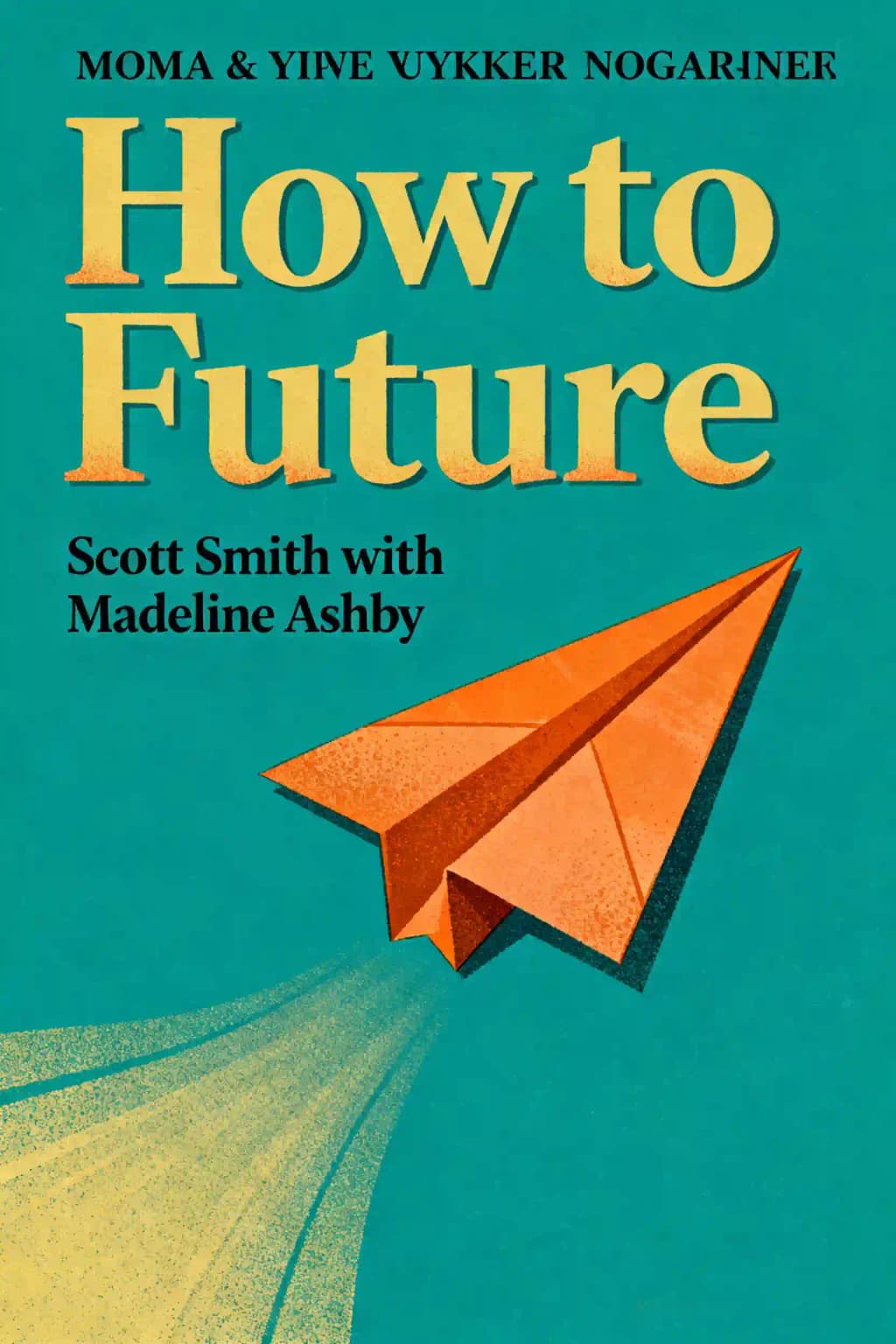
In an era of hyperchange, "How to Future" offers practical tools for strategic foresight. With a 4.04/5 rating, this guidebook by sci-fi writer Madeline Ashby and futurist Scott Smith reveals how industry leaders navigate disruption. Can you afford not to see what's coming?
Erlebe das Buch durch die Stimme des Autors
Verwandle Wissen in fesselnde, beispielreiche Erkenntnisse
Erfasse Schlüsselideen blitzschnell für effektives Lernen
Genieße das Buch auf unterhaltsame und ansprechende Weise
We've turned "the future" into a product. It's branded on magazine covers, streamed on Netflix, and somehow even printed on rubbish bins. Yet despite this obsession with what comes next, most of us feel utterly powerless to shape it. Here's the uncomfortable truth: we've been sold "flat-pack futures"-pre-assembled visions that someone else designed-when what we desperately need is the ability to build our own. This isn't about predicting tomorrow. It's about learning to navigate a world where the ground shifts beneath our feet before we've finished our morning coffee. Think about how you imagine next year. Do you see a straight line extending from today, or do you picture cycles and spirals? Your answer reveals something profound about how your mind processes possibility itself. Western cultures often treat time like a highway-linear, monochronic, marching steadily forward. But travel to Latin America, the Middle East, or much of Africa, and you'll encounter polychronic time: multiple threads weaving together, events overlapping, the past and future dancing with the present. These aren't just philosophical differences. They fundamentally shape how we frame probability, causality, and what's even possible. The language barrier runs deeper still. Modern life punishes uncertainty with a ferocity that would make medieval inquisitors proud. Data-driven businesses demand metrics for everything. "I don't know" becomes career suicide. Design teams rush to converge on singular solutions rather than productively exploring multiple possibilities. Organizations cling to "official futures"-like Moore's Law in computing-that become prison bars preventing us from seeing alternatives. Meanwhile, tech marketing has hijacked future language entirely, claiming "tomorrow, today" until the actual future becomes just another cultural commodity. Breaking free requires recognizing that futuring isn't about eliminating uncertainty-it's about learning to dance with it. The question isn't whether change is coming. It's whether we'll be swept along by it or learn to ride its currents with intention and skill.
Zerlegen Sie die Kernideen von How to Future in leicht verständliche Punkte, um zu verstehen, wie innovative Teams kreieren, zusammenarbeiten und wachsen.
Destillieren Sie How to Future in schnelle Gedächtnisstützen, die die Schlüsselprinzipien von Offenheit, Teamarbeit und kreativer Resilienz hervorheben.

Erleben Sie How to Future durch lebhafte Erzählungen, die Innovationslektionen in unvergessliche und anwendbare Momente verwandeln.
Fragen Sie alles, wählen Sie die Stimme und erschaffen Sie gemeinsam Erkenntnisse, die wirklich bei Ihnen ankommen.

Von Columbia University Alumni in San Francisco entwickelt
"Instead of endless scrolling, I just hit play on BeFreed. It saves me so much time."
"I never knew where to start with nonfiction—BeFreed’s book lists turned into podcasts gave me a clear path."
"Perfect balance between learning and entertainment. Finished ‘Thinking, Fast and Slow’ on my commute this week."
"Crazy how much I learned while walking the dog. BeFreed = small habits → big gains."
"Reading used to feel like a chore. Now it’s just part of my lifestyle."
"Feels effortless compared to reading. I’ve finished 6 books this month already."
"BeFreed turned my guilty doomscrolling into something that feels productive and inspiring."
"BeFreed turned my commute into learning time. 20-min podcasts are perfect for finishing books I never had time for."
"BeFreed replaced my podcast queue. Imagine Spotify for books — that’s it. 🙌"
"It is great for me to learn something from the book without reading it."
"The themed book list podcasts help me connect ideas across authors—like a guided audio journey."
"Makes me feel smarter every time before going to work"
Von Columbia University Alumni in San Francisco entwickelt

Erhalten Sie die How to Future-Zusammenfassung als kostenloses PDF oder EPUB. Drucken Sie es aus oder lesen Sie es jederzeit offline.