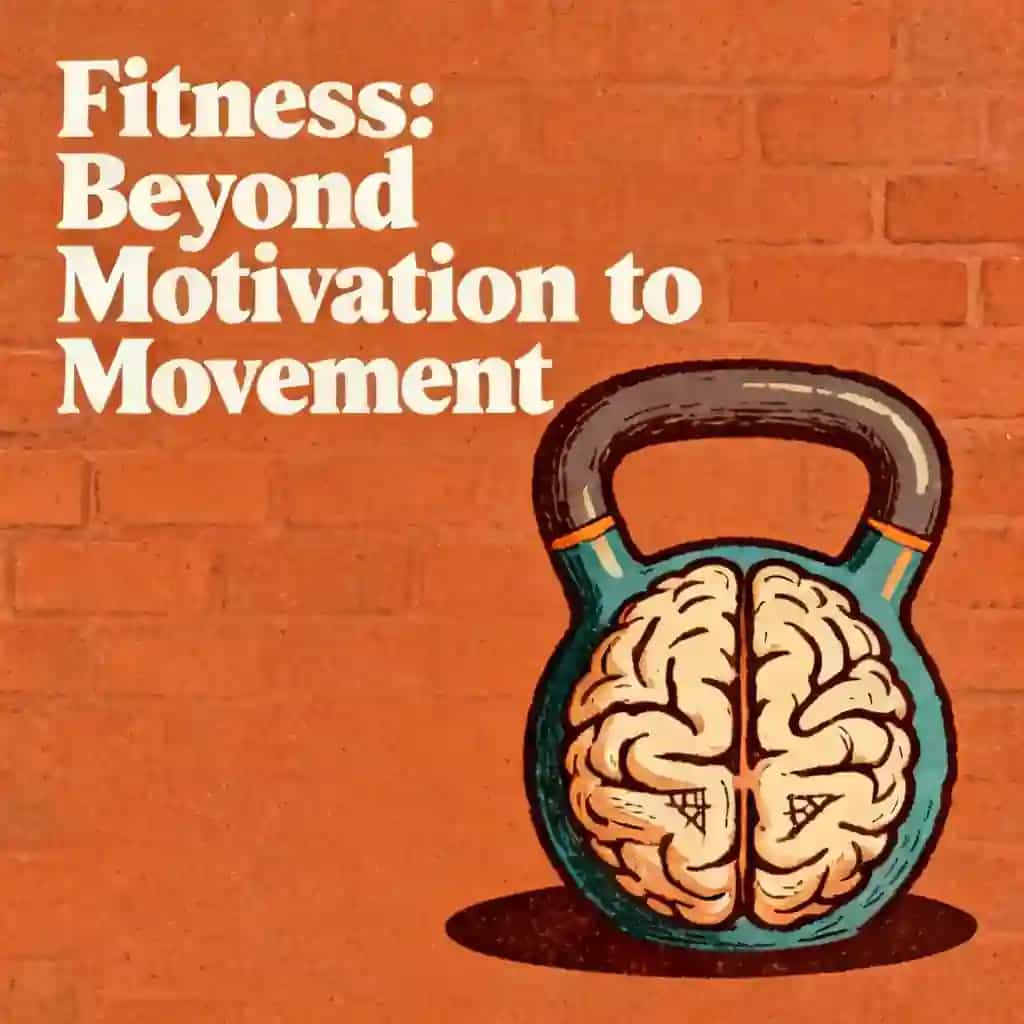
In "Exercised," Harvard evolutionary biologist Daniel Lieberman reveals why humans naturally avoid unnecessary exertion yet paradoxically need movement. Endorsed by Runner's World's Amby Burfoot, this myth-busting exploration explains why our ancestors never "worked out" - and how modern exercise culture gets evolution all wrong.
Daniel E. Lieberman, bestselling author of Exercised: Why Something We Never Evolved to Do Is Healthy and Rewarding, is a Harvard evolutionary biologist and paleoanthropologist renowned for bridging ancient human adaptation with modern health.
As the Edwin M. Lerner II Professor of Biological Sciences, his research on the evolution of human locomotion—including the endurance-running hypothesis and biomechanics of barefoot running—directly informs the book’s exploration of exercise as both an evolutionary paradox and a societal imperative.
Lieberman’s work, featured in his acclaimed The Story of the Human Body: Evolution, Health, and Disease, combines rigorous scientific analysis with accessible storytelling to reframe public understanding of obesity, chronic disease, and physical activity.
A popular speaker and “Barefoot Professor” known for his marathon-running advocacy, he has been featured in major media outlets and academic forums worldwide. Exercised has become a cornerstone text in evolutionary medicine, celebrated for its evidence-based approach to redefining fitness in alignment with human biology.
Exercised explores why humans evolved to avoid unnecessary physical activity and how modern lifestyles clash with our biology. Combining evolutionary anthropology and cutting-edge research, Lieberman debunks myths about exercise (e.g., sitting isn’t inherently harmful) and offers science-backed strategies to stay active sustainably. The book reframes exercise as a voluntary, health-promoting behavior rather than an innate instinct.
Fitness enthusiasts, evolutionary biology buffs, and anyone struggling to maintain consistent exercise habits will benefit. Lieberman’s insights are particularly valuable for those seeking evidence-based approaches to combat sedentary lifestyles or overwhelmed by conflicting fitness advice. Health professionals and educators will also appreciate its interdisciplinary perspective on human movement.
Yes. Lieberman’s myth-busting approach (e.g., challenging the “10,000 steps” rule) and engaging storytelling make complex science accessible. The book’s practical advice—like prioritizing enjoyable activities over grueling workouts—helps readers build sustainable habits. Its evolutionary lens offers a fresh take on modern health crises, distinguishing it from conventional fitness guides.
Our ancestors stayed active through survival tasks (hunting, gathering) rather than deliberate exercise. Lieberman argues that conserving energy was evolutionarily advantageous, which explains why modern humans instinctively avoid unnecessary exertion. Industrialization reduced daily movement, making voluntary exercise essential for health.
Hunter-gatherers remain active into old age, avoiding conditions like diabetes and heart disease common in sedentary societies. Lieberman links modern inactivity to weakened muscles, poor circulation, and metabolic dysregulation, emphasizing that regular movement is preventive medicine.
No. Lieberman advises against one-size-fits-all regimens. Instead, he advocates for diverse, moderate activities (e.g., brisk walking, gardening) that align with individual lifestyles. The goal is to make movement rewarding, not punitive.
Lieberman acknowledges that avoiding exertion is natural. To overcome this, he suggests:
Some readers may find its evolutionary focus too academic or its rejection of structured workouts impractical. Critics note it offers fewer actionable plans compared to traditional self-help fitness books. However, its evidence-based approach balances these concerns.
Unlike Atomic Habits or The 4-Hour Body, Exercised emphasizes biological and anthropological context over habit-building hacks. It complements Gretchen Reynolds’ The First 20 Minutes but delves deeper into evolutionary roots.
Erlebe das Buch durch die Stimme des Autors
Verwandle Wissen in fesselnde, beispielreiche Erkenntnisse
Erfasse Schlüsselideen blitzschnell für effektives Lernen
Genieße das Buch auf unterhaltsame und ansprechende Weise
Exercise is uniquely human and historically recent.
Sitting itself isn't inherently harmful.
We're fighting against deep-seated instincts.
Humans evolved to be physically active but also to avoid unnecessary exertion.
Exercise has become thoroughly commodified, commercialized, and medicalized.
Zerlegen Sie die Kernideen von Exercised in leicht verständliche Punkte, um zu verstehen, wie innovative Teams kreieren, zusammenarbeiten und wachsen.
Destillieren Sie Exercised in schnelle Gedächtnisstützen, die die Schlüsselprinzipien von Offenheit, Teamarbeit und kreativer Resilienz hervorheben.

Erleben Sie Exercised durch lebhafte Erzählungen, die Innovationslektionen in unvergessliche und anwendbare Momente verwandeln.
Fragen Sie alles, wählen Sie die Stimme und erschaffen Sie gemeinsam Erkenntnisse, die wirklich bei Ihnen ankommen.

Von Columbia University Alumni in San Francisco entwickelt
"Instead of endless scrolling, I just hit play on BeFreed. It saves me so much time."
"I never knew where to start with nonfiction—BeFreed’s book lists turned into podcasts gave me a clear path."
"Perfect balance between learning and entertainment. Finished ‘Thinking, Fast and Slow’ on my commute this week."
"Crazy how much I learned while walking the dog. BeFreed = small habits → big gains."
"Reading used to feel like a chore. Now it’s just part of my lifestyle."
"Feels effortless compared to reading. I’ve finished 6 books this month already."
"BeFreed turned my guilty doomscrolling into something that feels productive and inspiring."
"BeFreed turned my commute into learning time. 20-min podcasts are perfect for finishing books I never had time for."
"BeFreed replaced my podcast queue. Imagine Spotify for books — that’s it. 🙌"
"It is great for me to learn something from the book without reading it."
"The themed book list podcasts help me connect ideas across authors—like a guided audio journey."
"Makes me feel smarter every time before going to work"
Von Columbia University Alumni in San Francisco entwickelt

Erhalten Sie die Exercised-Zusammenfassung als kostenloses PDF oder EPUB. Drucken Sie es aus oder lesen Sie es jederzeit offline.
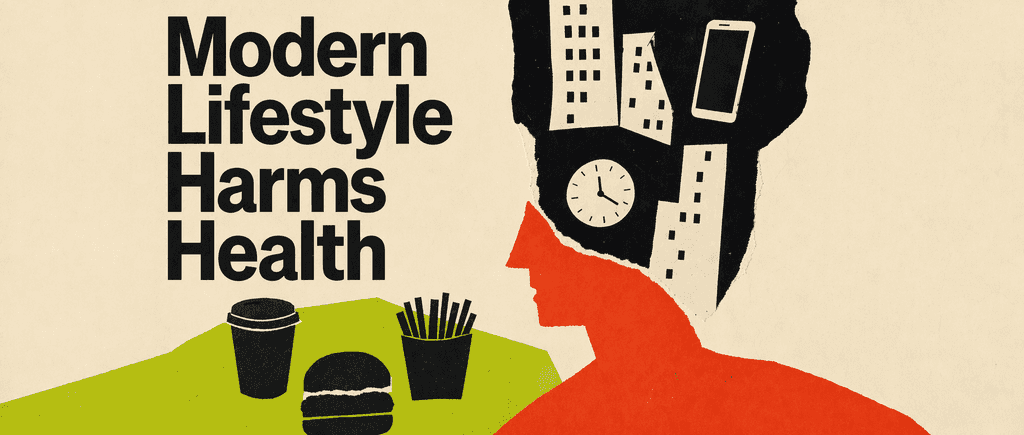
Picture this: Ernesto, a 70-year-old Tarahumara man from Mexico's Sierra mountains, looks puzzled when asked about "training" for running competitions. "Why would anyone run when they don't have to?" he asks. As a subsistence farmer who grows all his food without machines, Ernesto remains remarkably fit without ever "exercising." His perspective highlights the central paradox explored in "Exercised": humans evolved to be physically active but also to avoid unnecessary exertion. Our ancestors walked miles daily, carried heavy loads, and occasionally sprinted from predators - not to stay fit, but because survival demanded it. Meanwhile, they rested whenever possible to conserve precious calories. This evolutionary legacy explains why exercise feels like a chore. When you take the escalator instead of stairs or circle a parking lot looking for a closer spot, you're not being lazy - you're following ancient programming to conserve energy. Remember those documentaries portraying indigenous people as natural superathletes untainted by civilization? That's largely fiction. What surprised researchers most upon first visiting Hadza hunter-gatherer camps in Tanzania was finding everyone sitting around, apparently doing nothing. While Hadza do leave camp daily to hunt and gather, with women walking miles to dig for tubers and men tracking animals for 7-10 miles, much of their time in camp is spent resting and socializing. The problem isn't our natural inclination to rest - it's that modern environments have made physical activity optional while making calorie-dense food abundant. This "mismatch" between our evolved tendencies and current environment explains why half of American adults fail to meet basic activity guidelines, contributing to epidemic levels of chronic disease.